Summary
- You Can See Everything was filmed by a crew of seven.
- The filmmakers replaced their original anamorphic setup with three-camera coverage.
- Two 25–250mm zooms helped preserve spontaneous reactions.
- Shooting days sometimes lasted 16 hours.
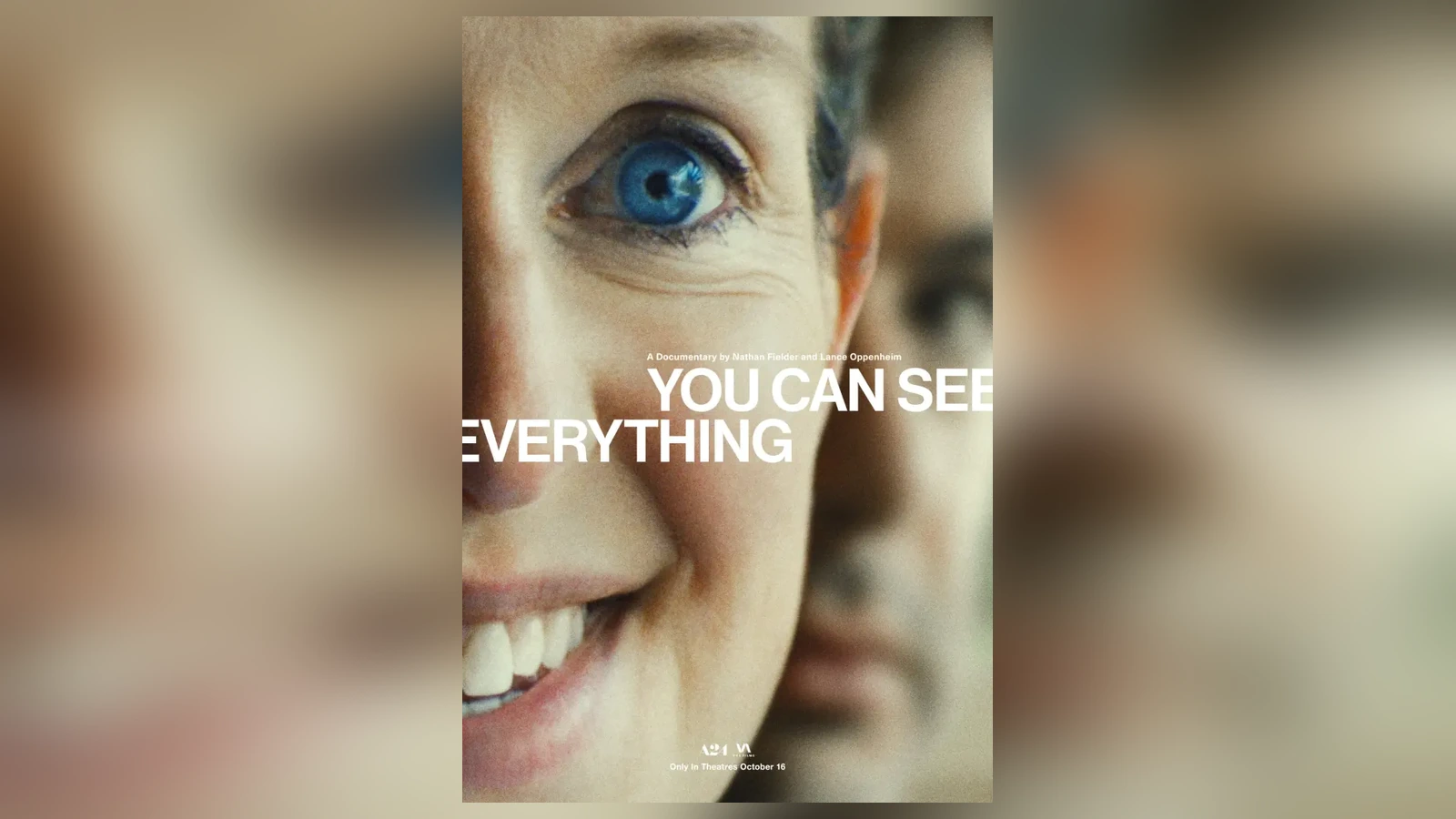
Elizabeth Holmes allowed cameras into her home, but the filmmakers behind You Can See Everything discovered on their first day that a conventional cinematic setup was not suited to capturing what unfolded.
At a New York Film Festival screening, Nathan Fielder and Lance Oppenheim described a production with a seven-person crew, three cameras and shooting days stretching to 16 hours. The priority was not spectacle but preserving reactions that could disappear in seconds.
A24’s official teaser offers a first glimpse of the unusual relationship between Holmes, her family and the filmmakers.
From one anamorphic camera to three-camera coverage
They began with a single camera and anamorphic lenses. That offered a cinematic look, but changing lenses and repositioning the camera meant missing the very spontaneous moments they had come to film. Oppenheim said they fundamentally redesigned their approach after roughly one day.
The revised setup involved three cameras and two operators. One wide-angle camera maintained coverage of the space while two other cameras used 25–250mm zoom lenses for close shots from a distance. The team assigned zones of the home, following Holmes, her partner Billy Evans and, increasingly, Fielder himself.
The narrative reason was straightforward: the face of someone receiving an uncomfortable question may register an important reaction for only a few seconds. Panning a single camera from speaker to listener risks losing it.
Seven crew members, with only four inside the house
Despite the extended shooting schedule, the crew numbered seven, with no more than four people inside the home at any one time. Oppenheim described working behind the wide camera while operators handled the other coverage. The idea was to reduce the pressure of making every conversation feel like a staged scene.
Shooting could continue for up to 16 hours a day. The subjects did not necessarily know which moment would matter to the finished film, and the filmmakers themselves often did not know in advance either.
David Bolen, available light and a 4:3 frame
Cinematographer David Bolen, a previous Oppenheim collaborator, helped keep the system responsive. Fielder recalled Bolen quickly moving the camera and tripod and locking down the head in seconds. The crew worked with available light by day and night rather than constantly stopping for an elaborate relight.
The film also uses a 4:3 aspect ratio. In a home filled with background detail, the narrower frame helped move attention away from distractions and towards faces. This is an editorial choice, not simply a nostalgic television aesthetic.
How the director became part of the frame
Fielder initially expected to remain off camera. Holmes and Evans repeatedly addressed him, however, and the operators began panning towards him during extended conversations. His own presence gradually became part of the narrative.
The documentary begins during Holmes’s final 34 days before she started serving her prison sentence for defrauding Theranos investors. The earlier A24 documentary announcement provides the background to this unusually close access.
You Can See Everything opened in US theaters on October 16, 2026. A24 describes a story that began just before Holmes entered prison and developed into a three-year filmmaking journey.
What we think
The strongest filmmaking lesson here is that comprehensive coverage does not always come from the most cinematic-looking setup. The anamorphic lenses might have provided a distinctive image, but every adjustment threatened to destroy the material the documentary needed most: a fleeting, unplanned response.
The two zooms and permanently available wide angle gave the filmmakers different perspectives within a confined room. For documentary makers, it is a reminder to build the shooting method around how people behave rather than requiring people to accommodate the camera.
There is a harder question, too. Prolonged filming can create the impression of neutral observation while changing the relationships it records. Fielder’s unexpected appearance in the narrative makes that tension visible. Three cameras may preserve a reaction, but they cannot establish a person’s intentions simply by recording their face.