

Summary
- The main camera on “Primetime” was the ARRI ALEXA 35 at EI 6400 and the footage was printed to 16mm film.
- The production also used eight Panasonic DVX100Bs to approach the television look of 2006.
- Vintage Ikegami tube cameras handled more subjective moments with unstable color rendering.
- A tiny colonoscopy camera was even used for a distinctive travelling shot.
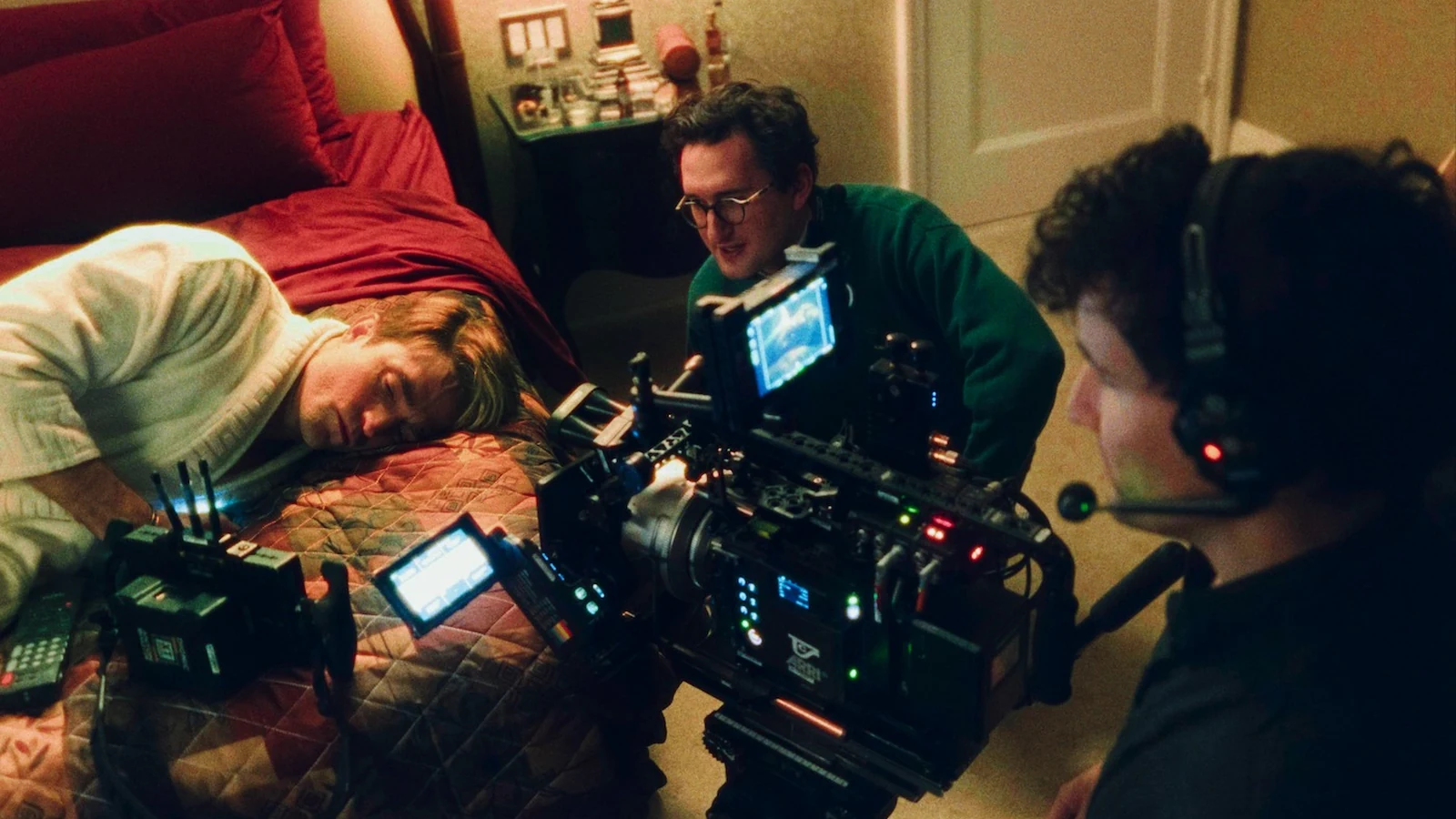
The look of “Primetime” was built with an unusual mix of technologies: an ALEXA 35 at EI 6400, eight Panasonic DVX100Bs, vintage Ikegami broadcast cameras and even a tiny colonoscopy camera.
Cinematographer David Bolen told The Credits that the goal was to preserve the immediacy of a documentary approach inside a large-scale narrative production. Lance Oppenheim’s film, starring Robert Pattinson as Chris Hansen, was released by A24 on September 25, 2026.
ALEXA 35 at EI 6400 and a 16mm film-out
The main camera was the ARRI ALEXA 35, but Bolen chose to shoot at exposure index 6400 to introduce a pronounced grainy character. The footage was then printed to 16mm film, adding another layer of texture to the final image.
The intention was not to hide the digital origin of the footage. Instead, the production used the contrast between a modern cinema camera and the imperfections introduced by high EI capture and film as part of the visual design.
Eight Panasonic DVX100Bs for the 2006 television look
To get closer to the visual language of “To Catch a Predator,” the team spoke with a former technician and camera operator from the show. Because the original production used a mixture of hidden and conventional camera setups, Bolen and Oppenheim felt free to experiment with formats and eventually relied heavily on eight Panasonic DVX100Bs.
The DVX100B was a MiniDV camera capable of 24 fps recording, and Bolen said that in testing it felt closest to the look of the original television program.
1980s Ikegami cameras for subjective imagery
For more surreal sequences, the production used Japanese Ikegami broadcast cameras from the 1980s with separate RGB tubes. As those tubes age, their response can deteriorate and produce strong blue or red shifts.
That instability was given a specific narrative role. The older broadcast cameras were used when the film moved deeper into Chris Hansen’s subjective experience.
The colonoscopy camera travelled through a computer
The most unusual solution came from a scripted travelling shot that needed to move through a computer and end on the reveal of a face. Since a conventional cinema camera could not physically pass through such a small space, Bolen tested very small medical cameras and eventually settled on a colonoscopy camera.
Production designer Alex DeGerlando built a miniature LED tunnel on a rotating gimbal with moving lights. The tiny camera could then be pushed through the tunnel and complete the move on the actor’s face.
One ALEXA, extremely close to the actors
Bolen describes the DV cameras as the more objective, wide perspective of the television show, while the ALEXA 35 was often used for extreme close-ups that move into the characters’ subjectivity. In many scenes the filmmakers preferred a single ALEXA placed physically close to the actors instead of conventional multi-camera coverage with zoom lenses.
Robert Pattinson also affected the shooting method. Bolen says the original shot list was abandoned on the first day because Pattinson changed his performance substantially from take to take, and before shots he would often ask to see the monitor so he could understand the frame, the light and where his face fell into shadow.
What we think
What makes “Primetime” interesting is not simply the number of unusual cameras involved. Each technology was given a different storytelling function, from the objective television language of MiniDV to the more subjective ALEXA 35 close-ups and the distortions of vintage tube cameras. It is a useful example of how technical imperfections can become part of a film’s visual grammar.
Frequently asked questions
What was the main camera on “Primetime”?
The main camera was the ARRI ALEXA 35. David Bolen said it was used at EI 6400 and the footage was later printed to 16mm film for additional texture.
How many Panasonic DVX100Bs were used?
The production relied primarily on eight Panasonic DVX100Bs to recreate the television look associated with “To Catch a Predator.”
Why were vintage Ikegami cameras used?
The 1980s tube broadcast cameras produced unstable blue and red color shifts. They were used as a more experimental tool during subjective moments involving Chris Hansen.
Was a real colonoscopy camera used?
Yes. It was used for a travelling shot through a miniature LED tunnel so the move could appear to pass through a computer before landing on an actor’s face.