Summary
- Some MacBook Pro PROLED buyers report headaches, dizziness and nausea.
- Notebookcheck measured PWM flicker at 240 Hz under specified conditions.
- Some owners say they returned the laptop.
- The percentage of affected users is unknown.
The new MacBook Pro with its PROLED XDR OLED display delivers striking image quality, but reports of headaches, dizziness and nausea have prompted some buyers to return their laptops.
The tandem OLED models reached customers on November 6, 2026. Within days, owners began describing difficulty reading text or working for extended periods. Some say they returned the device, while others report using the same display without symptoms.
What the PWM measurements show
Notebookcheck independently tested a 14-inch MacBook Pro with PROLED XDR and measured flickering at 240 Hz with 56% amplitude at brightness levels of 99% and below. The review also identified DC dimming throughout the brightness range, observing that the relatively low frequency may bother sensitive users.
Pulse Width Modulation (PWM) controls brightness through rapid changes in light output. The flicker is not necessarily visible, but some people may experience eyestrain or discomfort. The measured 240 Hz is not the screen refresh rate: ProMotion reaches 120 Hz and governs how often the displayed image updates.
Reports of dizziness and returns
User posts dated November 8–13 describe trouble reading, disorientation, nausea and headaches. Some users explicitly say they returned their PROLED laptop and went back to an earlier Mini-LED MacBook. These are personal accounts, not clinical findings or a representative survey.
Instrument-measured flicker is a genuine characteristic of the tested display. It does not, on its own, establish the cause of every reported symptom or suggest all owners are affected. Available evidence also cannot establish the percentage of customers experiencing discomfort or returning their laptops.
What it means for photographers and filmmakers
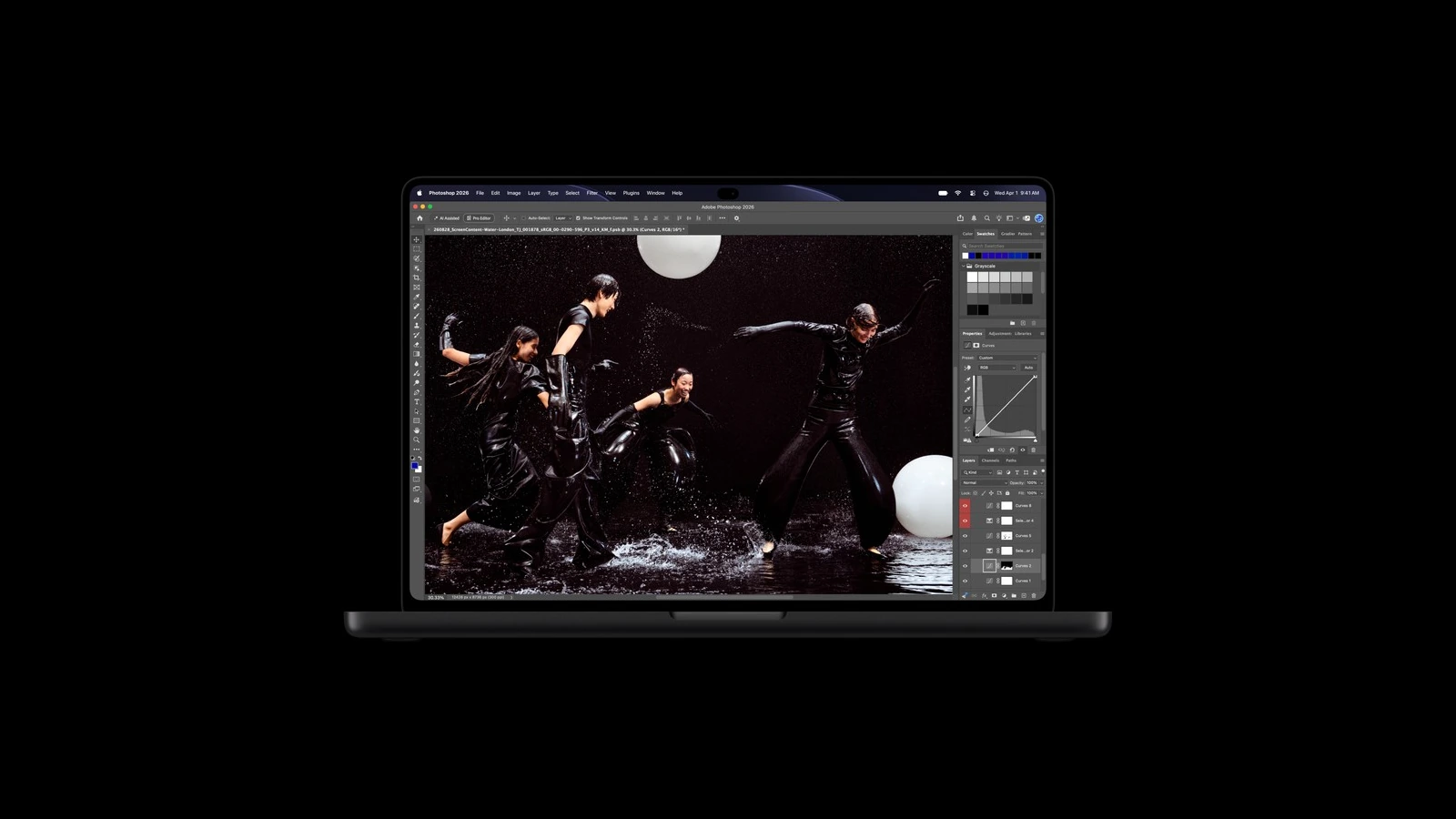
The new MacBook Pro PROLED XDR touchscreen promises high contrast, P3 and Adobe RGB color support, and the brightness needed for demanding creative workflows. These qualities matter in culling, retouching and color grading. But color accuracy does not guarantee that every user can look at the display comfortably for an eight-hour session.
Creators who know they are sensitive to PWM displays should try the exact model with realistic tasks, including reading, photo editing and video work, before committing to a purchase. Changing brightness may affect comfort but is not a guaranteed fix. For persistent symptoms, stopping use and seeking professional medical advice is preferable to forcing yourself to adapt.
What we think
For photographers retouching images or editors spending long days at a timeline, display comfort matters just as much as color accuracy. An OLED screen can deliver gorgeous blacks and impressive HDR, but those specifications do not help if your eyes feel strained after half an hour.
We would like Apple to be more transparent about PWM behavior at different brightness levels and ideally provide options that improve comfort for sensitive users. A professional display should not be judged solely by brightness and color gamut.
If you are buying a laptop for full-time photo or video work, do not judge it only by the HDR demos in a store. Open the software you actually use, read small text and work at your normal brightness setting. This is the screen you will be staring at all day.
Frequently asked questions
Does the new MacBook Pro give everyone headaches?
No. Some owners report discomfort, while others describe no symptoms. There are no reliable figures for the proportion affected.
Is 240 Hz the OLED refresh rate?
No. It refers to measured brightness-related flicker. The ProMotion image refresh rate reaches up to 120 Hz.
Will increasing brightness solve the problem?
Flicker behavior varies with brightness, but no universal setting has been shown to remove discomfort for every sensitive user.