Summary
- Apple has introduced its first touchscreen MacBook Pro models with tandem OLED.
- The PROLED XDR display supports P3 and Adobe RGB and reaches up to 2,000 nits under specified conditions.
- The 14- and 16-inch models feature M5 Pro or M5 Max, Thunderbolt 5 and Dynamic Island.
- Preorders opened on October 28, with availability beginning November 6, 2026.
Apple has brought touch to MacBook Pro for the first time, alongside tandem OLED and a new PROLED XDR display aimed squarely at photographers and video creators.
The 14- and 16-inch models debuted on October 28, 2026, with M5 Pro or M5 Max. They feature a thinner design, Dynamic Island and a redesigned hinge for greater stability while touching the screen. The launch confirms the reports of OLED touchscreen MacBook Pros that circulated ahead of the announcement.
Touch on Mac: Screen and trackpad together
Touch does not replace the keyboard or Force Touch trackpad. Apple adds another way to interact with content: scrolling, pinch-to-zoom on photos, moving objects and managing windows with your fingers. The touch sensor is integrated directly into the display panel rather than applied as a separate layer on top.

Photographers can quickly magnify a frame while selecting images or presenting work. Filmmakers may find direct interaction useful when reviewing footage. More intricate tasks in Photoshop, Lightroom or editing applications, however, still depend on the tools and interface each app actually provides.
PROLED XDR: What tandem OLED brings to imaging
The new panel combines two self-emissive OLED layers. Apple says this helps deliver deep blacks, consistent brightness and fewer internal reflections. The announced contrast ratio is 10,000,000:1, with ProMotion refresh rates from 10 to 120Hz.
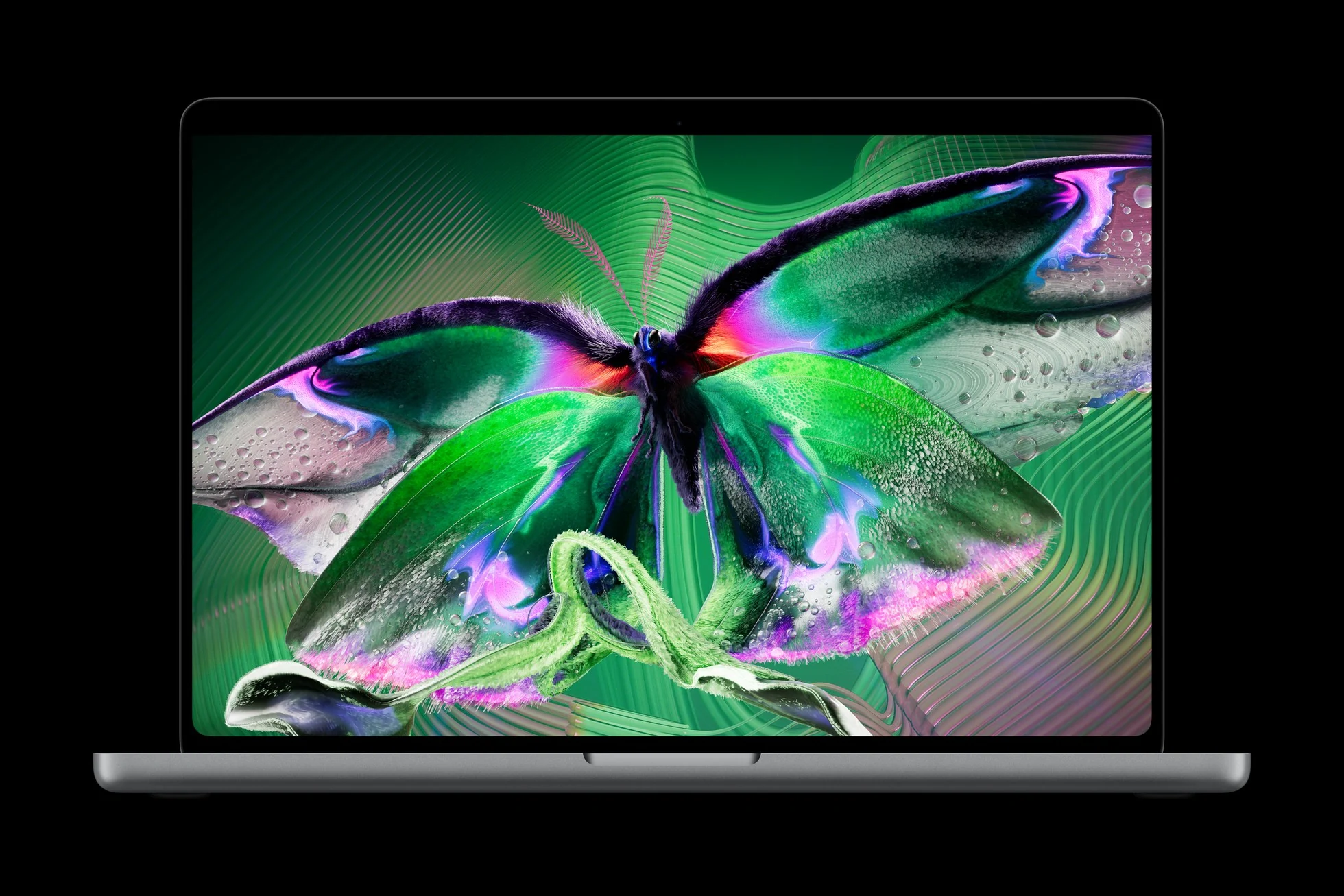
Peak brightness reaches 2,000 nits for HDR highlights, while the same maximum for SDR applies to outdoor use. Sustained full-screen brightness reaches 1,000 nits. The displays support P3 and Adobe RGB color spaces, reference modes for photography, HDR and video production, and optional nano-texture glass.
The standard antireflective coating also matters in a bright studio or during outdoor work. Accurate color work still requires choosing the appropriate reference mode, calibration where needed and checking deliverables on the right display.
Performance, ports and everyday workflow
M5 Pro and M5 Max offer Media Engines for H.264, HEVC, ProRes and ProRes RAW, plus AV1 decoding. Selected M5 Max configurations offer up to 128GB unified memory and 16TB SSD storage. The MacBook Pro includes three Thunderbolt 5 ports, HDMI, an SDXC card slot, MagSafe 3 and a 3.5mm headphone jack.
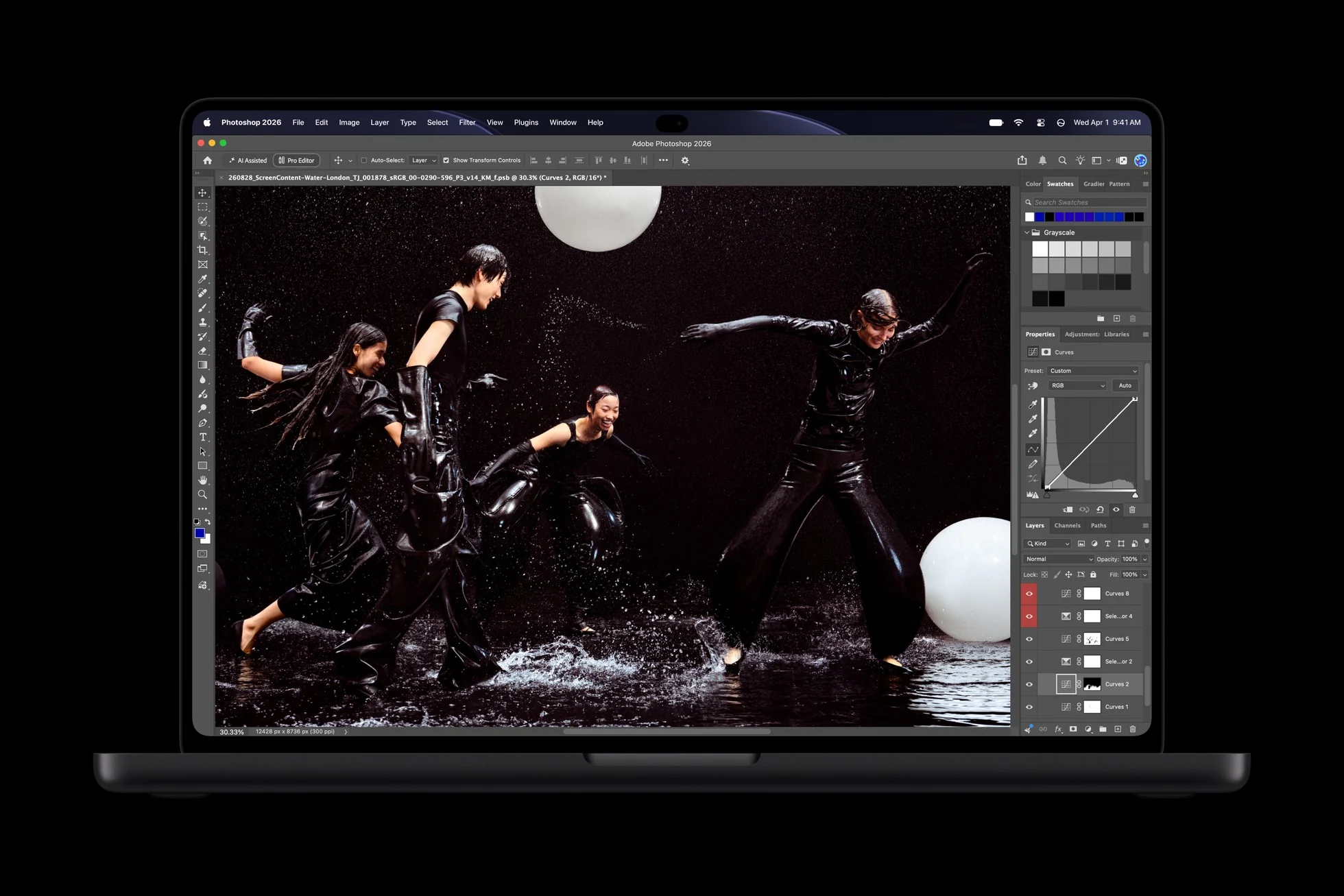
For transferring files from cards, connecting fast SSDs and working with external displays, physical ports matter as much as extra processing power. Apple quotes up to 24 hours of video streaming on the 16-inch M5 Pro configuration; battery life during exports, grading and large projects will vary.
The M5 Pro/Max OLED machines occupy a different place in the Mac lineup from other updates. Apple also announced the M6 iMac during the same period, designed for a desktop workflow.
More information here.
Price and availability
Preorders opened October 28, 2026, with availability starting November 6. In the US, the 14-inch M5 Pro model starts at $2,899 and the 16-inch version at $3,399. The M5 Max variants start at $4,499 and $4,799 respectively. An official price for the Greek market could not be verified.
What we think
Touch on Mac is a change many creators have wanted for years. When reviewing photographs, pointing to a detail or zooming in front of a client feels more natural when you can touch the part of the image that matters. During an edit, though, we are unlikely to abandon keyboard shortcuts or mouse precision for long sessions.
For us, the more consequential upgrade is OLED with both P3 and Adobe RGB support, reference modes and high brightness. Those features matter from photo culling through to HDR grading. Whether the built-in display can serve a demanding color-critical workflow also depends on panel consistency and real studio conditions.
The important buying question is not whether the new screen looks impressive. It is whether paying extra for the OLED model makes more sense than spending the money on memory, storage or an external reference monitor. The answer changes considerably depending on whether you mainly work on location or at a desk.
Frequently asked questions
Do all MacBook Pro models have touchscreens?
No. Touch is available on the new PROLED XDR models with M5 Pro or M5 Max, not automatically on every other MacBook Pro.
Can the new display show Adobe RGB?
Yes. Apple lists support for P3 and Adobe RGB, with dedicated reference modes. Accurate color work still requires appropriate display settings.
When are the new OLED MacBook Pros available?
Availability begins November 6, 2026, following the October 28 preorder launch.