Summary
- Motor City was shot on an ARRI ALEXA 35 with Master Anamorphic primes.
- John Matysiak used Astera tubes to light a neon sign that was added in post.
- Warm diner practicals were balanced with deliberately dark streets.
- Kodak 35mm tests informed the show LUT.
The look of “Motor City” was built on the contrast between a warm American diner and dark city streets shaped by neon, headlights and scattered practical light.
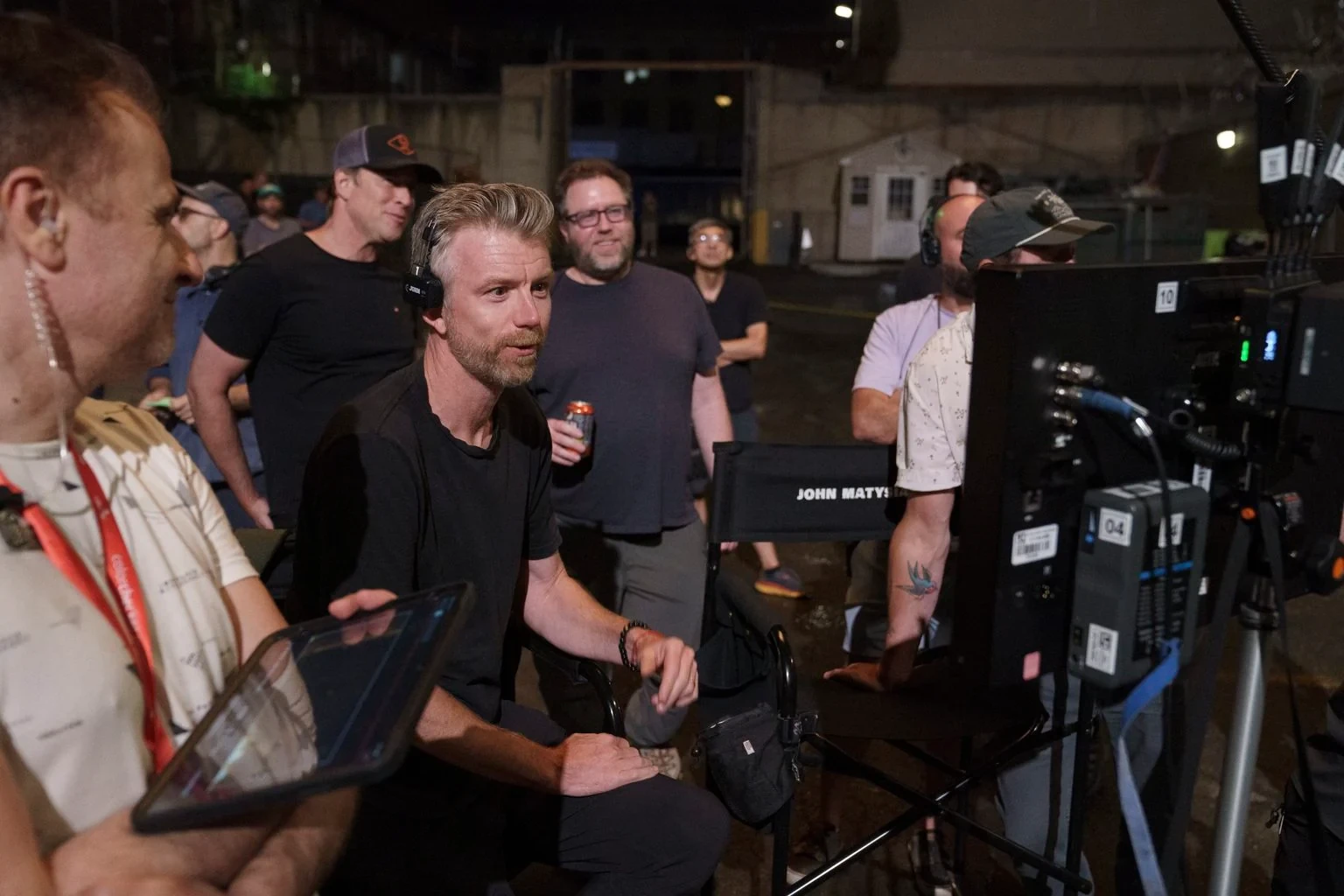
Cinematographer John Matysiak explains how he and director Potsy Ponciroli approached a 1970s Detroit revenge thriller starring Alan Ritchson, Shailene Woodley and Ben Foster.
ARRI ALEXA 35 and controlled anamorphic character
The film was shot on the ARRI ALEXA 35 with ARRI Master Anamorphic primes from 35mm to 135mm. ARRI Rental detuned the 40mm and 50mm lenses to give them some of the character of Large Format Alfas while remaining suited to Super 35.
With car headlights and strong practical sources appearing frequently, Matysiak favored modern lenses whose flare behavior could be controlled rather than vintage optics that might draw attention away from the story.
Turning a Blimpie into a 1970s diner
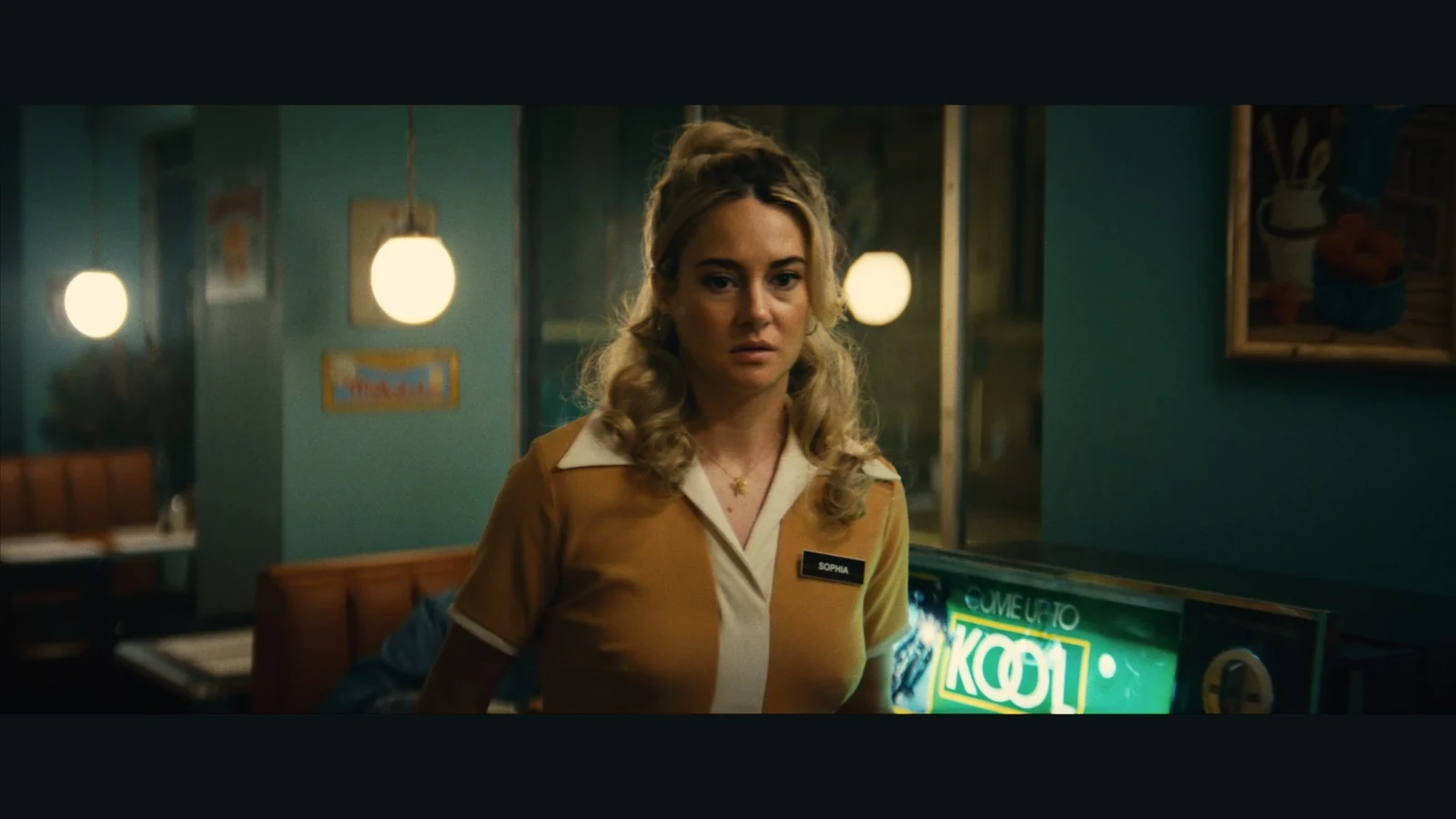
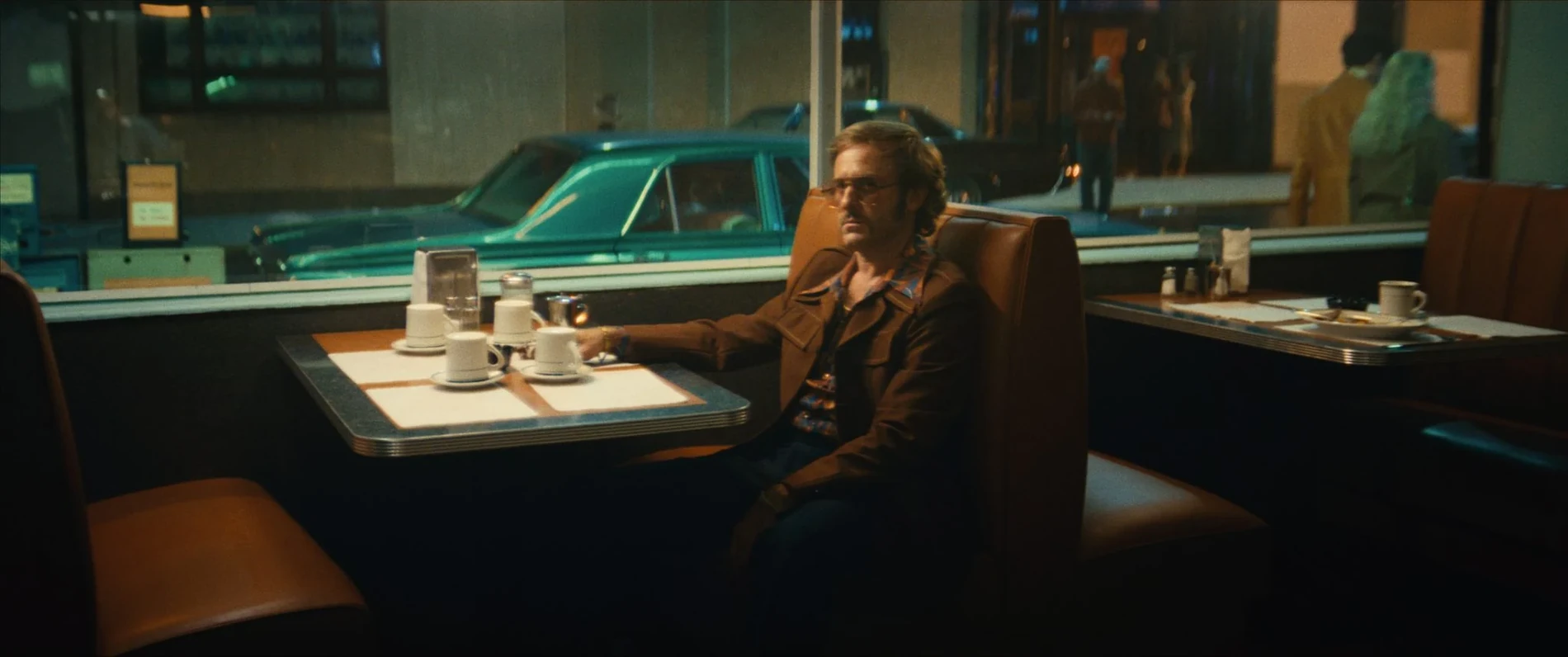
One of the film’s quietest moments sees Sophia (Shailene Woodley) meeting Reynolds (Ben Foster) without dialogue. Coffee, a cigarette and restrained looks carry the emotional weight.
The production filmed in New Jersey, transforming a contemporary Blimpie sandwich shop into a diner. Production designer Mayne Burke and art director Rick Dennis shaped the booths, fixtures and palette, while large windows allowed the interior and street to remain visible within the same frame.
Lighting a neon sign that did not exist
The large diner neon sign would be added in visual effects, but Matysiak wanted its illumination to exist on set: across the façade, pavement, parked cars and performers. That gave the eventual digital sign a physical relationship to its surroundings.
Working with gaffer Jason Velez, the team installed 16 Astera Titan Tubes along the roofline, eight above and eight below. For exterior shots they ran at roughly 30–40% output, providing real reflections for DNEG’s subsequent VFX work supervised by Bernie Kimbacher.
SkyPanel X, practical fixtures and deliberate darkness
ARRI SkyPanel X23 and X21 fixtures with HyPer Optics were raised on condors to create pools of backlight in the sodium-vapor tones of the city. Rather than evenly wash the entire street, the crew allowed sections to fall into darkness.
Inside, the team used 60W soft-white incandescent practicals, 1×2-foot and 1×4-foot Aputure Infinimats, and 2-foot and 4-foot Astera Lightsocks for close-ups. The performers were meant to feel embedded in the diner’s ambient light rather than isolated by a conspicuous key.
Using 35mm film tests to shape a digital image
The original goal was to shoot the entire film on 35mm, but action and VFX costs made digital capture the practical choice. Tests included Kodak 5219 rated at EI 320 and pushed half a stop, plus Kodak 5207 pushed one stop, all exposed at T4.
Colorist Walter Volpatto at Picture Shop helped develop the show LUT from those tests. The workflow pursued film characteristics including gate weave, halation, texture and highlight roll-off without requiring a film-out.
The same ALEXA 35 can produce radically different results: on “Primetime”, it was combined with MiniDV and other cameras to build an entirely different visual language.
What we think
What stands out is how a sign that did not yet exist in the physical location was already casting light in the photographed world. Adding a striking neon sign in post is not enough; if it is meant to illuminate a street, its light should affect nearby surfaces and faces.
The same thinking applies on smaller productions. Before placing a colored LED, it helps to decide where the source belongs, where its spill would land and what it will do to skin tones. A simple practical can feel more convincing than a complicated setup without a clear lighting logic.
I also like how Matysiak allowed the street to disappear into darkness. A night scene does not have to reveal every detail. It needs to establish what matters, and use light to bring our attention there.