Summary
- Voyager 1 reaches a distance of one light-day from Earth on 18 November 2026.
- The two spacecraft used vidicon cameras to capture extraordinary images of the outer planets.
- Filters and image processing turned separate exposures into historic colour composites.
- Pale Blue Dot remains among the most influential photographs of the mission.
On 18 November 2026, Voyager 1 will reach a distance of one light-day from Earth. Behind that milestone lies one of photography’s most remarkable stories: two spacecraft launched in 1977 that forever changed how we see the distant planets.
NASA puts the distance at more than 25.9 billion kilometres. A signal takes about 24 hours to reach Voyager 1 and another 24 hours for a reply to return. A light-day measures distance, not the spacecraft’s age.
Two missions and an extraordinary photographic journey
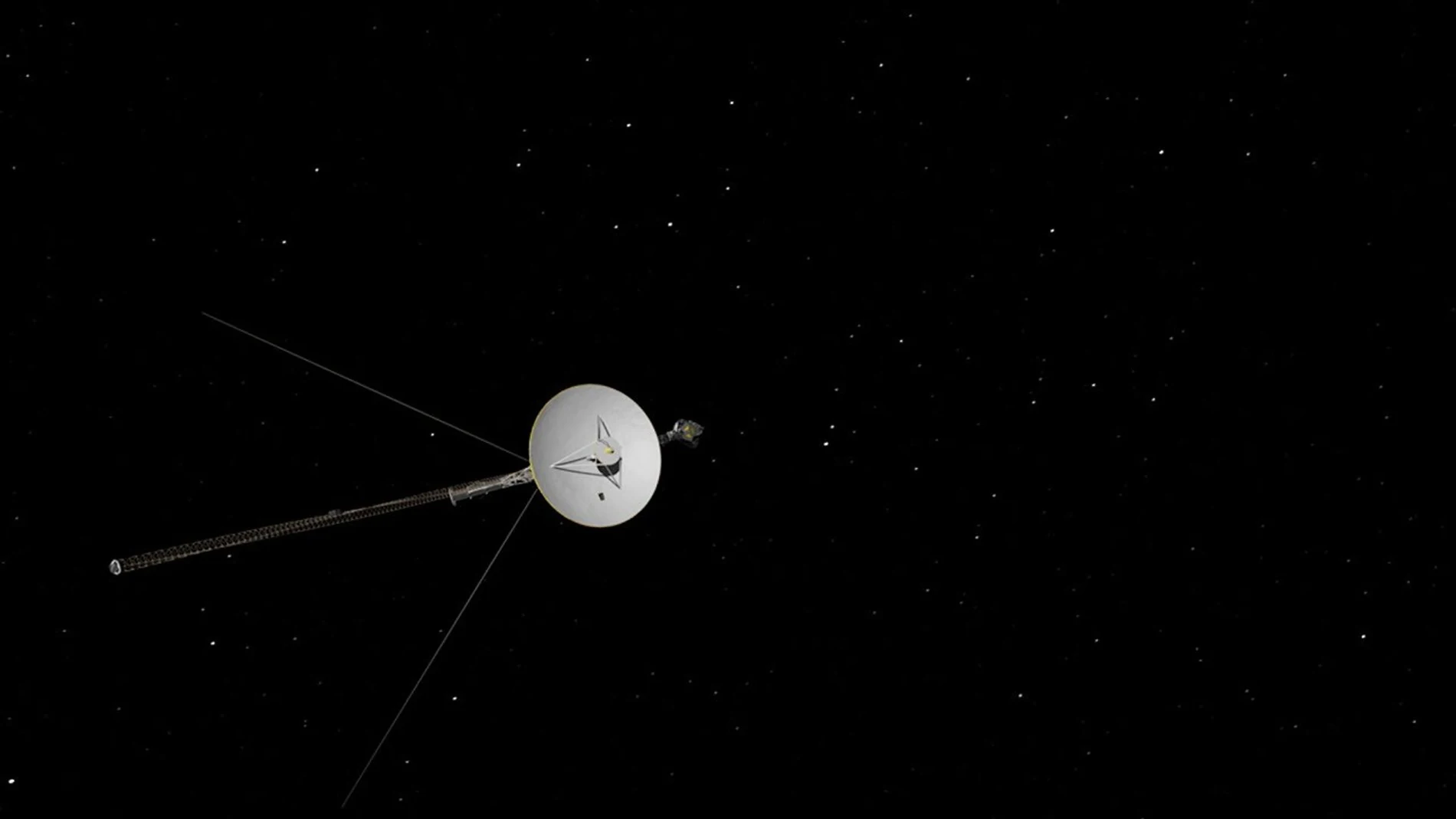
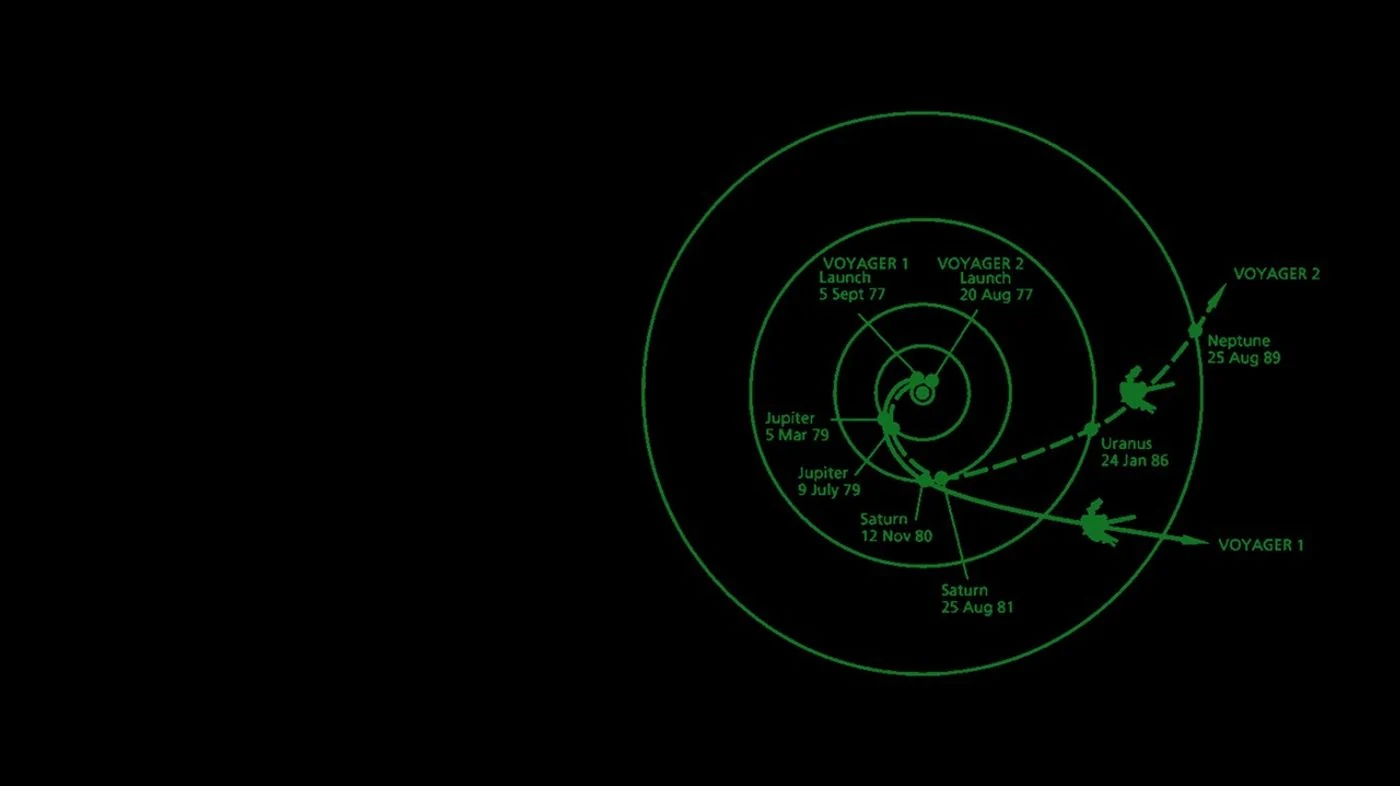
Voyager 2 launched on 20 August 1977 and Voyager 1 on 5 September. Both used gravity assists from the outer planets. Voyager 1 flew past Jupiter and Saturn, while Voyager 2 continued to Uranus and Neptune, which remain without a subsequent spacecraft flyby.
The most distant human-made object still gathers scientific measurements in interstellar space. Its cameras, however, no longer operate. That distinction matters: this milestone marks distance and mission longevity, not a new photograph.
Voyager cameras: vidicons rather than digital sensors
The Imaging Science Subsystem (ISS) used two television-style vidicon tube cameras, derived from designs flown on earlier Mariner missions. There were no modern CMOS sensors, contemporary RAW files or live preview screens. Images were produced by scanning the tube’s light-sensitive target and transmitted to Earth as data.
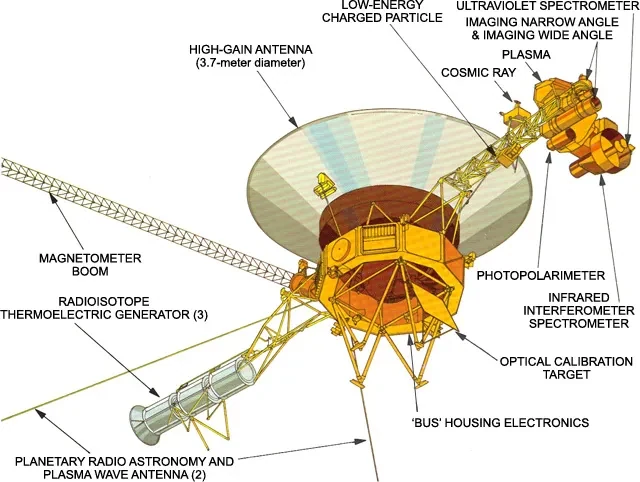
The wide-angle camera used a 200mm f/3 lens, while the narrow-angle camera carried a 1500mm f/8.5 telephoto. Here, “wide” and “narrow” describe the relative fields of view of the two optical systems: 200mm would not be considered wide-angle by today’s full-frame photographic standards.
Each camera had a rotating wheel holding eight filters. Instead of recording three RGB channels at once in each colour pixel, scientists could acquire successive frames through different spectral bands and combine them later. The filters supported both more natural colour rendering and scientifically useful false-colour composites.
Jupiter, Saturn and the worlds these images revealed
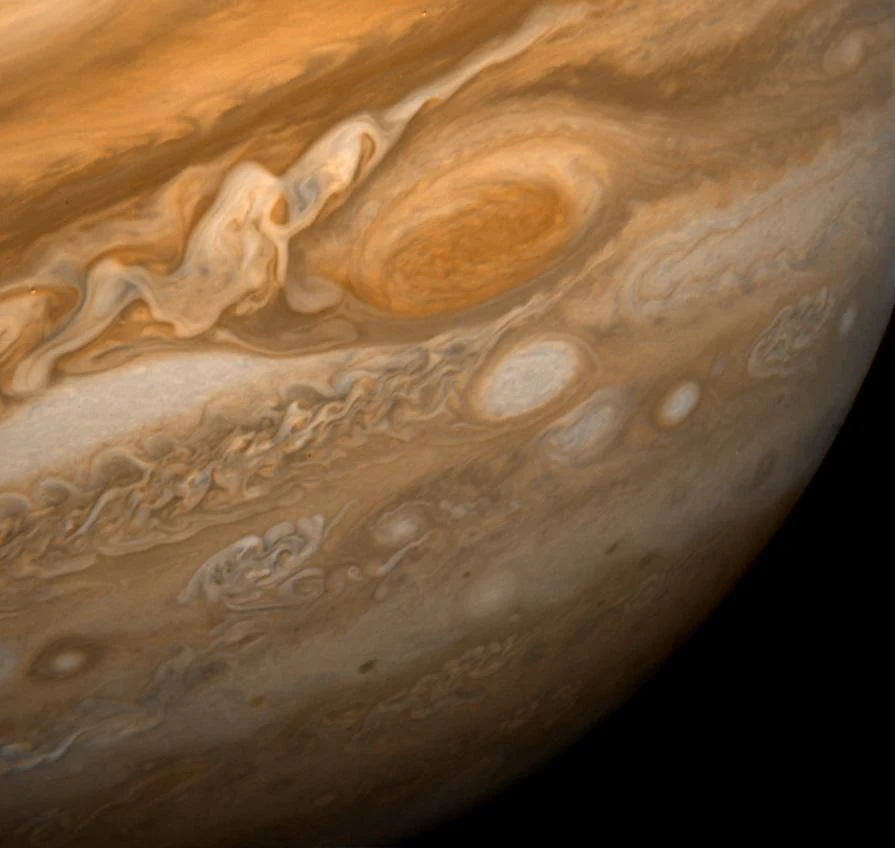
In 1979, the Voyagers revealed Jupiter’s clouds and atmospheric vortices in unprecedented detail, along with its faint rings and the active volcanoes of Io. The Great Red Spot was no longer merely a blurred mark in a telescope but a dynamic atmospheric structure with clearly visible detail.
At Saturn, the images revealed intricate ring structures and new detail on the moons. Voyager 2 went on to image Uranus in 1986 and Neptune in 1989. Those pictures remain invaluable because no newer spacecraft has provided comparable close-up photographic coverage.
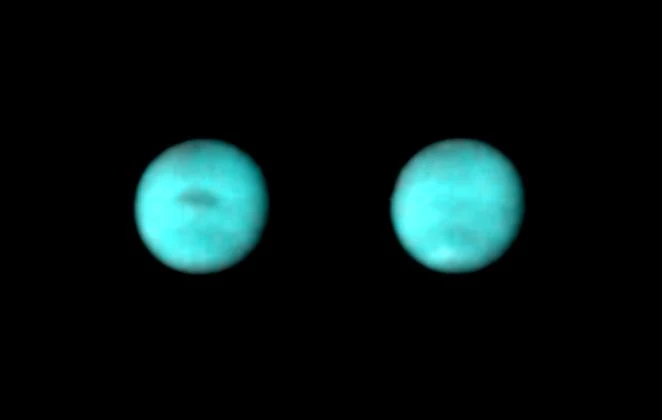
The imaging process is as interesting as the subjects. Mapping different spectral filters to visible colour channels can reveal clouds, haze and chemical differences that human vision alone would miss. A space-image caption should therefore make clear whether the image is a natural-colour or false-colour composite.
Pale Blue Dot: Earth at 0.12 pixel
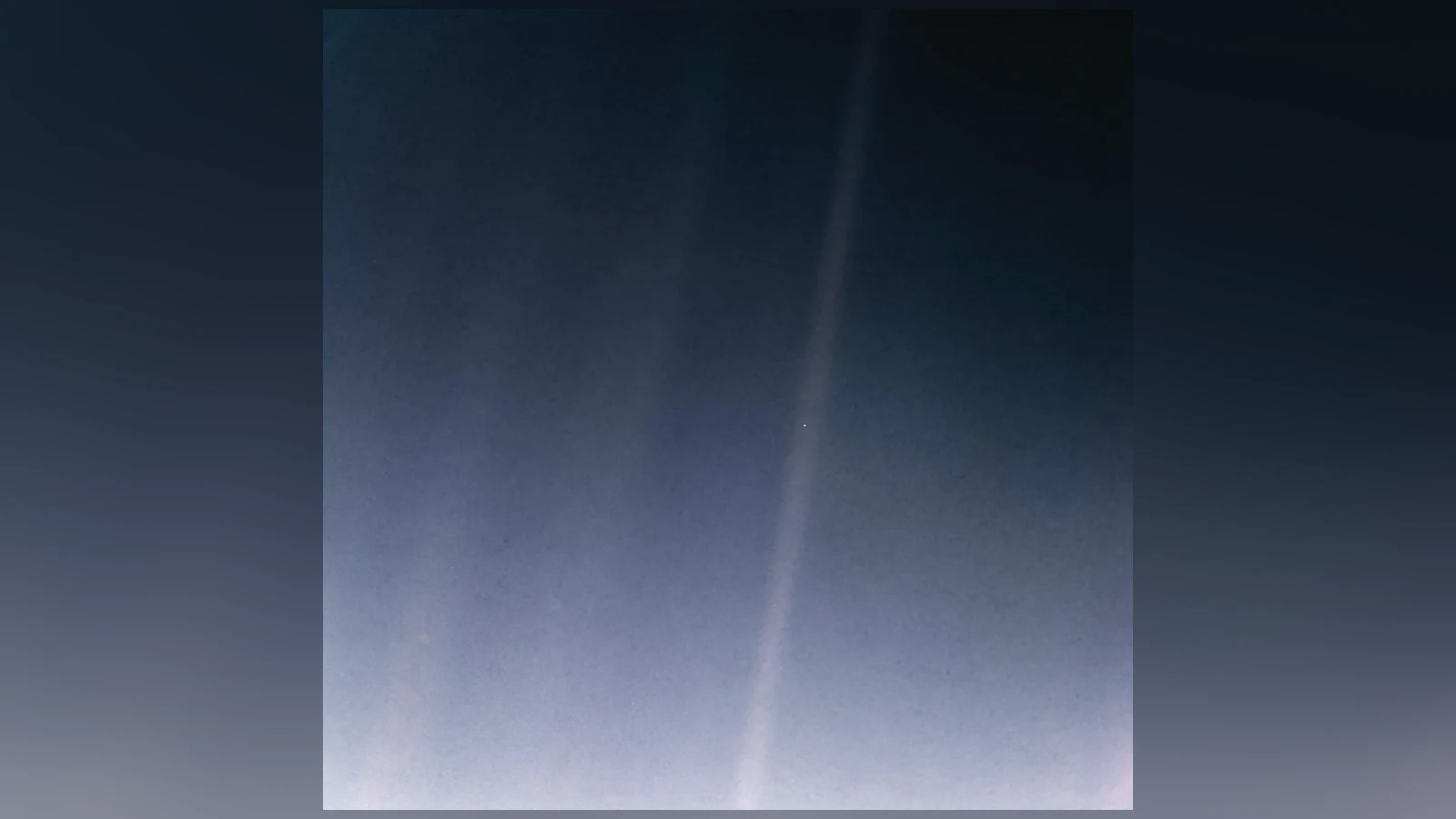
On 14 February 1990, following an idea championed by Carl Sagan, Voyager 1 turned its cameras back toward the inner Solar System one final time. Earth appeared as a nearly invisible blue speck, subtending just 0.12 pixel. The image belonged to a sequence of 60 frames intended to create a “family portrait” of the planets.
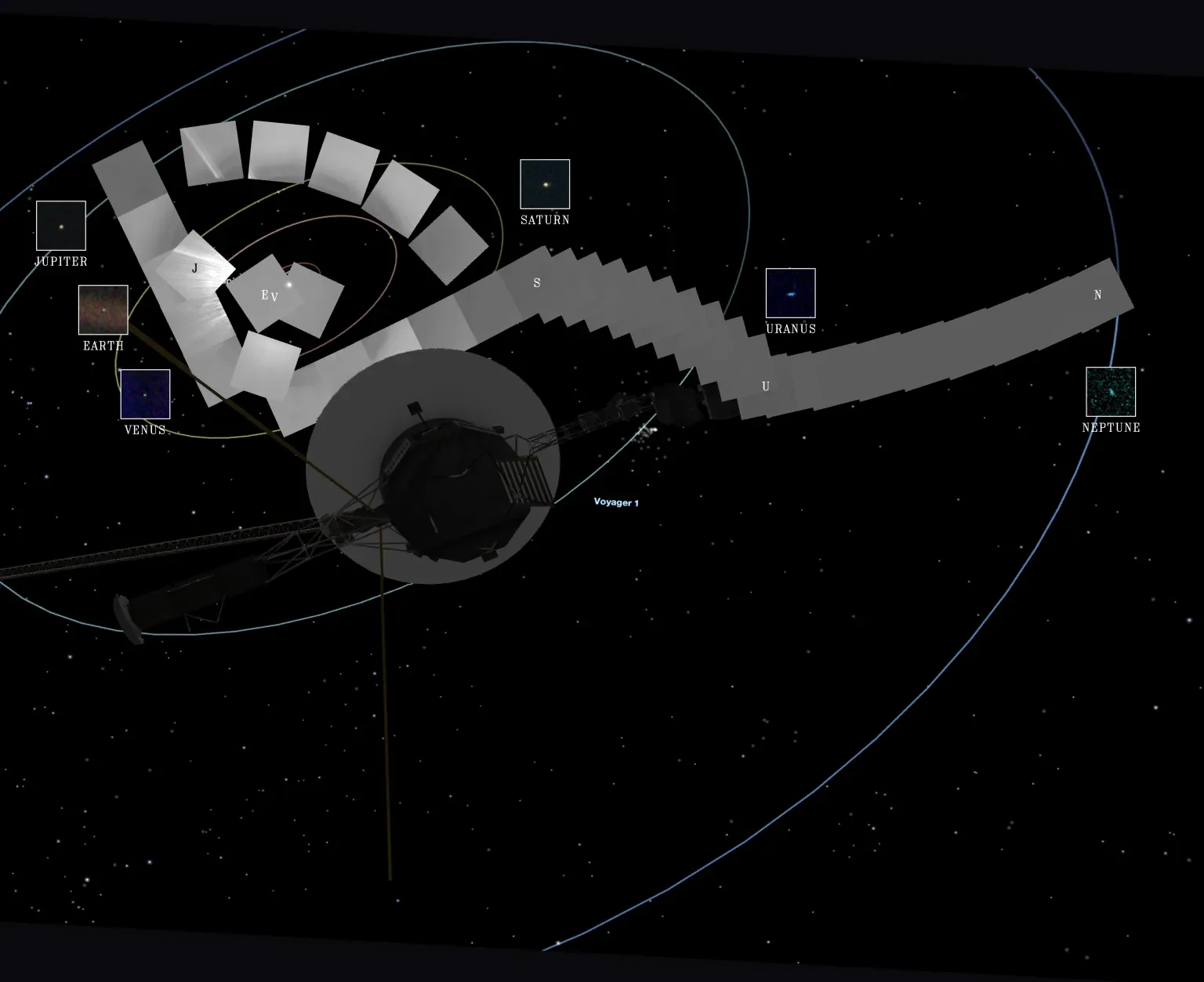
The familiar bright beam is not a physical spotlight illuminating Earth in space. It is stray sunlight scattered within the camera optics. The tiny planet happened, by chance, to lie along that streak.
The colour composite used images taken through green, blue and violet filters on the narrow-angle camera. Kevin M. Gill’s 2020 reprocessing applied modern tools to the original data with input from members of the original imaging team. Its colours result from deliberate channel mapping and balancing, not a JPEG captured directly in-camera.
That sequence marked the end of the imaging mission. NASA switched off Voyager 2’s cameras in 1989 and Voyager 1’s on 14 February 1990 to conserve power and continue operating other instruments. As the Voyager 2 power-management story illustrates, keeping these probes alive involves continual trade-offs.
One light-day away: NASA’s events
On 17 November, NASA invites the public to join “Shine Bright for Voyager’s Light-Day” by flashing “VGR” in Morse code after sunset. Participants can photograph or film their light signals and share them while tagging @NASA. It is a symbolic salute, not an operational communications link to Voyager.
On 19 November at 17:00 UTC (19:00 in Greece), JPL will host a discussion with mission leaders about current science, engineering challenges and the spacecraft’s continued operation. NASA will also preview its planned 2027 Voyager documentary on NASA+, timed to the mission’s 50th anniversary.
It is also an opportunity to revisit the historic Voyager photographs of the outer planets: images that remain scientific resources even though the hardware that captured them is no longer operating.
What we think
For photographers, the remarkable thing about Voyager is not merely how far its cameras travelled. It is how much they achieved within severe constraints: no instant preview, immense communications delays and every frame serving a scientific purpose. Choosing the right filter, framing and moment was part of mission planning itself.
Pale Blue Dot may be the strongest example of why a photograph’s value is not determined by its resolution. Earth occupies only a fraction of one pixel, yet the frame changed our sense of our place in the cosmos. It did so with imperfect data, optical flare and painstaking image processing.
Almost half a century after launch, these pictures deserve another look not only as exploration milestones but as feats of photographic planning. The technology has changed, but the underlying question is familiar: what image should we make with the tools and limitations available to us?
Frequently asked questions
Can the Voyagers take new photographs?
Not in their current operating configuration. The cameras were switched off in 1989–1990, while NASA continues to use other instruments for scientific measurements.
Were Voyager photographs really in colour?
Many colour pictures are composites assembled from successive monochrome frames acquired through different filters. Their final colour depends on how those spectral channels are mapped.
What does “one light-day” mean?
It is the distance light travels in 24 hours, approximately 25.9 billion kilometres. It does not describe Voyager’s travel duration.