Summary
- The Roman Space Telescope has entered science commissioning.
- NASA confirms successful pointing, guidance, and exposure tests.
- The 300MP Wide Field Instrument is undergoing image-quality checks and calibration.
- Routine science observations will follow the final tests.
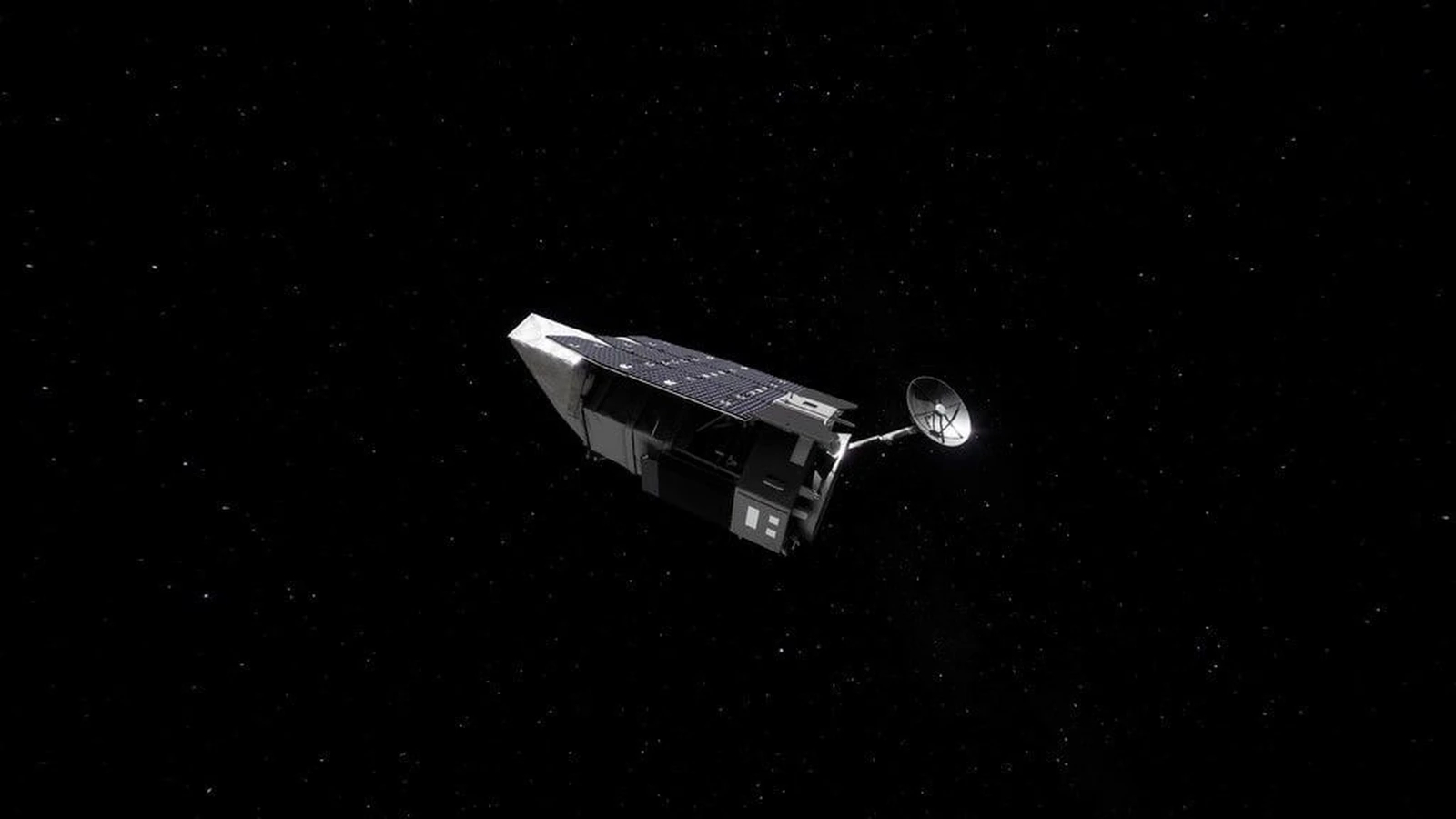
NASA has moved the Nancy Grace Roman Space Telescope into its final round of checks before scientific observations, after its 300-megapixel infrared camera and the observatory passed their core operational tests.
In its October 22, 2026 update, NASA confirmed that Roman can slew between targets, hold a stable pointing position, take exposures, and transmit data properly. The work is shifting from proving that the systems function to measuring just how consistently and precisely they perform.
From first starlight to image-quality measurements
In September, the Wide Field Instrument’s first detection of starlight demonstrated that the camera’s 18 infrared detectors were operating in space before focusing was complete. The team is now systematically assessing image stability and the instrument’s response to light so future exposures can support reliable scientific measurements.
If two images of the same astronomical target differ in brightness or sharpness because of the observatory rather than the object, scientists could mistake that difference for a real change. The new tests therefore cover photometric response calibration, optical image quality, and further fine-tuning of the imaging system.
Guidance tested in difficult star fields
One concern was whether the fine-guidance system could keep a reliable lock in regions where stars are extremely crowded or hidden by thick dust. NASA says test observations of such fields have performed very well, without the difficulties the team anticipated.
Roman uses reference stars to hold its pointing steady on a selected region of the sky. Even slight pointing jitter can affect image sharpness and the extremely faint variations in light that researchers intend to measure.
Why Roman’s observing speed matters
The Wide Field Instrument pairs approximately 300 megapixels with an exceptionally wide field of view. NASA says an ordinary exposure can reveal objects 100 million times fainter than the unaided human eye can detect. During tests of familiar regions of the sky, mission scientists are already noting how much detail the telescope captures in short observing periods.
Covering huge regions without stitching together countless narrow frames will support surveys of galaxies, dark energy, dark matter, and exoplanets. Roman’s previously powered-on Coronagraph Instrument serves a different purpose: testing high-contrast techniques for directly imaging exoplanets.
What happens before science operations
During science commissioning, the team will conduct carefully planned observations to characterize the observatory and calibrate how its instruments respond to light. Routine science operations will follow these checks. This announcement is not the release of Roman’s first finished science images.
What we think
For photographers, the most compelling aspect of this stage is not another big megapixel number. NASA is treating imaging as we would on an exceptionally demanding scientific shoot: stable framing, precise focus, and a measurable response to light that remains consistent from one exposure to the next.
The successful tests in crowded star fields are especially meaningful. A camera may have tremendous resolution, but pixels alone cannot rescue an exposure if its guidance system cannot hold the target steadily. Roman appears to be clearing that practical hurdle.
And the detail recorded in short exposures of extremely faint targets shows why this observatory could change the scale of sky mapping. What matters next is not simply striking images, but observations that scientists can compare confidently over time.