

Summary
- Six ARRI cameras were used on The Beloved.
- The film combines digital, 16 mm, 35 mm and 65 mm, in color and black-and-white.
- Álex de Pablo did not use LUTs to homogenize the different formats.
- The opening sequence was shot with five hidden cameras and no crew in the room.
On Rodrigo Sorogoyen’s The Beloved (El ser querido), cinematographer Álex de Pablo did not try to make six different cameras look the same. He did the opposite, allowing 16 mm, 35 mm, 65 mm and digital capture to retain their own character.
The film was shot with the ALEXA 35, ALEXA Mini LF, ALEXA Mini, ARRIFLEX 416 Plus, ARRICAM LT and ARRIFLEX 765. Different film gauges, digital acquisition, color and black-and-white imagery all coexist within the same visual world. Their use does not follow a rigid code, but instead reflects an intuitive approach to the unstable and unreliable nature of memory.
Each format keeps its own identity
De Pablo did not want footage from the different cameras to be smoothed into one uniform look. Film grain, color rendition and the different way each medium interprets reality were part of the photographic concept itself.
That is also why he did not use LUTs to force the material toward a common visual baseline. Rather than hide the differences between digital, 16 mm, 35 mm and 65 mm, he allowed them to remain visible as part of the image and the storytelling.
Ultra Primes and Ultra 16 without fixed rules
The same freedom applied to the lenses. The package included ARRI/Zeiss Ultra Primes and ARRI/Zeiss Ultra 16s, without assigning specific focal lengths to individual characters or narrative situations in advance.
For close-ups, lens choices were driven by the actor’s face, its geometry and the way it responded to light. The camera was meant to serve the relationship between father and daughter without imposing an obvious visual device on it.
A 20-minute opening sequence with five hidden cameras
One of the production’s most unusual choices appears at the very beginning of the film. The opening sequence runs for almost 20 minutes and was shot on the first day with Javier Bardem and Victoria Luengo, with no crew present inside the room.
Five cameras were concealed behind two-way mirrors and inside custom structures integrated into the set. This allowed the actors to move through the space without cameras and technicians visibly surrounding them.
The lighting was also designed so that no intervention would be needed during the scene. The main light came from outside through the windows using three ARRIMAX units, while the practical fixtures in the room had been preset.
Six cameras for a family meal shot over one week
An outdoor family meal, also running for roughly 20 minutes in the finished film, proved even more demanding. It was shot over an entire week with six cameras and all of the different capture formats being used in parallel.
De Pablo operated one of the cameras handheld himself. The challenge was to combine different media with constantly changing natural light while maintaining both visual continuity and the emotional intensity of the performances from one day to the next.
Fuerteventura as both real location and cinematic landscape
Most of the production took place in Fuerteventura, around Pájara, La Oliva and Punta de Jandía, with additional filming in Madrid. The island serves two purposes in the film: it is the real setting of the story and also the landscape of the film being made by the central character, set against the Spanish Sahara of the 1930s.
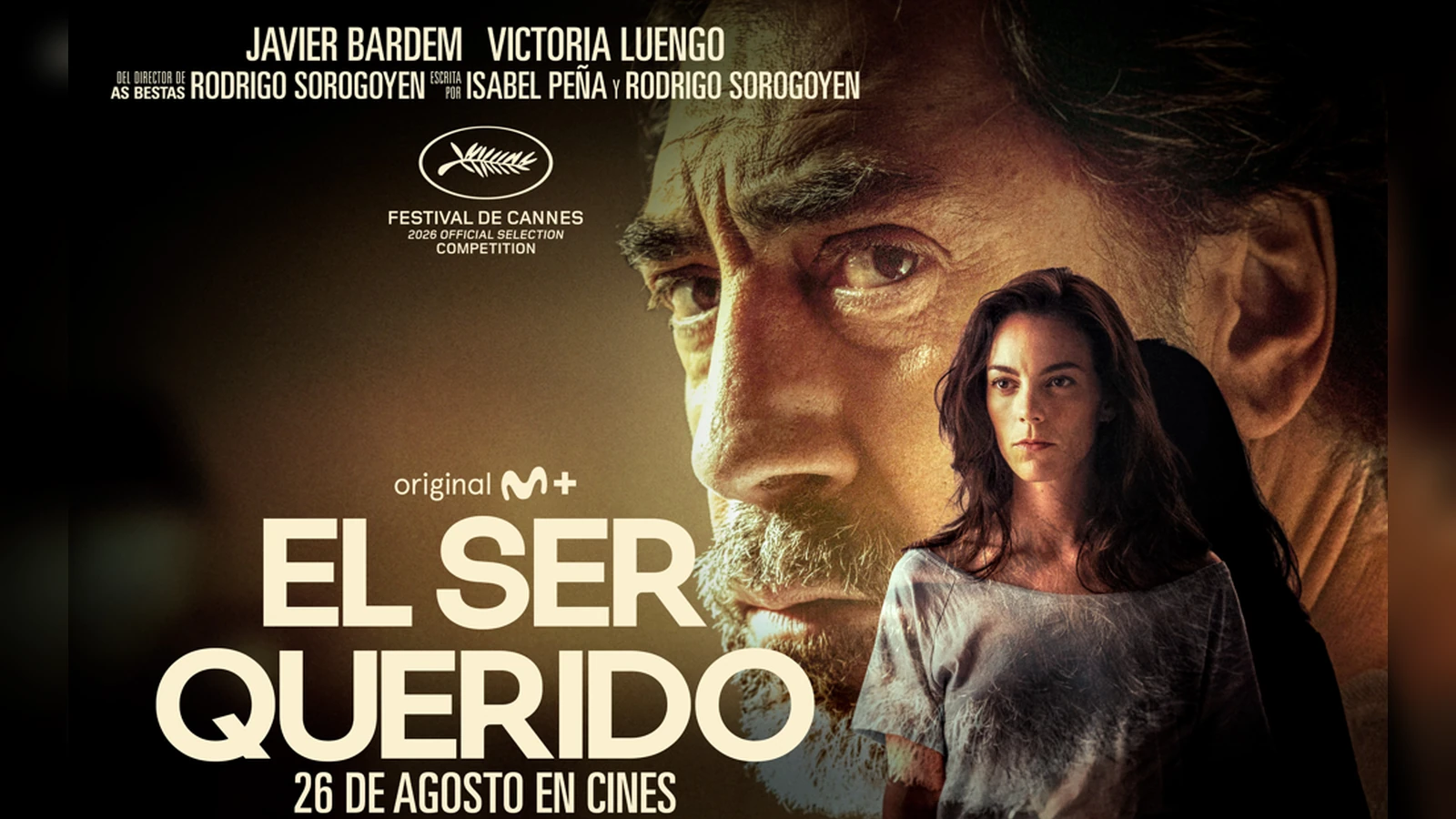
The Beloved had its world premiere in the Official Competition at the Cannes Film Festival. It stars Javier Bardem and Victoria Luengo and was written by Rodrigo Sorogoyen and Isabel Peña.
What we think
The key idea is not simply that many cameras were used, but that their differences became a creative tool. Instead of using post-production to erase the variations between formats, those variations remain part of the film’s photographic language.
Frequently asked questions
Which cameras were used on The Beloved?
ALEXA 35, ALEXA Mini LF, ALEXA Mini, ARRIFLEX 416 Plus, ARRICAM LT and ARRIFLEX 765.
Which formats were combined?
Digital acquisition together with 16 mm, 35 mm and 65 mm film, in both color and black-and-white.
Were LUTs used to match the cameras?
No. The goal was to preserve the differences in texture, grain and color rendition between formats.
Where was the film shot?
Primarily in Fuerteventura, with additional filming in Madrid.