

Summary
- ESA astronaut Sophie Adenot shared a new timelapse from the ISS
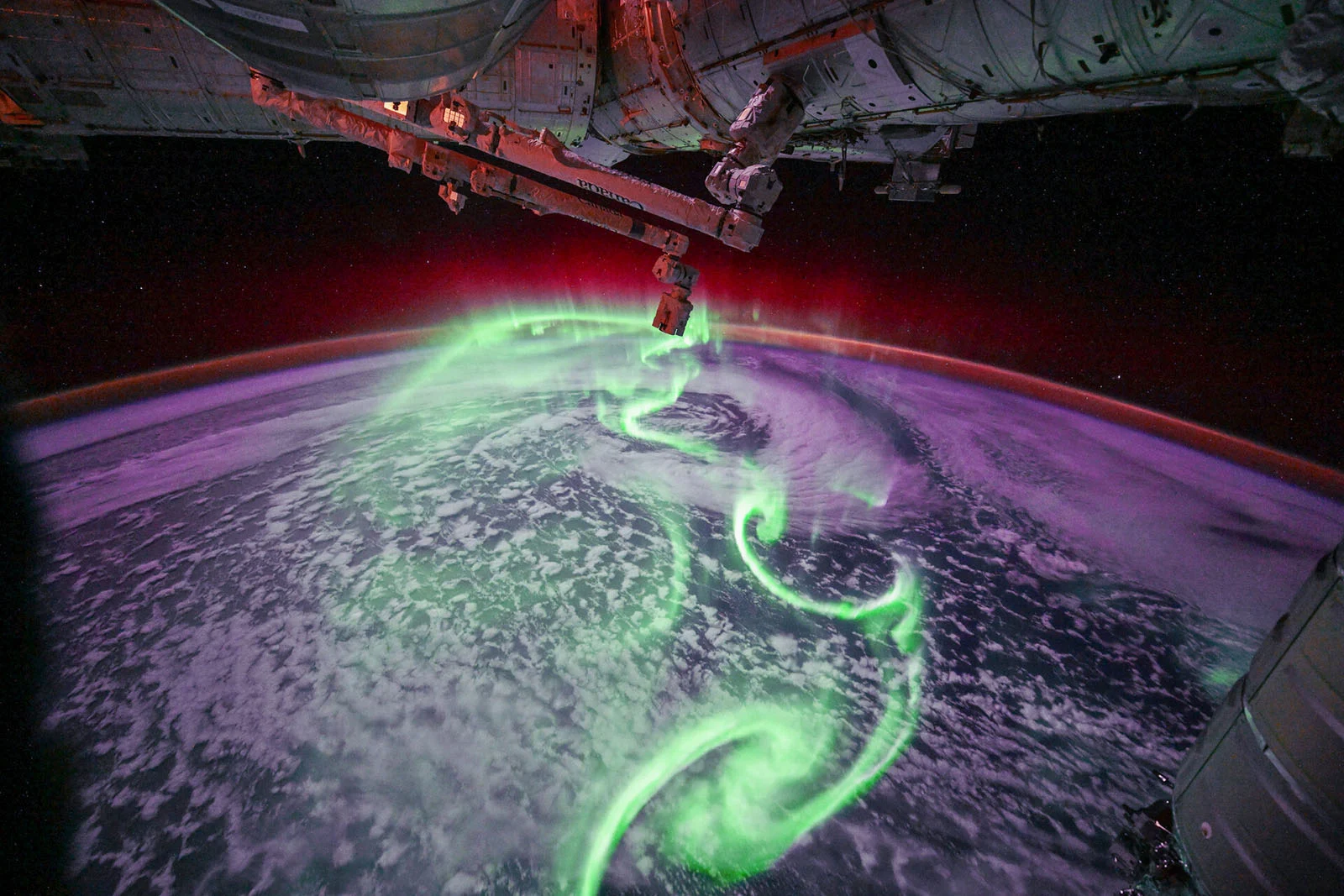
- The video shows a bright green aurora above Earth’s curved horizon
- Adenot is currently on her first space mission
- The aurora was intense enough to illuminate parts of the station
- The footage highlights the unique photographic perspective offered by orbit
ESA astronaut Sophie Adenot captured a striking aurora from the International Space Station.
Sophie Adenot, who is currently aboard the ISS on her first space mission, shared a new timelapse video showing an intense green aurora stretching above Earth’s curved horizon.
The footage is especially interesting for photography and astrophotography, as it shows the phenomenon from a perspective that is impossible to experience from the ground, with the aurora illuminating not only the atmosphere but also parts of the space station itself.
The aurora from Earth orbit
Adenot described the phenomenon as the most spectacular aurora she has seen so far during the εpsilon mission. In the timelapse, a bright green band appears to move and reshape itself above Earth’s horizon, creating a scene that looks almost three-dimensional from space.
A few days earlier, the astronaut had also shared a series of eight images of the same phenomenon, noting that the aurora was so intense that it lit up the station in shades of green.
View this post on Instagram
Sophie Adenot’s first mission
Sophie Adenot began her first spaceflight in February 2026 and, at the time the material was published, had spent more than 130 days in space.
The French astronaut previously served in the French Air and Space Force, where she reached the rank of Colonel. In 2022, she was selected for the European Astronaut Corps of the European Space Agency.
Why images from the ISS stand out
Auroras are impressive from Earth, but from the ISS they are revealed in a different way. The camera sees the phenomenon from above, together with the curve of the planet, atmospheric glow, and parts of the station that often appear in the frame.
For photographers, such images are valuable because they combine astrophotography, scientific observation, and visual storytelling. The timelapse highlights the movement of the light, something still images cannot convey with the same intensity.
Not her first impressive capture from the mission
Adenot has already used timelapse techniques to capture Earth at night from the ISS. In previous ESA material, meteors, thunderstorms, auroras, and other atmospheric light phenomena appeared in the same sequence.
In recent years, several astronauts and cosmonauts have shared similar views from the International Space Station, confirming that Earth orbit remains one of the most impressive vantage points for photographing our planet.
What we think
Sophie Adenot’s images once again show the power of photography from space. This is not just an impressive natural phenomenon, but also a visual record that helps the public see Earth in a different way.
Frequently asked questions
Who captured the new aurora video?
The video was captured by Sophie Adenot, an ESA astronaut currently aboard the International Space Station.
Where was it captured from?
The footage was captured from the International Space Station, in orbit around Earth.
What does the timelapse show?
The timelapse shows an intense green aurora moving above Earth’s curved horizon.
Why does it look so different from space?
From the ISS, the aurora is seen from above, together with Earth’s curve and atmosphere, offering a perspective that is not available from the ground.
Is this Sophie Adenot’s first space mission?
Yes, the mission that began in February 2026 is her first spaceflight.