

Summary
- Insta360 is working with photographers and shark conservation organizations
- 360-degree cameras capture perspectives conventional systems cannot easily achieve
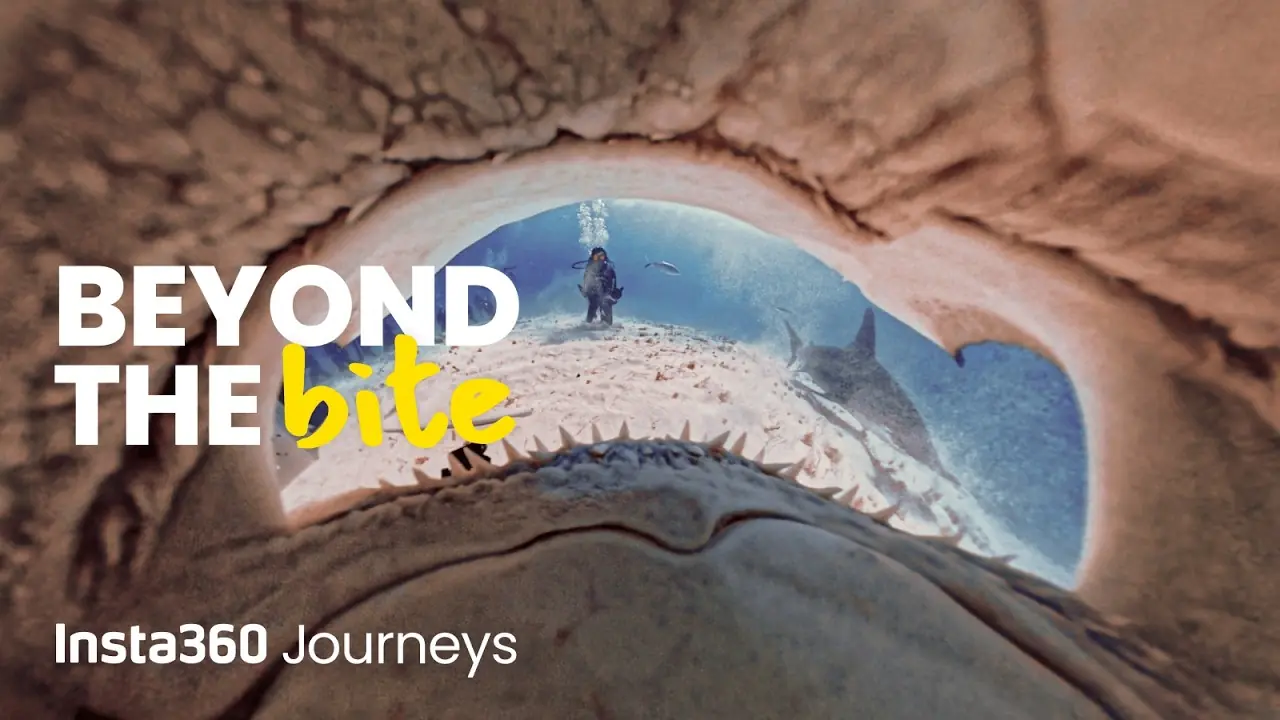
- Ari Rabin-Havt created images from inside sharks’ mouths
- The cameras were placed on the seabed and approached freely by the animals
- Divers can contribute archived footage to the Global Shark and Ray Census
Underwater cameras are taking on a new role as photographers and divers use their footage to educate the public and collect scientific data on sharks and rays.
Insta360 has partnered with photographers, wildlife filmmakers, and marine conservation organizations to present images that move sharks away from the stereotype of the bloodthirsty predator. The initiative is connected to Shark Awareness Day, observed annually on July 14.
The project matters because footage stored on divers’ cameras and memory cards may provide valuable information about the presence, distribution, and behavior of marine species. Photography therefore becomes not only a storytelling medium but also a tool for conservation and scientific observation.
Photography Against Fear
One of the campaign’s contributors is shark photographer Ari Rabin-Havt, who spent many years working in politics before turning his attention to underwater photography.
His first defining encounter with sharks took place around 18 years ago in Hawaii. Although he expected an adrenaline-filled experience, he found that being among the animals was calm and almost meditative.
According to Rabin-Havt, protecting an animal becomes far more difficult when the public sees it only through fear. For decades, popular portrayals of sharks have presented them as unpredictable threats, leaving little room for admiration, curiosity, or understanding.
Photography can change that perception without simply trying to argue against fear. An image of a great hammerhead moving peacefully over white sand, or a great white shark surrounded by rays of sunlight, can replace the picture already fixed in the viewer’s mind.
The Insta360 X5 Inside a Shark’s Mouth
Rabin-Havt uses a Canon EOS R5 Mark II inside a Nauticam underwater housing as his primary photographic system. For certain unusual shots, however, he turned to the much smaller Insta360 X5.
The camera can record in every direction simultaneously, while its compact size allows it to be placed in locations that would be difficult to reach with a conventional photographic system.
In one of the most striking cases, the camera recorded footage from inside a shark’s mouth. The process did not involve forcing the camera on the animal. The devices were placed on the seabed, giving the sharks the choice to approach and pick them up on their own.
The method required extensive observation of the animals’ behavior, reliable equipment, and a careful approach that would not endanger either the divers or the sharks. Similar images were later recorded from inside the mouths of a great white shark and a bull shark.
From the Memory Card to Scientific Research
The collaboration between Insta360 and the PADI AWARE Foundation is not limited to producing spectacular images. On August 2, 2026, the PADI AWARE Shark and Ray Discovery Challenge is expected to launch, inviting divers to review footage from previous dives and submit shark and ray sightings to the Global Shark and Ray Census.
Photos and videos can reveal where a species appeared, when it was observed, and under what conditions. In some cases, divers’ footage may even help scientists identify species in areas where their presence was not previously known.
The initiative highlights the importance of citizen science. A diver does not need to be a professional researcher to contribute useful data, provided that the footage includes basic information such as the location and date of the observation.
The Power of Visual Storytelling
Insta360 also worked with conservationist ZimyDaKid, Tiger Beach specialist Roy Mauritsen, and Emmy Award-winning wildlife cinematographer Andy Casagrande IV.
Through their different approaches, the creators present sharks as curious, complex animals that play an important role in maintaining healthy marine ecosystems.
Images alone cannot replace scientific research. They can, however, encourage the public to engage with it and strengthen support for meaningful conservation measures.
What We Think
The use of 360-degree cameras in conservation projects shows that photographic equipment can offer far more than spectacular content. When images are created with respect for wildlife and connected to credible scientific programs, they can transform public curiosity into knowledge and meaningful participation.
Frequently Asked Questions
How do Insta360 cameras help protect sharks?
They capture unusual underwater perspectives that can be used to educate the public and, when accompanied by the appropriate information, support scientific monitoring projects.
How were the images from inside a shark’s mouth captured?
The cameras were placed on the seabed, allowing the sharks to approach and pick them up without being forced by the divers.
Can recreational divers contribute to scientific research?
Yes. Photos and videos that include information about the date, location, and species can provide useful data for citizen science programs.
What is the Global Shark and Ray Census?
It is an initiative that collects observations from divers and other members of the public to improve available information about the presence and distribution of sharks and rays.
When is Shark Awareness Day observed?
It is observed annually on July 14 and aims to challenge myths surrounding sharks while highlighting their role in marine ecosystems.