

Summary
- Flash can be useful in both dark and bright conditions
- It reduces harsh shadows and improves backlit portraits
- Its short burst of light can freeze fast movement
- It gives photographers greater control over light direction and intensity
- It can enable lower ISO settings and cleaner image quality
Flash can offer much more than a simple way to illuminate a dark scene.
Many photographers avoid flash because they associate it with harsh shadows, unnatural-looking faces and overexposed highlights, but when used correctly, it can significantly improve an image.
Its importance lies in the control it provides over light, allowing photographers to shape a scene, balance exposure and highlight their subject even when the available light is far from ideal.
It illuminates the subject properly
The most obvious reason to use flash is to add light. Indoors, at night or in dimly lit locations, flash can help capture the subject clearly and preserve more detail.
Effective flash use does not necessarily mean pointing the light directly at the subject. Bouncing it off a wall or ceiling can produce a softer and more natural result.
It reduces harsh shadows
Flash can serve as fill light even when plenty of natural light is available.
In a portrait taken under strong midday sunlight, deep shadows often appear beneath the eyes, nose and chin. A controlled burst of flash can brighten these areas without changing the overall atmosphere of the image.
It helps with backlit scenes
When a subject stands in front of a bright light source, such as the sun or a window, the camera may expose the background correctly while leaving the face too dark.
Flash balances the difference in brightness and preserves detail in both the subject and the background. This is one of its most useful applications in portrait photography.
It freezes motion
The extremely short duration of a flash burst can help capture fast movement with greater clarity.
Water droplets, sporting moments, dancers and moving objects can be photographed with less motion blur, especially when flash is the main source of illumination.
It provides greater creative control
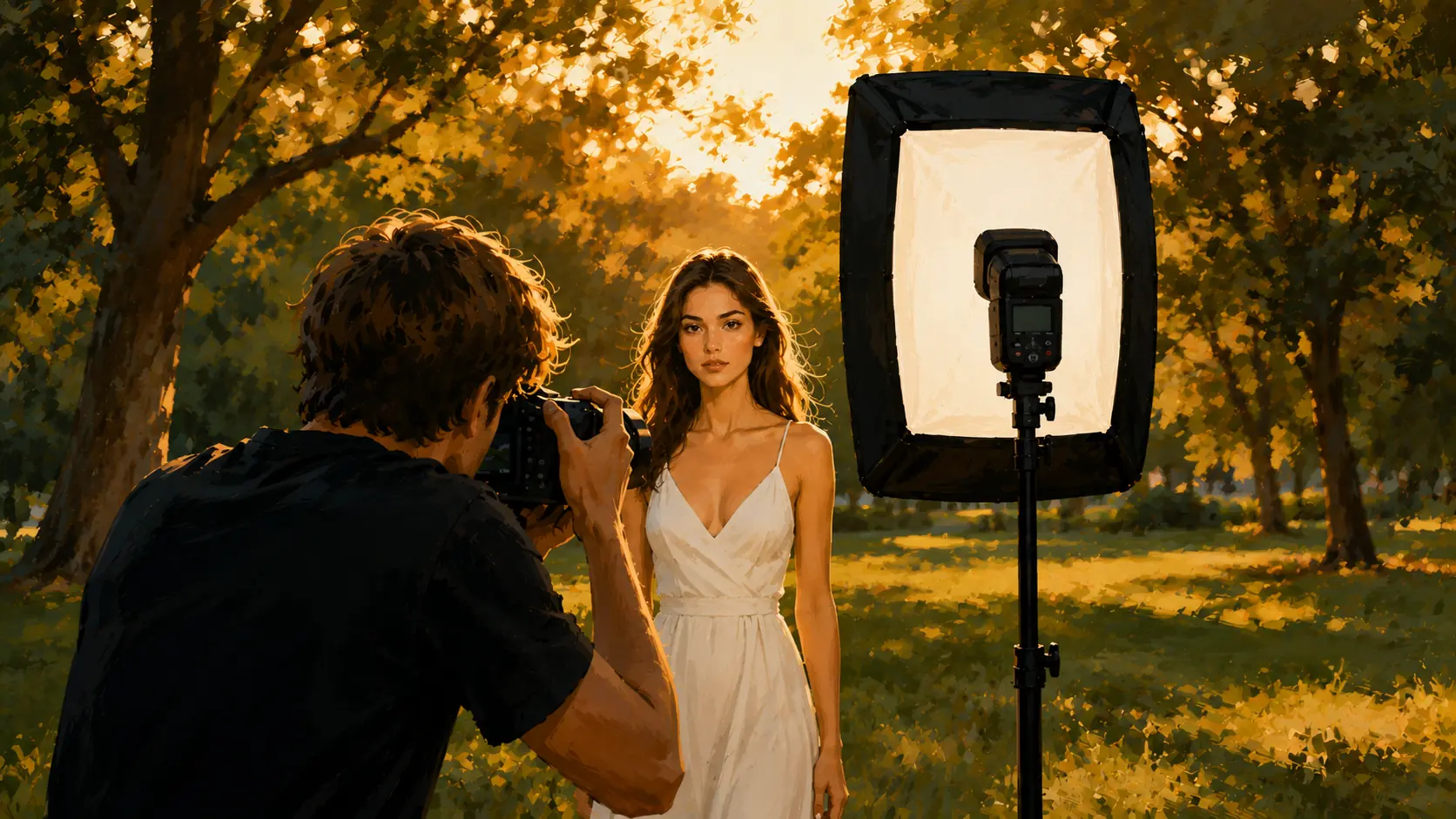
With one or more flash units, photographers are no longer entirely dependent on available light. They can choose the direction, intensity and quality of the illumination.
This makes it possible to create dramatic portraits, rim lighting, carefully shaped shadows or images that appear to have been produced in a controlled studio.
It improves colour and contrast
Adding light correctly can enhance contrast and make colours appear cleaner and more vivid.
When natural light is flat or weak, flash can help separate the subject from the background and give the image greater visual interest.
It allows the use of a lower ISO
In dark conditions, increasing ISO can introduce more digital noise and reduce fine detail.
Flash often allows photographers to work at a lower ISO sensitivity, producing cleaner files and better image quality, particularly with cameras that use smaller sensors.
It separates the subject from the background
A flash positioned beside or behind the subject can create a subtle rim of light.
This technique helps separate the subject from a dark or visually complex background, adding depth and a more professional appearance to the photograph.
What we think
Flash is one of the most misunderstood tools in photography. When used carefully, it does not destroy natural light but complements it, providing greater control and more consistent results. Learning how to manage its power, direction and diffusion can dramatically improve both portraits and everyday photographs.
Frequently asked questions
Is flash useful only at night?
No. It can also be used during the day to reduce shadows, illuminate a backlit subject or balance the brightness of a scene.
Why does a built-in flash often produce harsh results?
Because it sits close to the lens and sends light directly toward the subject. This can create flat illumination, strong reflections and hard shadows.
How can flash light be made softer?
It can be bounced off a wall or ceiling, modified with a diffuser, softbox or umbrella, and moved away from the camera’s optical axis.
Does a beginner need an external flash?
It is not essential, but an external flash provides greater control over the direction and intensity of the light, making it easier to produce natural-looking results.
Can flash be used outdoors?
Yes. It is particularly useful for portraits in strong sunlight, backlit scenes and situations where the subject needs to stand out more clearly from the background.