Summary
- TIME included three cameras among its 300 Best Inventions of 2026.
- Nikon ZR brings RED imaging technology to a compact cinema body.
- GoPro MISSION 1 PRO ILS adds interchangeable MFT lenses without autofocus.
- Fujifilm instax mini Evo Cinema connects instant prints with short videos.
Three very different cameras made TIME’s Best Inventions of 2026 list: the Nikon ZR, GoPro MISSION 1 PRO ILS and Fujifilm instax mini Evo Cinema, spanning cinema production, specialist rigs and instant prints.
TIME’s annual selection includes 300 inventions from many industries. It is not a ranked comparison of the best cameras. These three choices have obvious relevance to image-makers, but their intended users and compromises differ substantially.
Nikon ZR: RED recording in a compact body
The Nikon ZR is primarily a filmmaking camera. Its 24.5MP full-frame sensor records internal R3D NE RAW with RED colour science up to 6K/60p. Nikon also specifies 32-bit float audio, a 4-inch monitor and up to 7.5 stops of in-body stabilisation.
Those capabilities are useful for documentary production, small crews and projects where rig weight and setup time matter. The lack of a built-in viewfinder and mechanical shutter, however, makes it a video-first tool rather than the natural choice for dedicated still photographers.
The Nikon ZR firmware 1.10 update introduced changes affecting recording duration and workflow, illustrating how the camera continues to evolve after launch.
More information here.

GoPro MISSION 1 PRO ILS: interchangeable lenses, manual operation
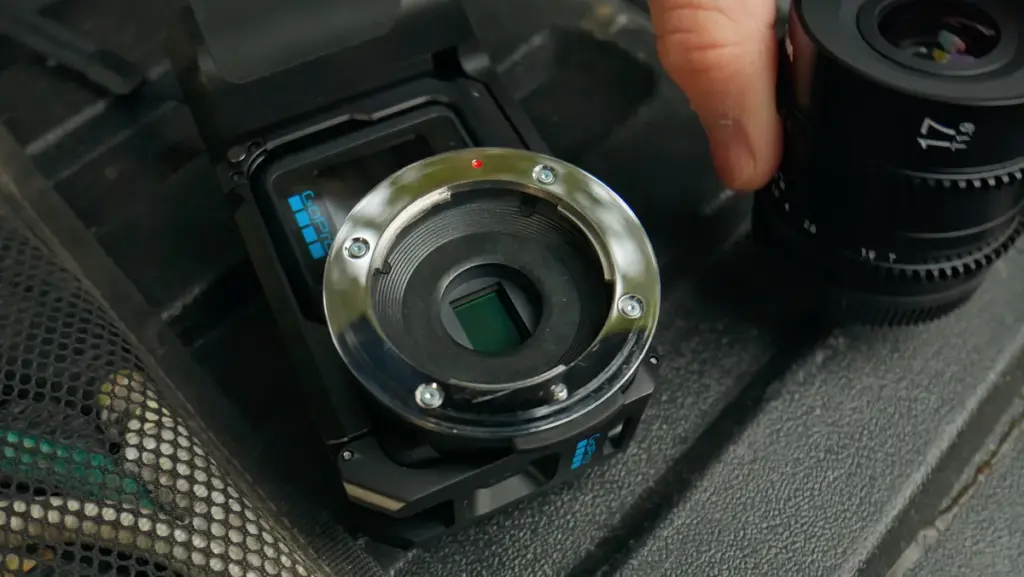
The MISSION 1 PRO ILS is an unusual GoPro. It combines an approximately 197g body with a 50MP Type 1 sensor, video up to 8K/60p and a Micro Four Thirds interchangeable-lens mount. It is not designed to behave like a conventional point-and-shoot action camera.
The crucial limitation is its mount: with no electronic contacts, the camera offers neither autofocus nor body-controlled electronic aperture. Users need appropriate manual lenses and often additional focusing or monitoring equipment. Its small size, on the other hand, creates possibilities for FPV work, hard-to-reach angles and specialist rigs.
The camera’s availability and MISSION Monitor app add to its practical ecosystem, but manual focusing remains a fundamental part of working with it.
More information here.
Fujifilm instax mini Evo Cinema: turning photographs into video keepsakes
The instax mini Evo Cinema takes a different route. It combines digital stills, video clips of up to 15 seconds and instax mini printing. A printed photograph can include a QR code that opens the associated video on a phone.
Its Eras Dial applies looks inspired by different decades. A small roughly 5MP sensor and low resolution in many video modes make it a camera for creative keepsakes rather than maximum technical image quality. Owners should also retain local copies of the videos instead of treating QR-linked hosting as permanent storage.
The success of the instax range reflects wider interest in physical photographs alongside digital sharing.
More information here.

What we think
The most interesting thing about these three cameras is that they are not trying to solve the same problem. Nikon puts serious cinema capabilities into a smaller body, GoPro extends its mount-anywhere approach into interchangeable lenses, and Fujifilm gives printed photographs a connection to short moving images.
For paid production work, practical questions still come first: focus control, file reliability, sound, lens support and editing time. An invention award is not a substitute for choosing a system that matches the job.
The MISSION 1 PRO ILS makes that point particularly clearly: its size and recording formats are impressive, but the lack of electronic lens communication changes the shooting process. Likewise, the instax mini Evo Cinema may be enjoyable and creatively distinctive without competing on resolution. That is what makes TIME’s selection worth discussing: three different answers to how images can be made and shared.