Summary
- The roadside photograph in January 1996
- The Mamiya RZ67 and Velvia: the colors behind the image
- From Westlight and Corbis to Microsoft
- October 25, 2001: a photograph reaches millions of desktops
- Was it edited in Photoshop?
- What happened to the hill, and how “Bliss” lived on
- What we think
- Frequently asked questions
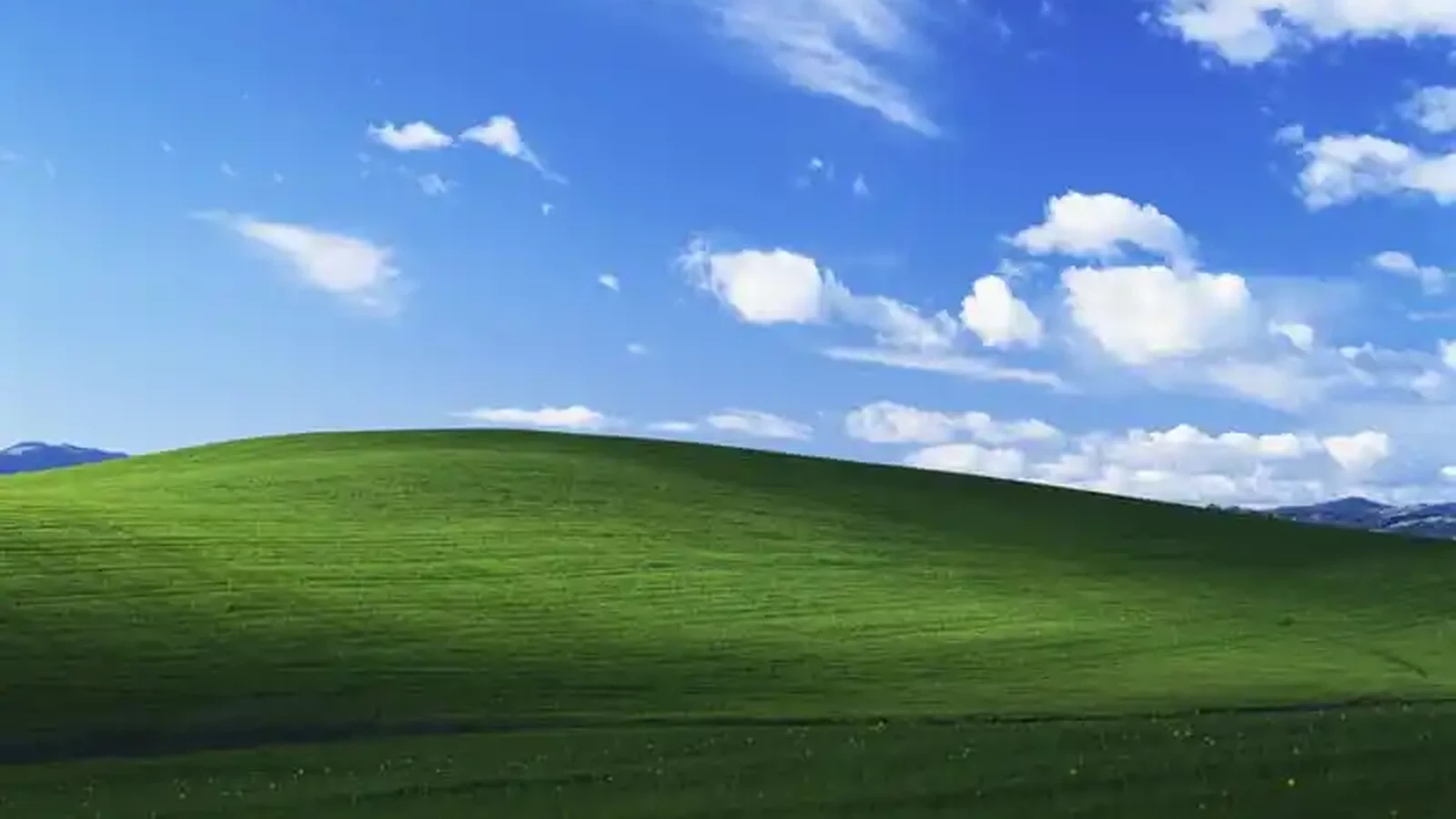
A green hillside, blue sky and four frames on film became one of photography’s most recognizable images: Windows XP’s “Bliss” marked thirty years since its creation in January 2026.
Its creator, American photographer Charles O’Rear, was not making an advertisement for a technology company. In January 1996 he was driving through California to visit his partner, Daphne Larkin, when the light and the landscape made him stop.
The roadside photograph in January 1996
His route passed through Sonoma County, near Napa Valley north of San Francisco. Winter rain had turned the hillside lush green, while breaks in the clouds revealed a blue sky. O’Rear knew the place and recognized a brief combination of weather, light and color.
The site had not always looked like this. Vineyards had been cleared following a phylloxera infestation, leaving grass to cover the hillside for a time. O’Rear pulled over, set up his camera and, according to the widely reported account, exposed just four frames before driving on.
The Mamiya RZ67 and Velvia: the colors behind the image
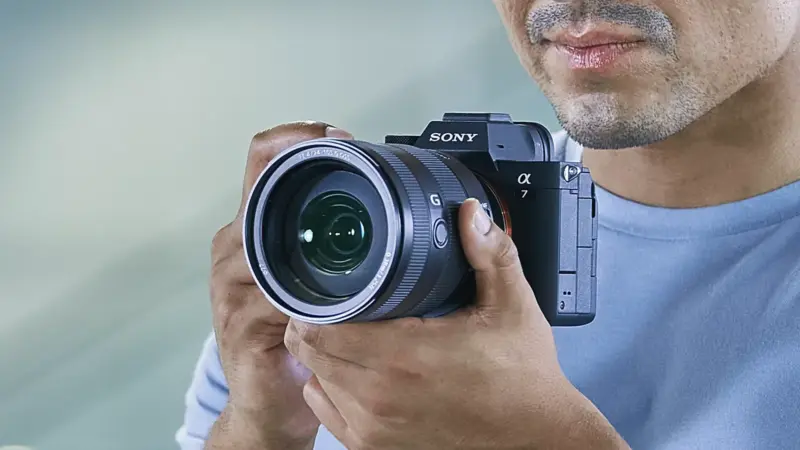
“Bliss” was captured on analog film using a Mamiya RZ67 medium-format camera and Fujifilm Fujichrome Velvia color-reversal film. Several accounts mention a tripod, although some later interviews describe the camera as hand-held. The camera and film are well established; how it was supported for every exposure is less certain.
Velvia is renowned for saturated greens and blues, while the RZ67’s larger frame offered ample detail. The history of Fujifilm’s photographic film gives useful context for why a 1996 photograph could display colors that many people now assume were digitally generated.
O’Rear maintains that he did not create the landscape on a computer: the grass, clouds and light were real. But an image shot on film should not be confused with every later digital presentation of that original transparency.
From Westlight and Corbis to Microsoft
O’Rear had spent years in photojournalism, including work for National Geographic, and co-founded the Westlight photo agency. The image entered the stock photography market. In 1998 Westlight was acquired by Corbis, a company owned by Bill Gates, putting “Bliss” in a library of images available for licensing.
In 2000 Microsoft selected the image for its new operating system and negotiated extensive rights. The company gave it the name “Bliss.” The exact payment has never been disclosed because of a confidentiality agreement. O’Rear has described it as one of the largest payments for a single photograph, even estimating it ranked second; no public contract independently verifies that ranking.
Delivering the original transparency created another problem: its declared value was above the insurance limits of shipping companies. Microsoft paid for O’Rear to fly to Seattle and hand-deliver the film himself.
October 25, 2001: a photograph reaches millions of desktops
Windows XP went on sale on October 25, 2001, with “Bliss” as the default desktop background of its Luna interface. It was not an advertisement users had to choose to open; it was already on the screen. A photograph in an image library became part of everyday computer use worldwide.
Microsoft has cited an audience of more than one billion people. This is not an independently audited count of unique viewers, but an estimate associated with the huge reach of Windows XP. “Bliss” is therefore widely described as one of the most viewed photographs ever, sometimes the most viewed, without a verified global record proving the latter.
This commercial from the Windows XP era captures the visual identity with which the photograph became associated.
Was it edited in Photoshop?
O’Rear’s original exposure was not a digital composite. However, comparison with the photographer’s personal file shows that the Windows version was cropped, chiefly on the left, and the hillside was made more vividly green. The photographer’s statement that he did not alter the scene describes his original capture, not every later Microsoft reproduction.
The distinction is particularly relevant now, when filters, editing and AI-generated imagery can make any striking landscape look manufactured. This image began as a real hillside photographed on real film.
What happened to the hill, and how “Bliss” lived on
The location is in Sonoma County near the roads connecting Sonoma and Napa. Vines were subsequently replanted, and familiar later photographs show vineyard rows where the 1996 image featured one continuous green hill. In 2007, artists Goldin+Senneby returned to make “After Microsoft,” a photograph of the same place that offers a revealing comparison.
The image outgrew its operating system. Microsoft brought it back in nostalgic merchandise, from a holiday sweater in 2023 to themed Crocs in 2025. Its lasting recognition owes much to Windows XP’s reach and to the image’s remarkably simple visual structure: a horizon, two dominant colors and plenty of clear space for desktop icons.
What we think
For photographers, the best part of the “Bliss” story is not the price Microsoft paid. It is that an experienced photographer looked closely enough at a familiar drive to know when to stop. No exotic expedition or hundreds of frames were necessary. He recognized the right light, season and composition.
Velvia and the RZ67 helped, but neither would have made a photograph people still remember three decades later on its own. The composition stays readable on a small screen, and the blue and green work naturally with the XP desktop. That practical suitability matters just as much as the image’s technical quality.
There is a professional lesson too: you cannot always predict where a photograph will end up. A frame originally filed as stock can find its way onto screens around the world. Keeping a strong original, maintaining an organized archive and understanding licensing terms all matter, even when the subject appears to be “just a nice hill.”
Frequently asked questions
When and where was “Bliss” photographed?
In January 1996, on a hillside in Sonoma County, California, near Napa Valley. It was not commissioned specifically for Windows XP.
Which camera and film were used?
A Mamiya RZ67 medium-format camera and Fujifilm Fujichrome Velvia color-reversal film. The lens and exact exposure settings are not reliably established in the accessible primary record.
How much was O’Rear paid?
The exact amount remains confidential. Charles O’Rear has described an exceptionally high fee for a single photograph, but reported dollar figures are not confirmed contract amounts.