

Summary
- EOS was introduced in 1987.
- The name comes from the goddess Eos.
- It symbolized the beginning of a new technological era.
- The EOS system introduced the EF mount.
- The name remained in DSLR and mirrorless cameras.
The EOS name has been at the center of Canon’s camera strategy for nearly four decades, yet many photographers do not know what it actually means.
EOS is the name Canon has used for its main camera system since 1987, covering both film and digital DSLR and mirrorless cameras.
Beyond its commercial importance, EOS has a unique history and symbolism, as it was chosen to mark a new era in photography and Canon’s technological development.
What EOS Means
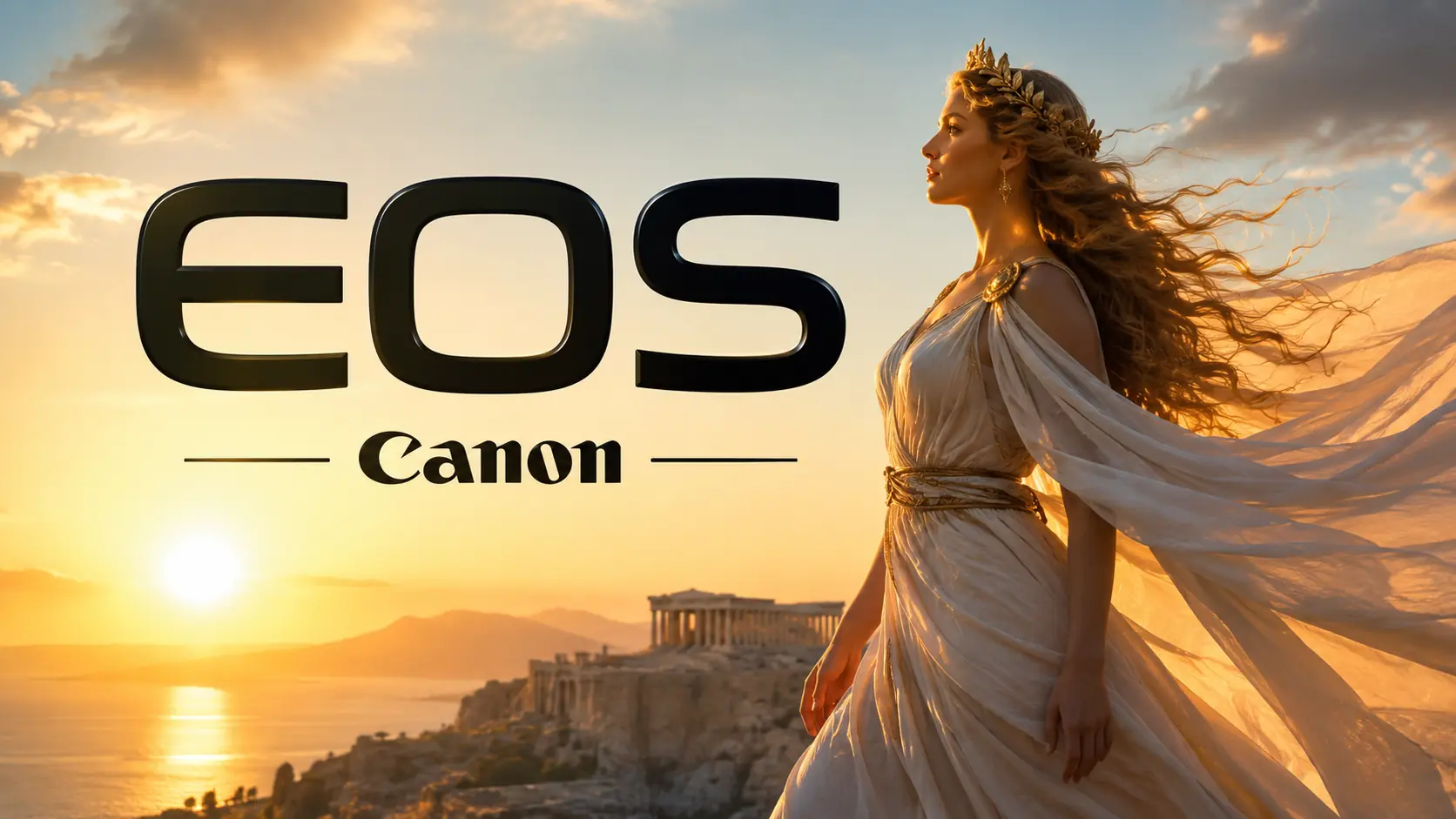
The word EOS comes from Eos, the goddess of dawn in ancient Greek mythology.
Canon chose the name to symbolize the “dawn” of a new generation of cameras. At the same time, the company used the fact that the three letters could also be associated with the phrase “Electro Optical System,” although the official symbolism remains linked to the goddess of dawn.
The choice of the name was intended to show that Canon was entering a completely new technological era.
The Birth of the EOS System
In 1987, Canon introduced the EOS 650, the first camera of the new EOS system.
The camera marked a turning point for the company, as it introduced the new EF mount system, designed entirely from scratch. Unlike previous market solutions, the autofocus motor was moved into the lenses, offering greater speed and flexibility.
The decision was considered bold, as Canon completely abandoned the previous FD mount and created an entirely new ecosystem of lenses and accessories.
The Film EOS Era
During the 1990s, the EOS system became one of the most successful camera systems in the world.
Models such as the EOS-1, EOS 5 and EOS 3 became popular among both professionals and advanced enthusiasts. Canon invested heavily in autofocus speed, metering systems and ergonomics, building a strong presence in sports, news and wildlife photography.
The Transition to Digital Photography
With the arrival of digital photography, Canon retained the EOS name and carried it over to its DSLR cameras.
The EOS Digital line and later the EOS 300D, EOS 5D and EOS-1D played a key role in the adoption of digital photography. The EOS 5D in particular is considered one of the most important cameras in industry history because it made full-frame photography accessible to a wider audience.
The EOS name had by then become synonymous with digital photography for millions of users worldwide.
EOS in the Mirrorless Era
Canon continued using the EOS name for its mirrorless cameras.
The EOS M series appeared first, followed by the EOS R system in 2018, which is now the company’s primary platform. Models such as the EOS R5, EOS R6, EOS R3 and EOS R1 continue the EOS legacy in an era dominated by mirrorless technology.
Despite the major technological changes of recent decades, Canon has kept EOS as a common reference point across all generations of its cameras.
Why EOS Remains Important
Few names in the photography industry have survived for such a long period.
EOS is not simply a brand name. It represents a technological philosophy that began in 1987, moved through the film and digital eras, and continues today with Canon’s most advanced mirrorless cameras.
What We Think
Choosing the EOS name proved to be one of the most successful branding decisions in photography history. By combining Greek mythology symbolism with a technological revolution, Canon created a name that remains recognizable nearly 40 years after its debut.
Frequently Asked Questions
What does EOS mean?
It comes from Eos, the goddess of dawn in ancient Greek mythology.
When was the EOS system introduced?
In 1987 with the launch of the Canon EOS 650.
What is the EF mount?
It is the lens mount introduced alongside the EOS system, featuring fully electronic communication between camera and lens.
Does EOS still exist today?
Yes. Canon continues to use the EOS name in its modern EOS R mirrorless lineup.