

Summary
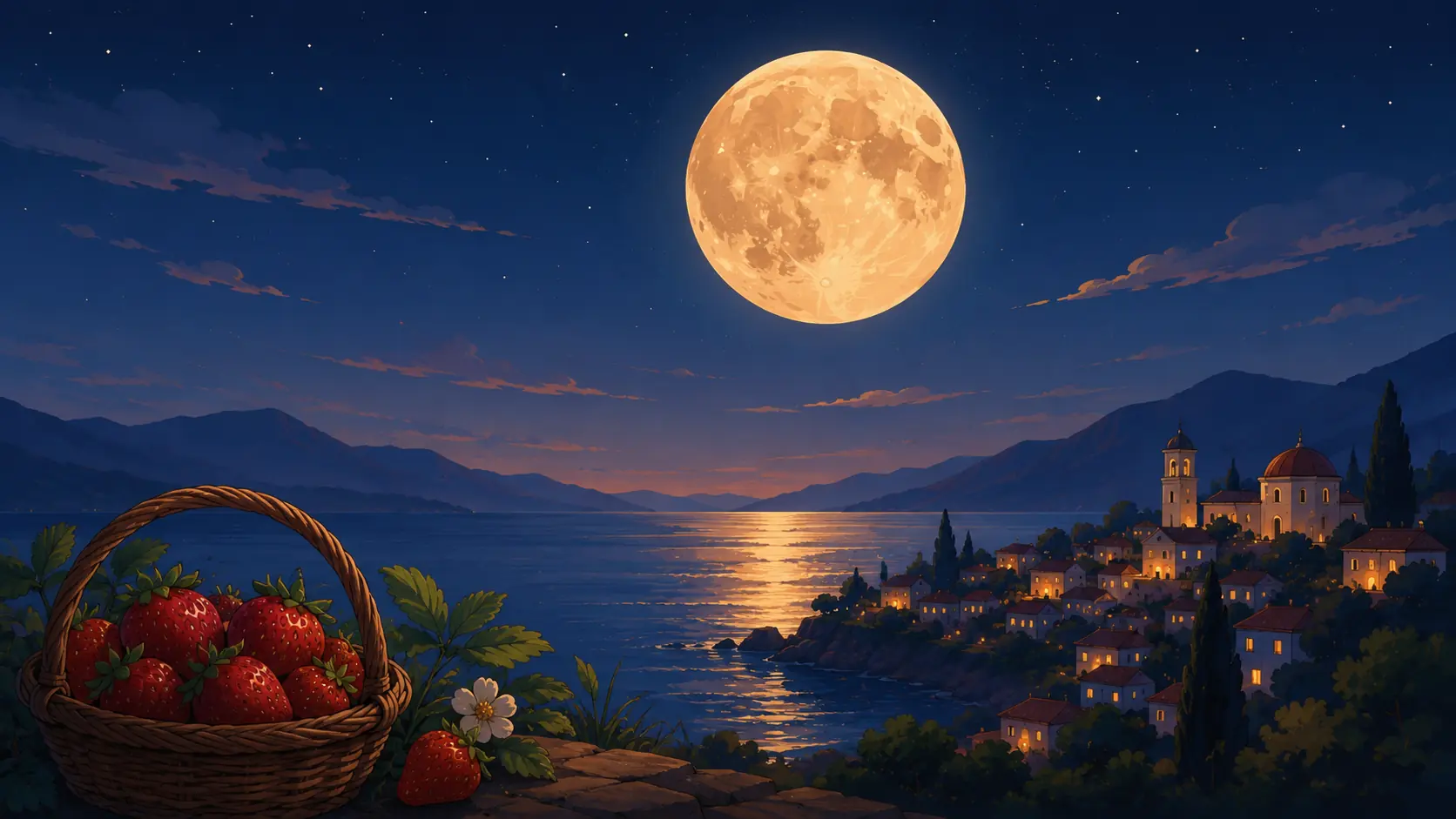
- The June Full Moon is known as the Strawberry Moon.
- It occurs on June 29, 2026.
- Moonrise offers the most impressive photographic opportunities.
- Simple techniques can improve results with cameras and smartphones.
- Landscape elements help create more engaging compositions.
- When Is the June Full Moon
- Why It Is Worth Photographing
- How to Prepare Before Photographing It
- The Essential Equipment
- The Ideal Settings for a Clear Moon
- How to Photograph the Moon With a Landscape
- Tips for Photographing With a Mobile Phone
- Common Mistakes to Avoid
- Post-Processing After the Shot
- The Best Times for Shots
- What We Believe
- Frequently Asked Questions
Event Details
The June Full Moon, also known as the “Strawberry Moon”, is one of the most popular full moons of the year for observation and photography.
The phenomenon attracts the interest of astronomy enthusiasts and photographers every year, as it combines pleasant weather conditions, short nights and impressive moonrises near the horizon.
The name “Strawberry Moon” is not related to the color of the Moon. It comes from traditional names used by Indigenous peoples of North America, who associated the June full moon with the harvesting season of wild strawberries.
When Is the June Full Moon
For 2026, the June Full Moon takes place on June 29.
Although the exact moment of the full moon has astronomical significance, for most observers the best experience is on the evening of moonrise, as well as the previous and following evening, when the disk appears almost full.
Why It Is Worth Photographing
The June Full Moon rises relatively low in the sky for countries in the northern hemisphere.
This creates impressive images, as the moon appears larger when it is close to the horizon, a phenomenon due to human perception and not to an actual change in the size of the Moon.
At the same time, the warm summer tones of the atmosphere can add golden or orange hues during the first moments of its rise.
How to Prepare Before Photographing It
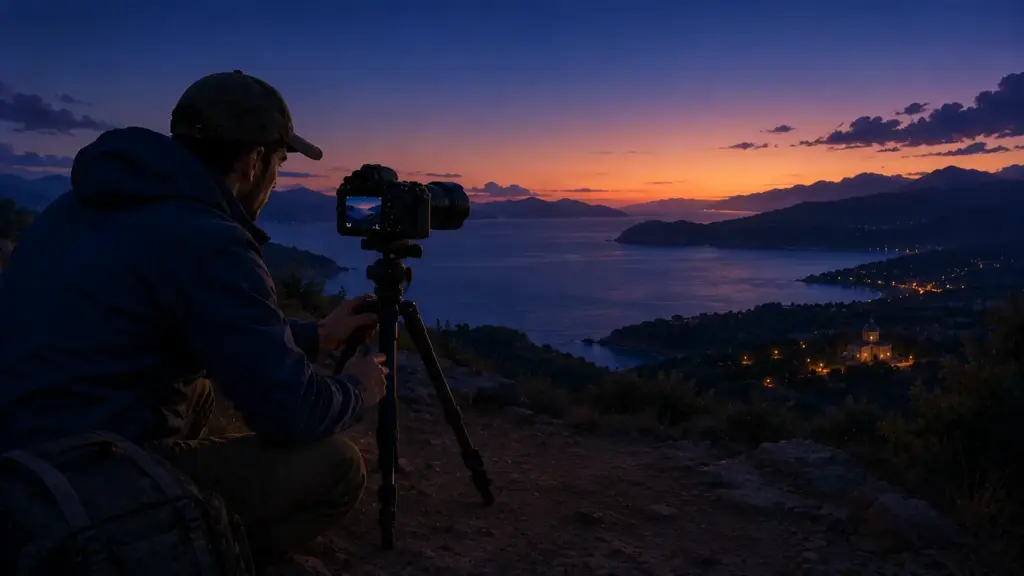
The success of a full moon photograph begins several hours before the moon appears in the sky. Choosing the location is crucial, as an interesting foreground can turn a simple shot into an impressive photograph.
It is worth looking for spots with an open horizon toward the direction of the Moon’s rise. Beaches, hills, castles, churches, lighthouses or distinctive buildings can work as compositional elements.
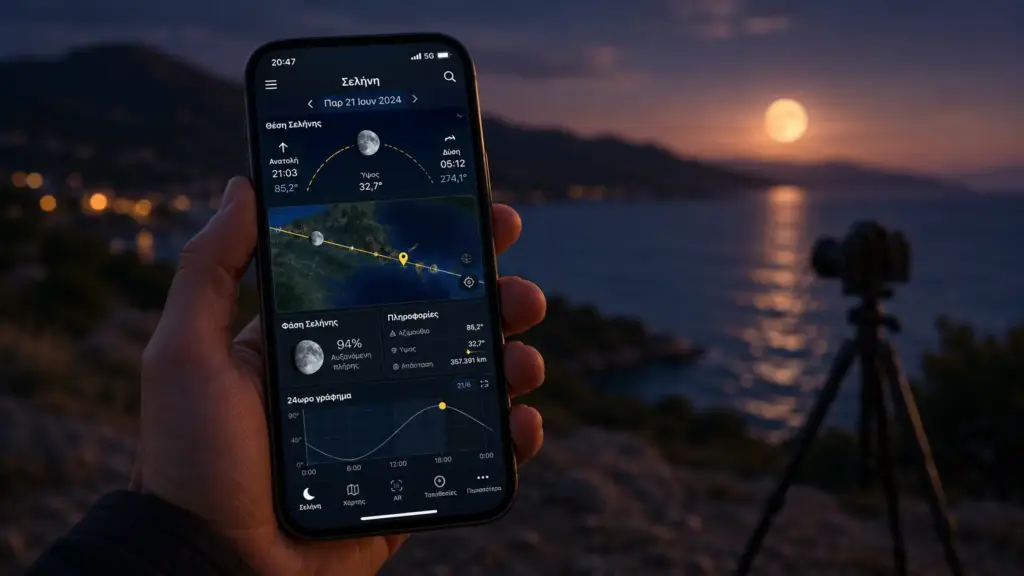
Using apps such as Moon position maps allows the photographer to know in advance exactly where the moon will rise from, making planning the shot significantly easier.
PhotoPills
- The most popular app for photographers.
- Shows exactly where and when the Moon will rise.
- AR view in the landscape.
- Ideal for composition with buildings, lighthouses, mountains, etc.
Planit Pro
- Very detailed.
- Calculates the position of the Moon, Sun and Galaxy.
- Excellent for telephoto lenses and precise alignments.
The Photographer’s Ephemeris
- Professional tool.
- Maps with Sun and Moon paths.
- Ideal for landscape photography.
The Photographer’s Ephemeris (TPE)
Sky Guide
- Very beautiful interface.
- Easy for beginners.
- Shows the position of the Moon in real time.
SkySafari
- A more astronomical approach.
- Very accurate data.
- Ideal for observation and photography.
MoonX
- Specialized in the Moon.
- Phases, rise, set, full moon calendar.
The Essential Equipment
Although the full moon can be photographed even with a mobile phone, the right equipment significantly increases the chances of a better result.
A stable tripod is considered almost essential, especially when using long focal lengths. Even small vibrations can reduce image sharpness.
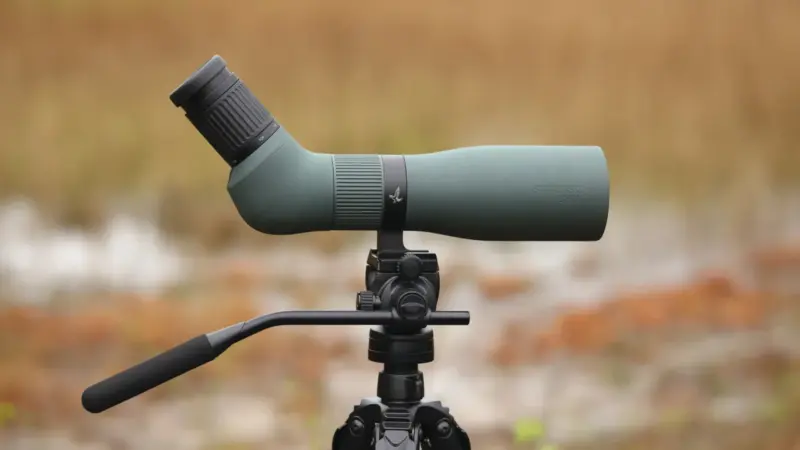
Telephoto lenses between 200mm and 600mm offer impressive magnification of the Moon, while a remote shutter release or the camera’s self-timer prevents vibrations when pressing the shutter.
Those who have mirrorless or DSLR cameras can take advantage of the electronic shutter option for even more stable shots.
The Ideal Settings for a Clear Moon
One of the most common mistakes is using automatic exposure. Most cameras try to brighten the dark sky, resulting in the Moon appearing as a white, overexposed object without detail.
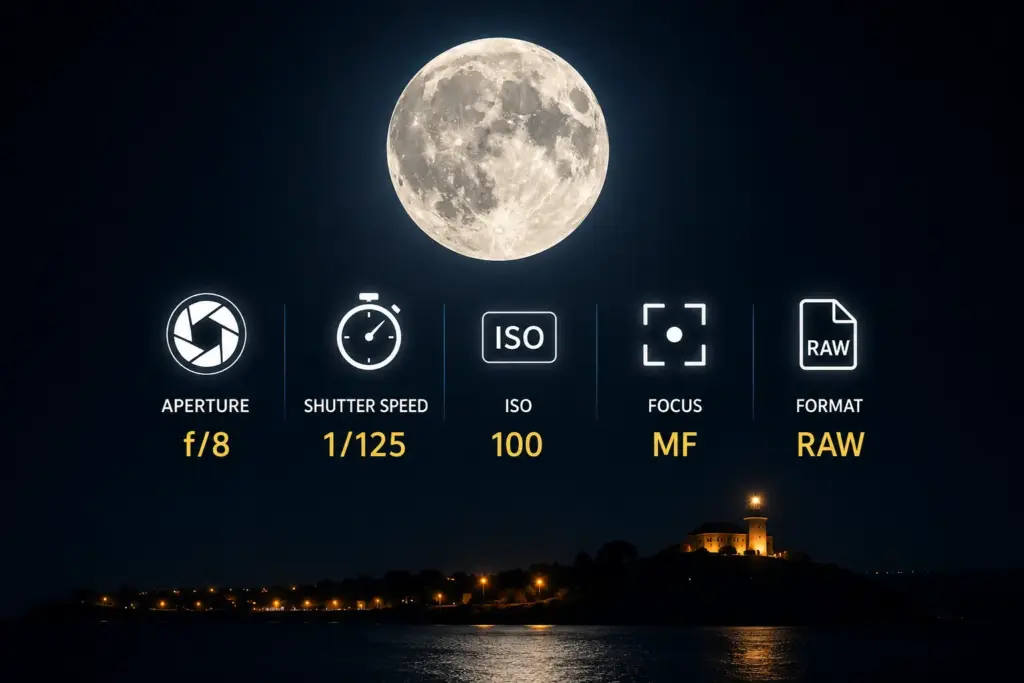
For a clear rendering of the craters and surface details, the following are usually recommended:
- ISO 100 to 400
- Aperture f/8 to f/11
- Shutter speed 1/125 to 1/500 sec.
- Shooting in RAW
These values are a starting point and may need small adjustments depending on the equipment and conditions.
How to Photograph the Moon With a Landscape
Photographs that show only the Moon are mainly of astronomical interest. The most impressive images usually combine the moon with elements of the landscape.
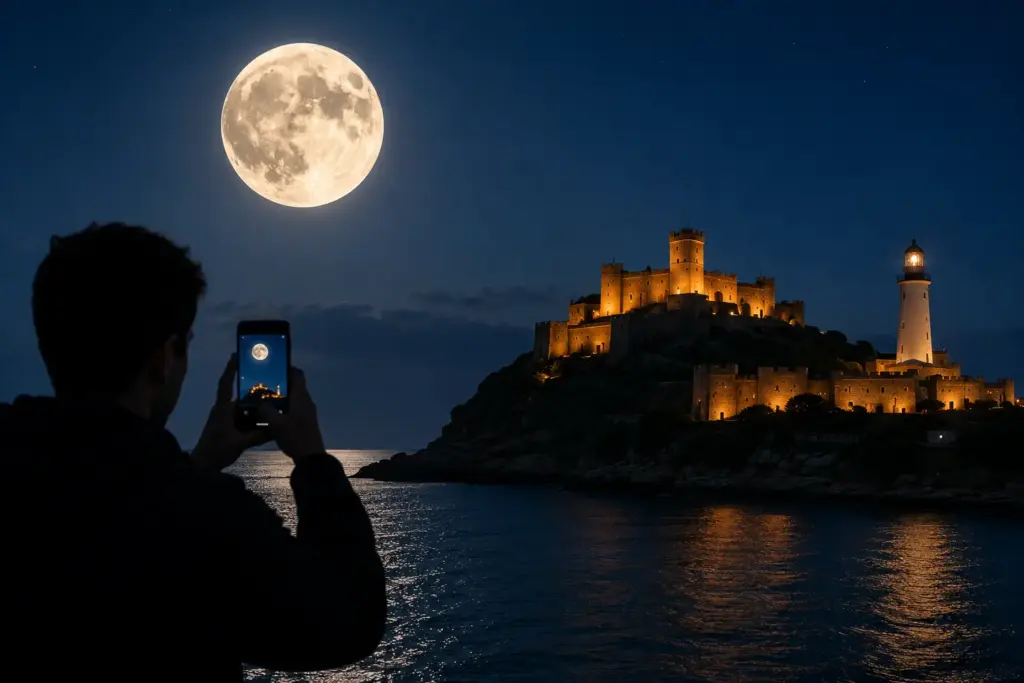
The best moment is during moonrise or moonset, when it is low on the horizon. Then it can be placed next to buildings, mountains, bridges or other recognizable elements.
Using longer focal lengths creates the effect of “perspective compression”, making the Moon appear much larger in relation to the foreground.
Tips for Photographing With a Mobile Phone
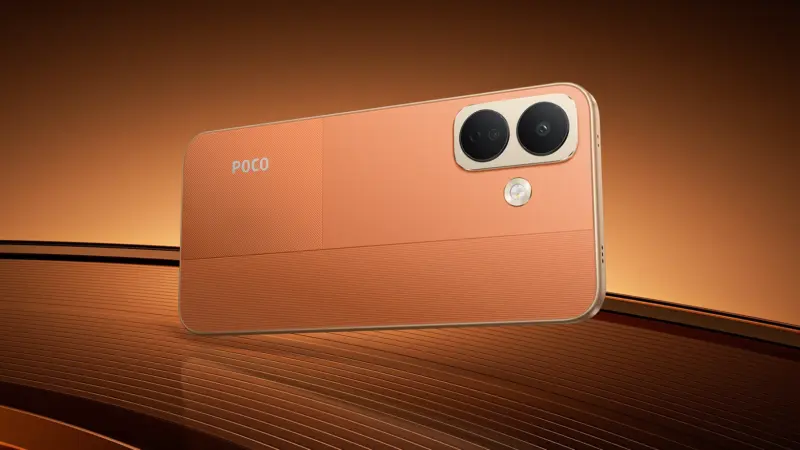
Today’s top smartphones feature telephoto lenses and advanced processing algorithms that can deliver impressive results.
For better shots:
- Use a tripod or stable surface.
- Turn off the flash.
- Manually reduce the exposure by touching the Moon on the screen.
- Use Pro mode if available.
- Prefer optical over digital zoom.
- Use a 2- or 3-second timer.
Even if the moon appears small in the frame, the high resolution of modern sensors often allows additional cropping during processing.
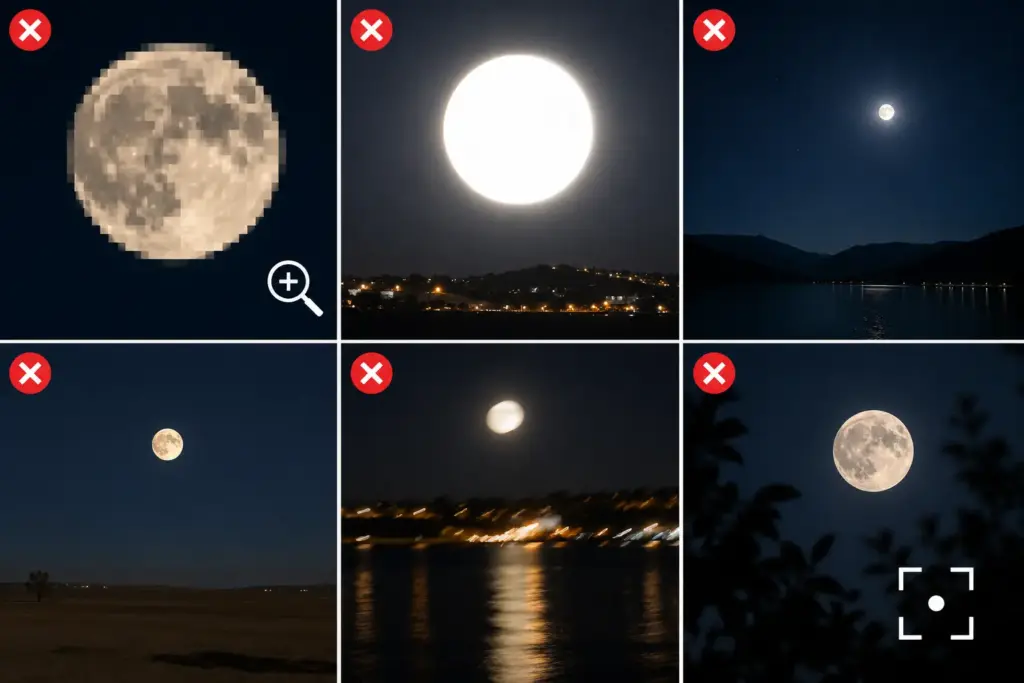
Common Mistakes to Avoid
Many photographers are disappointed by their first attempts because they fall into certain classic traps.
The most common mistakes are:
- Excessive digital zoom.
- Automatic exposure that burns out the details.
- Photographing very late at night when the Moon is high.
- Lack of foreground elements.
- Camera or mobile phone shake.
- Focusing elsewhere instead of on the Moon.
Post-Processing After the Shot
Photographing the full moon does not end with pressing the shutter. Careful processing can reveal significantly more detail.
Increasing contrast, carefully enhancing texture and correcting white balance can bring out craters and color tones that are often not visible in the original shot.
For those who shoot in RAW, the possibilities for recovering detail are significantly greater compared with JPEG files.
The Best Times for Shots
The most impressive moment is usually the Moon’s rise shortly after sunset.
Then the moon is low on the horizon and can be combined with elements of the landscape, creating images with a sense of scale and depth.
Astronomy apps and Moon position maps can help with the precise planning of a photograph.
What We Believe
The June Full Moon is an excellent opportunity for those who want to try photographing the night sky without specialized equipment. With a little preparation and the right choice of location, even a modern mobile phone can deliver impressive results.
Frequently Asked Questions
Why Is It Called the Strawberry Moon?
The name comes from traditional calendars of Indigenous peoples of North America and is associated with the strawberry harvesting season.
Do You Need a Professional Camera for Good Photographs?
No. A modern mobile phone or a simple camera can produce very good results.
What Is the Best Time for Photography?
Usually during moonrise, shortly after sunset.