

Summary
- Major exterior filming for The Batman Part II begins in Glasgow on August 18
- The city is being transformed into Gotham again and the Batmobile has already arrived
- Erik Messerschmidt replaces Greig Fraser as cinematographer
- Messerschmidt won the Academy Award for Best Cinematography for Mank
- The sequel's camera and lens package has not yet been officially confirmed
- The film is currently scheduled for release on February 18, 2028
- Glasgow becomes Gotham again
- The Batmobile arrived before Batman
- A major change in cinematography
- Who is Erik Messerschmidt?
- What changes from the first film?
- Which cameras and lenses are being used?
- Why shooting in a real city matters
- Glasgow’s role as a film location is growing
- When will The Batman Part II be released?
- What we think
- Frequently Asked Questions
The Batman Part II moves a major phase of its exterior production to Glasgow beginning August 18, with the city once again becoming Gotham and Academy Award winner Erik Messerschmidt serving as cinematographer.
Principal photography on the film had already begun in June, but the Scottish phase now expands the production significantly, with the Batmobile already appearing in the city centre and extensive road restrictions introduced to accommodate filming.
For cinematography followers, the sequel is particularly interesting because Greig Fraser, who served as cinematographer on the first film and helped define its distinctive dark visual language, is not returning. He has been replaced by Erik Messerschmidt, a frequent David Fincher collaborator and the Academy Award winner for Mank.
Glasgow becomes Gotham again
Glasgow previously doubled for Gotham City in Matt Reeves’ first film and now returns to the same role.
The new location phase begins on August 18 and is expected to run for approximately three weeks across major parts of the city.
Traffic restrictions extend beyond the actual shooting dates, with temporary bans affecting parking, loading, vehicle access and at certain times pedestrian movement at different locations.
The scale of those arrangements provides an indication of how much of the production is being staged on real streets rather than relying entirely on studios and digitally created environments.
The Batmobile arrived before Batman
The clearest indication that the Glasgow production is entering full operation was the arrival of the Batmobile.
The vehicle was seen being moved around St Vincent Lane while production crews were already working in the area.
Its presence makes it reasonable to expect that the Glasgow unit will include driving or action material, although no official details about any specific sequence have been released.
In the first film, the Batmobile featured prominently in the memorable pursuit of the Penguin.
Its presence in Glasgow confirms that it is part of this phase of production, but it does not necessarily mean that the sequel will attempt to repeat a similar sequence.
A major change in cinematography
The most significant visual change is behind the camera.
The Batman from 2022 was shot by cinematographer Greig Fraser, ASC, ACS. For the sequel, Erik Messerschmidt, ASC has taken over.
This is a major change because the cinematography of the first film was one of the defining elements of its identity.
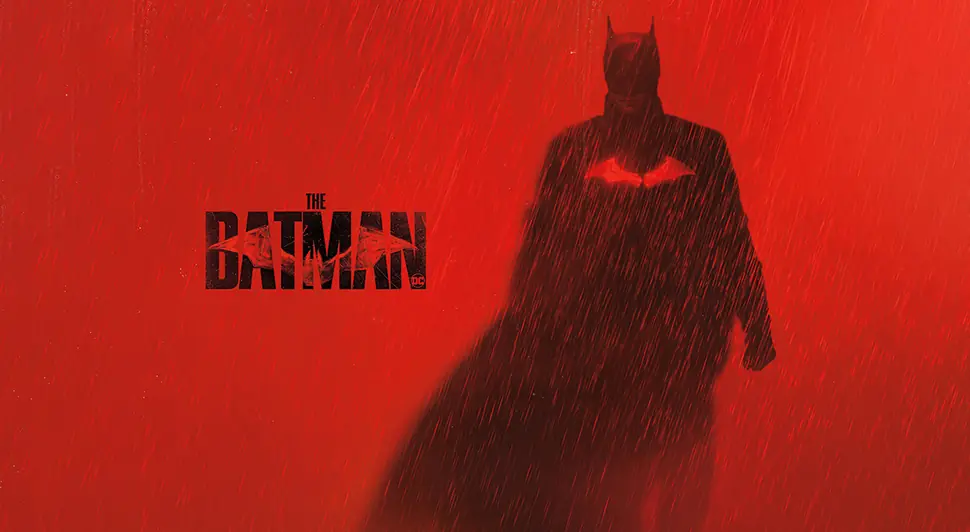
Fraser created a Gotham built around very low light levels, strong highlights, rain, haze and imagery that frequently resembled a modern noir rather than a conventional superhero blockbuster.
Messerschmidt therefore inherits an established visual world while still having to avoid simply imitating his predecessor.
Who is Erik Messerschmidt?
Erik Messerschmidt is one of the leading contemporary American cinematographers and has developed a particularly close creative partnership with David Fincher.
He won the Academy Award for Best Cinematography for Mank in 2021.
His cinematography credits also include Fincher’s The Killer and Michael Mann’s Ferrari, while his earlier work includes Mindhunter and serving as chief lighting technician on Gone Girl.
His background is especially relevant to The Batman Part II because much of his work is characterised by controlled lighting, the use of darkness as a narrative tool and very precise compositions.
On Mank, for example, he and Fincher used modern digital technology to create black-and-white imagery inspired by classical cinematography, shooting with RED Ranger Monochrome Helium cameras and Leitz Summilux-C lenses.
What changes from the first film?
From a technical perspective, the first The Batman was a particularly interesting production.
The film used ARRI ALEXA Mini LF, ALEXA LF and ALEXA 65 systems together with ALFA and Prime DNA optics.
Fraser’s images became inseparable from the story: dark interiors, aggressive falloff, silhouettes and a Gotham that appeared permanently wet, dirty and dangerous.
The change of cinematographer therefore creates one of the sequel’s most interesting questions.
Will Messerschmidt preserve Fraser’s visual language almost entirely, or will he push Gotham toward his own aesthetic?
There is not yet enough official material to answer that reliably.
Which cameras and lenses are being used?
At this stage, the production has not released a complete, officially confirmed list of cameras and lenses for The Batman Part II.
Various claims and speculation are circulating online about specific systems, but without sufficient primary confirmation they should not yet be presented as established fact.
PTTL will revisit the technical setup once reliable information is published by Messerschmidt himself, the production, the equipment manufacturers, the ASC or another primary source.
For a sequel following a film whose cinematography generated so much technical interest, the choice of sensor, optics and workflow will be particularly important.
Why shooting in a real city matters
Transforming a real city into a fictional cinematic space is itself a major filmmaking exercise.
Glasgow’s architecture gives the production physical scale, genuine perspective and surface texture that would be far more difficult to reproduce completely on a stage.
For the cinematographer, this also means working with existing architecture, practical street lighting, weather and enormous physical distances.
The challenge is not simply lighting an individual street. It is making an entire city feel consistent with the Gotham established by the film.
Glasgow’s role as a film location is growing
The choice of Glasgow is not an isolated case.
The city has hosted several major international productions because its architecture can double for very different urban environments.
More recently, it also hosted Spider-Man: Brand New Day, while earlier productions have included World War Z and Indiana Jones and the Dial of Destiny.
For The Batman Part II, Glasgow has another advantage: it is returning to a visual world that it already helped establish in the first film.
When will The Batman Part II be released?
The film is currently in active production, with Robert Pattinson returning as Bruce Wayne/Batman.
Its current theatrical release date is February 18, 2028.
By then, considerably more information should emerge about Messerschmidt’s approach, the technical package and the sequel’s overall photographic language.
What we think
The change from Greig Fraser to Erik Messerschmidt is far more interesting than a simple name change in the credits.
The first The Batman had one of the most recognisable visual identities in contemporary superhero cinema, meaning the new cinematographer inherits a world whose look has already been firmly established.
Messerschmidt has repeatedly demonstrated his ability to work with darkness, difficult lighting conditions and highly controlled compositions without losing narrative clarity.
The key question will be whether he closely serves the first film’s aesthetic or allows Part II to develop a subtly different photographic identity.
The fact that a major portion of the exterior work is again being captured on Glasgow’s real streets makes that comparison even more interesting.
Frequently Asked Questions
When does The Batman Part II film in Glasgow?
The major Glasgow location phase begins on August 18, 2026 and is expected to last around three weeks. Principal photography had already started earlier in June.
Who is the cinematographer of The Batman Part II?
Erik Messerschmidt, ASC is the cinematographer, replacing Greig Fraser from the first film.
Who is Erik Messerschmidt?
He is an American cinematographer and frequent David Fincher collaborator known for Mank, The Killer and Mindhunter. He won the Academy Award for Best Cinematography for Mank.
Which cameras are being used for The Batman Part II?
A complete and officially confirmed camera and lens package has not yet been published.
When is The Batman Part II released?
The current theatrical release date is February 18, 2028.