Summary
Instagram is giving video creators a new way to discover who reposts their work and decide what should happen to copies.
On November 17, 2026, Meta announced the expansion of Content Protection to Instagram. Using matching technology associated with Rights Manager, the tool searches for visual matches to original videos across Instagram and Facebook. It is not automatically available to every account: eligible creators must enroll.
How Content Protection works
When the system identifies a video matching the original, the creator receives a notification and can inspect details about the copy. The Matches dashboard collects these findings, showing view counts, the posting account and how much of the original material appears to match.
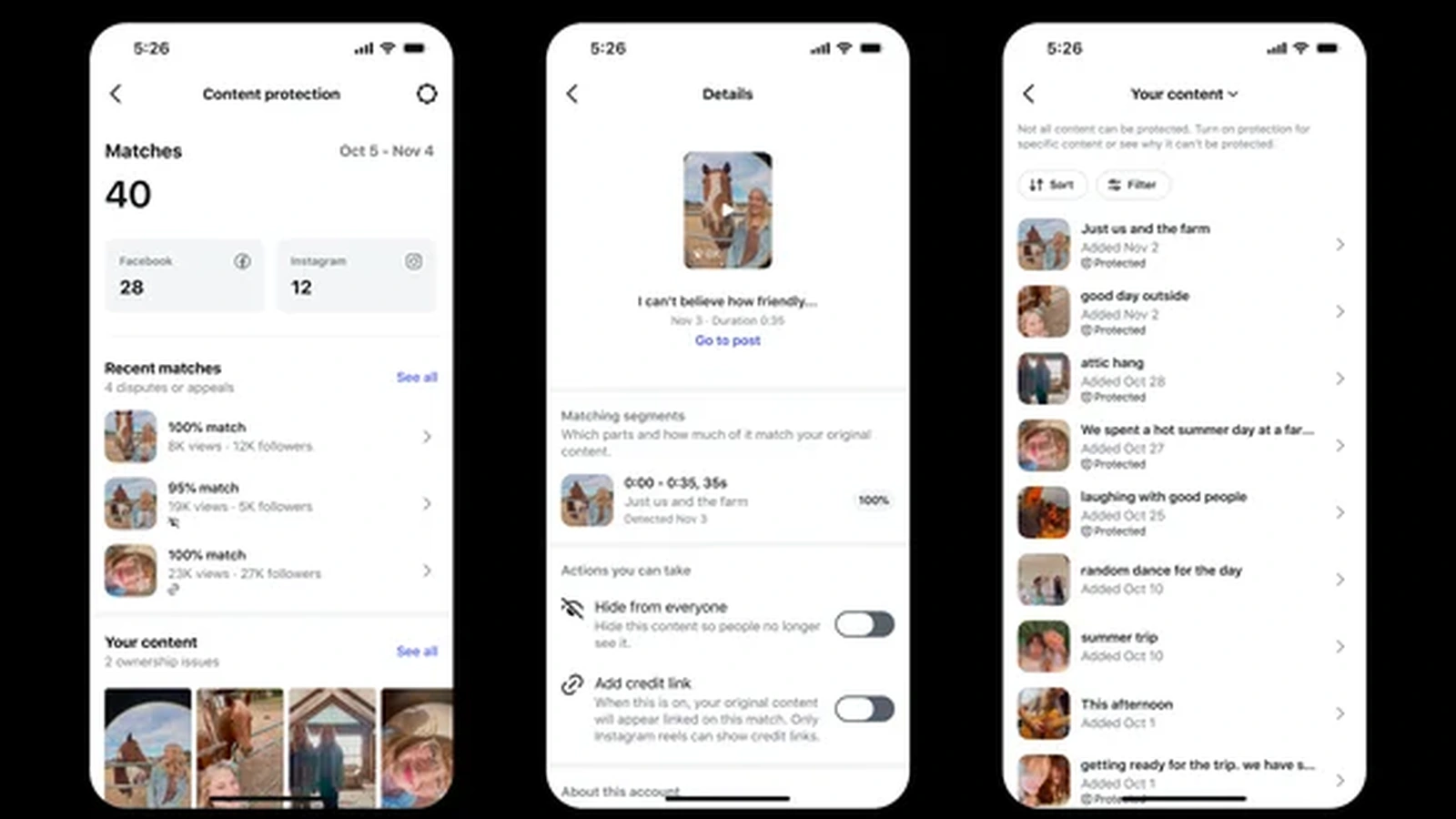
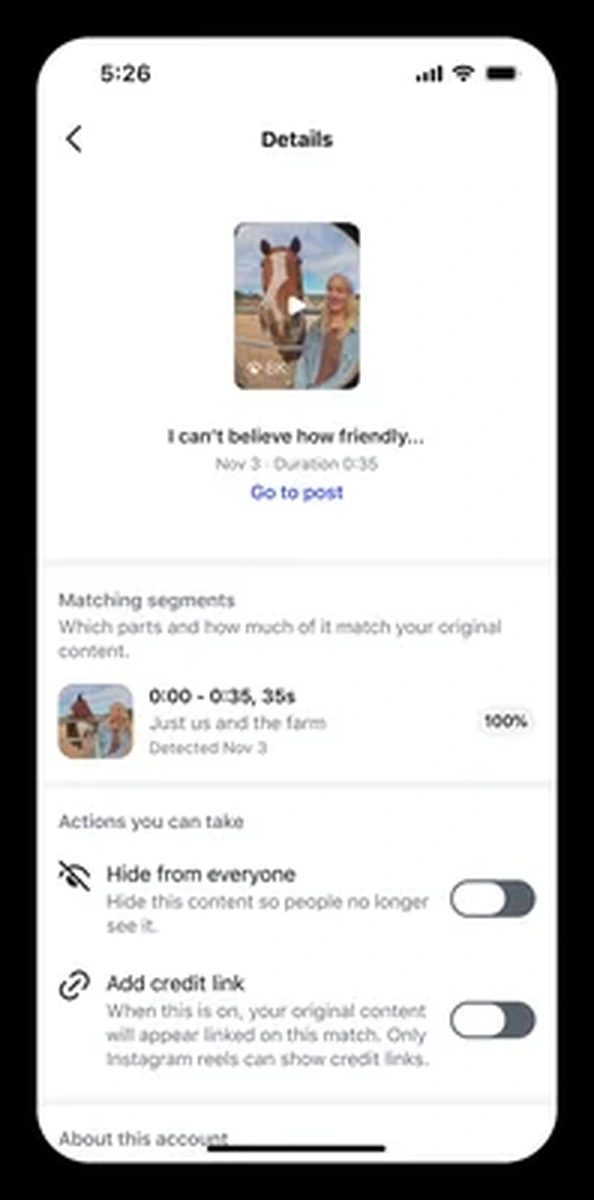
Creators can choose what happens to each match. Track lets them monitor the repost without hiding it. Hide from everyone makes the matched copy unavailable to other users on Meta platforms. Add credit link, where supported, points viewers to the original video or creator profile. Release match drops the claim for that match and leaves the repost available.
Exceptions for collaborators and second accounts
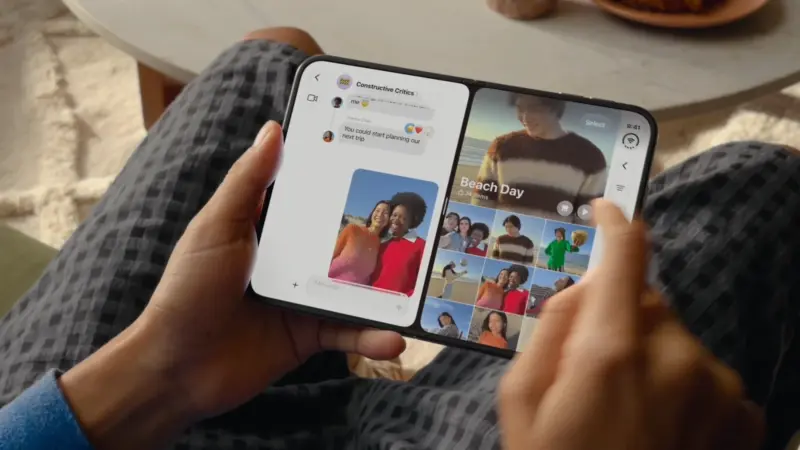
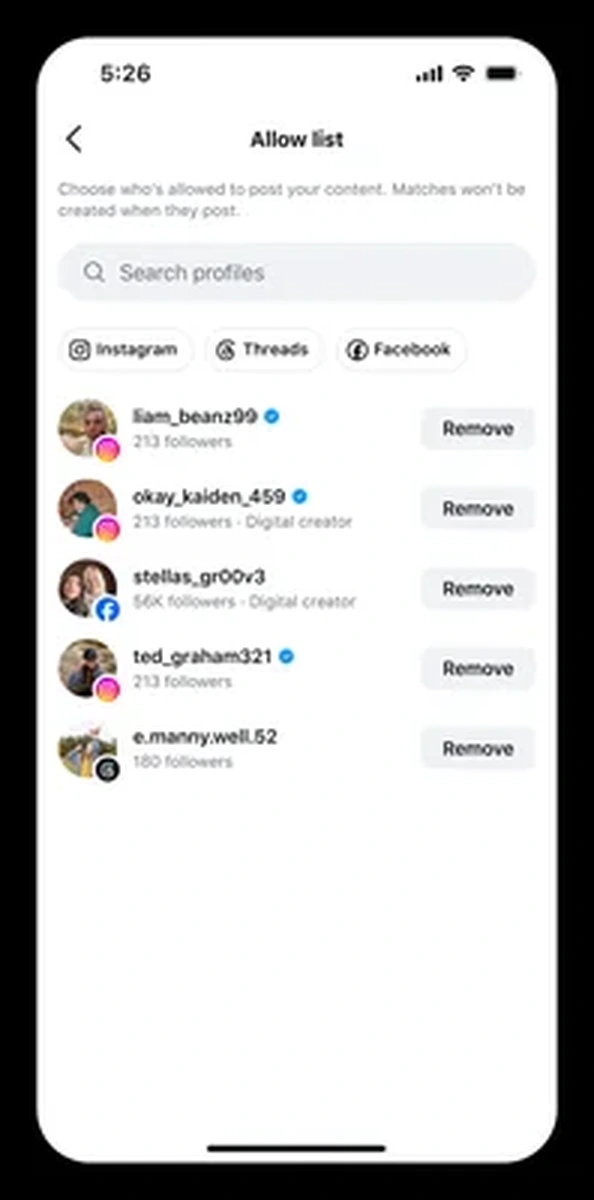
The Allow list lets creators authorize accounts such as a second profile, a collaborator or a brand partner. Permitted reposts are then excluded from matches requiring review. The interface displays account selection across Instagram, Threads and Facebook.
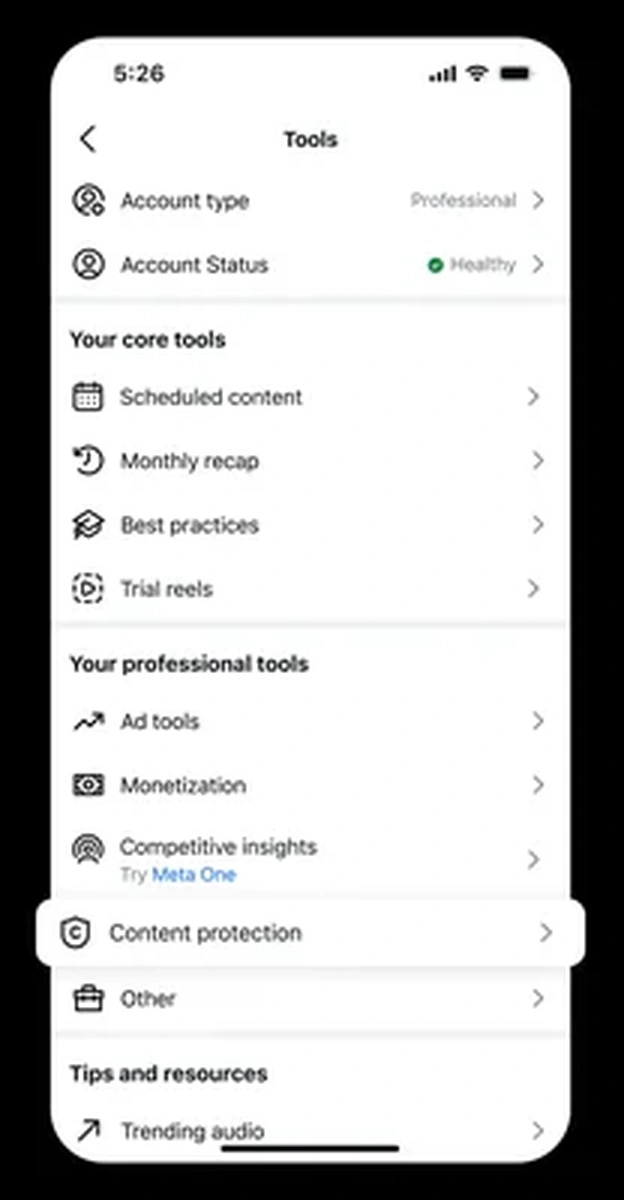
The feature is accessed through the professional tools area as Content protection. Meta’s interface examples also show alerts when a creator’s material has been found in a new Reel.
What about AI-modified copies?
Meta is exploring tests for more complex cases where parts of original speech or audio are reused while visuals are changed, potentially with AI tools. This should not be confused with today’s visual-matching feature: it is a test or planned extension, not universal protection against every AI remake.
Creators’ rights have been in focus following Meta’s withdrawal of an AI feature that used public Instagram posts as visual references. This new tool addresses a different problem: finding and managing copies of videos within Meta’s platforms.
Eligibility and important limits
Content Protection is being made available to eligible creators, so not every account will immediately see the feature. An automatic match can flag a possible reuse, but it is not a legal determination of copyright ownership. If another account protects someone else’s video first, the original creator can dispute ownership within the tool or use Instagram’s intellectual-property reporting process.
What we think
Anyone who makes Reels knows how easily an edit can show up on another account without attribution. Often the most time-consuming part is not requesting action but discovering where the video was copied in the first place. A consolidated matches dashboard could make that much easier.
We particularly like having choices beyond simply hiding a copy. A filmmaker might want a collaborator to repost footage legitimately, or prefer a clear link back to the original rather than losing every view generated by a repost. The right response depends on the licensing agreement and context.
There is still a major limitation: matching software cannot always know who owns the rights or whether permission was granted. That makes the dispute process and properly maintained allow lists just as important as detection itself.
Frequently asked questions
Are all Instagram videos automatically protected?
No. Content Protection is available to eligible creators who enroll, and availability can vary by account.
Can collaborators repost my videos with permission?
Yes. Authorized accounts can be added to the Allow list so their reposts are excluded from automatic matching alerts.
Does it already detect every AI-modified video?
No. The main feature identifies visual matches. Detecting more complex remixes, including altered visuals that retain original audio, is being tested.