

Summary
- Stuart Dunn breaks down the cinematography of How to Live on Earth: 15–18 months of filming, RED Raptor VV, ZEISS primes, 8K RAW and a detailed style guide that kept the film visually consistent across locations.
- 15–18 months of filming, in shoots lasting a few weeks
- The style guide that keeps different countries inside the same film
- RED Raptor VV and ZEISS primes
- 8K RAW, focus pulling and very fast apertures
- The environment can be harder than the camera
- Beauty as a storytelling tool
- How to Live on Earth is now free to watch
- What we think
- Frequently asked questions
Shooting wildlife on an international documentary scale is not only about long lenses and patience: for Director of Photography Stuart Dunn, the crucial element is building a visual system that can remain consistent from the Amazon rainforest to a museum in London.
In a new ZEISS interview, Dunn — whose credits include National Geographic and BBC productions as well as projects with David Attenborough — breaks down the work behind How to Live on Earth, the Open Planet Studios feature documentary presented and narrated by Benedict Cumberbatch. Directed by Fredi Devas, the film travels from Mexico and Singapore to Chad and the Amazon, exploring how humanity can work with nature rather than against it.
For image-makers, the most useful part is how that visual continuity was built: roughly 15–18 months of photography, small crews, a detailed style guide, RED Raptor VV cameras, ZEISS primes, 8K RAW and constant decisions in the field.
15–18 months of filming, in shoots lasting a few weeks
Dunn says that roughly 15–18 months passed between the first meeting and the completion of principal photography. It was not one continuous expedition: individual shoots typically lasted two or three weeks, while he continued working on other productions in between.
As Director of Photography, his role went beyond the material he personally shot. He wrote the production style guide, defining lenses, focal lengths, camera technology, lighting approach and the basic method for different types of scenes. He estimates that he personally filmed around 80–85% of the documentary, while other cinematographers followed the same visual framework.
The style guide that keeps different countries inside the same film
One of the most practical details in the interview is how specific that style guide became. For an interview, the production could use three cameras: an A camera on an 85mm lens, a B camera on a 50mm and a C camera using a specified zoom and angle. Character introductions were designed around gimbal shots, while scene introductions would ideally use a slider or gimbal.
The instructions could go as far as the position of the key light relative to the subject and the f-stop used on the lens. The objective was simple: even when Dunn could not attend a shoot, the material still had to cut seamlessly into the same film.
RED Raptor VV and ZEISS primes
For the main production Dunn chose the RED Raptor VV, aiming for high resolution and the full VistaVision image inside a roughly 2.35:1 cinematic frame. On location he mixed ZEISS CP.2 Super Speed and CP.3 lenses. Because the wider CP.2 lenses do not cover the entire VistaVision frame, CP.3 lenses were used for some of the wider shots.
He says he particularly likes the CP.2 T1.5 lenses for their rendering of skin tones, flares and bokeh. For the Benedict Cumberbatch scenes at London’s Natural History Museum, the production used ZEISS Supreme Primes on RED Raptor VV cameras.
Time inside the museum was especially limited: filming had to finish before the doors opened to the public at 9:00 AM. Cumberbatch’s scenes were shot over two mornings, with the crew beginning the build at roughly 3:00–3:30 AM.
8K RAW, focus pulling and very fast apertures
Despite the scale of the production, Dunn describes a location workflow in which he often operates and pulls focus himself. He prefers shallow depth of field and says he likes working around f/1.5, moving to roughly f/2.8 or f/3.5 when the scene requires it.
The main recording format was 8K RAW. The reason was not resolution alone: shooting 6K on the Raptor would crop the sensor, while Dunn wanted to retain the full VistaVision field of view and capture as much information as possible for post-production.
For monitoring and creative communication he generally used Rec.709 as a starting point, together with custom looks. Even though the footage was RAW, he deliberately pushed colour temperature in camera or through the lighting so that the editor and final grade could understand his intention for a scene from the start.
For viewing the image, he prefers an electronic viewfinder rather than an external monitor unless he is working on a dolly or slider. Inside the viewfinder he removes almost all overlays and keeps the image itself plus peaking for focus.
The environment can be harder than the camera
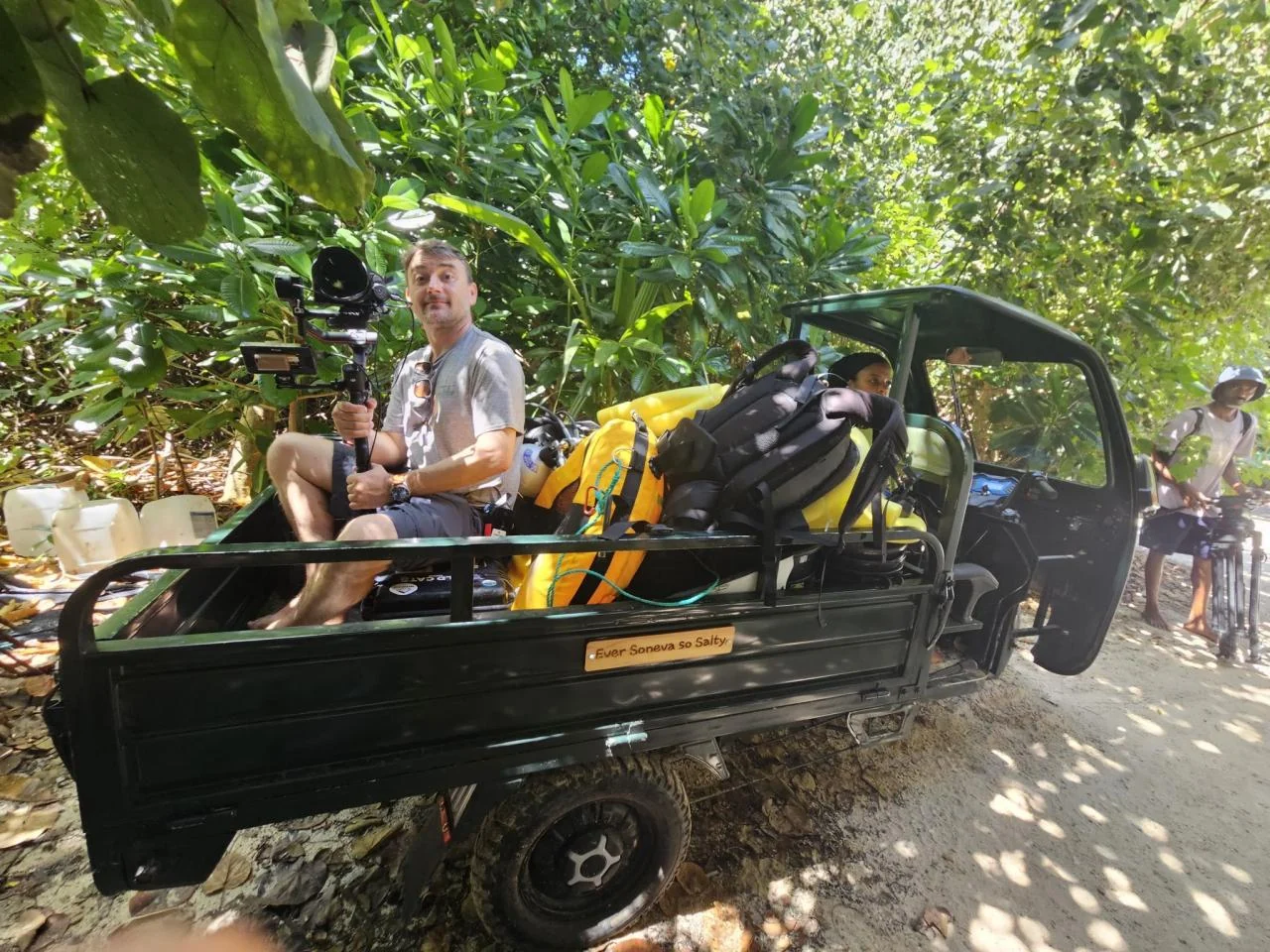
Location crews on How to Live on Earth were small and mobile. For the night scenes with rangers in Chad, Dunn describes a core four-person UK team — himself, director Fredi Devas, a sound recordist and an assistant producer — supported locally in the field.
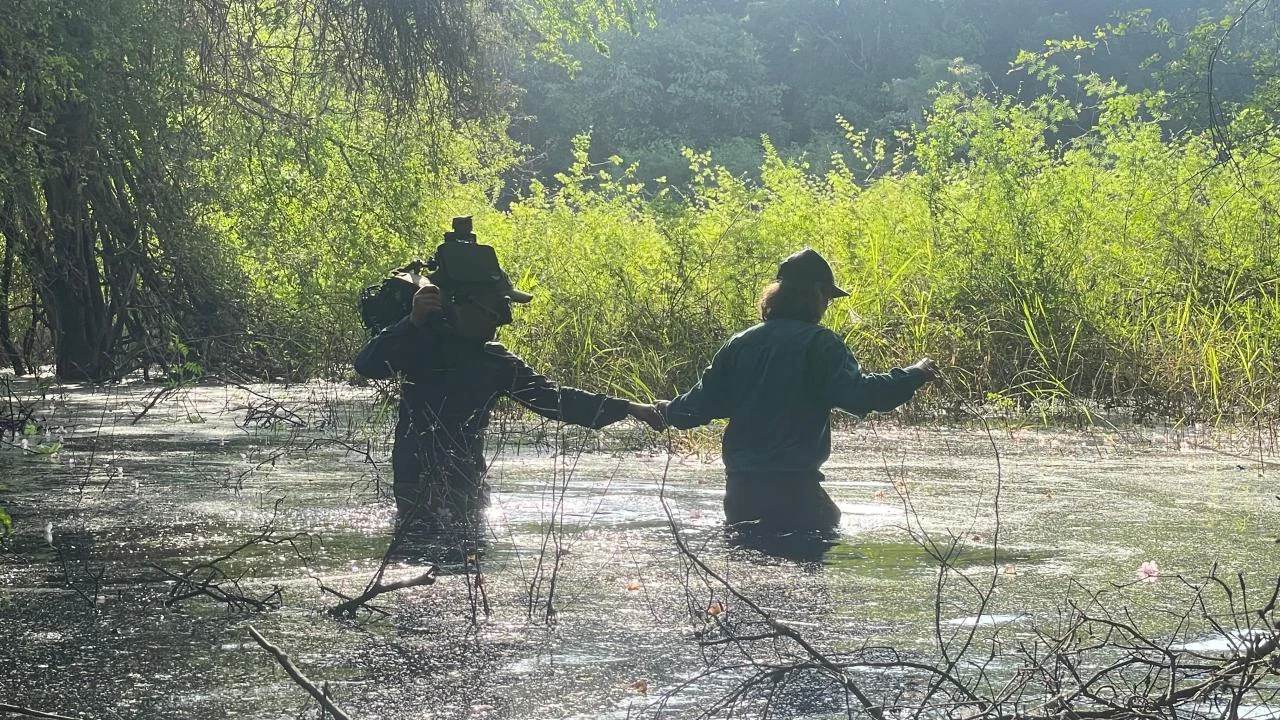
On other shoots, including the Ecuadorian Amazon, the problems began before the camera was even ready: moving equipment through the forest, humidity, moisture, saltwater, heat and simply keeping the gear working. In another production interview, Dunn says environmental conditions are often what create the biggest headaches on location.
Beauty as a storytelling tool
For Dunn, aesthetics are not separate from the environmental message. His approach is to place people within the natural world and photograph landscapes in a way that makes audiences care about them. That is why the production pursued a coherent cinematic language even when moving between jungles, cities and industrial locations.
A useful example is a gold mine shown in the film. Because access was limited, several aerial shots came from existing footage of that specific location. The choice was not to use generic stock, but material that showed the real mine and the real scale of the intervention.
How to Live on Earth is now free to watch
How to Live on Earth runs for 96 minutes and is an Open Planet Studios production in association with Villars Institute Foundation and Silvania. Fredi Devas is director and producer, Jonnie Hughes is producer and executive producer, Colin Butfield is executive producer, Matt Meech is editor and Stuart Dunn is Director of Photography.
After its theatrical run, the complete documentary was published on September 20, 2026 on the official Open Planet YouTube channel and is available to watch for free.
What we think
The most useful lesson in Stuart Dunn’s approach is not a particular camera body or lens, but the discipline of turning a visual style into a repeatable production method. When a documentary moves across continents with small crews and different operators, a carefully designed style guide can be as important as the equipment itself.
For wildlife and documentary creators, the second key point is that the technical workflow should communicate visual intent from the moment of capture: framing, lens choice, exposure, colour temperature and camera movement give post-production a clear direction instead of postponing every decision until later.
Frequently asked questions
How long did How to Live on Earth take to film?
Stuart Dunn says the photography period stretched across roughly 15–18 months, with individual shoots typically lasting two or three weeks.
Which camera and lenses were used?
The main combination was RED Raptor VV with ZEISS CP.2 Super Speed and CP.3 lenses. ZEISS Supreme Primes were used for the Natural History Museum scenes in London.
Which recording format was used?
Dunn says the production shot 8K RAW to use the full VistaVision sensor area of the Raptor. Monitoring generally started from Rec.709, together with custom looks.
Did Dunn shoot the entire film himself?
No. As Director of Photography, he estimates that he personally filmed around 80–85% of the material, while other cinematographers followed the style guide he created.
Where can I watch How to Live on Earth?
The complete documentary is available for free on the official Open Planet YouTube channel.