Summary
- Shannon Dill reveals the production choices behind Everest: The Other Side.
- The Canon R5 C was used at altitude with a body-worn battery system.
- Two DJI drones rotated to cover the descent.
- A team of around 45 people endured storms and difficult acclimatisation.
How do you film on Everest when your crew lives at 5,500 metres for weeks, batteries are freezing and the decisive shot cannot be repeated?
Producer Shannon Dill explains the preparations and camera choices behind Everest: The Other Side, directed by Elizabeth Chai Vasarhelyi and Jimmy Chin and following ski mountaineer Jim Morrison. The story of the film and the descent on Everest’s North Face has an equally demanding dimension behind the cameras.
Canon R5 C on the ascent, C400, C70 and C80 lower down
Before the first expedition, the crew tested cameras of different sizes in sustained cold conditions. They needed footage suitable for large cinema screens, alongside equipment that people wearing heavy gloves and mountain clothing could actually operate.
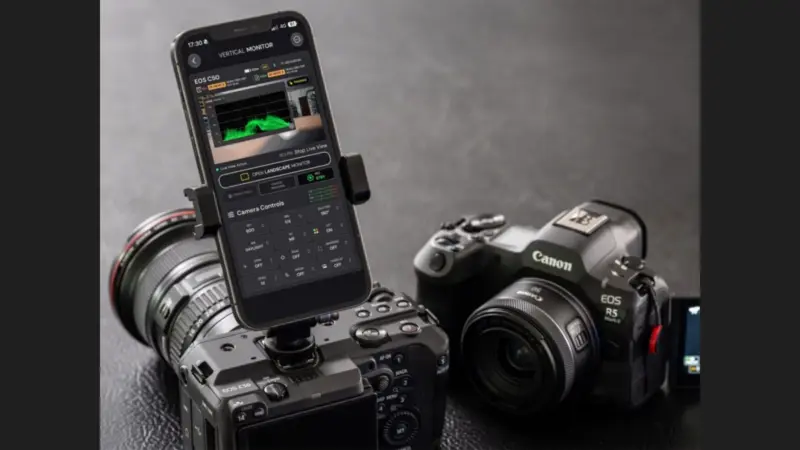
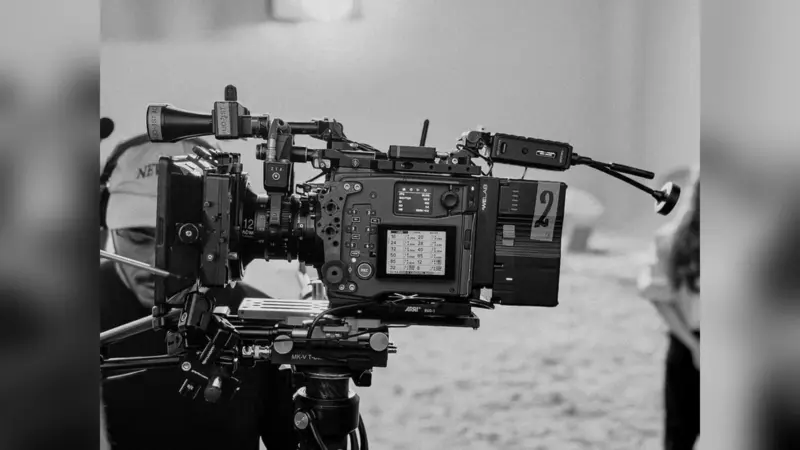
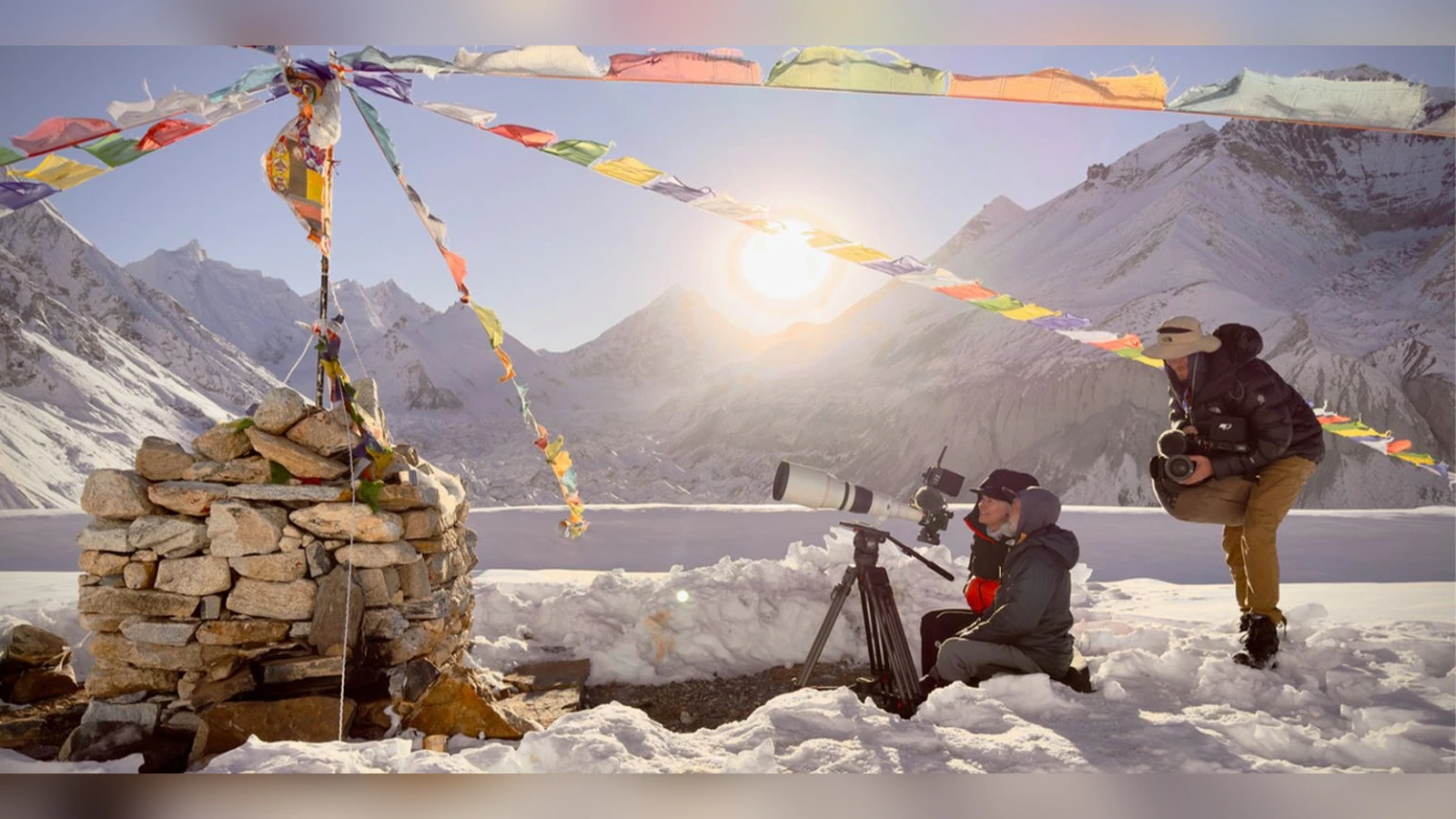
The Canon EOS R5 C became the main lightweight high-altitude camera. Its battery system could be worn underneath insulated suits to keep the power source warmer and extend operating time. At lower elevations, the team used Canon EOS C400, C70 and C80 cameras, with a selection of zoom and prime lenses and ND filters.
GoPro HERO12 cameras supplied first-person views. They were worn not only by filmmakers but also by climbers, Sherpa team members, route-fixing crews and on-camera participants. The edit could therefore move between the cinematographers’ viewpoints and the personal experience of people on the face.
Two drones for a one-time opportunity
The aerial unit used DJI drones sourced in China to meet local requirements. Leo Hoorn and Savannah Cummins operated from Camp 1, around 6,100 metres (20,000 feet) above sea level.
There was no chance to repeat the climb or descent for the sake of another shot. The operators kept two drones in rotation: while one flew, the other was prepared, with footage offloaded and batteries swapped. This arrangement helped them work around limited flight endurance while keeping coverage continuous.
45 people, three camps and demanding logistics
The international team numbered approximately 45 people from the United States, Canada, the United Kingdom, China, Nepal and Ecuador. Base camp stood at 15,000 feet, advanced base camp around 18,000 feet and Camp 1 at 20,000 feet. Expeditions took place over three consecutive years.
Local porters and yaks carried food, supplies, climbing equipment and cameras. With limited electricity and communications, the team relied heavily on solar energy. Major storms stranded the crew for days during the final two years, followed by thawing snow that flooded their camps.
When crew safety sets the schedule
Dill was not a climber, and describes acclimatisation as one of the greatest production challenges. Preparations began roughly a month before departure, and each member ascended gradually at an individual pace. She spent weeks at advanced base camp during each expedition, including one stay lasting two months.
One of her greatest concerns was high-altitude cerebral oedema (HACE), a potentially fatal emergency associated with altitude sickness. Staying healthy was essential both to personal safety and the ability to complete filming.
Interviews recorded during weather-enforced downtime also brought crew members, including Erich Roepke, into the story. Their experiences became more than behind-the-scenes material: they helped explore the risks faced by both the athletes and filmmakers.
What we think
What stands out here is that the camera decisions were not driven by which model produced the most impressive lab image. They were driven by what someone could actually operate with thick gloves, where even a battery change could be difficult.
The R5 C power system worn inside a suit is a useful reminder even on far less extreme shoots: power management, physical controls and media protection are part of cinematography. The same goes for the two-drone rotation. Backup equipment was actively integrated into the shooting plan rather than merely kept in reserve.
There is a human lesson, too. A production this demanding does not succeed because someone owns the most expensive camera. It succeeds when people can work together, recognise when to stop, and come back with footage safely captured. That applies to any film crew.