Summary
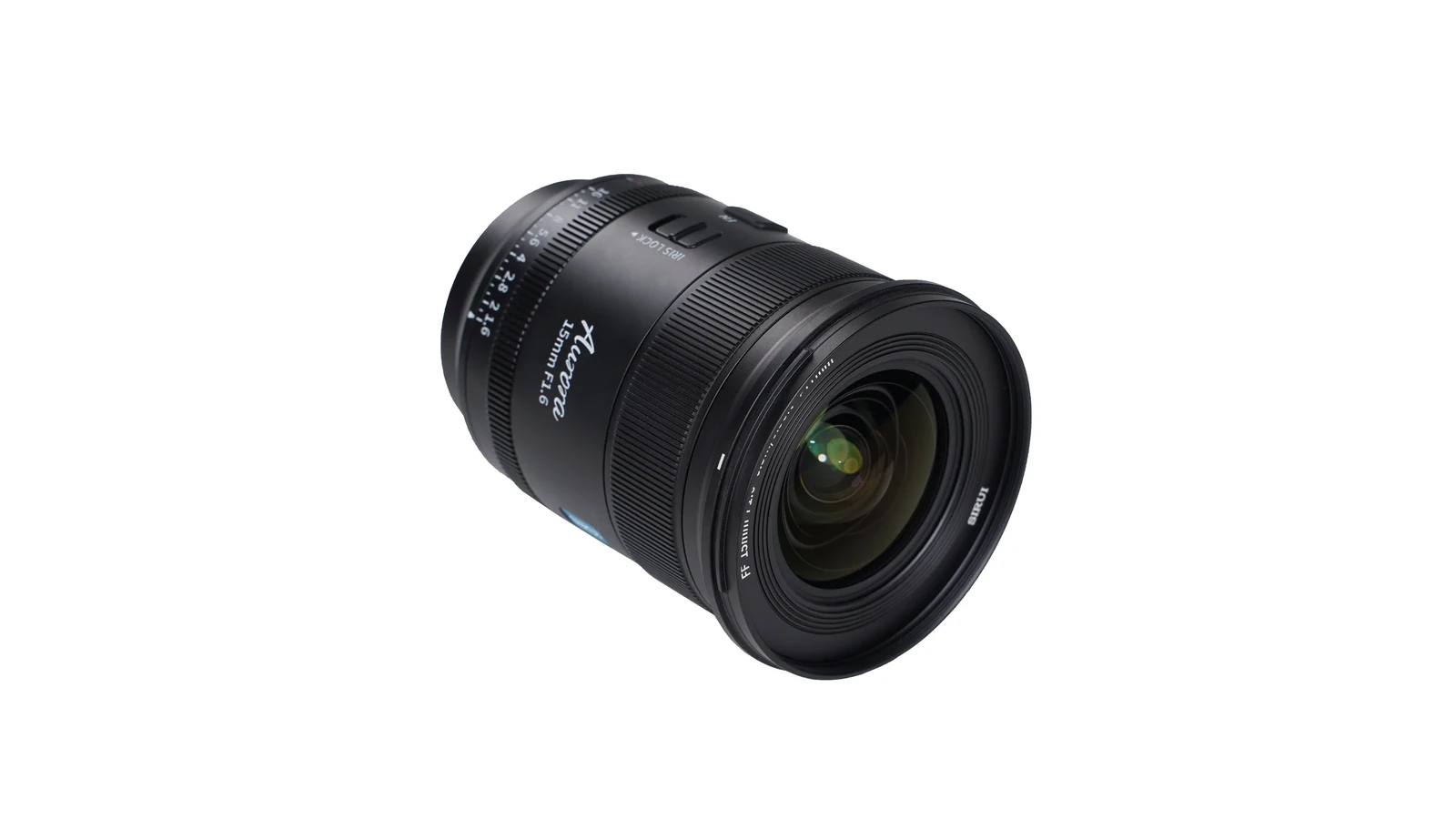
- SIRUI has launched its full-frame Aurora 15mm f/1.6 and 24mm f/1.4 autofocus primes.
- Both initially come in Sony E and L-Mount versions with useful video-oriented controls.
- The 15mm accepts 77mm filters and the 24mm uses 62mm filters.
- Official European prices are €649 and €539 respectively.
SIRUI is expanding its full-frame Aurora autofocus lineup with two fast wide-angle primes: a 15mm f/1.6 for expansive scenes and a 24mm f/1.4 for more versatile everyday photography and video.
Both are launching in Sony E and L-Mount versions, combining large apertures, metal barrels and practical controls for filmmakers. The range began with the Aurora 85mm f/1.4 and now covers substantially more focal lengths.
Pre-production samples of both lenses were shown at IBC 2026. Their formal launch now brings full specifications and pricing.
A look at the lenses during IBC 2026:
SIRUI Aurora 15mm f/1.6: ultra-wide for night skies, landscapes and architecture
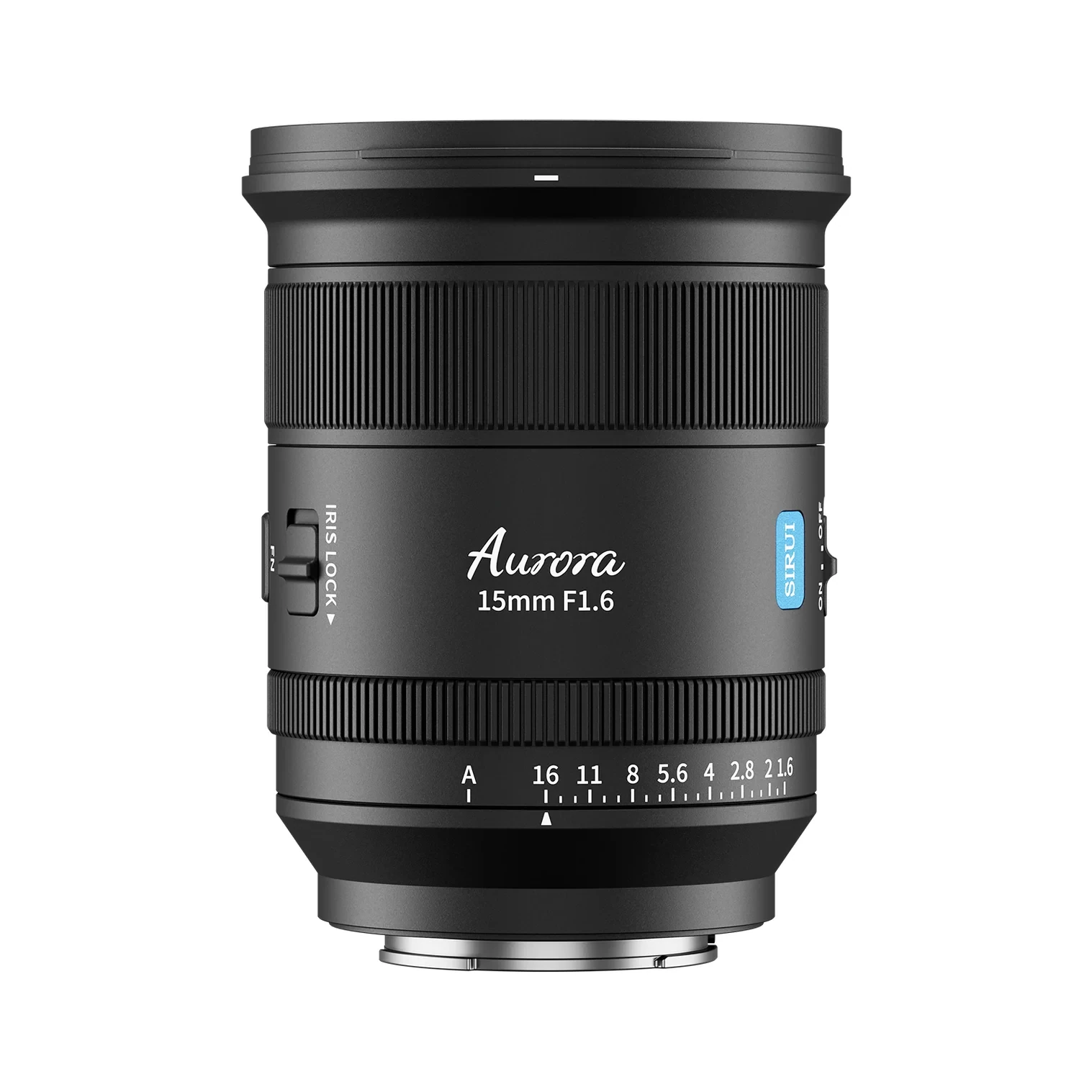
With a 109.3° diagonal field of view on full frame, the 15mm covers sweeping landscapes, interiors and night scenes. Its f/1.6 aperture offers more flexibility in low light. SIRUI also quotes optical distortion of approximately 1.4%, a manufacturer claim rather than an independent measurement.
Its optical formula comprises 17 elements in 12 groups, including three aspherical, three ED and three HRI elements. There are 11 aperture blades, a 30cm minimum focus distance and 0.08× maximum magnification. The Sony E version weighs 542g and is 106.4mm long without caps.
The 77mm front filter thread is particularly useful for standard screw-on ND filters in video and polarizers for landscapes. As with any ultra-wide lens, thick or stacked filters may need checking for vignetting.
More information here.
SIRUI Aurora 24mm f/1.4: a versatile fast wide-angle
The 24mm f/1.4 is intended for photographers who want to include subjects in their surroundings, from travel and documentary work to interviews, weddings and confined spaces. Its wide f/1.4 aperture offers more depth-of-field control than slower wide-angle alternatives.
It uses 14 elements in 11 groups, including three aspherical, four ED and three HRI elements, with 11 aperture blades. Minimum focus is 26cm, maximum magnification is 0.15×, and the filter thread measures 62mm. The Sony E version weighs around 550g.
More information here.
Autofocus and controls for stills and video
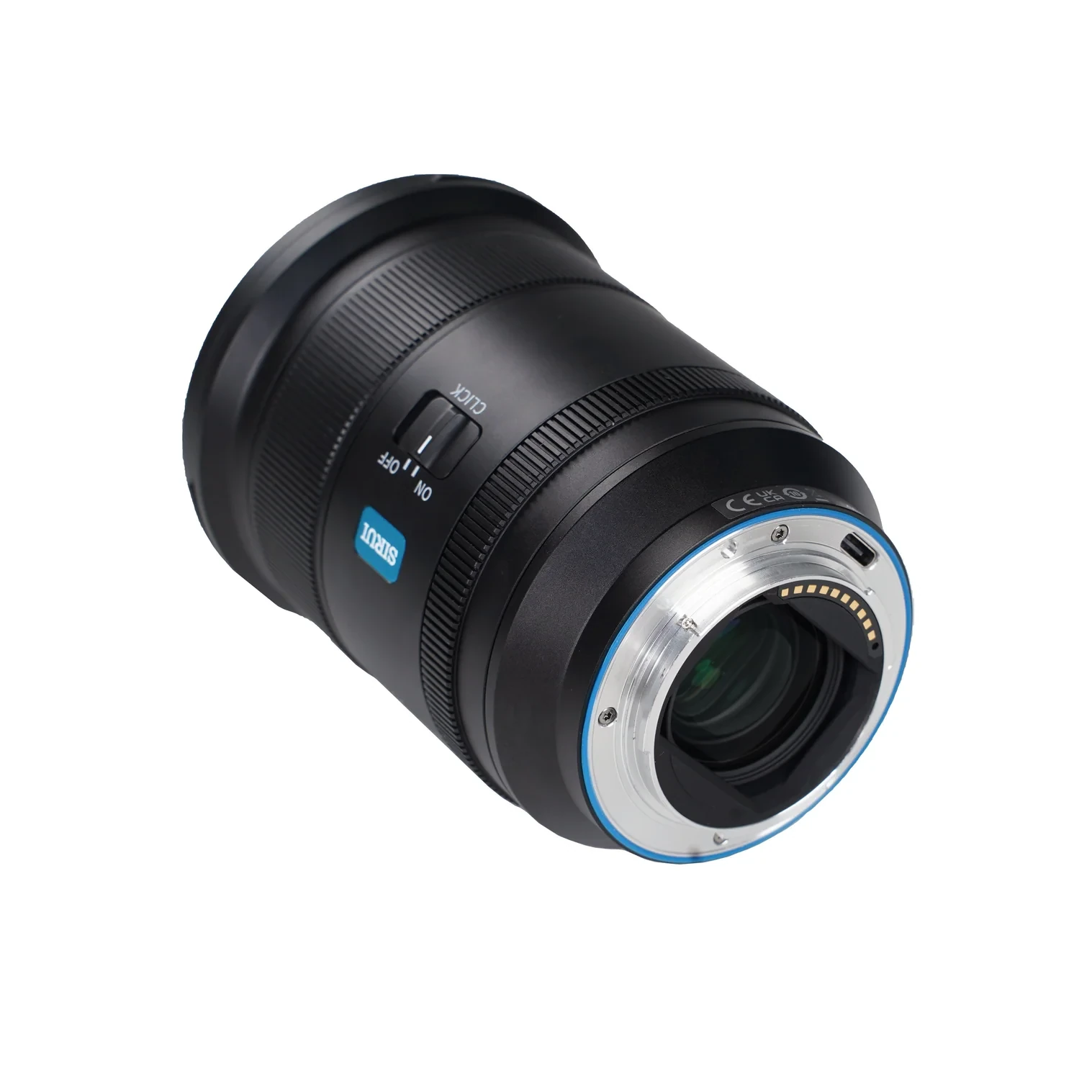
Both lenses use STM autofocus motors and support compatible cameras’ subject tracking and face/eye detection functions. SIRUI claims low focus breathing, which is desirable for focus transitions in video, but this is not an independently verified comparison.
The barrels include AF/MF switches, programmable Fn buttons, iris-ring locks and selectable clicked or de-clicked aperture control. There is a metal construction, protection against dust and splashes, and a USB-C port for firmware updates. They target a different buyer from the smaller, cheaper SIRUI Swift 20mm and 40mm lenses.
Key specifications
| Specification | Aurora 15mm f/1.6 | Aurora 24mm f/1.4 |
|---|---|---|
| Coverage | Full frame | Full frame |
| Optical design | 17 elements / 12 groups | 14 elements / 11 groups |
| Aperture blades | 11 | 11 |
| Minimum focus | 0.30m | 0.26m |
| Maximum magnification | 0.08× | 0.15× |
| Filter thread | 77mm | 62mm |
| Sony E weight | 542g | 550g |
| European price | €649 | €539 |
Price and availability
SIRUI’s official European store lists the Aurora 15mm f/1.6 at €649 and the Aurora 24mm f/1.4 at €539, including tax. The Sony E and L-Mount variants are listed for preorder/backorder. Nikon Z and Fujifilm X versions are planned but are not yet offered as selectable purchase options.
What we think
The 15mm is the more intriguing lens for us. An ultra-wide f/1.6 with a standard 77mm filter thread answers two practical needs for night-sky photographers and video shooters: gathering more light and controlling exposure without a special filter holder.
The 24mm may be more useful for a working creator who needs one wide prime across different jobs. For interviews or tight interiors, the fast aperture and de-clickable ring are genuinely useful controls rather than specification-sheet extras.
Aperture alone would not settle the purchase for us. We would want to examine star shapes toward the corners, flare around strong light sources and actual focus breathing, particularly on the 15mm. Both are attractively priced; those real-world results will determine whether either earns a permanent place in the kit.