Summary
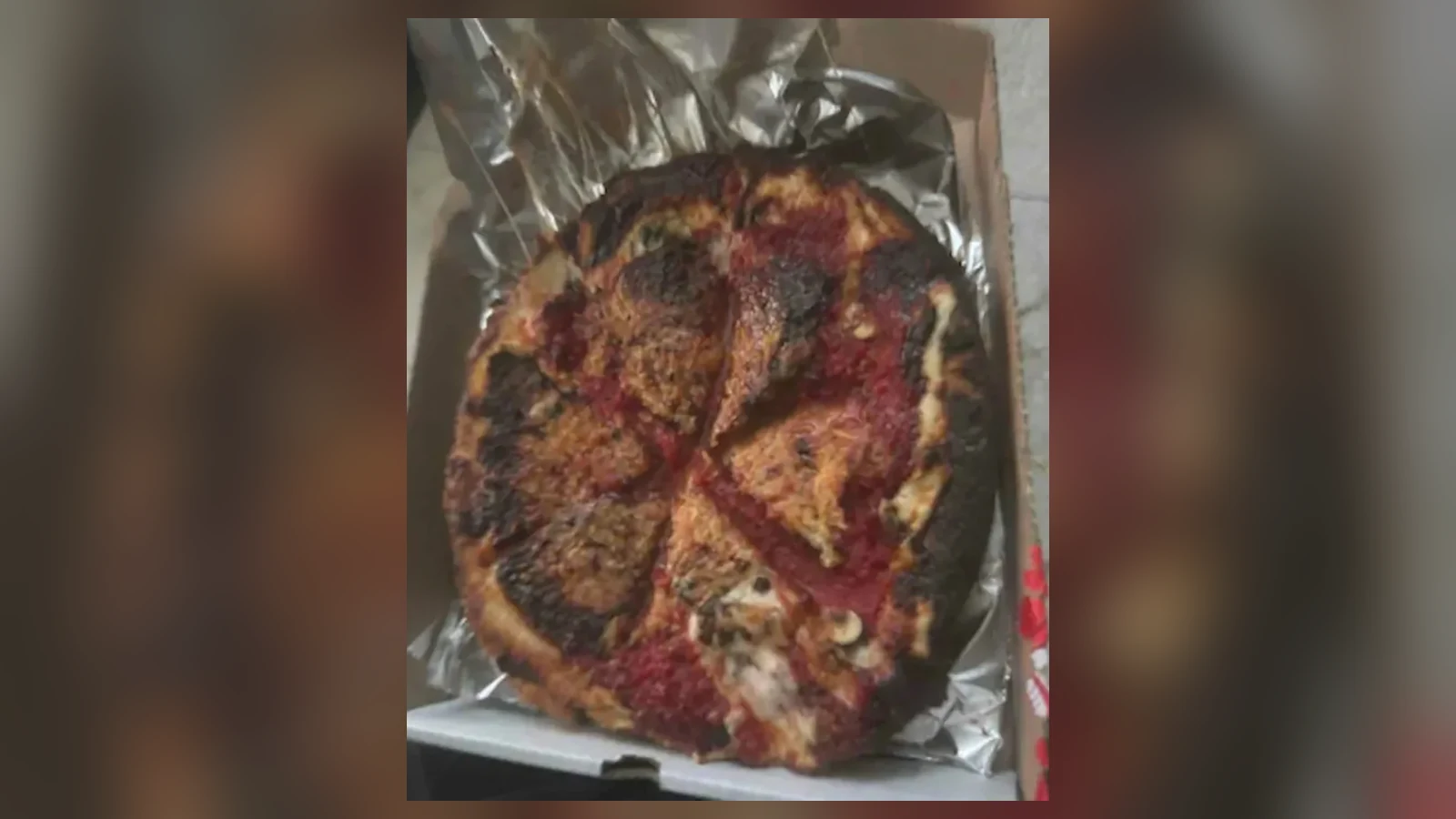
- A DoorDash customer submitted a burnt-pizza image to seek a refund from Masa of Echo Park.
- IsThisAI returned a 96% confidence score for AI generation.
- Kitchen security footage showed the order without the severe charring seen in the submitted image.
- The initial refund was reversed following the restaurant’s challenge.
A photo of an almost blackened pizza was used to request a refund in Los Angeles, but the image did not match footage recorded by the restaurant’s security cameras.
The incident involved Masa of Echo Park, known for its Chicago-style deep-dish pizzas. A DoorDash customer identified as “Dani B” claimed the order was too burned to eat, submitted a photo and demanded a full refund.
The photo that raised suspicions
Owner Rhonda Reynolds felt the image was inconsistent with the restaurant’s kitchen standards and what a pizza could plausibly look like when sent out for delivery. Rather than rely on her initial impression, she investigated.
An AI detector returned 96% confidence
Reynolds submitted the image to IsThisAI. Its result labeled the picture “AI-Generated” with a 96% confidence score, citing unnatural lighting on the crust, inconsistent shadow directions and unusual aluminum-foil texture.
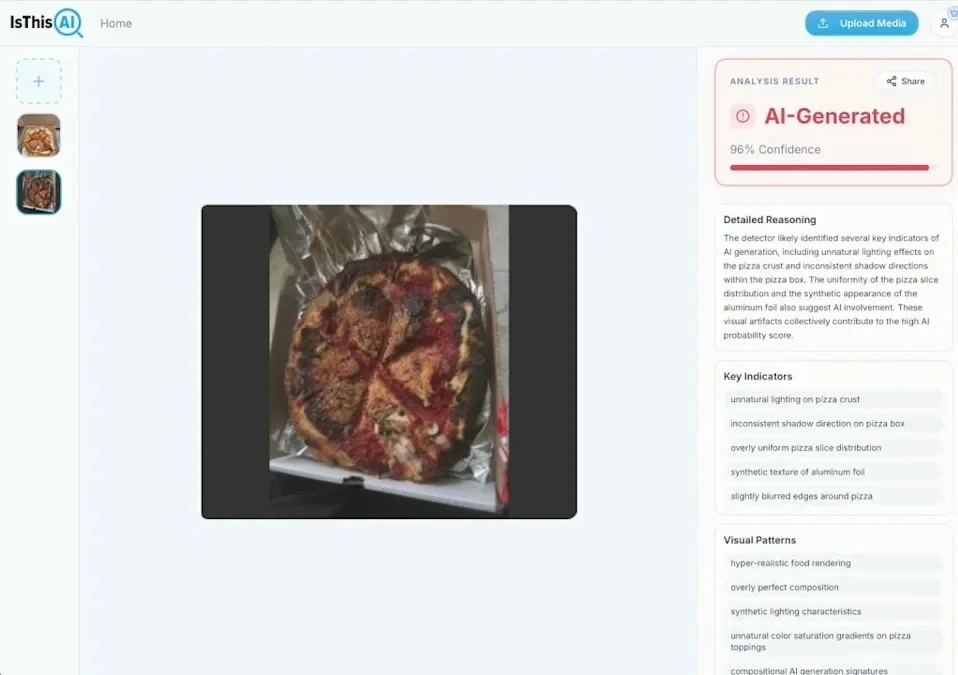
That 96% figure is the tool’s own assessment, not mathematical proof that the pixels were produced by AI. Detection services can make mistakes, which made the restaurant’s next step especially important.
Kitchen footage changed the case
The owner reviewed security-camera footage showing the order being removed from the oven and placed into its delivery box. The pizza did not appear severely charred as it did in the customer’s photograph.
Jose Tapa, the employee who boxed the order, said the package showed the customer’s name and order number, allowing the business to connect the footage to the specific transaction.
A refund had initially been issued, but the restaurant challenged it and the decision was reversed. Reynolds said this was her business’s first encounter with this kind of alleged AI-image scam and expressed concern about the burden such disputes could place on small businesses.
When an image is treated as evidence
The case illustrates why a single photograph, however persuasive, should not automatically be treated as proof. Checking recordings, timing and order details provided a stronger evidentiary basis here than simply assessing the appearance of the file.
Questions about photo provenance are already shaping camera research. The experimental CAIM1 camera, for example, is exploring cryptographic provenance data generated at capture—a different approach from detectors that inspect images after the fact.
What we think
The significant part of this story is not the eye-catching 96% score. It is that kitchen footage gave the pizzeria a way to investigate what actually happened. Had the owner relied on an AI detector alone, its reliability would still have been in question.
For those of us working with images, this is a practical illustration of the difference between “it looks real” and “I can document it.” Whether the setting is photojournalism or a mundane consumer dispute, an image needs context: who captured it, when, and what corroborating evidence exists.
An attempted scam need not be technically flawless to cause damage. It may be enough for a platform to approve a claim quickly without reviewing the rest of the record. Documentation and a meaningful appeals process matter for anyone forced to demonstrate that an image is misleading.