Summary
- CAIM1 creates cryptographic provenance evidence for photos and videos at the moment of capture.
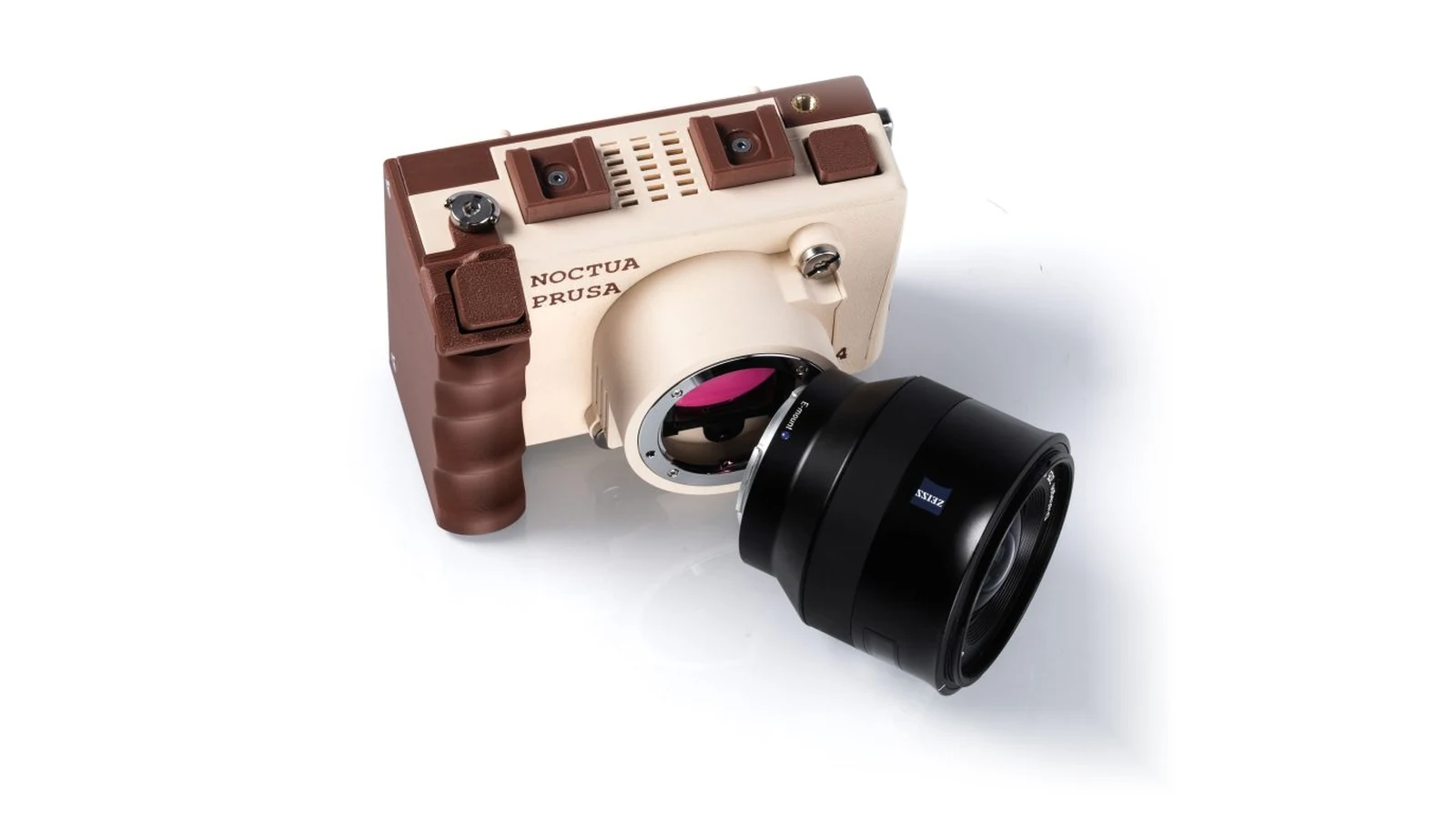
- The working prototype combines a Micro Four Thirds sensor, TROPIC01, 4K/60 processing and active Noctua cooling.
- Its enclosure is printed from Prusament PETG, and the team is targeting an initial production batch in 2027.
- A valid signature attests provenance, not necessarily the truth of the recorded scene.
Can a camera provide verifiable evidence, at the moment of capture, that a photograph or video originated from a physical device? That is the premise behind CAIM1, an unusual prototype that brings cryptographic attestation directly into camera hardware.
A new technical feature published by Prusa Research on October 29, 2026, explains how 3D printing shapes its enclosure and how the imaging pipeline and cryptographic processing are designed to operate together.
Turning an image into verifiable provenance
CAIM1 stands for Counter Artificial Intelligence Machine 1. Its creator, Josh Cowell, is developing a portable camera that records photos and video while generating cryptographic evidence tied to their origin. The goal is to let viewers check whether media is linked to a particular capture process rather than relying solely on what the pixels look like.
The device incorporates a TROPIC01 secure element from Tropic Square, an auditable RISC-V security chip used in a functioning hardware wallet. The project describes a sequence in which the camera creates proof at capture, anchors verification on decentralized infrastructure and makes it independently checkable. This is its proposed architecture, not a published security audit of the final camera.
CAIM1 also proposes an unusual physical extension: an optional printed receipt linked to the digital proof of a recording. In that model, provenance would not be confined to conventional file metadata.
Micro Four Thirds, 4K/60 and active cooling
The prototype uses a Micro Four Thirds sensor, a 4.3-inch touchscreen and an edge computing unit that, according to Prusa, processes 4K video at 60 fps while calculating cryptographic signatures. Those details describe the prototype architecture rather than an independent benchmark of final image quality.
Project images show a lens fitting through a Sony E-mount in front of the smaller sensor. For photographers, this does not mean a full-frame lens automatically provides a full-frame field of view: framing depends on the sensor dimensions, and final lens and autofocus compatibility has not been comprehensively documented.
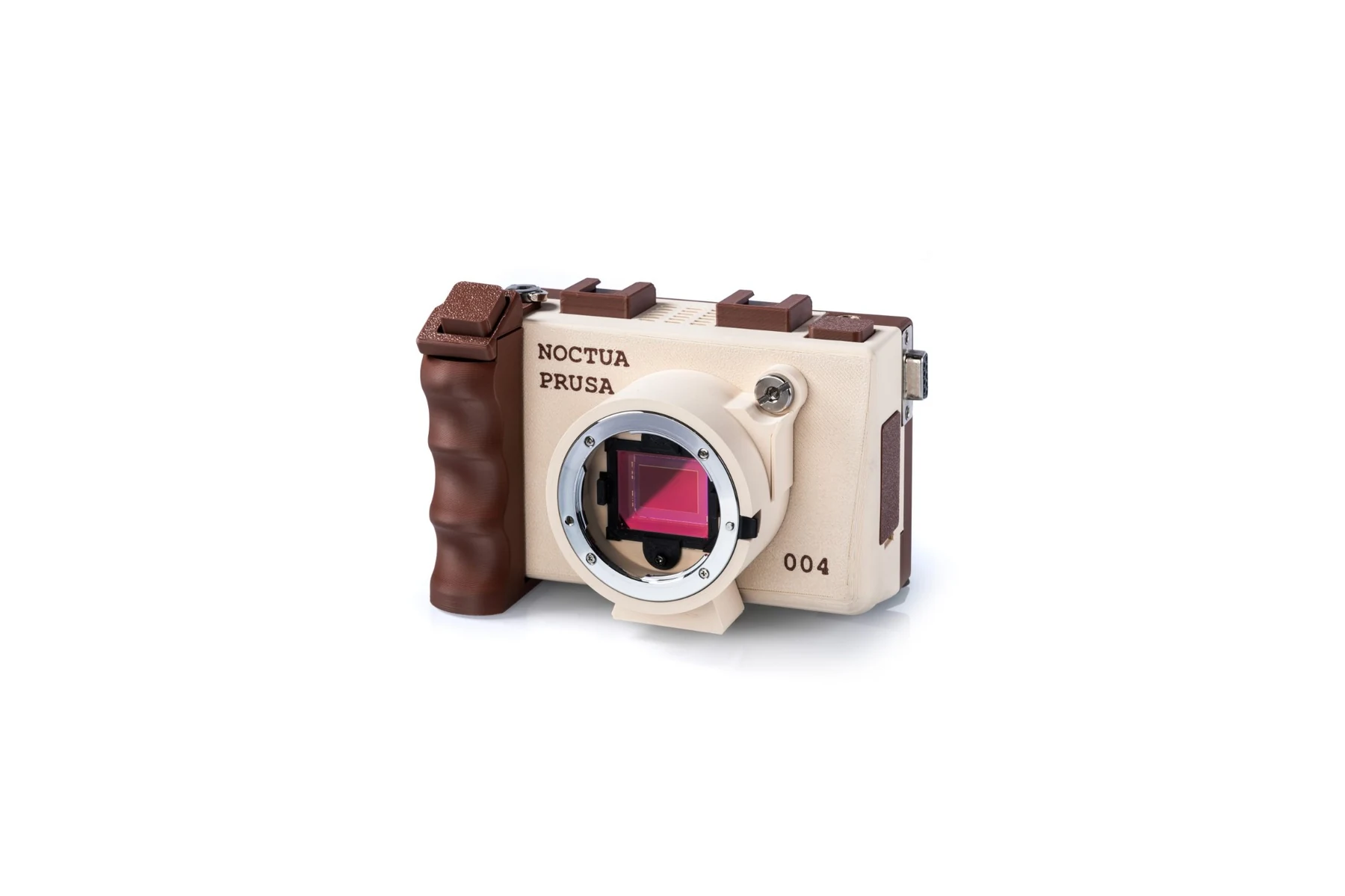
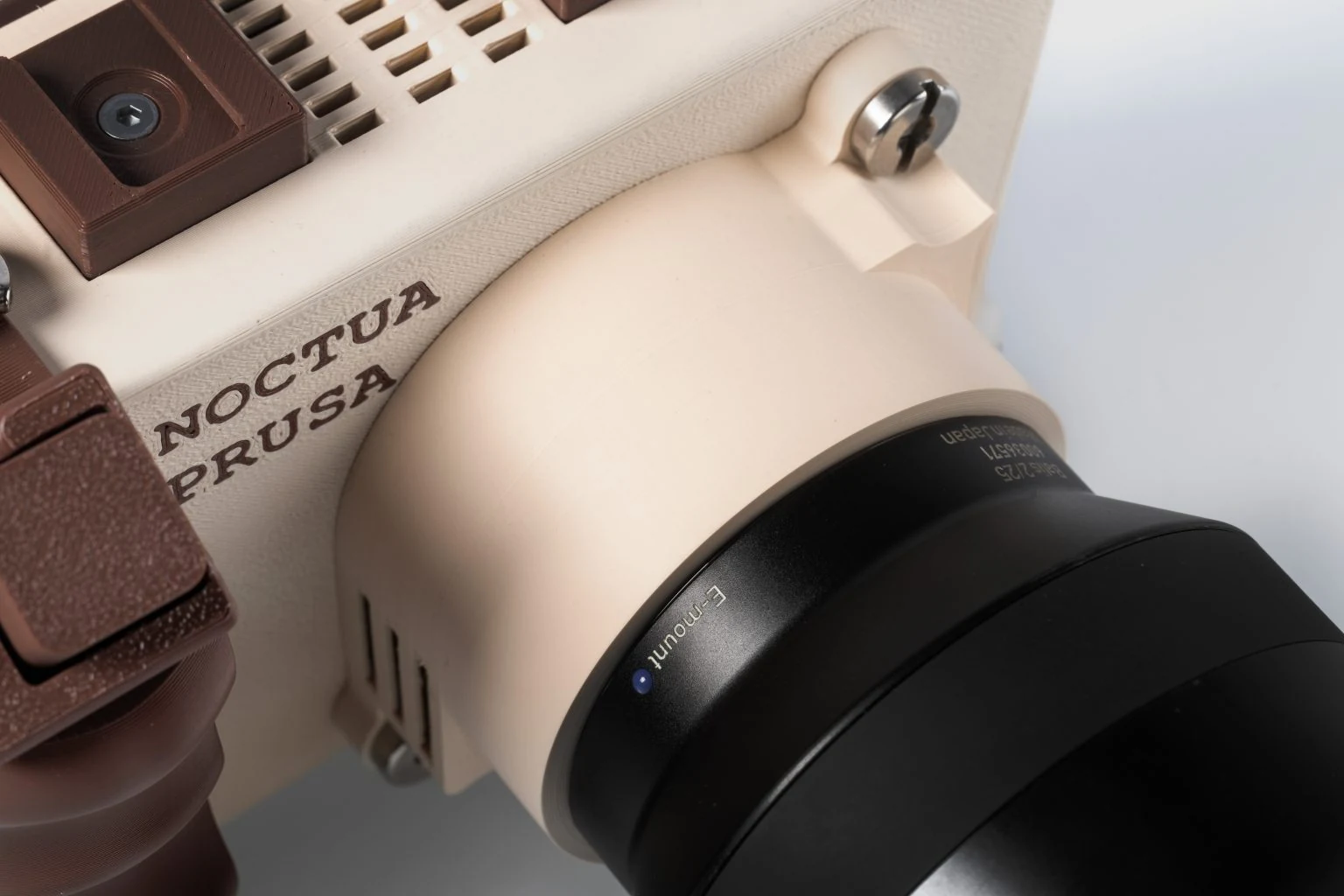
Running 4K/60 processing alongside cryptographic workloads generates heat. CAIM1 uses a Noctua NF-A4x10 5V PWM fan and a single airflow path: air enters the front grilles, passes across the sensor’s metal backplate, flows through the fan and over CPU heatsinks, then exits the body.
Why a 3D-printed camera body matters
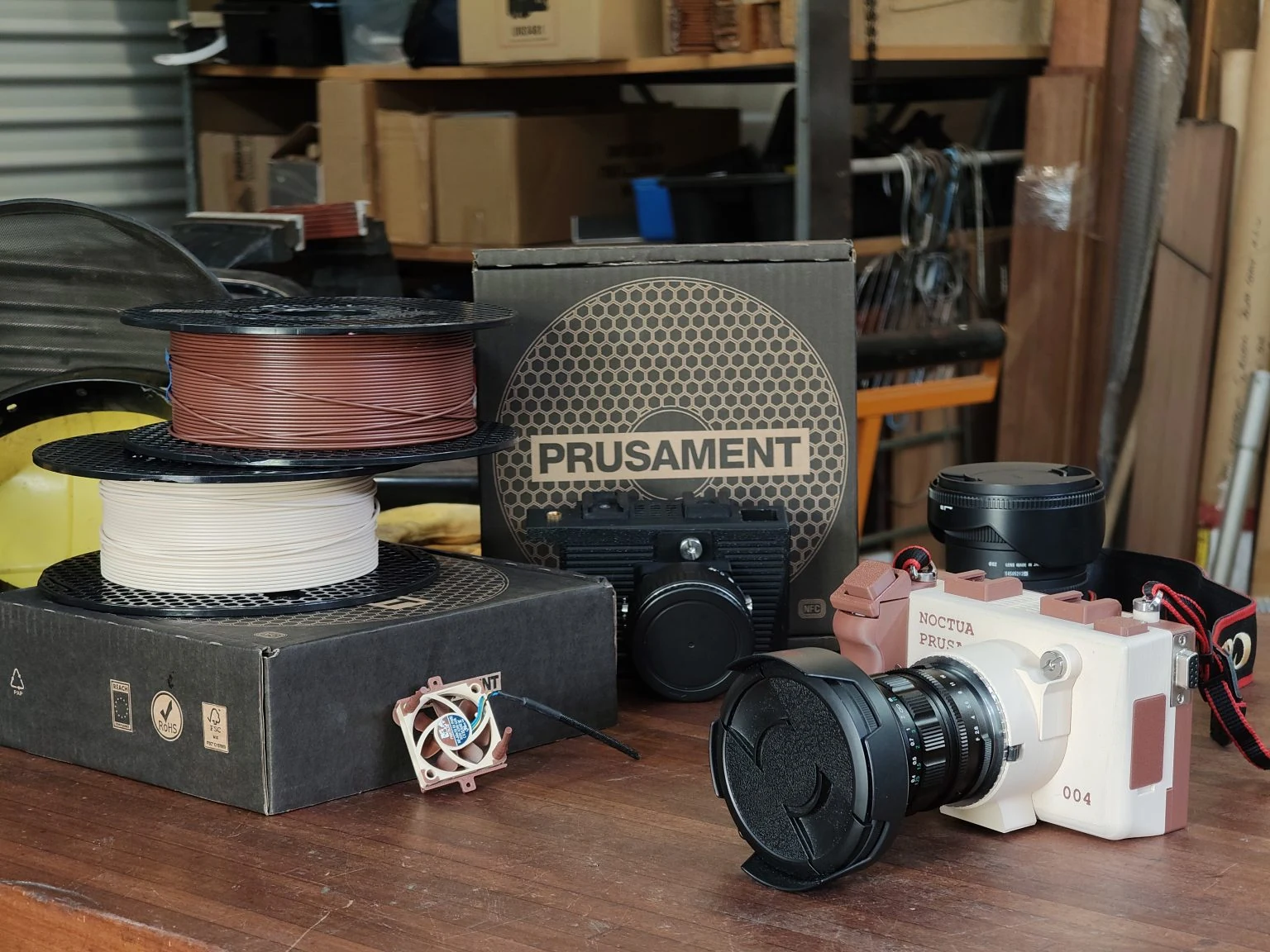
Prusa Research supports the project with Prusament PETG in Noctua Beige and Brown. Additive manufacturing lets the team revise air intakes, internal cooling channels and mounting points without commissioning new injection-molding tools for every change. Cowell says replacement panels can be printed locally within a few hours.
Prusa quotes a ±0.02 mm filament-diameter tolerance and PETG heat resistance of approximately 68–75°C. The former refers to filament manufacturing accuracy, not a certified alignment tolerance for the lens mount or sensor. What matters for this prototype is repeatable component production and heat-resistant ducting.
What cryptographic proof can—and cannot—establish
A cryptographic signature can help verify the origin of a file and flag subsequent changes that do not match its verifiable record. It cannot independently prove that the scene was spontaneous or accurately represented: staged events or even an image displayed on a screen can be photographed with a real camera.
The same issue is already affecting photojournalism. Canon’s Authenticity Imaging System uses C2PA data to document image provenance, while the Sony–Reuters newsroom workflow explores how provenance information can survive editing and video distribution. CAIM1 is experimenting with its own hardware and decentralized verification architecture; compatibility with every established C2PA workflow should not be assumed.
Development and availability
Prusa describes CAIM1 as an end-to-end working prototype that remains under active development and field testing. A small number of demonstration units exist, and the team is targeting an initial production batch in 2027. No official price, final retail specification sheet or firm sales date has been announced.
More information about the project here.
What we think
CAIM1 is compelling because it treats provenance as something photographers may need to deliver with the image. When someone dismisses a real photograph as “AI-generated,” a verifiable trail leading back to capture could be far more useful than another tool trying to infer authenticity from the pixels alone.
It is also a reminder of how much actual engineering this idea takes: a sensor, cooling, computing power, secure silicon and an enclosure that keeps changing with field feedback. The beige-and-brown body gets attention, but thermal management and cryptographic processing are what will determine whether the concept can cope with a long shooting day.
For photojournalism, documentary work or incident documentation, the key question is how easily a third party can check the proof—and what happens when footage is edited, exported or uploaded to a platform. Signing material inside a camera is a starting point. Creators also need to hand over a file that a recipient can genuinely verify.
Frequently asked questions
Can CAIM1 prove an image was not AI-generated?
It aims to provide cryptographic evidence that media came through its own physical capture pipeline. That alone does not establish whether the recorded scene was unstaged or truthful.
Can I buy CAIM1 now?
Not as a finished retail product. The team is testing functioning prototypes and targeting a first production batch in 2027, with no published price.
Is CAIM1 the same as C2PA?
Not necessarily. CAIM1 describes secure hardware and decentralized proof anchoring, whereas C2PA is a particular content-provenance standard. Full interoperability between the prototype and C2PA workflows has not been documented.