Summary
- Laowa has announced the international rollout of its 24mm f/2 Zero-D Tilt-Shift after an earlier launch in China.
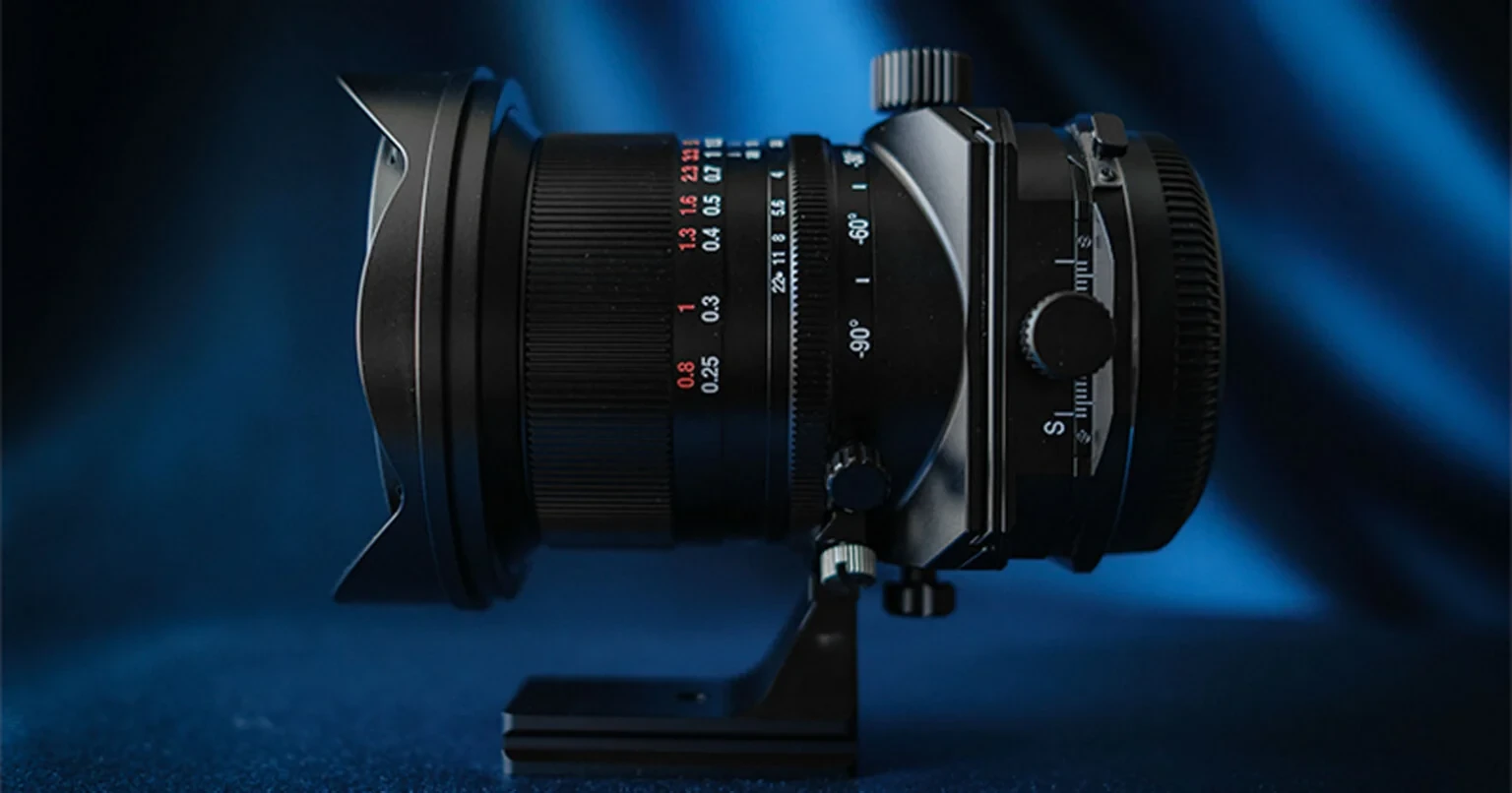
- The lens offers up to ±10° of tilt and ±12 mm of shift with a 67 mm image circle.
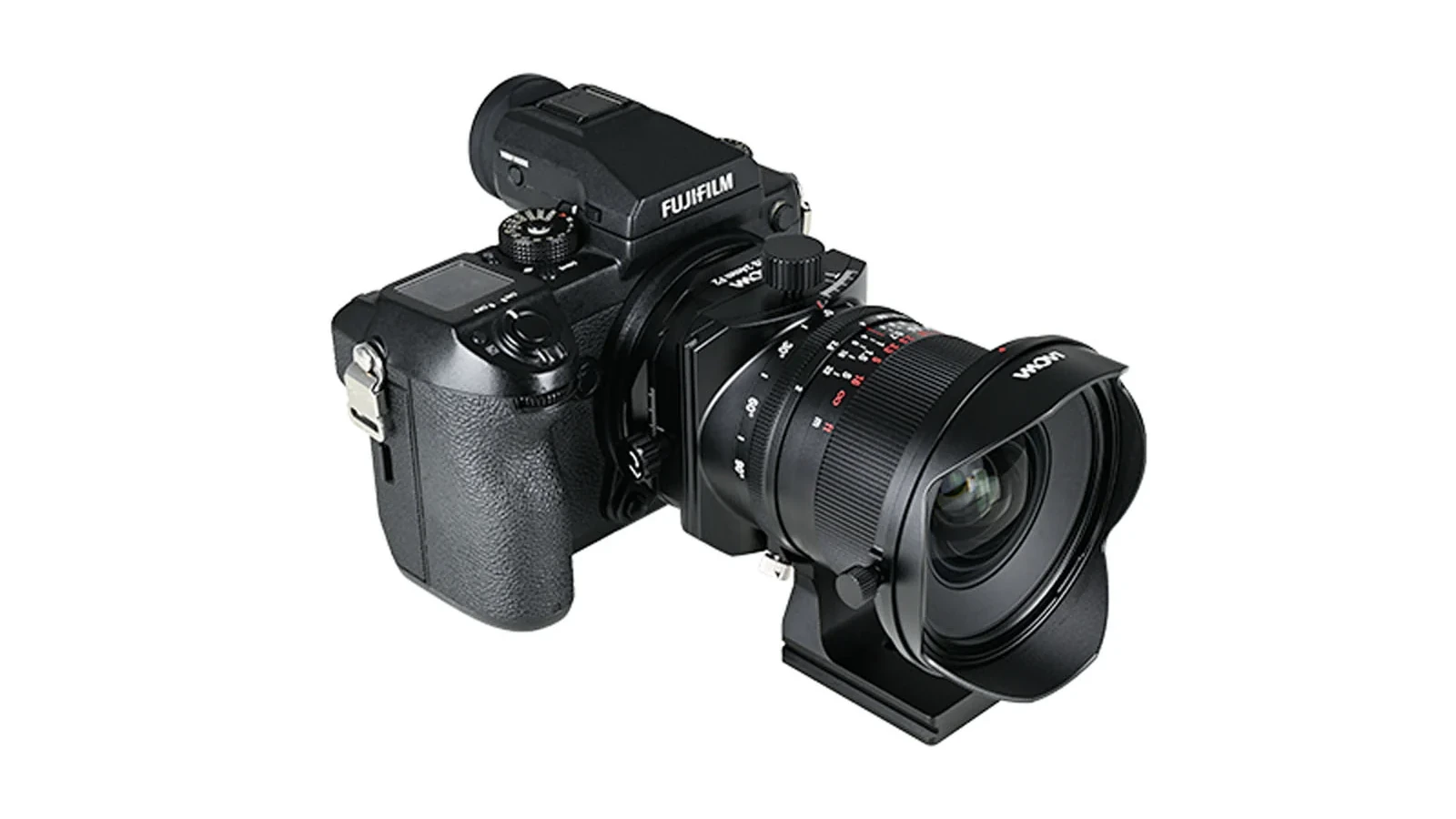
- It comes in six mounts, including Fujifilm GFX and Hasselblad XCD.
- The US price is $1,249.
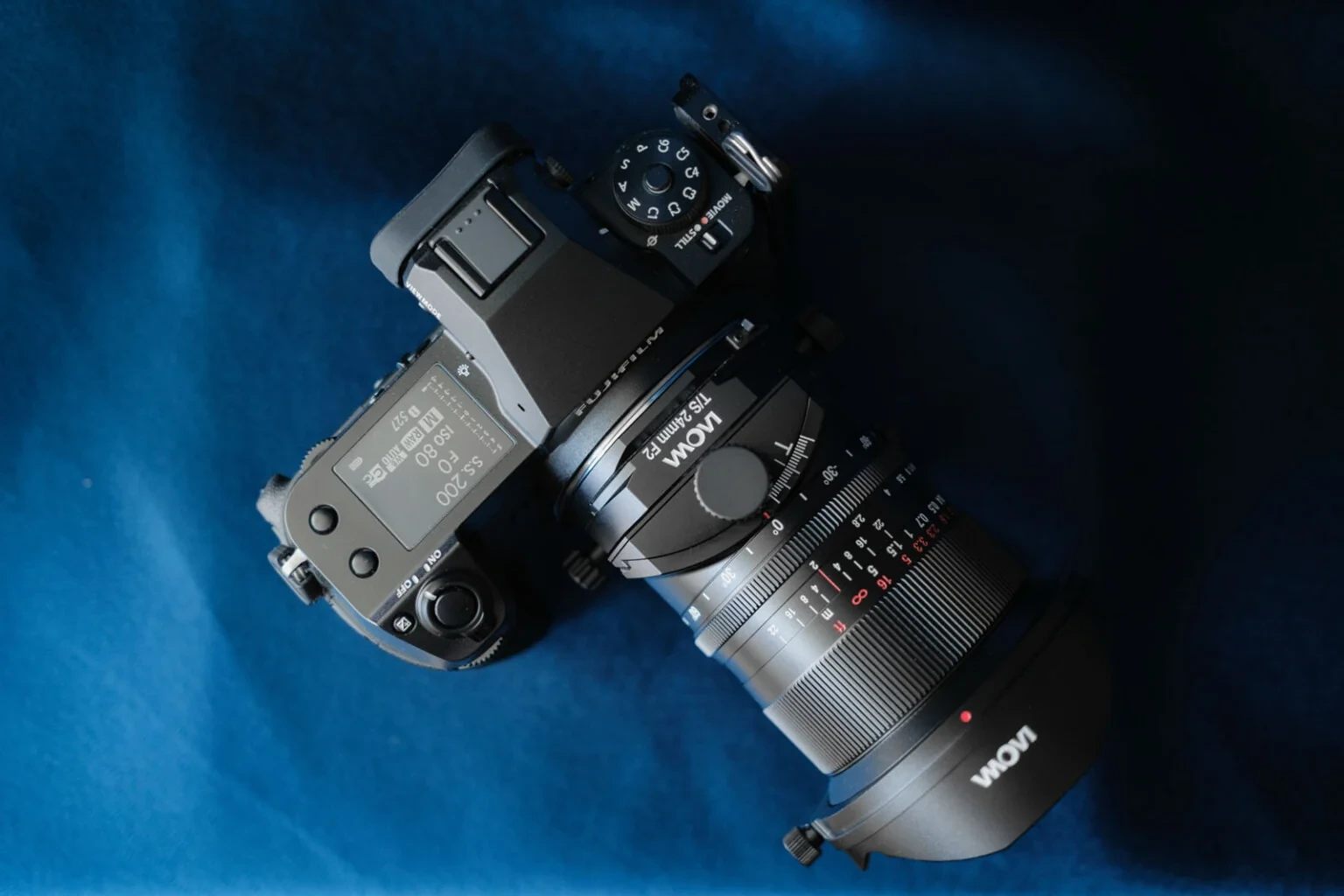
Laowa is bringing the 24mm f/2 Zero-D Tilt-Shift to international markets, combining perspective control with an unusually bright aperture for this type of lens.
Its November 5, 2026 announcement marks the international rollout, not the lens’s first appearance: it had already launched in China in September. The f/2 maximum aperture sets it apart from established designs such as Canon’s TS-E 24mm f/3.5 and Nikon’s PC-E 24mm f/3.5.
Perspective correction and control over the plane of focus
With ±12 mm of shift, photographers can reframe a scene without tilting the camera upwards. When shooting a building facade, that helps keep vertical lines parallel rather than converging. Shift also makes it possible to stitch together higher-resolution compositions.
Up to ±10° of tilt changes the orientation of the plane of focus. It can keep an angled surface sharp or, conversely, create a narrow area of selective focus. Maximum tilt and maximum shift cannot be applied simultaneously, and the available movement depends on the mount and focusing conditions.
What f/2 brings to interiors and night photography
Compared with an f/3.5 tilt-shift, f/2 gathers about 1.6 stops more light. That allows more flexibility with ISO or shutter speed when working in dim interiors, photographing buildings at dusk or shooting night landscapes. Focusing remains manual, but the wider aperture can also make composing and focusing in low light easier.
Of course, not every architectural photograph will be taken at f/2. Smaller apertures are often preferable when substantial depth of field is needed. The advantage is having the wider setting available when the situation calls for it.
Medium-format coverage and manual operation
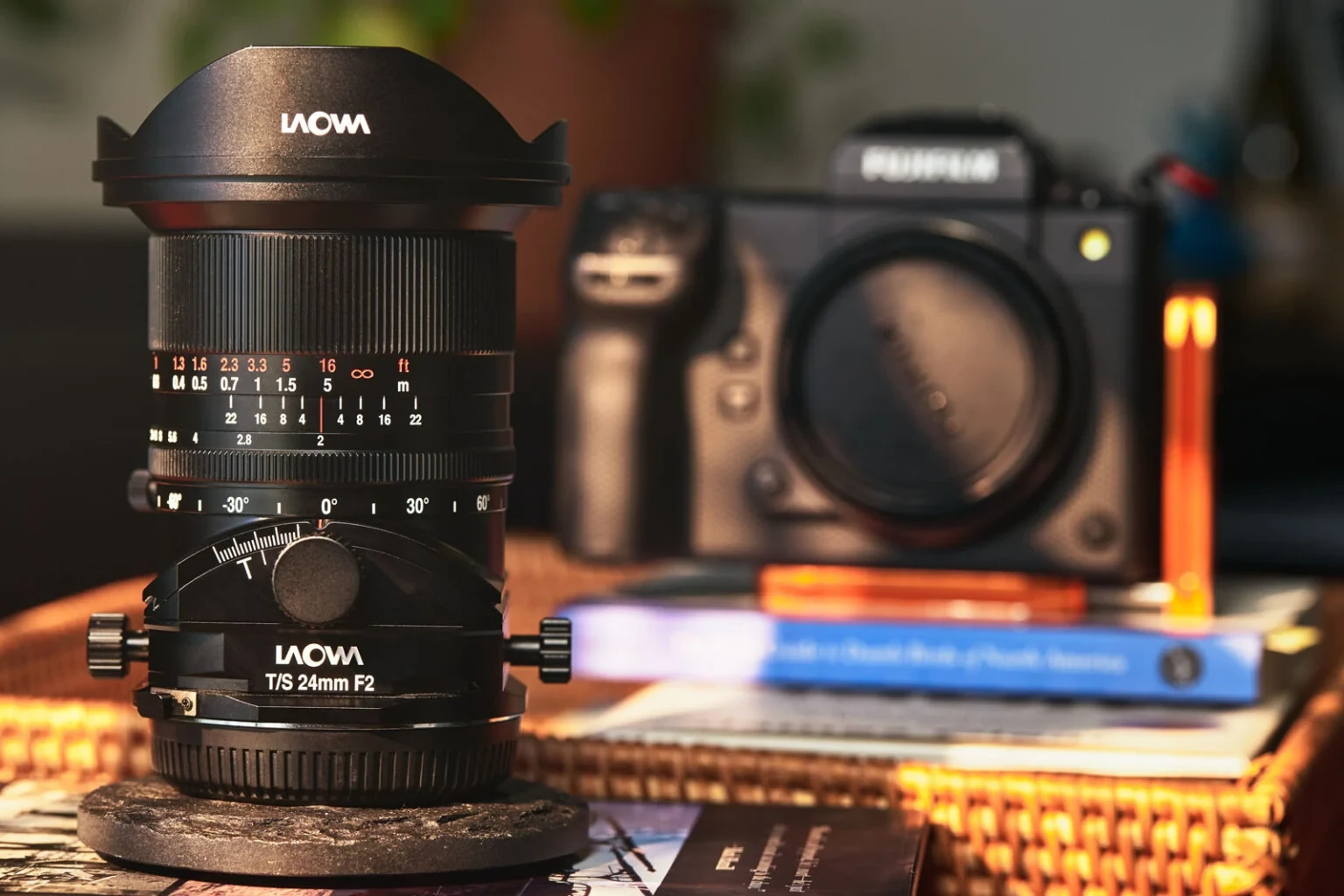
The lens has a 67 mm image circle, covering full-frame sensors as well as Fujifilm GFX and Hasselblad XCD medium-format systems. Its six mounts are Sony E, Canon RF, Nikon Z, L-Mount, Fujifilm GFX and Hasselblad XCD. L-Mount photographers should verify compatibility with their particular camera because some Panasonic models are excluded.
The optical design uses 13 elements in 10 groups, while the Zero-D name reflects Laowa’s aim of keeping geometric distortion to a minimum. Other specifications include a 14-blade f/2–f/22 aperture, 25 cm minimum focus distance, approximately 0.19× maximum magnification and a 77 mm filter thread.
The metal-bodied lens measures 93 × 119 mm and weighs around 860 g. The tilt-shift assembly rotates through 360° to change the orientation of the movements, and an Arca-Swiss-compatible support foot is included. Both focusing and aperture adjustment are manual.
Venus Optics already has the Laowa 55mm and 100mm f/2.8 tilt-shift macro lenses in its specialist range, combining perspective movements with 1:1 macro capability. The new 24mm serves a different purpose, offering a wide view for buildings and interiors with an emphasis on light gathering.
More information here.
Price and availability
The announced US price is $1,249. All six versions appear at €1,245 before VAT on Laowa’s Italian website, while the official Focus Nordic announcement lists a recommended €1,609 in its markets and shipments beginning in December 2026. Neither figure should be treated as a confirmed Greek retail price.
What we think
For architectural photographers, controlling perspective optically is still a major convenience. In tight interiors especially, keeping the camera level and moving the framing with shift can save both post-production corrections and cropped pixels.
The f/2 aperture is what makes this Laowa especially appealing. We would not use it wide open for every tripod-mounted real-estate shoot, but extra light is genuinely useful in a dark room or a night scene, without immediately changing lenses. There is also creative potential when combining tilt with a relatively wide aperture.
It remains a fully manual, specialist lens. For fast-moving reportage it is unlikely to be anyone’s everyday choice. But for work where careful framing and geometry matter as much as image quality, the combination of a 24mm field of view, tilt-shift movements and f/2 is compelling.
Frequently asked questions
What is the difference between tilt and shift?
Shift moves the framing without tilting the camera and is mainly used for perspective control or stitched images. Tilt rotates the plane of focus, allowing photographers to change how sharpness is distributed through a scene.
Does it offer autofocus or electronic aperture control?
No. The Laowa 24mm f/2 is manually focused, and the aperture is adjusted using the ring on the lens.