Summary
- Topaz Labs released Wonder 4 on November 3, 2026.
- Its Mixture of Experts architecture combines multiple repairs in one pass.
- Image HDR turns SDR photos into HDR JPEGs for compatible displays.
- Both are currently available through Web and Mobile.
Topaz Labs has introduced Wonder 4, a new AI model designed to address noise, blur and low resolution in a single pass, without sending a photo through a chain of separate enhancement tools.
Announced on November 3, 2026, it arrives alongside Image HDR, a separate feature that converts standard pictures into HDR JPEGs. Both are already available through Topaz for Web and Topaz for Mobile.
How Wonder 4 works
What makes Wonder 4 interesting is not merely that it combines several fixes. Its new Mixture of Experts architecture breaks a photograph into thousands of regions, according to Topaz, and assesses what each one needs. A blurred face can receive different treatment from a noisy background instead of applying an identical enhancement sequence to the entire frame.
In a single pass, the model combines upscaling, denoising, deblurring, sharpening, compression-artifact removal and face recovery. It selects the corrections automatically rather than asking users to configure each tool separately.
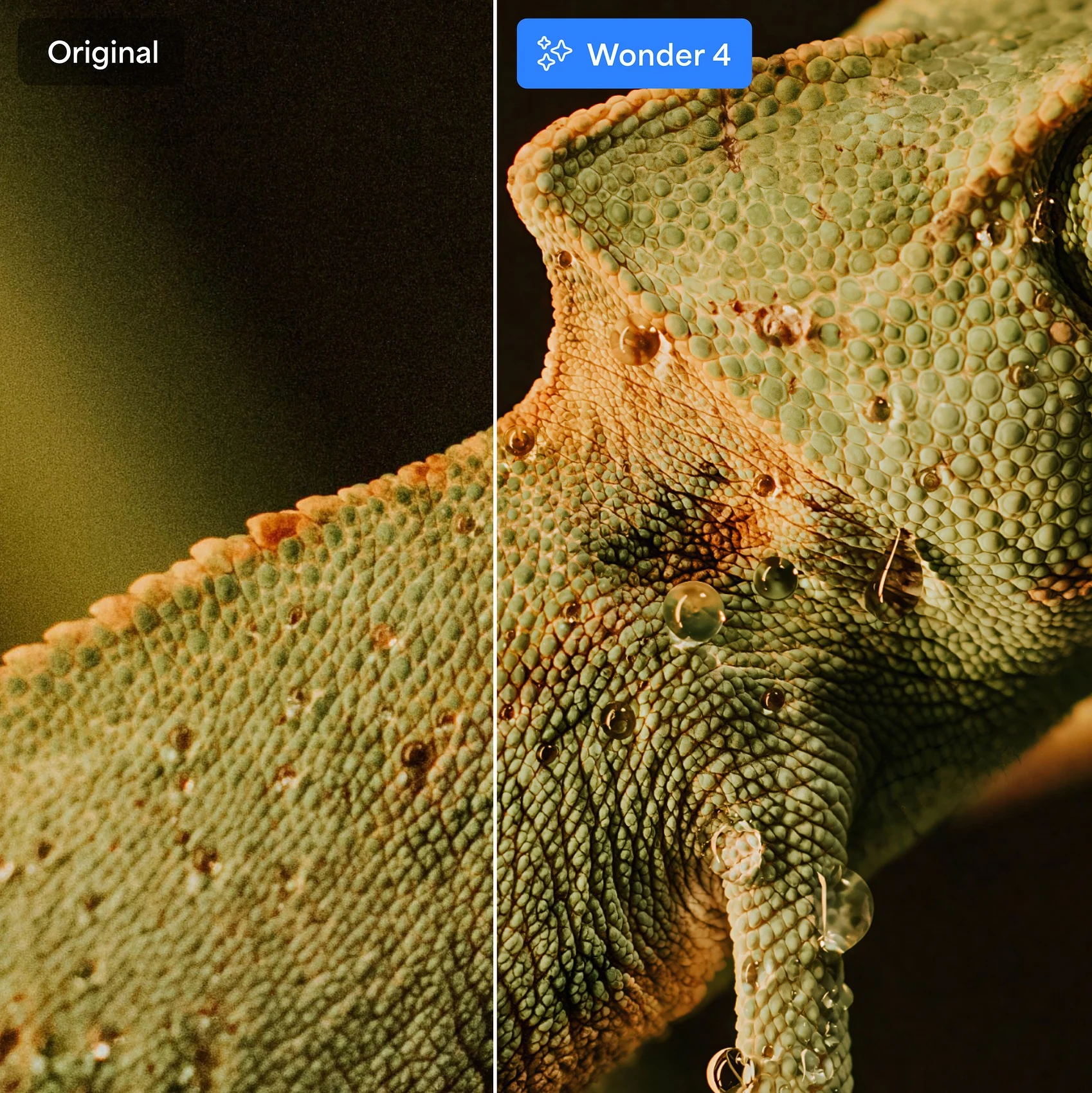
Topaz has already explored image recovery and resolution enhancement with Gigapixel AI. What changes with Wonder 4 is how the model decides which intervention each part of the image needs, reducing the number of separate editing steps.
More information here.
What the before-and-after examples show
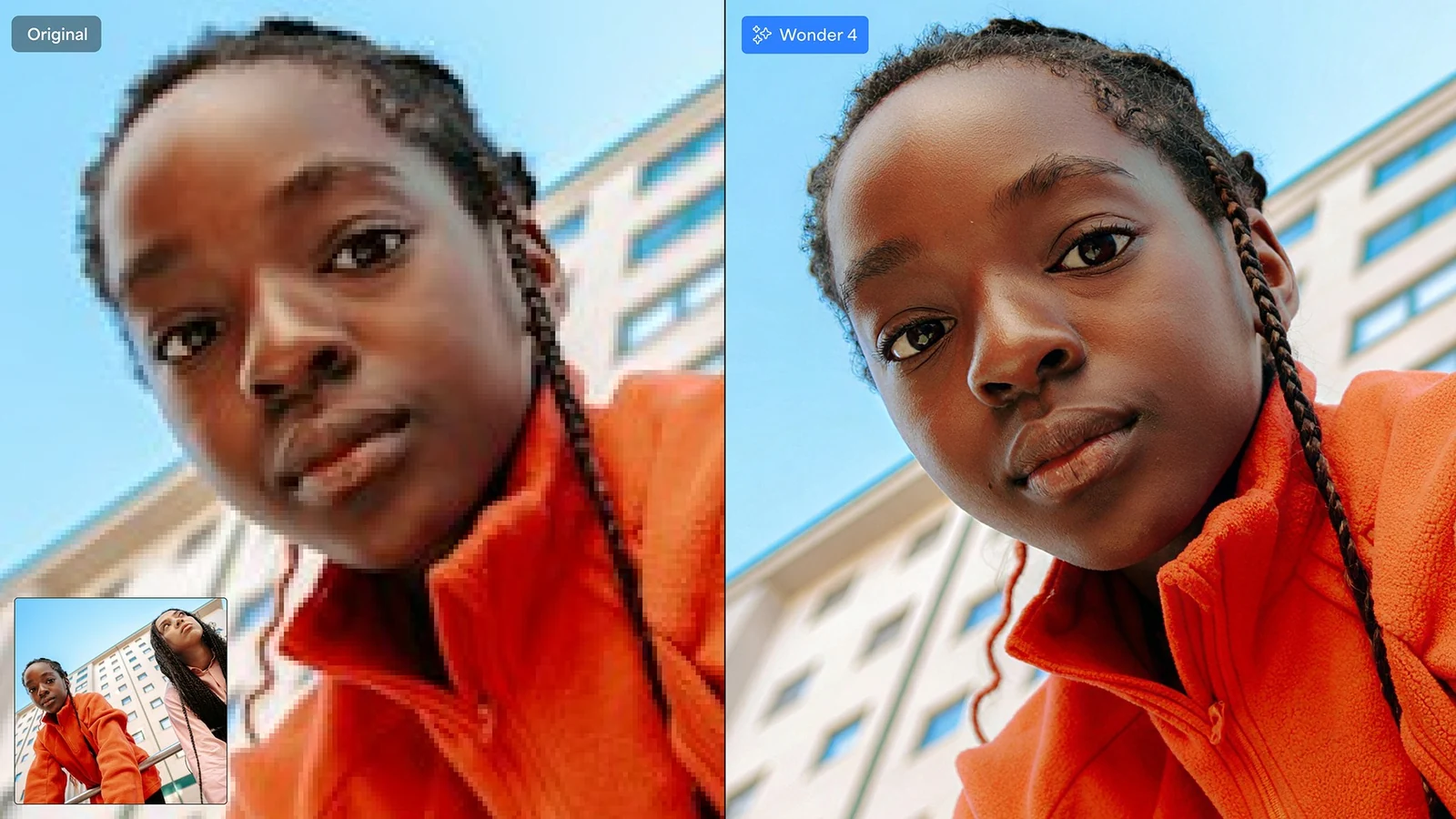
The company’s examples show improvements to noisy portraits, the recovery of small details and cleaner edges. These samples were selected by Topaz; they are not independent benchmarks or the results of our own RAW-file testing.
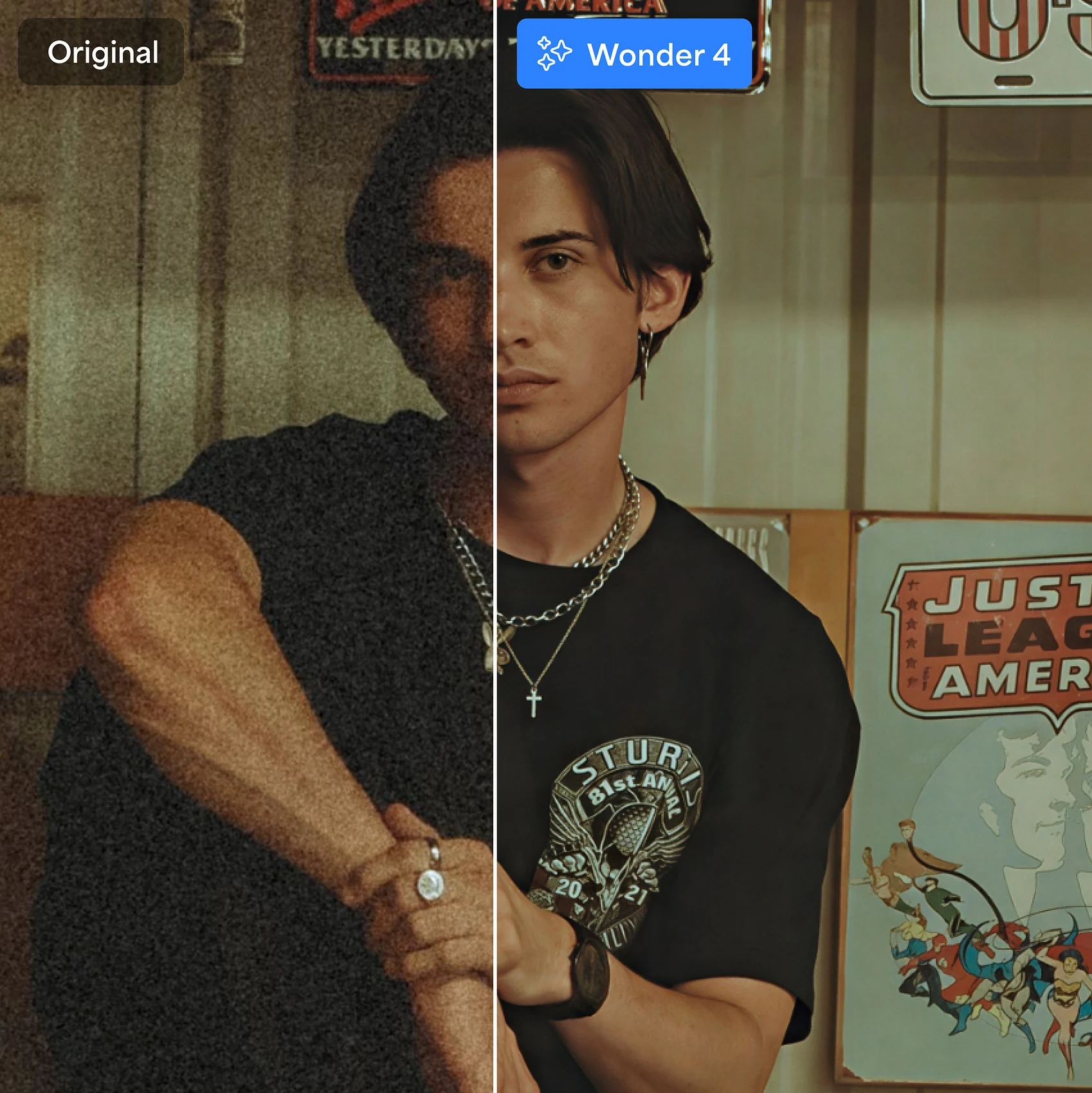
For photographers, the potential benefit is straightforward: an older JPEG, a heavily compressed image or a photograph that needs cleanup could be processed in one run instead of through a series of filters. Facial details and textures still deserve inspection at full resolution, however, because AI restoration can reconstruct information that was not clearly recorded.
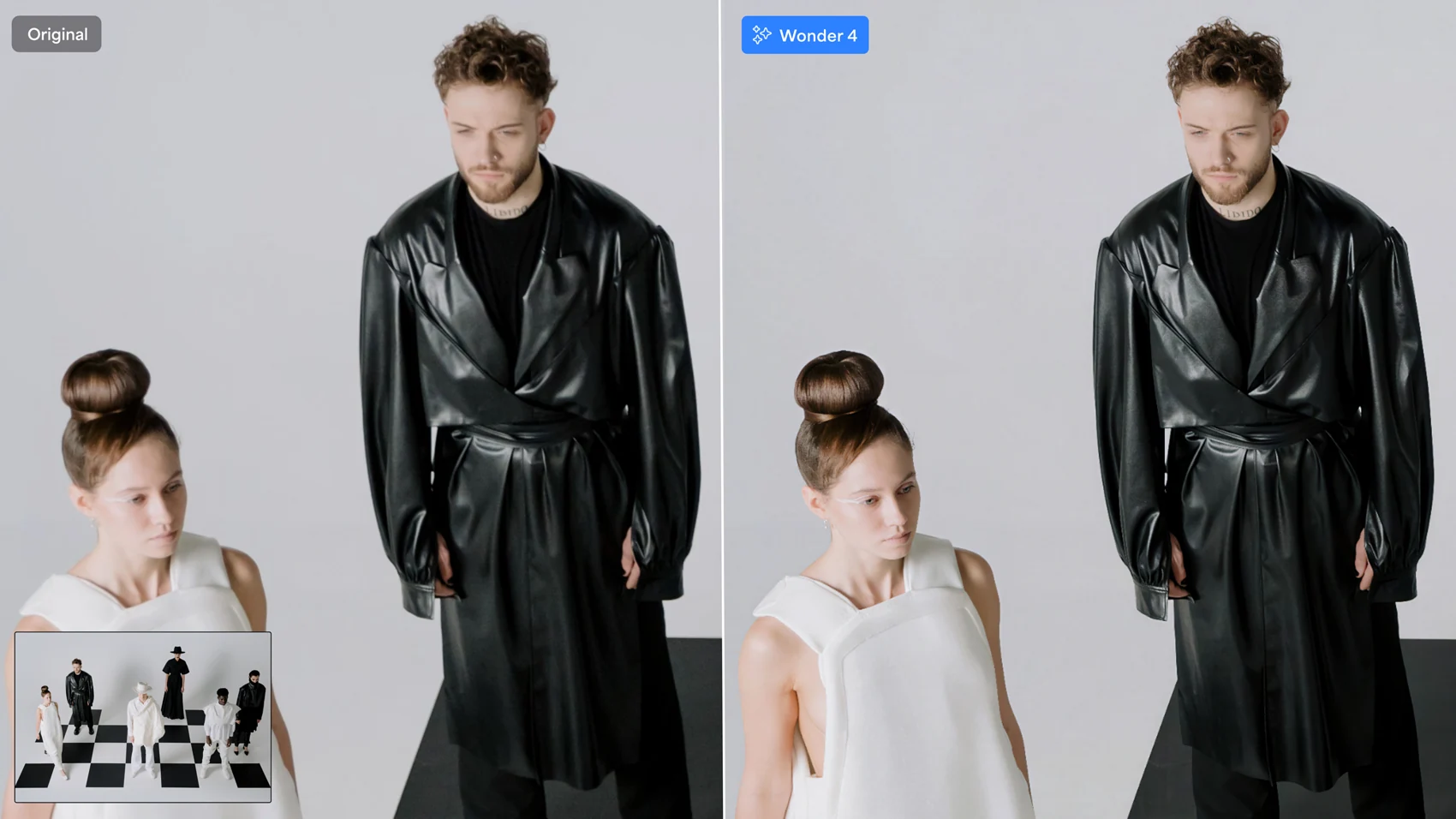
Image HDR: A different kind of enhancement
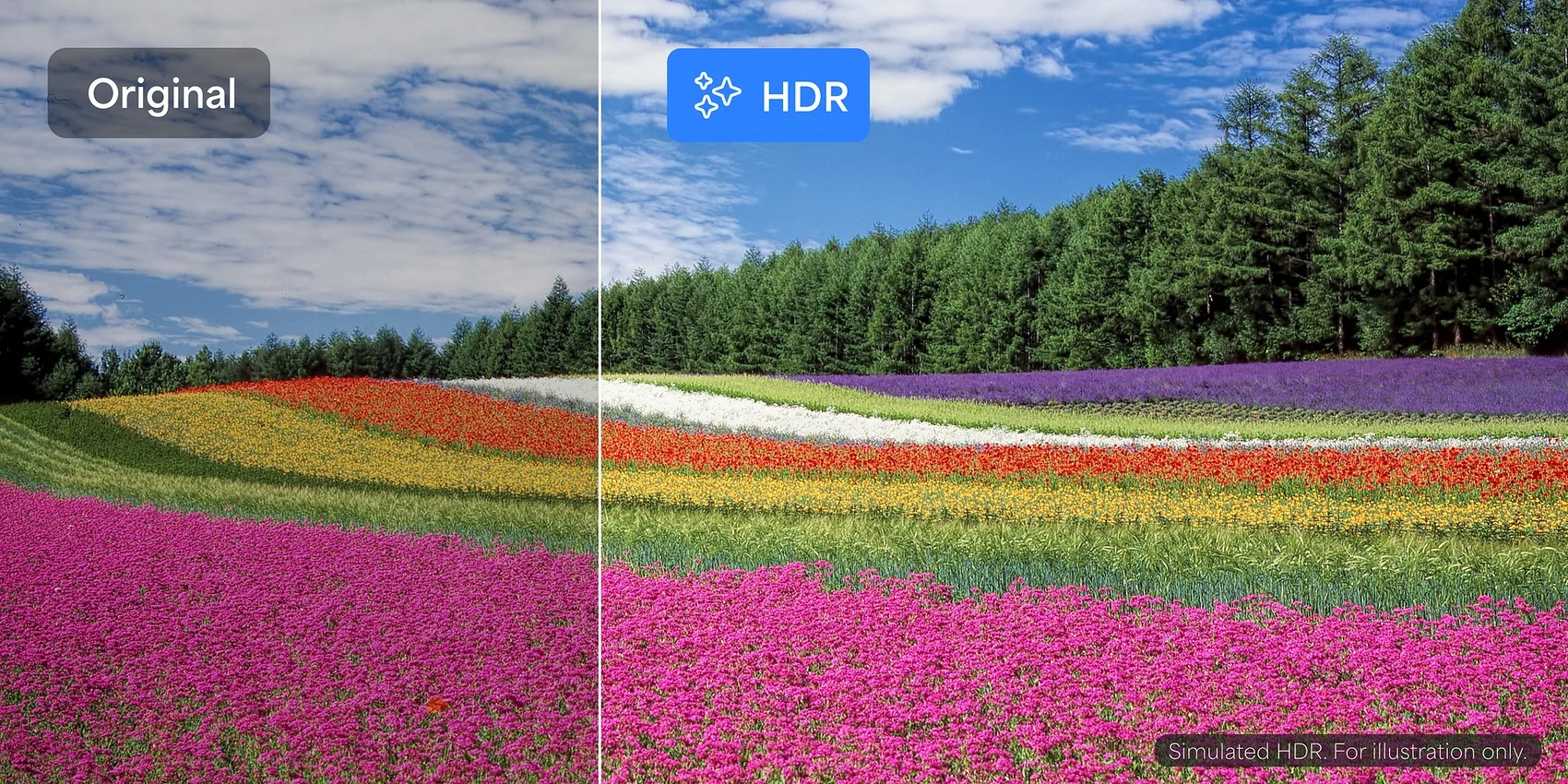
The new Image HDR does not fix blur. It converts standard dynamic range (SDR) photos into HDR JPEGs, using a gain map that, according to Topaz, carries expanded brightness and tonal-range information while preserving the original image.
The result is intended for HDR-compatible monitors and mobile devices, where brighter highlights and more tonal depth can be displayed. A comparison viewed on a conventional SDR display cannot reproduce the actual brightness of an HDR file.
More information here.
Price and availability
Wonder 4 and Image HDR are available now in Topaz for Web and Topaz for Mobile. The release does not announce them as updates for the desktop Topaz Photo or Gigapixel apps. Topaz Photo’s published release history still lists Wonder 3.5 as its latest Wonder generation.
The official Topaz for Web page currently advertises subscription plans starting at $12 per month as part of an offer. There is no separately announced price for Wonder 4, and no official European price for this new feature was found.
The release also comes just weeks after Adobe completed its acquisition of Topaz Labs. The fact that some Topaz technology is already present in Adobe products does not mean Wonder 4 has been added to Photoshop or is automatically included in every Creative Cloud subscription.
More information here.
What we think
Fixing a difficult photograph often means making several small adjustments and then revisiting earlier steps because one correction has affected another. That’s why Wonder 4 makes practical sense: if it can recognise that the sky needs denoising while a face needs different work, it could save real time, particularly with files already damaged by compression.
We would look first at the fine details: hair, eyelids, skin texture, lettering and repeating patterns. A cleaner image is not automatically a more faithful one. Reconstructed detail might be fine for an advertising portrait, but the same intervention raises much more serious questions in documentary photography.
Image HDR is compelling for sharing photos on modern HDR displays, provided we don’t confuse a more striking presentation with extra real-world information originally captured by the sensor. We’d want good controls and an easy way to compare against the original, rather than relying solely on a striking before-and-after.
Frequently asked questions
Is Wonder 4 available in the desktop Topaz Photo app?
Not as an officially announced release at the November 3, 2026 launch. Topaz currently lists availability through Web and Mobile.
Do I need an HDR display to see Image HDR properly?
Yes. To see the extended brightness of the HDR JPEG, you need a compatible HDR screen and suitable playback support. On a regular SDR display, the comparison is illustrative only.