Summary
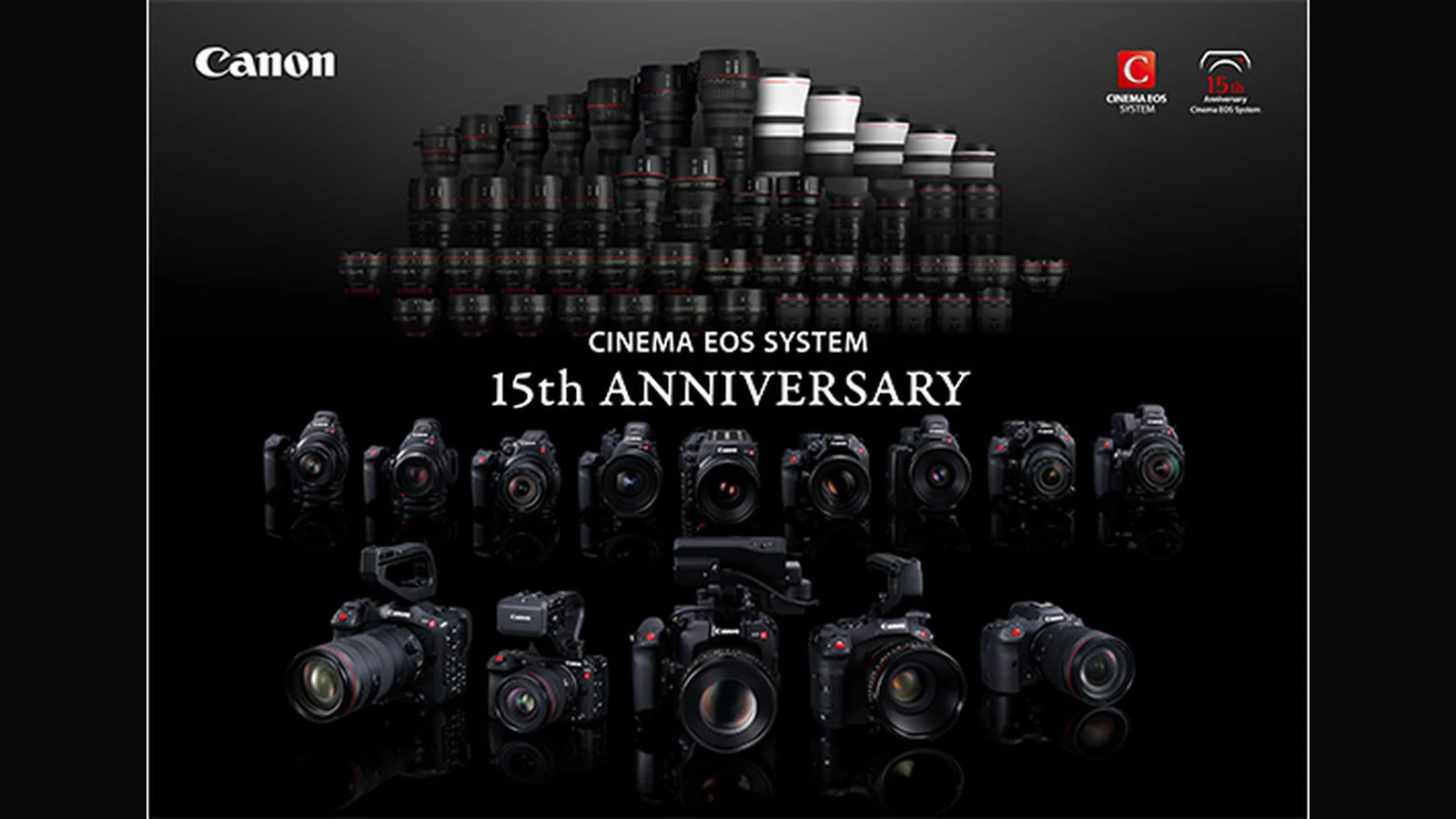
- Canon celebrates 15 years of Cinema EOS, with 17 cameras and 53 lenses released by November 2026.
- The EOS 5D Mark II helped spark the system through the popularity of its Full HD video.
- The first Cinema EOS C300 was introduced in 2011 and released in 2012.
- Modular and compact camera designs subsequently expanded the production options for filmmakers.
A DSLR that could record Full HD video became the starting point for an entire cinema system: Canon is celebrating 15 years of Cinema EOS, spanning 17 cameras and 53 lenses.
In its November 4, 2026 announcement, Canon traces the journey from the EOS 5D Mark II to today’s compact and modular cinema cameras. The figures cover products released by that date, rather than models merely announced.
The EOS 5D Mark II showed what a stills camera could do for filmmaking
In 2008, the EOS 5D Mark II brought Full HD recording to a full-frame DSLR body. Filmmakers embraced the ability to work with a large sensor and still-photography lenses, pursuing a cinematic look without the size or cost of the dedicated systems of the time.
Canon itself recognizes that enthusiastic response as the catalyst for a more ambitious move into professional filmmaking. Before developing Cinema EOS, the company spoke with filmmakers about shooting styles, handling and workflows. That DSLR’s legacy is still apparent today, as illustrated by a recent restoration of the Canon EOS 5D Mark II.
EOS 5D Mark II — More information here.
2011: The first Cinema EOS C300 is unveiled
The Cinema EOS System debuted in 2011 alongside the EOS C300, unveiled that November before going on sale in Japan in January 2012. With a Super 35 sensor, interchangeable lenses and video-focused ergonomics, the C300 demonstrated how the DSLR filmmaking idea could become a dedicated tool for professional crews.
The EOS C500 followed in October 2012. Canon sought to pair the flexibility of smaller camera bodies with capabilities demanded by productions, rather than simply copying the form of traditional large cinema cameras.
EOS C300 — More information here.
From modular camera bodies to the EOS C400
The 2019 EOS C500 Mark II and 2020 EOS C300 Mark III demonstrated the value of modular design: one core camera could be configured with different accessories for different jobs. For a crew, that enables setups suited to documentary work, television studios or more demanding film shoots.
Released in 2024, the EOS C400 continues that progression with a 6K full-frame sensor, RF mount and connectivity for both filmmaking and live-production workflows. It shows just how broad the Cinema EOS concept has become.
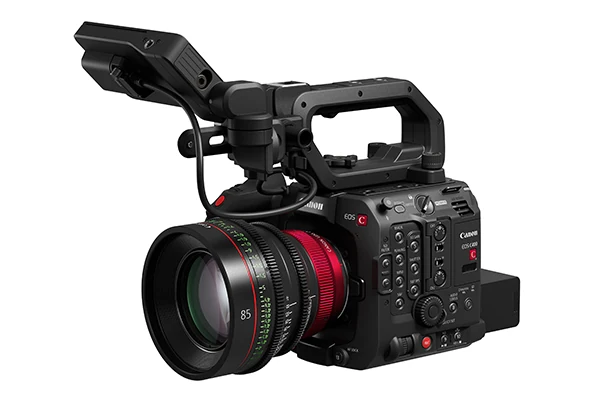
EOS C400 — More information here.
The shift toward smaller cinema cameras
The 2022 EOS R5 C brought hybrid mirrorless thinking closer to Cinema EOS. In 2025, the EOS C50 pushed the compact-body approach further, offering full-frame 7K RAW, Open Gate recording and a detachable top handle. For a solo operator or small crew, size and the ability to reconfigure a camera quickly are practical considerations, not minor details.
The EOS C50 and its 7K RAW and Open Gate capabilities demonstrate how a system that began with professional cine cameras now also serves more flexible productions.
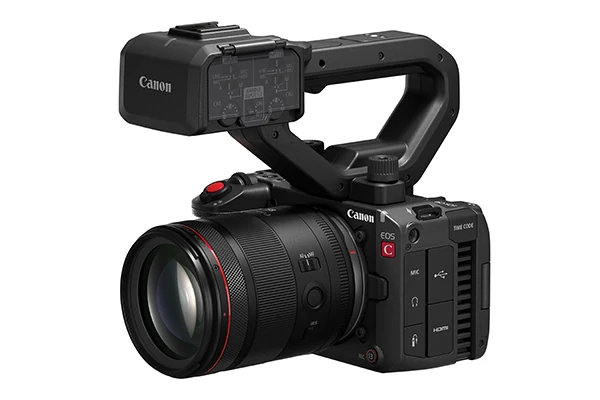
EOS C50 — More information here.
53 cinema lenses and a presence in acclaimed productions
The anniversary celebrates a system, not just camera bodies. Canon says it had released 53 Cinema EOS cinema lenses as of November 4, 2026, excluding the EF-EOS R 0.71x mount adapter. Its optical development, lens mounts and camera-to-lens integration have been central to the system’s evolution.
Canon cites documentaries including All the Empty Rooms, winner of the 2026 Academy Award for Best Documentary Short Film, and All That Breathes, recognized at Cannes and Sundance. Cinema EOS is also used across television, corporate production, live streaming and virtual production.
What we think
The most telling part of this story is that filmmakers showed Canon a use for the 5D Mark II beyond its original still-photography role. A new equipment category did not have to exist before creators began experimenting. The demand emerged on actual sets.
But a dedicated cinema camera also needs to handle things a DSLR was never designed to manage day after day: dependable audio, ergonomics, connectivity, monitoring, repeatable operation and flexible rigging. That is why the journey from the C300 to the C400 and C50 matters beyond sensor resolution.
If you are working alone or with two other people, you will probably want a different camera setup from a fully staffed film crew. What matters is that Cinema EOS has not remained locked into a single camera form. That flexibility can genuinely change how we plan and run productions.
Frequently asked questions
Why does Canon count 15 years from 2011 if the C300 went on sale in 2012?
The Cinema EOS System was introduced in 2011 alongside the EOS C300. The C300 was subsequently released in the Japanese market in January 2012.
Does the count of 53 lenses include the EF-EOS R 0.71x adapter?
No. Canon explicitly excludes the EF-EOS R 0.71x mount adapter from its count of 53 cinema lenses.