Summary
- Canon has announced free firmware for the EOS C400, C80, C50 and R5 C, scheduled for December 17, 2026.
- Multi Matrix adds targeted color controls to the C400, C80 and C50.
- The C400 and C80 gain autofocus at 72p, 75p, 90p and 96p in Slow & Fast Motion.
- The C50 gains flash photography, a 1/8000-second shutter and audio monitoring during standby.
- Multi Matrix: Targeted in-camera color correction
- Autofocus at more frame rates and continuous audio monitoring
- Canon EOS C50: Flash photography and a 1/8000-second shutter
- More control over camera operation, lenses and post-production
- What each camera actually gets
- New accessories and European firmware availability
- What we think
- Frequently asked questions
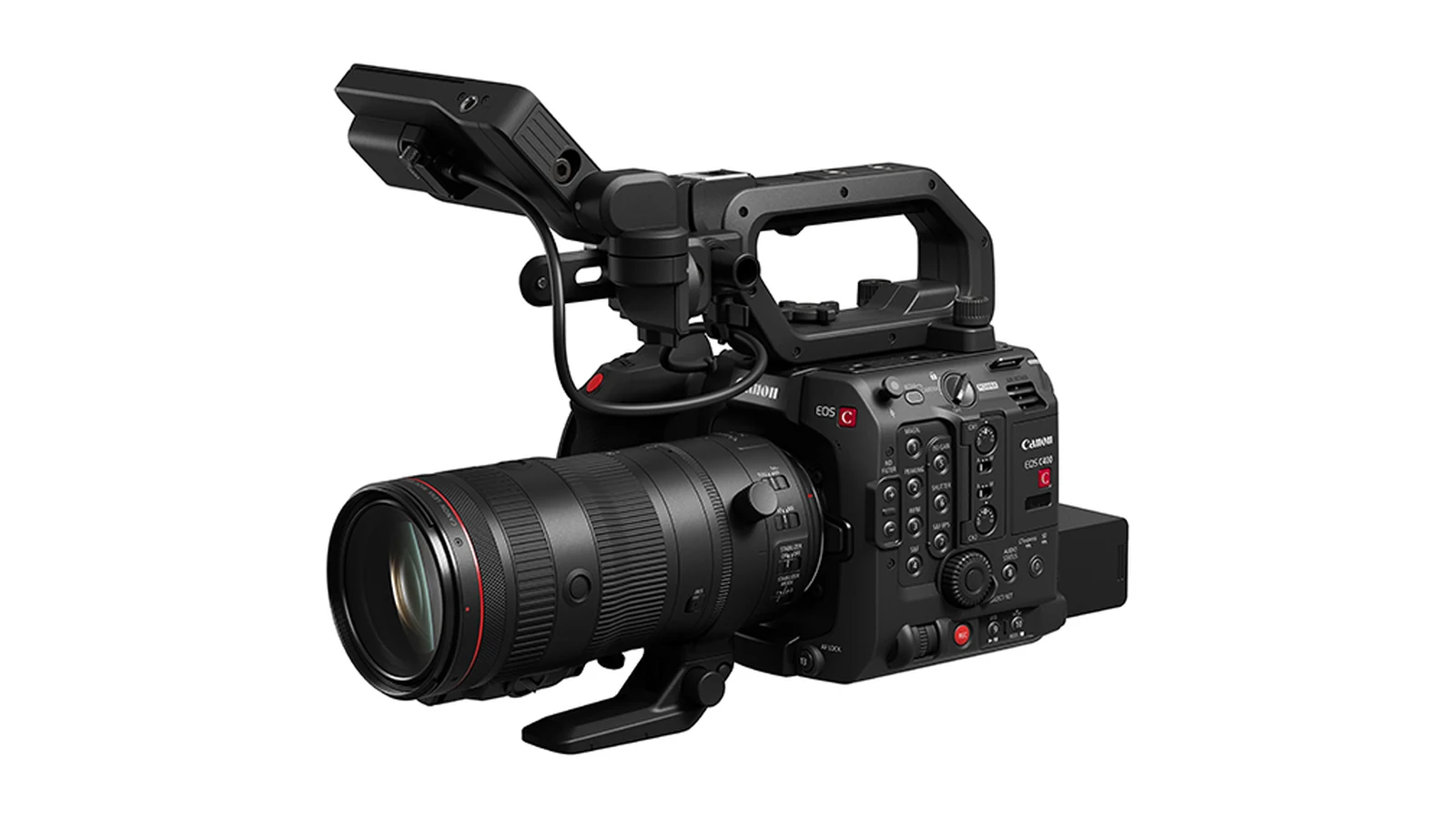
The Canon EOS C400, C80, C50 and R5 C are set to receive a free firmware update on December 17, 2026, adding new color controls, autofocus options and on-set workflow features.
Canon announced 14 groups of changes on November 4, although not every feature applies to every camera. Multi Matrix, for example, is coming to the C400, C80 and C50, but not to the R5 C.
Multi Matrix: Targeted in-camera color correction
The headline addition is Multi Matrix, which splits the image hues into 16 or 32 sectors and allows independent hue and saturation adjustments for a selected range. It is accessed through Custom Picture on the EOS C400, C80 and C50.
An Area Display option keeps the selected color range visible while turning the rest of the image monochrome, making it easier to see exactly which parts of a shot are being adjusted. Think product colors, clothing or sports jerseys where matching a particular shade matters.
Autofocus at more frame rates and continuous audio monitoring
On the EOS C400 and C80, autofocus will also work in Slow & Fast Motion at 72p, 75p, 90p and 96p. The C50 already supports these settings. For sports, moving wildlife and gimbal work, retaining AF at these rates removes a practical limitation.
The EOS C50 adds audio output while Slow & Fast Motion is selected but recording is on standby. Camera operators and sound recordists can keep monitoring audio between takes. The C400 and C80 already support this behavior.
Canon EOS C50: Flash photography and a 1/8000-second shutter
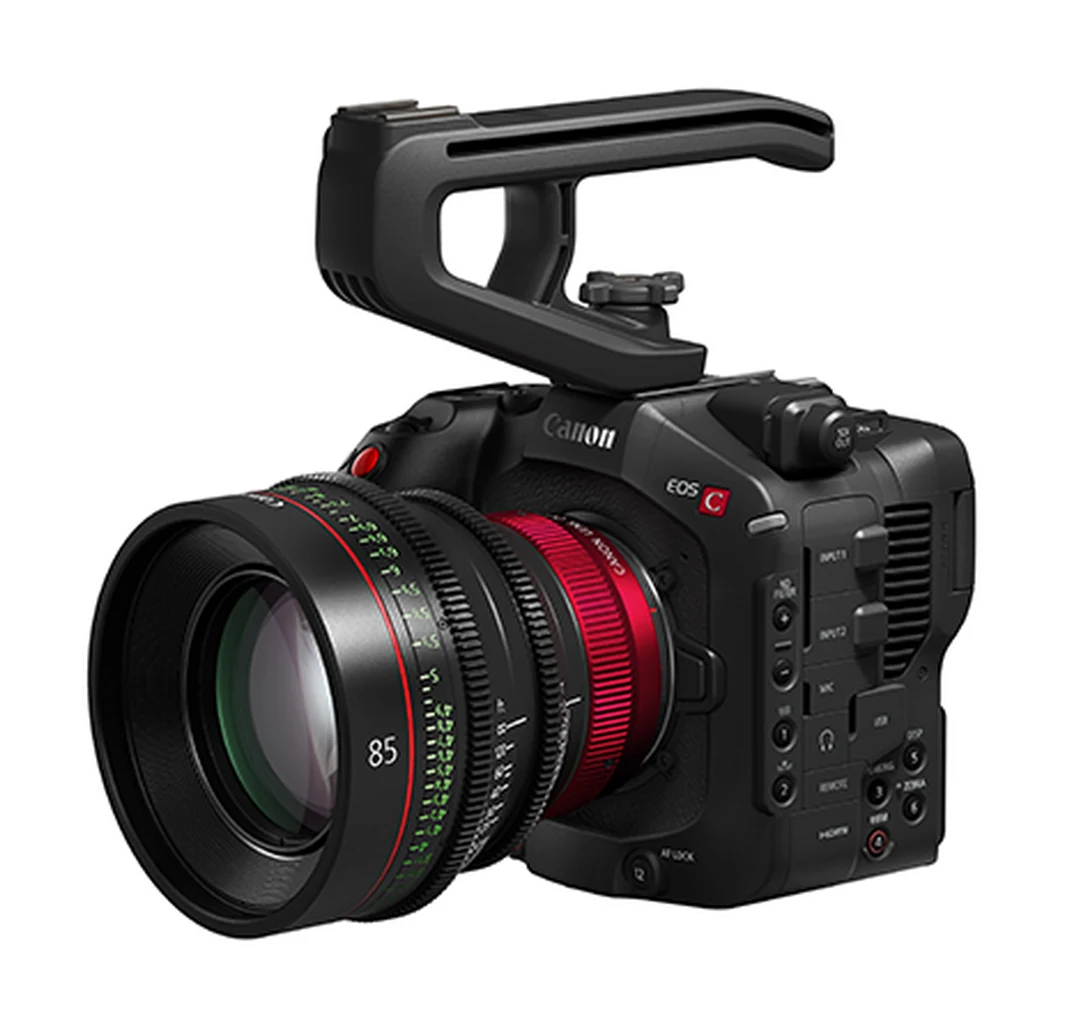
Beyond video, the C50 gains some particularly useful changes. Flash photography will become possible in still-photo mode, along with a new 1/8000-second shutter-speed option. Canon says the AD-E1 adapter is needed for older five-contact flashes.
Its new firmware also adds audio monitoring during S&F standby, building on the USB control and SRT streaming improvements introduced for the C50 and C80 in June.
More control over camera operation, lenses and post-production
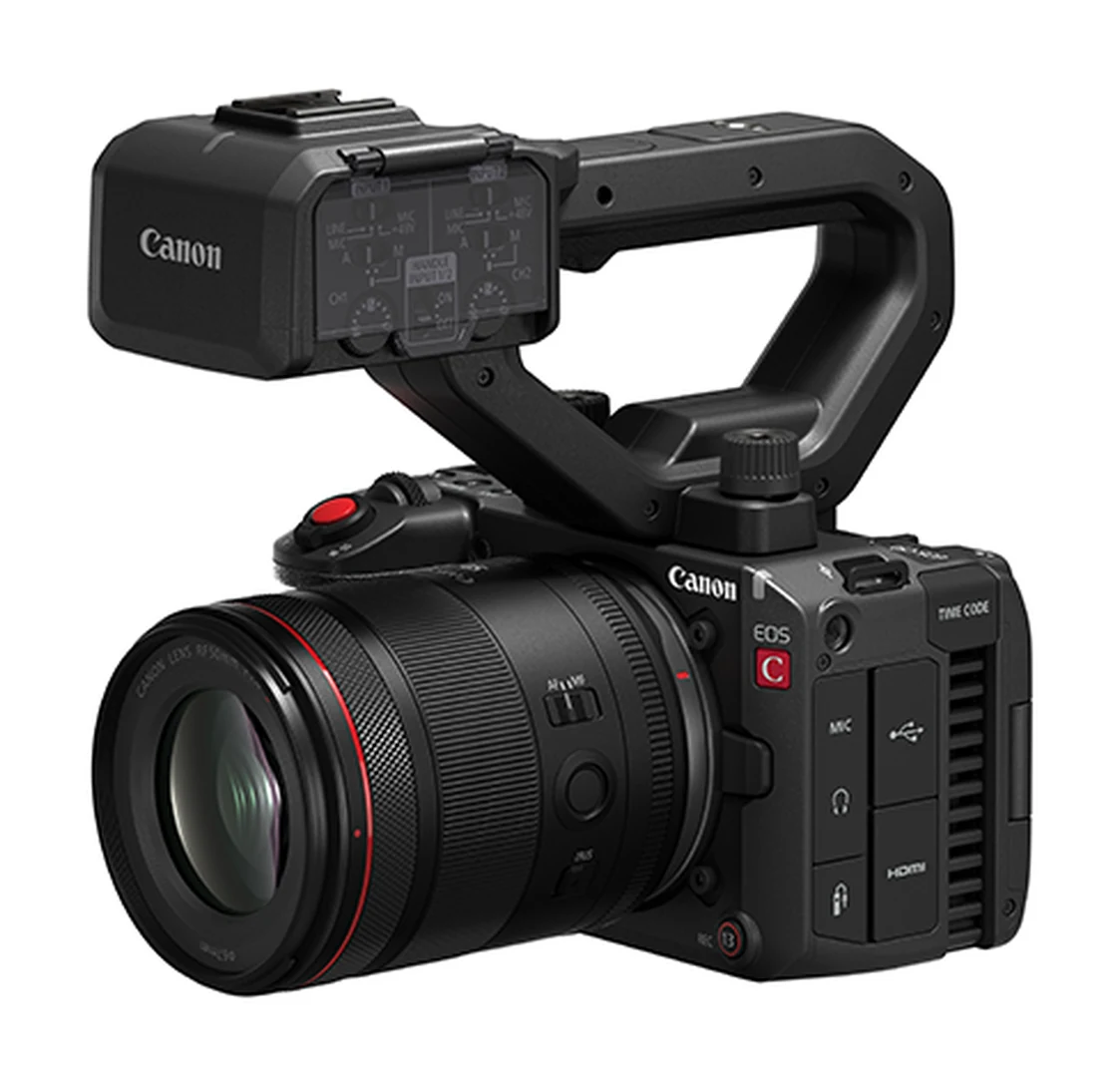
Across the C400, C80 and C50, Canon adds one-touch sensor-mode/crop changes via assignable buttons, custom functions for compatible RF lens buttons, and more information on the DISP Level 2 screen, including Base ISO, clip names and fan status.
The same three cameras also gain black-level (pedestal) adjustment for Canon Log 2 and Canon Log 3. This changes the black reference when tuning the camera image ahead of grading; it does not introduce a new Log curve or codec.
For remote camera operation and virtual production, CV metadata will include zoom and focus encoder values. The C400 and C80 also gain direct shutter and aperture operation through the SELECT dial, plus stabilization support with lenses longer than 1,000mm. Canon lists the corresponding C50 features as already supported where applicable.
What each camera actually gets
EOS C400 and C80: Multi Matrix, AF at 72/75/90/96p, new Custom Picture and control options, richer metadata and expanded stabilization. The C50 gets Multi Matrix, crop/control/Log tools, S&F standby audio, flash support and 1/8000-second shutter for photography.
EOS R5 C: This update is mainly about compatibility with newer accessories. Canon has not announced Multi Matrix or the C400/C80 high-frame-rate AF expansion for the R5 C.
New accessories and European firmware availability
All four cameras will support the new Canon DM-E10D microphone, expected in December. Canon also announces support for the TC-N3 and TC-E3 timer remote controllers on the C50 and R5 C; the accessories themselves are scheduled for January 2027.
The firmware is free and scheduled for December 17, 2026. These new versions are not yet available to download. The verified Canon Europe support pages below are the correct places to check for each camera’s release once it is published.
Canon EOS C400: More information here.
Canon EOS C80: More information here.
Canon EOS C50: More information here.
Canon EOS R5 C: More information here.
Unlike the October security-maintenance firmware, this release focuses on new shooting tools. When it arrives, read the release notes for your particular model and back up camera settings before installing it on production gear.
What we think
Multi Matrix looks genuinely useful when a job calls for a very particular color. If a red jacket, a logo or a product shade has to stay consistent from shot to shot, making a targeted correction in-camera could save a fair amount of trial and error. It will not replace grading, but it can help get a more consistent starting point before the footage reaches the editing suite.
For C80 and C400 shooters, AF at 96p is just as practical. In action and wildlife shoots, you want to choose slow motion without having to rethink how you track the subject. And on the C50, maintaining audio monitoring while the camera is standing by removes a small but annoying interruption on set.
It is good to see Canon paying attention to the smaller tools too: programmable buttons, clearer on-screen information and richer metadata. Those details become valuable when there are two cameras to match, a setup to change quickly and a crew waiting for the next take.
Frequently asked questions
When will the new firmware be released?
Canon has scheduled the free release for December 17, 2026. The new versions are not yet available for download.
Will the EOS R5 C receive Multi Matrix?
No. Multi Matrix has been announced for the EOS C400, C80 and C50 only. The R5 C is included mainly for new accessory compatibility.