Summary
- Olivia Colman and Alexander Skarsgård star in Wicker.
- Their intimate scenes were filmed on a closed set with a tiny crew and the guidance of Ita O’Brien.
- Wētā Workshop created the practical suit, while Lol Crawley served as cinematographer.
- The film opens in Australian cinemas on November 5, 2026.
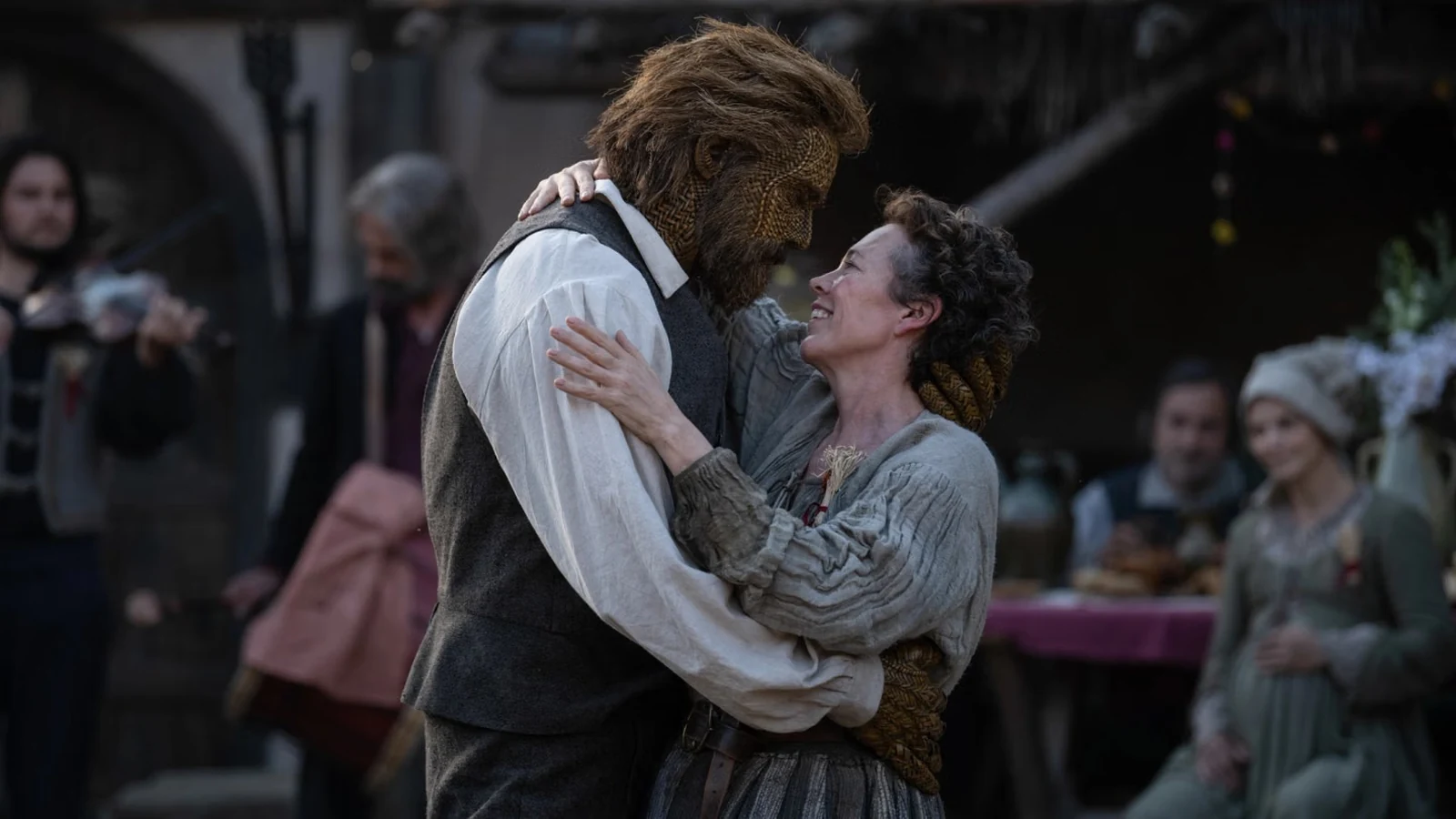
In Wicker, Olivia Colman falls for a man made of wicker, but filming their most intimate moments required a careful balance between two performances and an unusually elaborate practical costume.
In a new interview, directors Eleanor Wilson and Alex Huston Fischer explain how they filmed Colman’s intimate scenes with Alexander Skarsgård, who plays the Wicker Husband. Adapted from Ursula Wills-Jones’s short story The Wicker Husband, the film follows an ostracised fisherwoman who asks a local basketmaker, played by Peter Dinklage, to make her a husband.
Watch the official trailer:
A closed set with only essential crew
The most personal scenes were shot on a closed set, with very few people present: Colman, Skarsgård, both directors, intimacy coordinator Ita O’Brien, cinematographer Lol Crawley and essential sound crew. Wilson explained that no additional people were watching the shots on monitors.
The limited setup was about more than privacy. It gave the performers and the people working directly with them room to develop the scenes without the usual activity of a large set. Fischer likened the process to stunt choreography, with movements and positions developed together so they would make sense within each shot.
Alexander Skarsgård and Wētā Workshop’s elaborate prosthetics
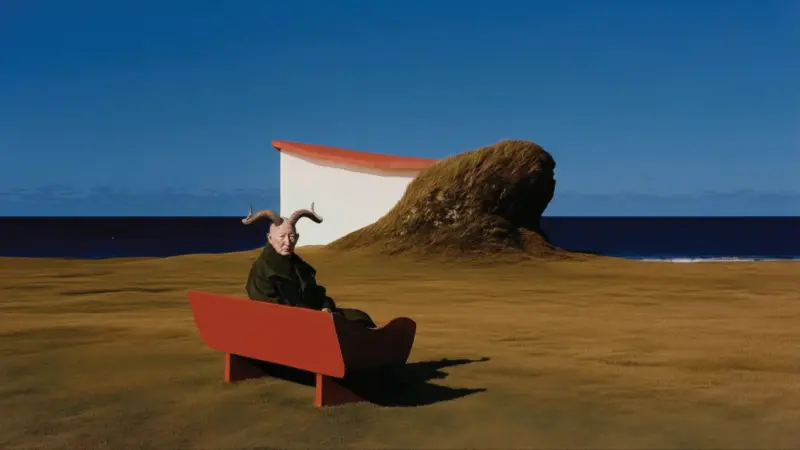
The Wicker Husband’s body and face were created by Wētā Workshop as a fully practical fabricated suit with facial prosthetic makeup worn by Skarsgård. Joe Dunckley led the prosthetic makeup design and Sarah Rubano oversaw its on-set application. The challenge was to create the appearance of woven material while preserving the actor’s facial expressions and physical performance.
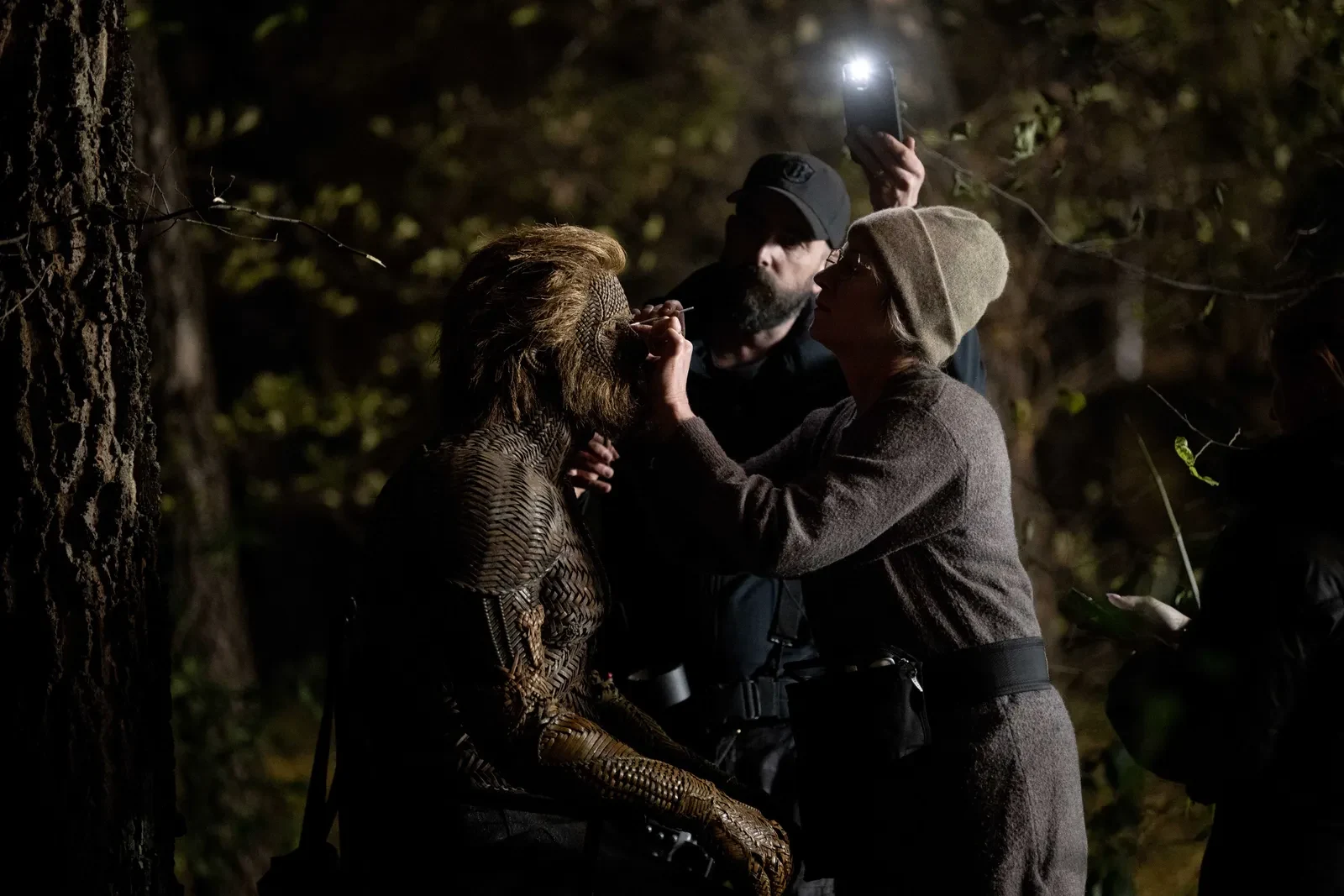
Wētā states that most shots of the Wicker Husband do not use CGI. Sound and limited VFX provided finishing touches in selected moments, including points of light shining through the weave to suggest that the figure is hollow. Skarsgård has described how the facial prosthetic moved with his expressions once attached, helping him discover the physicality of his character.
Why the cinematography matters
With a costume like this, a close-up depends on the relationship between expression, gesture, light and camera placement. Lol Crawley was part of the tiny crew working on these scenes, underlining how closely cinematography and performance had to be coordinated. The filmmakers have not disclosed specific lenses or lighting setups for these sequences.
Crawley, an Oscar and BAFTA winner for The Brutalist, previously discussed his creative approach and working on film in a masterclass at the Greek Film Archive. In Wicker, the task was different: giving emotional credibility to a romance with a character who quite literally looks hand-woven.
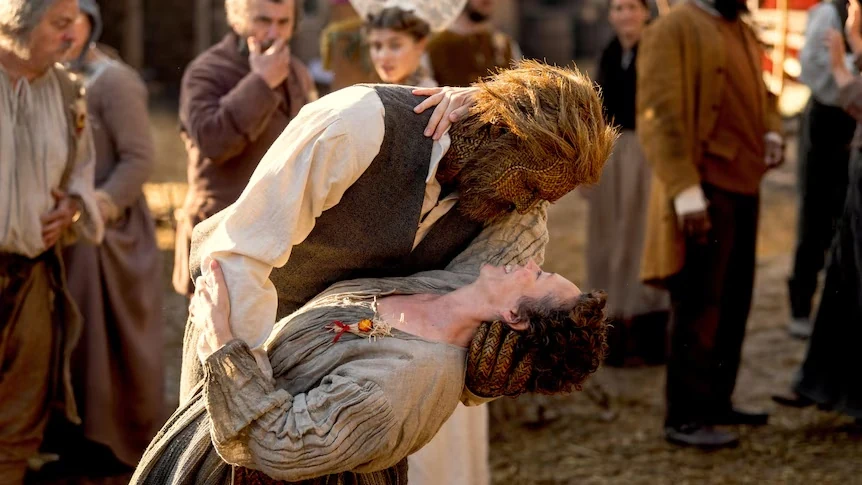
The film combines comedy with genuine emotion, with Elizabeth Debicki and Richard E. Grant also in the cast. Its theatrical release in Australia is set for November 5, 2026.
What we think
The interesting thing about Wicker is that its strange visual premise was treated as a real performance rather than a visual trick that needed to impress in every frame. When a prosthetic face can convey expressions, the actor still has room to work with glances and small reactions. That is far more challenging—and more valuable to the story—than simply producing a spectacular costume.
The closed-set approach also offers a practical lesson for filmmakers handling sensitive scenes. Fewer people around the camera can make communication clearer, provided the scene is properly prepared, coordinated and its movements agreed upon. The intimacy coordinator and cinematographer each have an essential role: arranging the work safely and translating it into images.
Wētā’s work is also a reminder that practical effects are not an outdated approach. When they are built to work with the performer, the light and the camera, they can keep the acting at the centre of a scene and let digital effects handle only what is truly necessary.