Summary
- Sony has revealed the specialty POV shots in Spider-Man: Brand New Day.
- The Cyclops Cam placed a VENICE 2/RIALTO Mini imaging head near Tom Holland’s eyes.
- Panavision built a custom 24mm T4 macro lens.
- An FX3 with a 45-degree mirror allowed the actor to see during action scenes.
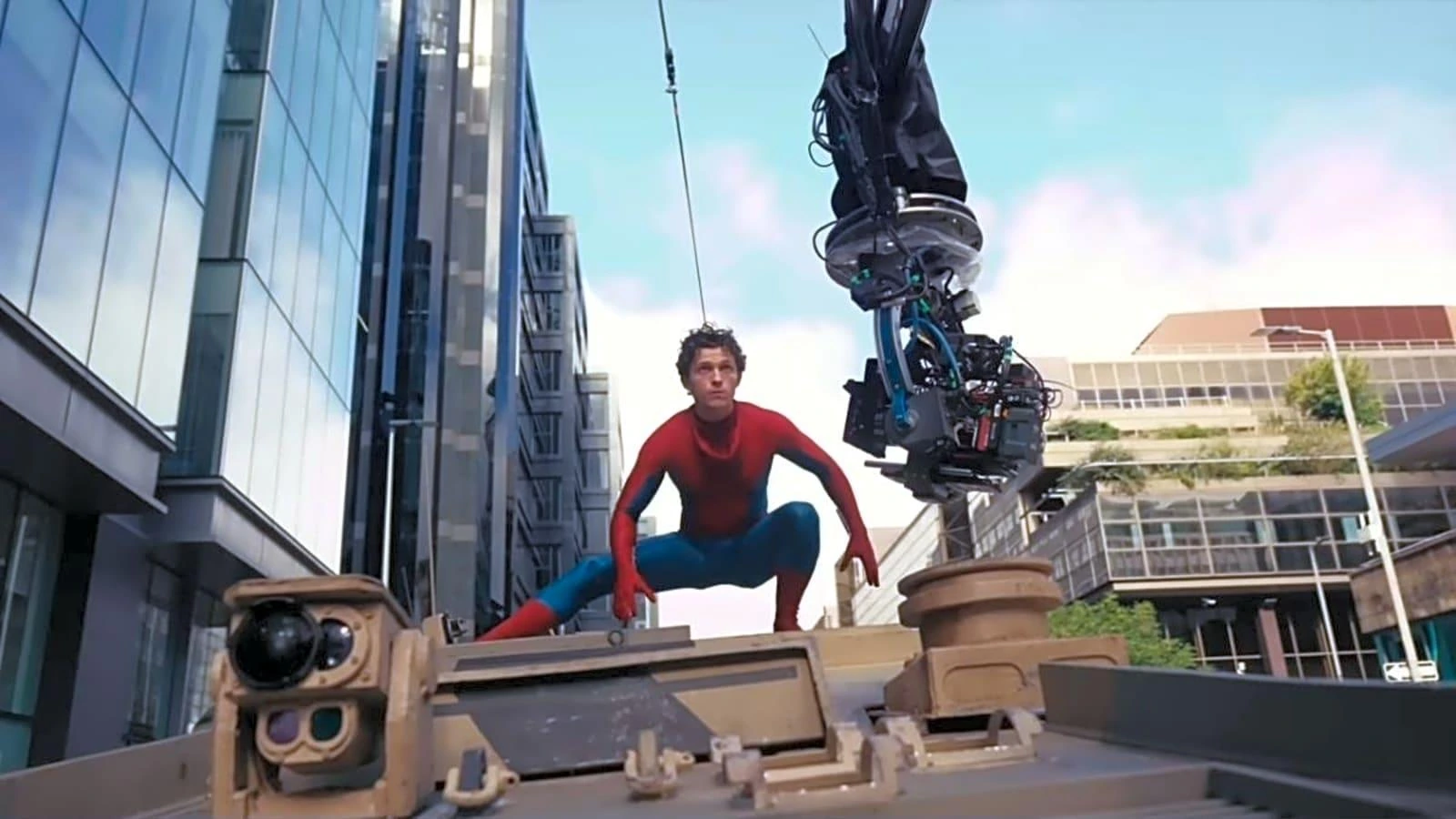
To show what Spider-Man sees behind his mask, the Spider-Man: Brand New Day crew built a camera system that Tom Holland could actually wear.
Sony’s official behind-the-scenes feature reveals how director Destin Daniel Cretton and cinematographer Brett Pawlak used a Sony VENICE 2 with RIALTO Mini, a purpose-built Panavision lens and a separate Sony FX3 setup. The film opened on July 31, 2026, and went on to enjoy an extraordinary global box-office run.
The idea went beyond getting another spectacular action shot. The camera needed to sit as close as possible to Peter Parker’s eye line without restricting the actor’s movement.
Cyclops Cam: A camera Tom Holland could wear
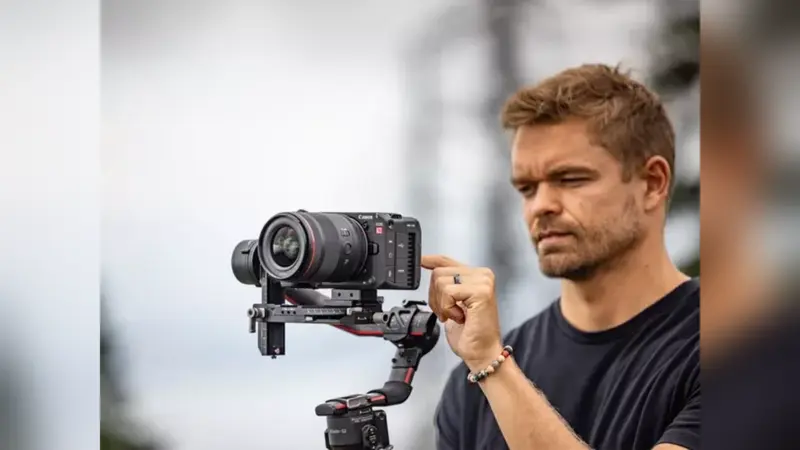
The team used a VENICE 2 with the VENICE Extension System Mini (RIALTO Mini) for Spider-Man’s point-of-view shots. The system separates a very small imaging head from the larger main camera body, allowing it to fit in positions where a conventional cinema camera would not work.
Key grip Steve Ellingworth built a custom modular head-mounted rig nicknamed the Cyclops Cam. It allowed the imaging head to move with Holland during extreme close-ups, putting the lens near his eye line. The RIALTO Mini has its own 8.6K sensor head and should not be confused with the newer, much larger-format RIALTO 65.
VENICE 2 is also a platform receiving ongoing operational updates, including the improvements introduced with firmware 5.00. For this particular shoot, however, the decisive advantage was the ability to position the imaging head on a custom rig.
Sony VENICE 2 — More information here.
Sony RIALTO Mini (CBK-3621XS) — More information here.
The custom Panavision 24mm T4 macro lens
A conventional cinema macro lens would have been too large and heavy for a wearable head rig. Dan Sasaki and Panavision’s Special Optics team therefore developed a custom 24mm T4 macro lens with extremely close focusing to suit the physical constraints of the setup.
The combination also allowed the filmmakers to capture extremely tight shots of Holland’s eyes and the reflections in them. These were actual images of the actor’s eyes, rather than generic simulated character-eye imagery.
Sony FX3: A 45-degree mirror that let the actor see ahead
For shots requiring an even more compact solution, the crew turned to the Sony FX3. The camera was positioned facing down, while a semi-reflective mirror angled at 45 degrees sat in front of the actor inside a specially configured matte box.
The glass reflected light from the scene upward into the camera but also let Holland look straight ahead. That was crucial for close-quarters fight choreography: he could see other performers and perform the action rather than having an opaque lens obstruct his view.
Sony FX3 — More information here.
How the specialty shots fit into the larger production
The Sony cameras were not the only camera systems used on the film. The production also employed ARRI ALEXA 265 and ALEXA Mini LF, among other cameras, while the VENICE 2/RIALTO Mini and FX3 served specific demanding angles. That distinction matters: these rigs were designed for shots that would have been far more difficult to capture using the main camera configurations.
What we think
What I like about behind-the-scenes material like this is how much thought went into just a few seconds of footage. The crew did not simply grab a smaller camera. They designed a lens, a mounting system and an optical arrangement around one clear goal: making the audience feel as though they were looking through Spider-Man’s eyes.
The mirror solution is particularly interesting for those of us shooting video. On set, the right question is not always “which camera has the best image quality?” It can be “how do we get a camera into this position without obstructing what is happening in front of it?” Here, the solution had to preserve the actor’s visibility while delivering the camera angle the shot demanded.
You do not need a Spider-Man budget to take away the principle. A carefully planned rig, the right shooting angle or a simple optical technique can solve a problem that a more expensive camera on its own would not.
Frequently asked questions
Was the camera literally inside Spider-Man’s mask?
The Cyclops Cam was a special head-mounted system worn by Tom Holland, with a small remote imaging head positioned near his eye line. “Inside the mask” describes the perspective of the shot, not a complete conventional camera hidden inside the costume fabric.
Why did the crew also use a Sony FX3 mirror setup?
The semi-reflective mirror allowed the FX3 to record from the desired angle while leaving the actor with a clear forward view for action choreography.
Was the entire film shot on Sony cameras?
No. VENICE 2/RIALTO Mini and FX3 were used for specialty footage. Other cinema camera systems, including ARRI ALEXA 265 and ALEXA Mini LF, were also employed.