Summary
- Worldwide digital camera shipments declined 12.1% in September 2026.
- Mirrorless shipments fell 19.3%, while built-in-lens cameras grew 16.5%.
- The nine-month figures show a similar divergence, with compacts up 15.4% and mirrorless down 7.9%.
- CIPA data measure manufacturer shipments, and the statistical coverage changed in 2026.
Worldwide camera shipments declined in September 2026, but fixed-lens compact cameras moved against the trend and posted double-digit growth.
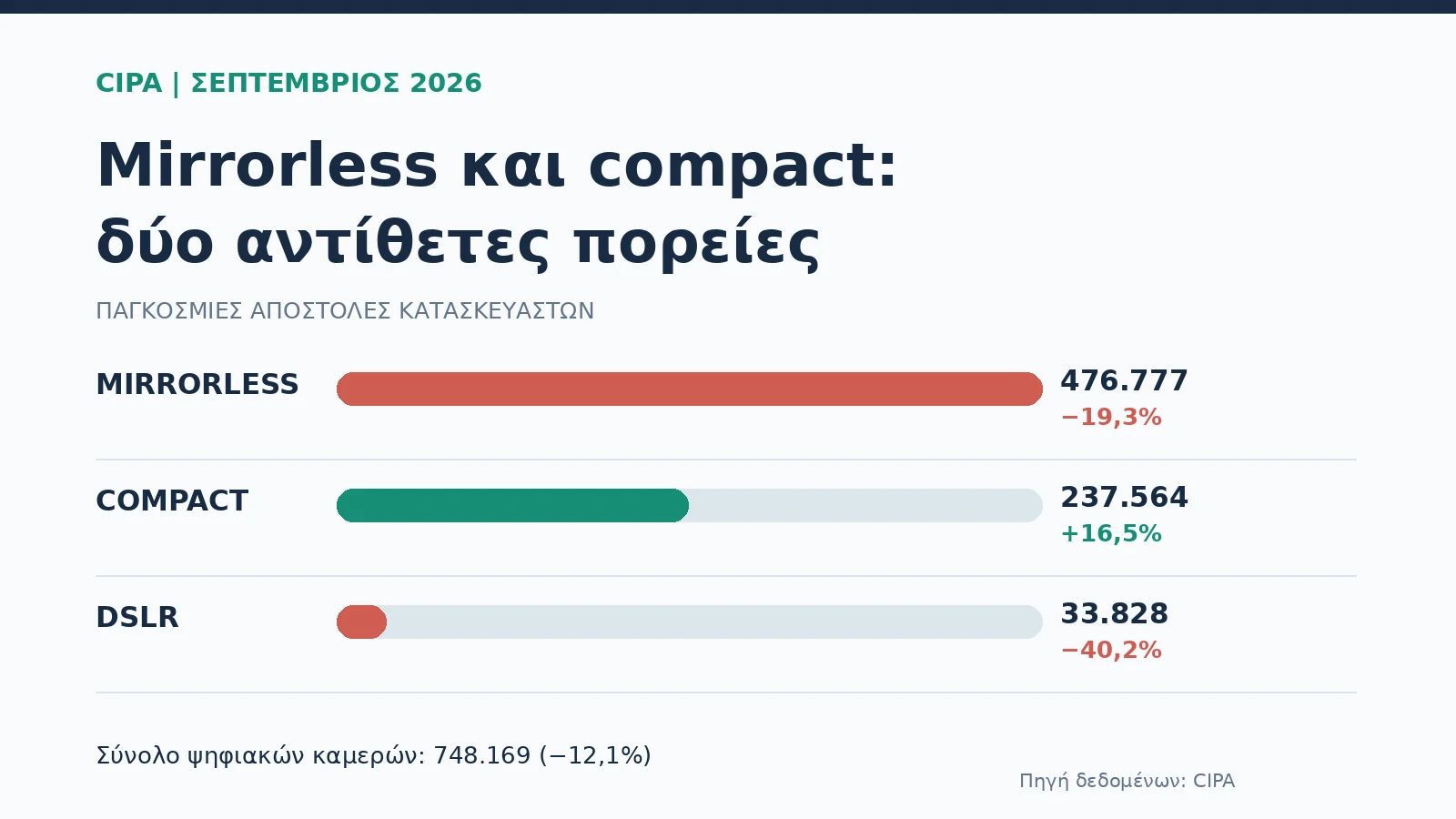
According to the Camera & Imaging Products Association (CIPA), worldwide digital camera shipments reached 748,169 units, down 12.1% from September 2025. Mirrorless shipments fell 19.3%, while built-in-lens cameras grew 16.5%.
September figures: compact cameras buck the trend
| Category | Worldwide shipments | Change vs Sep. 2025 |
|---|---|---|
| All digital cameras | 748,169 | −12.1% |
| Built-in-lens / compact cameras | 237,564 | +16.5% |
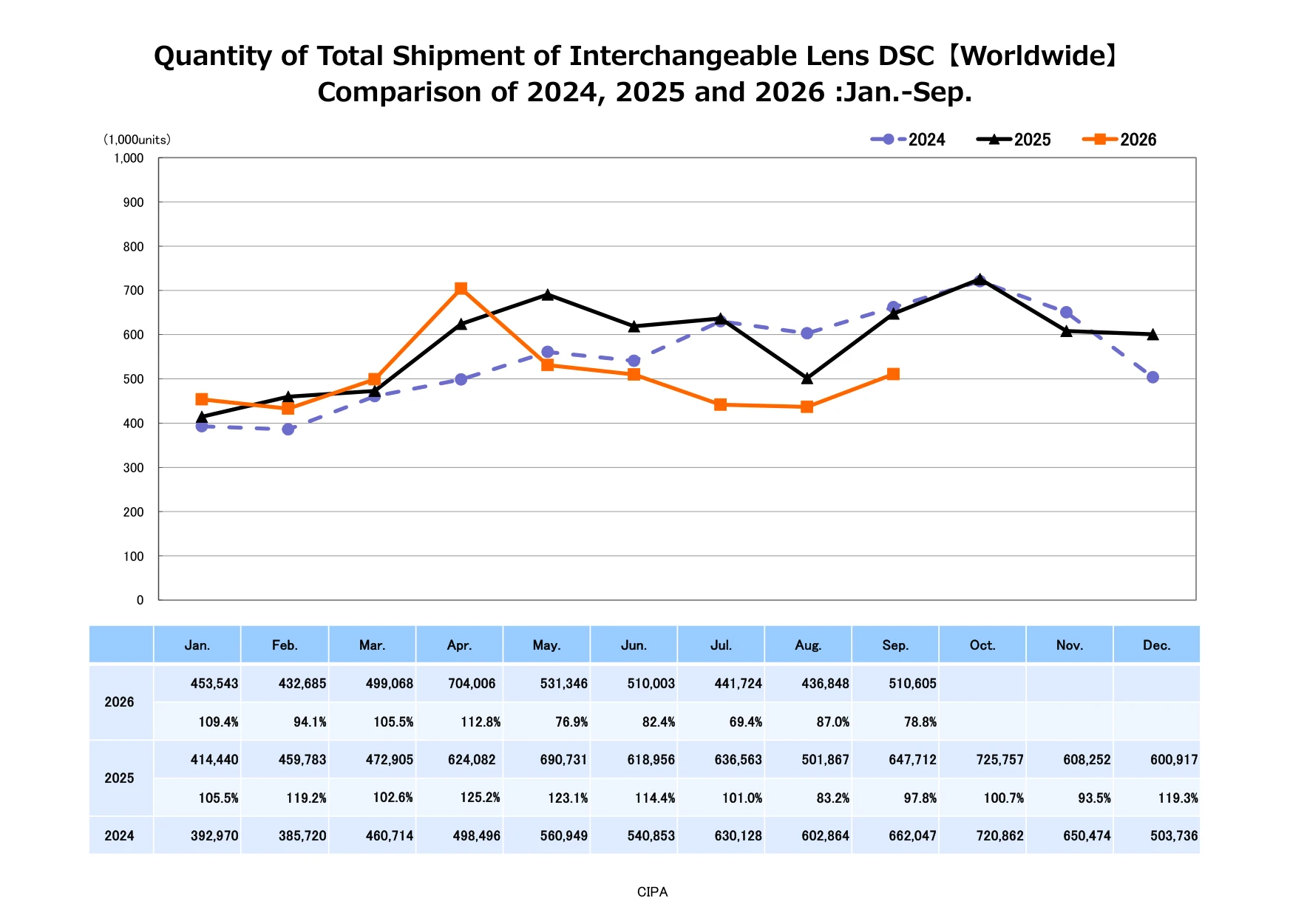
| Interchangeable-lens cameras (total) | 510,605 | −21.2% |
| Mirrorless cameras | 476,777 | −19.3% |
| DSLR cameras | 33,828 | −40.2% |
Built-in-lens cameras accounted for roughly 31.8% of shipments in the month, compared with about 23.9% in September 2025. Mirrorless bodies still ship in substantially higher numbers, but the gap narrowed noticeably during September.
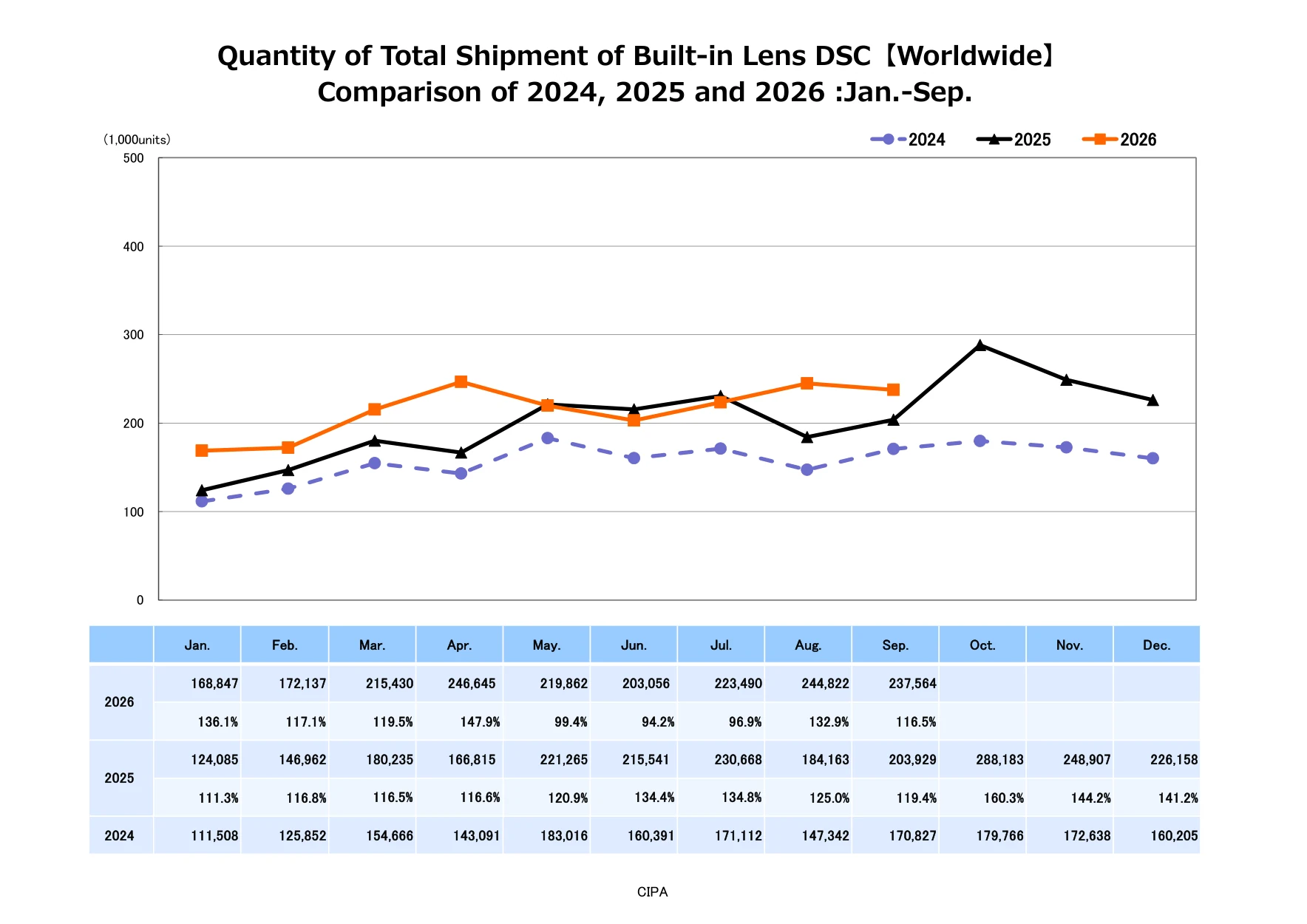
January–September: the compact trend is not just one good month
For January–September 2026, CIPA recorded 6,451,681 digital camera shipments worldwide (−4.3% year on year). Fixed-lens cameras reached 1,931,853 units (+15.4%), while mirrorless cameras totalled 4,179,988 (−7.9%). DSLR shipments fell to 339,840 (−35.5%). The contrasting performance is visible across the full nine-month period, not just September.
This fits the wider recovery of compact cameras in the digital camera market, without implying a return to the immense sales volumes seen before smartphones became dominant.
Europe shows a similar split
Shipments to Europe totalled 160,240 digital cameras in September, down 3.7% year on year. Yet built-in-lens cameras rose 23.9% to 54,321 units. Mirrorless shipments reached 97,831 (−4.9%), while DSLRs fell to 8,088 (−59.0%). Europe therefore shows the same broad divergence between camera categories.
What CIPA counts — and the important 2026 methodology change
These figures measure shipments by companies participating in CIPA statistics, including their overseas production. They are not retail sales to end customers, and they do not establish market shares for Canon, Nikon, Sony, Fujifilm or any individual brand.
One methodological detail matters: Kenko Tokina was added to CIPA’s Digital Camera Statistics from January 2026. Year-on-year comparisons are therefore affected by the change in coverage, although the September table does not quantify how much of any particular increase or decrease is attributable to the additional participant.
What we think
The compact camera figures are interesting because they suggest there is still an audience for a dedicated camera that does not require a body and a collection of lenses. A good compact is easy to carry, ready to shoot and can feel very different from using a phone. That does not, however, tell us which particular compacts people are buying or how much they pay.
I would not read the mirrorless decline as evidence that photographers are abandoning interchangeable-lens systems. Even in a difficult September, mirrorless shipments were roughly twice those of compacts. For work requiring specific lenses, responsive autofocus, depth-of-field control or a substantial hybrid photo/video workflow, a mirrorless camera still solves a different set of problems.
These numbers help frame the question of whether buying a dedicated camera still makes sense, but they cannot tell us which model is best. As creators, our choice should follow the pictures and films we actually make, not whichever camera segment had the strongest month in shipment statistics.
Frequently asked questions
Are CIPA shipment figures the same as retail sales?
No. They count units shipped by participating manufacturers, not cameras purchased by consumers from stores. These are different measures.
Did compact cameras outsell mirrorless cameras in September?
No, not by absolute unit count. Mirrorless camera shipments reached 476,777 units versus 237,564 for built-in-lens cameras. The difference is in annual growth: mirrorless fell 19.3%, while compacts gained 16.5%.