Summary
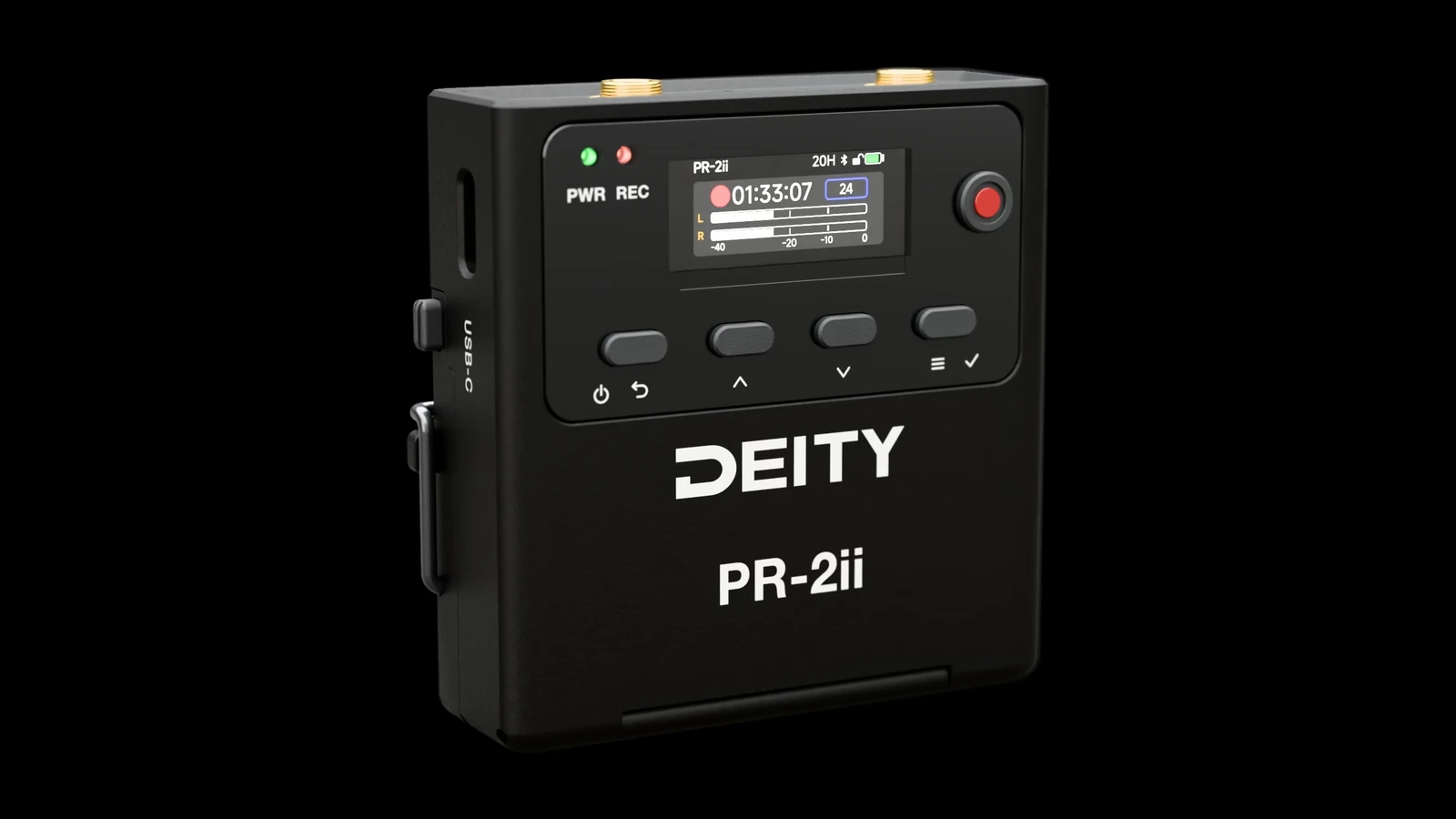
- The Deity PR-2ii is a second-generation pocket recorder built for independent audio capture.
- It offers 32-bit float mono and 24-bit stereo recording alongside PSRAM protection and a redesigned dual-ADC preamp.
- Timecode, IP54 protection and over 20 hours of battery life make it useful for production.
- Deity’s US store lists it at $259 with a lavalier microphone.
One lost line of dialogue can ruin a take, and the new Deity PR-2ii aims to keep a separate recording safe even when the wireless link cannot be trusted.
The second generation of Deity’s pocket recorder combines independent audio capture, a redesigned dual-ADC preamp, file protection and timecode. As of November 2, 2026, Deity’s official online store lists it as in stock.
32-bit float for one source, 24-bit for stereo
The PR-2ii records at 48 kHz / 32-bit float in mono or 48 kHz / 24-bit in stereo. That distinction matters: it cannot capture two independent 32-bit float channels at once. Recordings are saved as BWF WAV files for use in editing and sync workflows.
According to Deity, the new dual-path A/D preamp delivers at least 124 dB of internal-recording dynamic range and lower self-noise than the original PR-2. The 32-bit float format provides more flexibility when adjusting levels in post, but it cannot fix poor microphone placement, distortion at the analogue input or bad sound at the source.
PSRAM buffering adds a layer of recording protection
The most compelling addition for a recorder often hidden on talent is PSRAM-backed file protection. It is intended to preserve usable audio if a recording is interrupted unexpectedly or a file is damaged. This reduces risk but is not a guarantee that every power or storage failure can be repaired.
A selectable 3-, 6- or 10-second pre-record mode helps capture moments before Record is pressed, while mark points help locate important takes. Operators also get gain presets for lavaliers including DPA 4060/4061, Sennheiser MKE 2, Countryman B3 and Shure TL47, along with 75/150 Hz low-cut filters and a limiter.
Timecode and remote control for small crews
The PR-2ii receives wireless timecode from compatible Deity devices including TC-1, TC-SL1, THEOS and PR-4. Wired LTC and ATC are available over 3.5 mm, and USB-C can output timecode to compatible equipment, including selected DJI, Insta360 and XTRA cameras. Deity rates timecode drift at one frame over 48 hours.
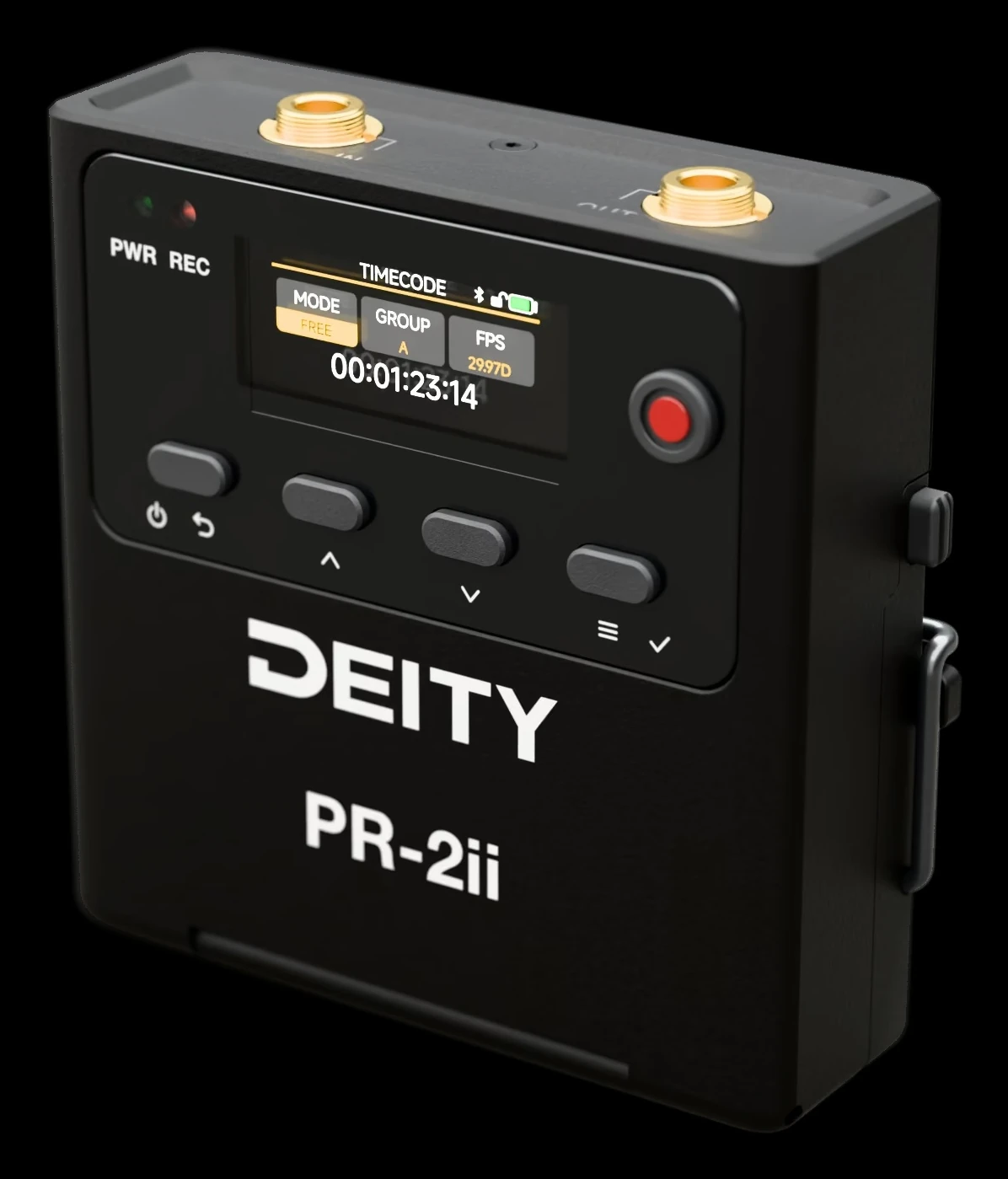
Sidus Audio lets an operator start and stop recording and adjust settings over Bluetooth without reaching under wardrobe or entering a difficult location. The rated remote-control range exceeds 40 metres. Continuous wireless timecode reception is linked by Deity to a future firmware update, so it should not be assumed to be available today.
Pocket-sized hardware with useful connections
At 60 × 58.5 × 18.5 mm and approximately 55 g without batteries, the PR-2ii is small enough to disappear on talent or inside a vehicle. It offers a 3.5 mm TRS mic/line input with 5V plug-in power, a 3.5 mm output for headphones, line or timecode, and USB-C for file transfer, power and 48 kHz/24-bit two-channel USB audio.
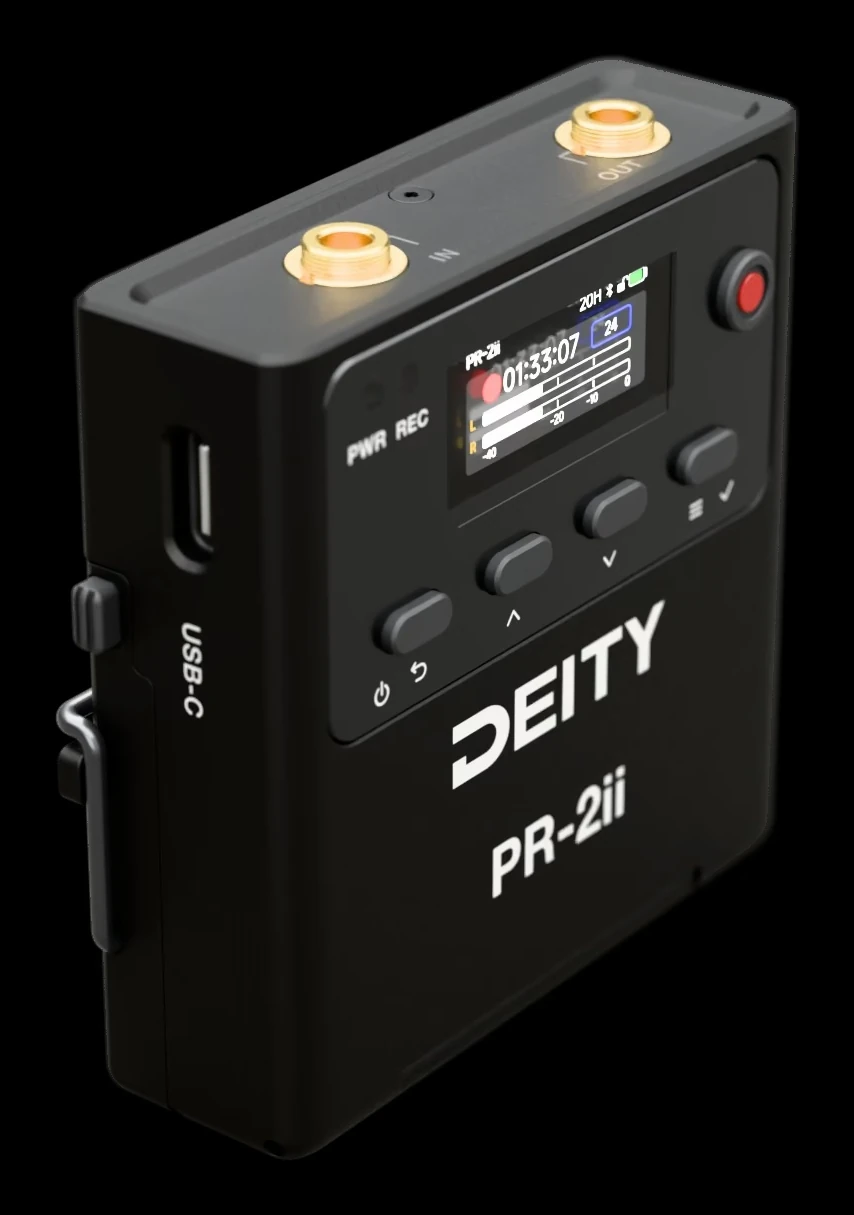
The colour display is rated at 600 nits, while IP54 protection covers dust and water splashes, not immersion. It records to microSD cards up to 1 TB. Deity quotes over 20 hours with two of its AA batteries; 5V USB-C power is another option.
Price and availability
Deity’s official US store lists the PR-2ii at $259 and marks it as in stock. The bundle includes an Avora lavalier, foam windscreen, microphone clip and two AA batteries. Deity’s main product page still shows “Coming Soon”, and no official European price or confirmed availability in Greece was found.
More information here.
What we think
If you shoot interviews or documentaries, you already know that a line of dialogue cannot always be repeated. A tiny recorder running independently on talent makes sense when your main feed is going wirelessly into the camera. If that radio link drops, you can return to the local recording rather than request another take. The PSRAM buffer adds an extra layer of protection to that setup.
I would not confuse it with a multichannel handheld recorder such as the Tascam DR-40XP, which serves a different recording job. It does not replace a complete wireless system either: systems offering on-transmitter local recording involve a different workflow. The PR-2ii makes sense because it concentrates on one task without depending on a live wireless audio feed.
I would still like to see 32-bit float stereo. If you need two separate sources in a single unit, you are limited to 24-bit here. But for a single lavalier on talent, local recording, timecode and long battery life are more useful than another headline specification.
Frequently asked questions
Can the PR-2ii record two channels in 32-bit float?
No. 32-bit float is available in mono only. Two-channel stereo recording uses 24-bit integer audio.
Can it work as a USB-C audio interface?
Yes. It supports USB Audio Class 2.0 as a two-channel 48 kHz/24-bit audio device.