Summary
- The Sony ECM-W5 has two wireless transmitters with 64 GB of internal storage each.
- Compatible Sony Alpha cameras support 32-bit float audio in the video file.
- Recording ordinary wireless microphone audio directly into video is already common on rival systems. Sony quotes a maximum 500-metre line-of-sight range.
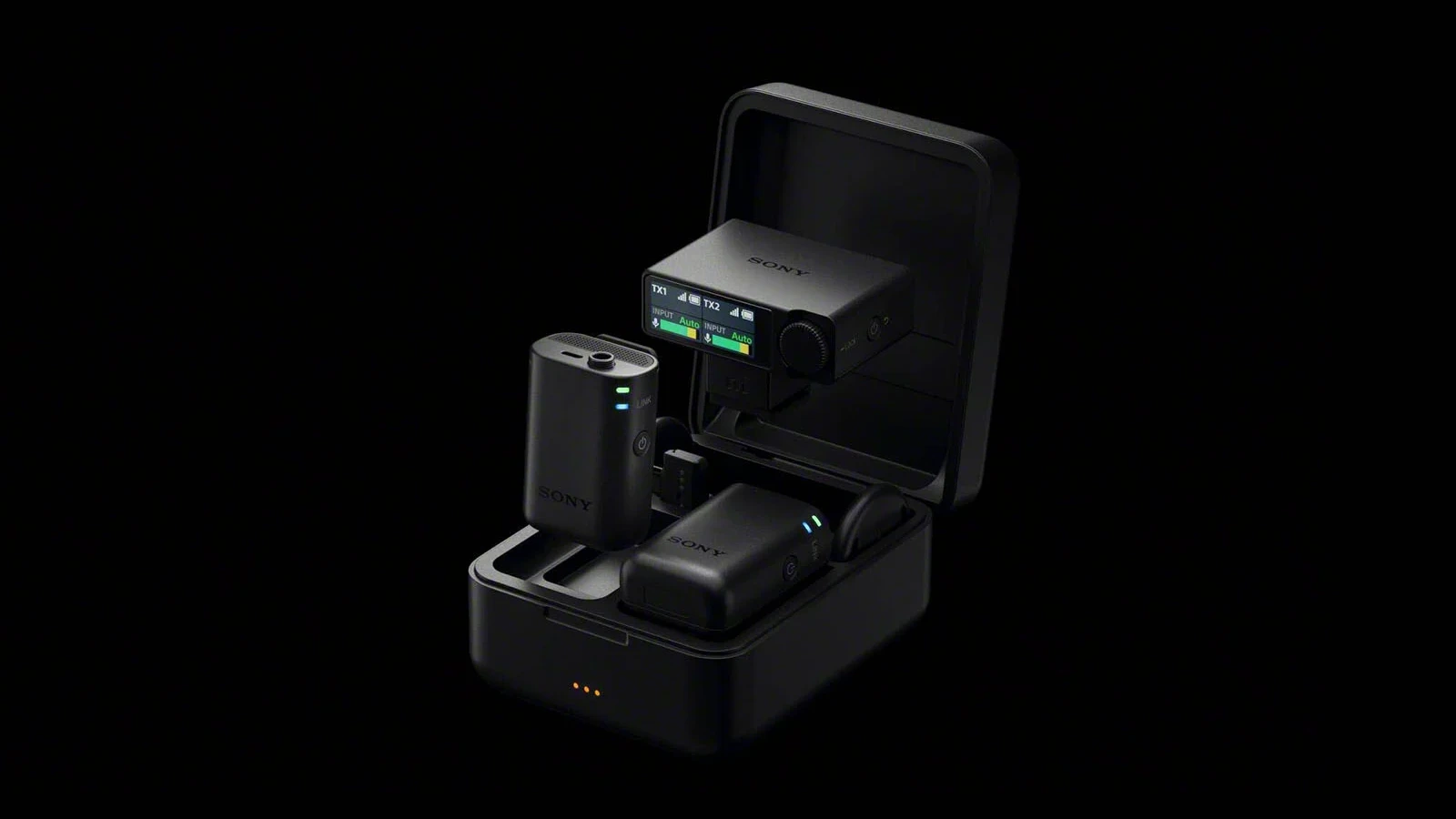
Sony has introduced the ECM-W5, a dual-transmitter wireless microphone system with 32-bit float recording, 64 GB of storage in each transmitter and a stated transmission range of up to 500 metres.
Recording wireless microphone audio into a video file is nothing new: DJI, RØDE and other systems already do this through their receivers. The more specific feature here is 32-bit float audio recorded inside the video file on compatible Sony Alpha cameras, alongside independent transmitter backups. That can reduce the need to substitute and sync a separate backup recording when correcting levels in post.
What in-camera 32-bit float actually changes
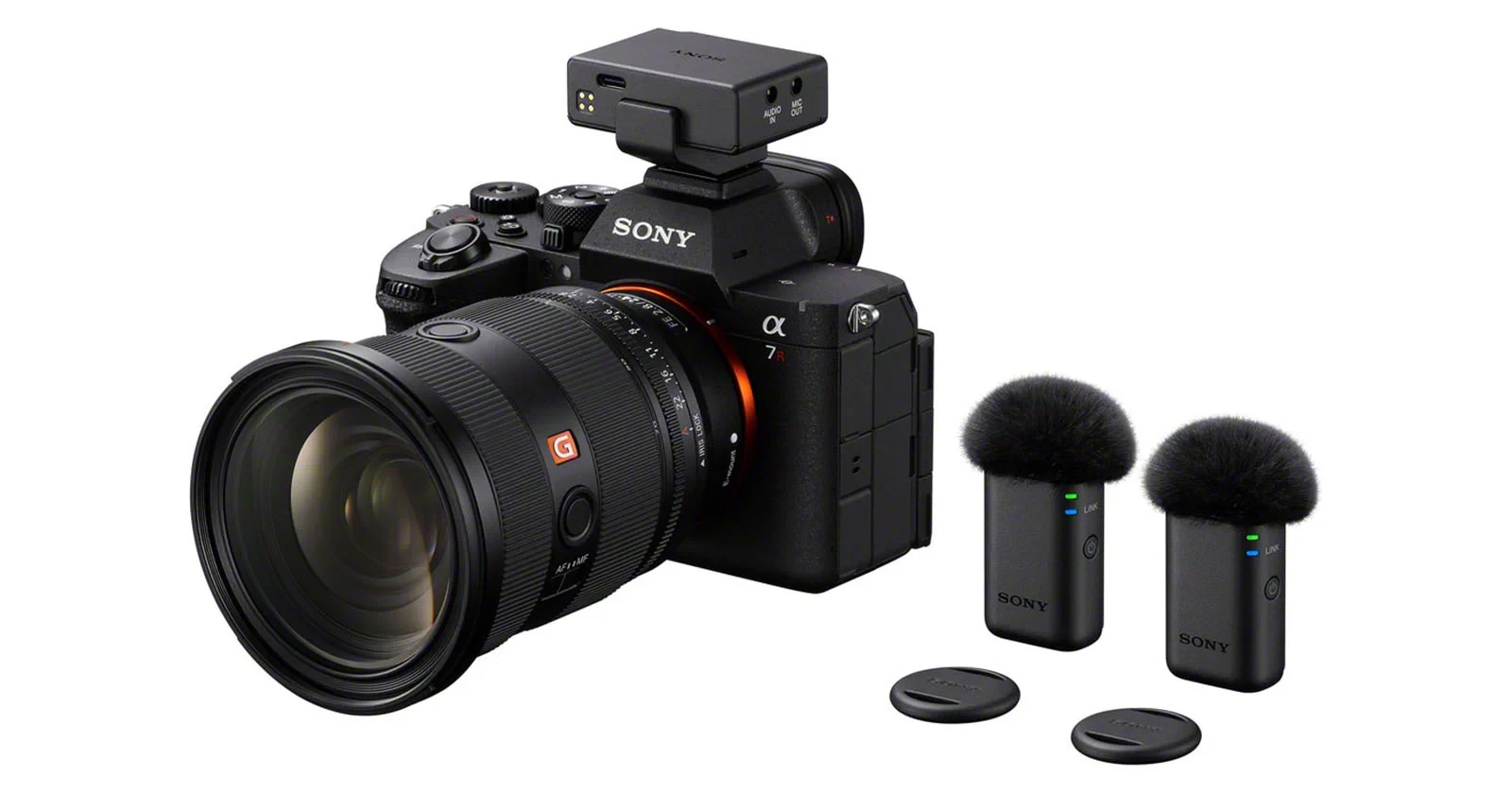
The ECM-W5 delivers 32-bit float audio at 48 kHz through the Multi Interface Shoe on supported Sony cameras. Sending audio from a wireless receiver straight into a camera file is standard across many competing kits. The distinction here is 32-bit float stored in the camera recording itself with supported Sony combinations, giving editors greater flexibility over levels without necessarily having to replace the soundtrack with a separately recorded transmitter file. It cannot, however, repair distortion that has already occurred at the microphone input stage.
High-resolution recording at up to 96 kHz is also supported, but not simultaneously with 32-bit float, which is limited to 48 kHz. A 3.5 mm microphone input lets each transmitter accept an external lavalier, including the ECM-L1.
64 GB of backup storage for irreplaceable takes
Each transmitter has 64 GB of built-in storage and can make its own backup recording. Sony states this can hold up to 90 hours at 32-bit float/48 kHz, or up to 60 hours at 24-bit/96 kHz. This is particularly useful for interviews and documentaries: a momentary wireless dropout need not mean the locally recorded audio has been lost.

500-metre line-of-sight range and cable-free monitoring
Sony quotes a maximum line-of-sight range of 500 metres and claims approximately three times more stable transmission than its ECM-W3 under the company’s own measurement conditions. Actual range will vary with obstacles, reflections and interference. Low-latency transmission also supports uses such as live streaming.
Selected compatible Sony wireless headphones can monitor audio without cables, while supported models can also serve as microphone inputs. These functions depend on a specific compatibility list; they should not be assumed to work with every pair of Bluetooth earbuds.
Four channels, timecode and mobile connectivity
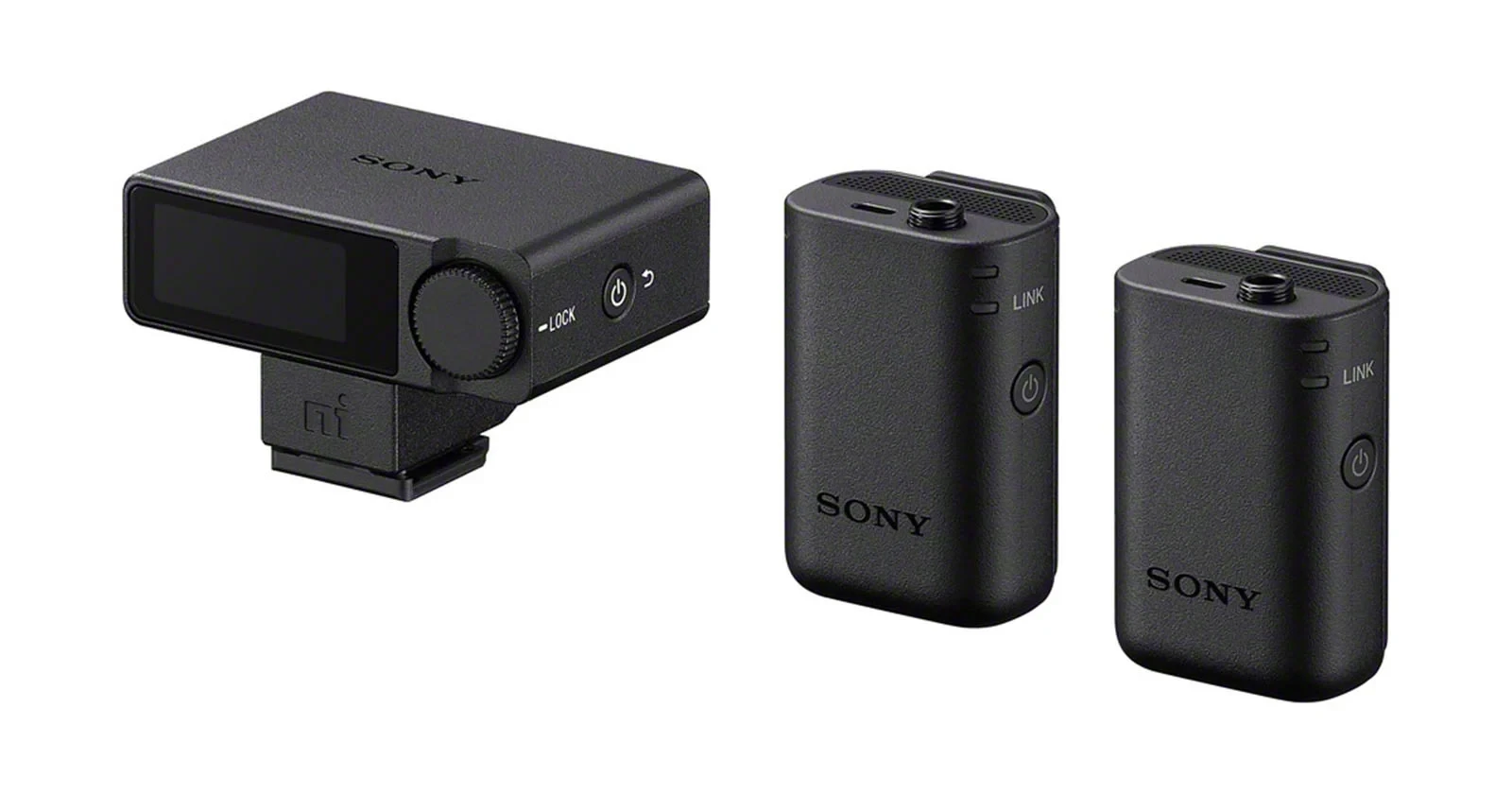
The standard kit has two transmitters and one receiver, but the system supports up to four channels of in-camera recording with an appropriate configuration and additional transmitters. Timecode simplifies sync for multi-camera productions. Sony quotes up to 11 hours of transmitter operation.
On supported Sony cameras, the Multi Interface Shoe can power the receiver and provide linked power control. A supplied USB-C adapter connects to compatible smartphones and computers with USB Audio Class 2.0 support. Direct Bluetooth recording is also offered with supported devices. The hardware is designed to resist dust and moisture but is not guaranteed to be fully sealed.

A familiar compact form factor
Its small transmitters and charging case follow a familiar format found in popular third-party systems from DJI, RØDE and Hollyland. Our guide to wireless microphones for smartphone creators explores those different approaches. With the ECM-W5, the main story is its own recording features and tighter integration with supported Sony cameras.
Price and availability
The ECM-W5 is due in the United States in November 2026 at a suggested price of $399.99. The separate ECM-W5R receiver costs $189.99 and the ECM-W5T transmitter $119.99. US pre-orders start October 14. An official European price has not been confirmed. More details are available on the product page.
What we think
The ECM-W5 is most interesting for the way it fits into a creator’s everyday workflow. Putting ordinary receiver audio directly into a camera file is not an advantage over DJI or RØDE; those systems do it too. The point worth evaluating is in-camera 32-bit float on a compatible Alpha, which could save the extra task of locating and synchronising an independent transmitter recording when wider level adjustments are needed.
Independent recording on the transmitters is just as significant. If an interview answer cannot be repeated, a backup matters more than a headline transmission-distance figure. The 64 GB in each transmitter addresses that real production risk.
At $399.99, the ECM-W5 enters a mature and competitive category. For supported Sony camera users, MI Shoe power, in-camera 32-bit float and timecode provide clear reasons to investigate it. For everyone else, actual compatibility and total system cost are likely to decide its value.
Frequently asked questions
Does it record 32-bit float at 96 kHz?
No. Sony specifies 32-bit float at 48 kHz; 96 kHz recording is available in a different mode.
Can the transmitters record backup audio?
Yes. Each transmitter contains 64 GB of internal storage, enough for up to 90 hours at 32-bit float/48 kHz according to Sony.