Summary
- The US anniversary release of Pan’s Labyrinth began on October 9, 2026.
- SDFX Studios created a stereoscopic 3D version under Guillermo del Toro’s supervision.
- The release also offers 4K and HDR by Barco options.
- A Greek theatrical release of the 3D edition has not been confirmed.
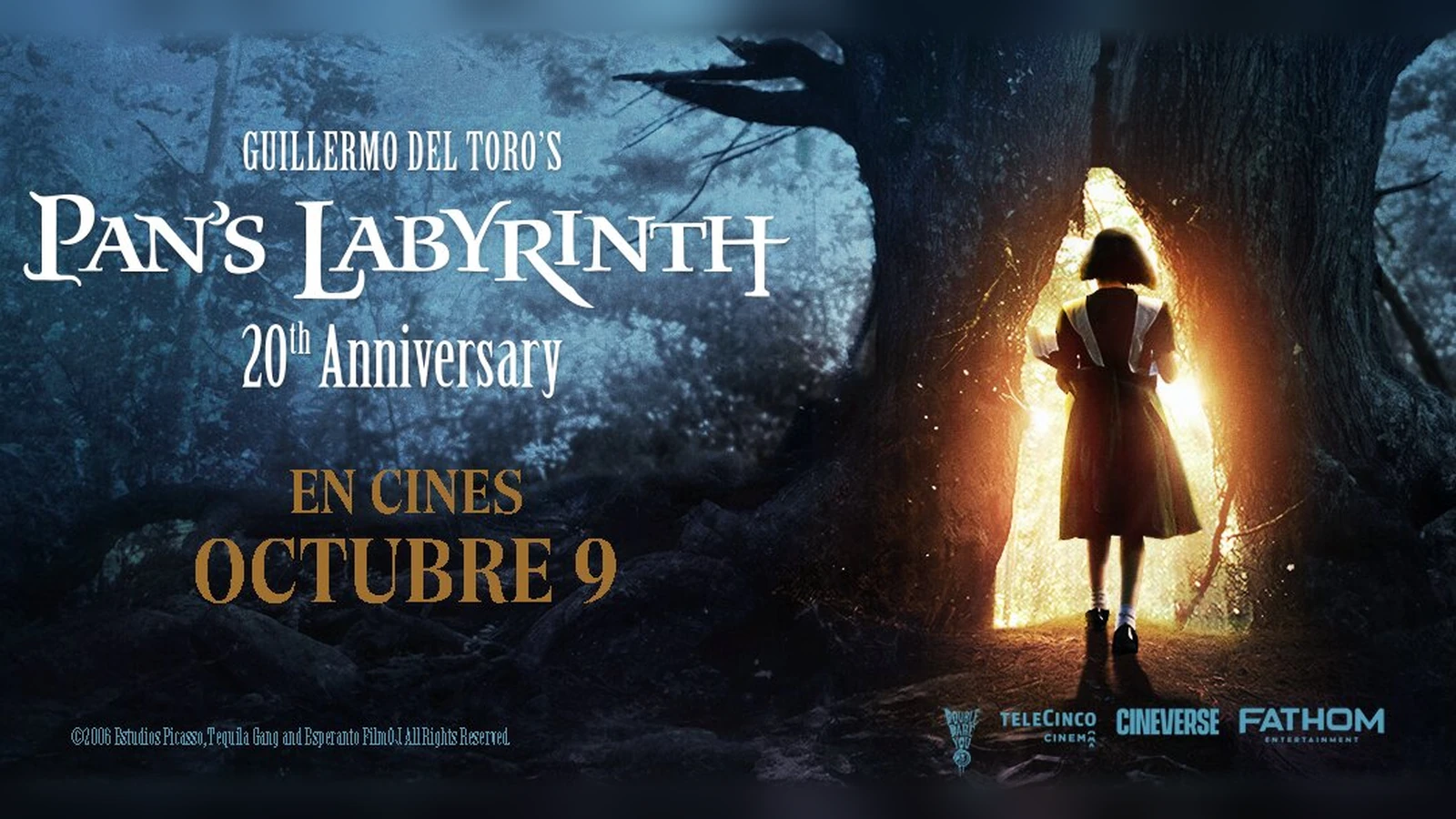
Twenty years after its original release, Pan’s Labyrinth has received a stereoscopic 3D version, with Guillermo del Toro overseeing a new spatial interpretation of Ofelia’s world.
The anniversary theatrical run from Cineverse and Fathom began in US cinemas on October 9, 2026. SDFX Studios (formerly Stereo D) handled the 3D conversion, while the director also supervised the other versions prepared for the film’s return.
How do you add depth to a film created for 2D?
The 2006 film was photographed on 35mm film for conventional two-dimensional theatrical presentation. Stereoscopic conversion is not simply a resolution upgrade. It requires distinct viewpoints for the left and right eye so that viewers perceive spatial separation between subjects, objects and backgrounds.
In a typical 2D-to-3D conversion, visual-effects artists isolate elements from their surroundings, establish depth relationships and reconstruct areas that were hidden in the original view. This describes the technique in general, not a confirmed shot-by-shot workflow at SDFX: the studio has not published that level of production detail in the announcement.
Cineverse confirms that SDFX created the stereoscopic visual effects for this release. Del Toro’s oversight matters because choosing how far forward or back an element appears can change the way a scene is read, even when its original composition remains intact.
Revisiting Guillermo Navarro’s Oscar-winning cinematography in 3D
The film was photographed by Guillermo Navarro, who won the Academy Award for Best Cinematography in 2007. In Pan’s Labyrinth, the dark forest, stone passageways and figures emerging from shadow do more than establish a setting. They direct our attention while sustaining the uncertainty between brutal reality and the film’s fantastical world.
That is what makes the conversion particularly interesting for photographers and filmmakers. A shot built around carefully arranged planes of light and the distance between Ofelia and a creature may acquire a different spatial emphasis in stereoscopic presentation. Without examining the actual 3D screening, however, we cannot say precisely how individual shots have been treated.
3D, 4K and HDR solve different problems
The anniversary release offers 4K, 3D and HDR by Barco presentations, depending on a cinema’s technical capabilities. 4K concerns resolution and fine detail; stereoscopic 3D concerns perceived depth; HDR concerns the luminance range of projection. Cineverse advertises up to six times higher peak brightness for Barco’s HDR system, but that claim should not be read as a guarantee of the same experience in every auditorium.
There is an important distinction for audiences in Greece. The Greek theatrical release of the 4K restoration opened in the country on August 20, 2026, through Weirdwave, using a restoration sourced from the original 35mm negative. The October US release adds the new stereoscopic option. A Greek theatrical release of the 3D version has not been confirmed.
What we think
The real interest here is a creative decision about cinematic language rather than a technology showcase. Pan’s Labyrinth already has a carefully calibrated sense of space: the forest conceals information, doorways lead to places with uncertain rules and the shadows let the audience complete parts of the image with its imagination. 3D could strengthen that physical presence, but it could also steer our gaze too insistently.
It is encouraging that del Toro supervised the versions himself. That gives the decision to add stereoscopic depth meaningful creative oversight, but it does not automatically prove that every shot benefits. A technical breakdown from SDFX, with before-and-after examples and explanations of depth choices in the darker scenes, would be genuinely valuable.
For image-makers, the useful test is whether this added dimension preserves the balance of Navarro’s photography. A successful conversion should keep us inside Ofelia’s story rather than make us watch every frame for objects reaching toward the audience. Until we see the new presentation ourselves, that remains a standard by which to judge it, not a verdict.
Frequently asked questions
Was Pan’s Labyrinth originally shot in 3D?
No. The original film was photographed on 35mm for two-dimensional presentation. SDFX Studios created the new stereoscopic edition through a conversion process.
Is this the same version released in Greece in 4K?
Not exactly. The August Greek release concerned the restored 4K image. The October US anniversary release additionally offers stereoscopic 3D. No theatrical release of the 3D version in Greece has been confirmed.
Can the trailer on a phone show how good the 3D is?
Not in ordinary two-dimensional playback. A stereoscopic effect requires separate images for each eye and compatible viewing equipment. The official trailer offers a look at the film, not a substitute for a 3D screening.