

Summary
- Previously unseen video from the first 17 days of the Chilean mine disaster is central to National Geographic’s new docuseries.
- The footage was filmed by the 33 trapped miners before contact with the surface was restored.
A few minutes of video recorded by the 33 trapped miners themselves, while nobody on the surface yet knew whether they were alive, form the rarest core of National Geographic’s new docuseries “Chilean Mine Rescue: Race Against Time”.
The three-part series returns to the collapse of Chile’s San José mine on August 5, 2010, when 33 men were trapped nearly 700 metres underground for a total of 69 days. For the first 17 days there was no contact with the surface, and nobody knew whether the miners had survived.
Among the vast archive assembled for the production is material the public had never seen before: video filmed underground by the miners on an old mobile phone. Co-director James Parris told PetaPixel that roughly five to six minutes of this material survive from those first 17 days.
Footage that was never meant for television
These images were not shot by a crew and were not intended for a future documentary. They were recorded inside the mine by people who, at the time, believed there was a real possibility they would never reach the surface. That changes the role of the camera completely: it becomes less an observing device and more a personal record, potentially a final message.
The technical quality is inevitably limited compared with modern smartphone video, but the value of the material lies in its immediacy. The filmmakers had access to a primary visual record from inside the crisis, captured before the outside world even knew that all 33 men were alive.
According to James Parris and Chloe Campbell, the team chose to handle the footage with restraint. Rather than cutting it into tiny fragments and scattering it throughout the series, the material is presented largely as a continuous body, with interviews from people directly connected to what is being shown woven around it.
A huge archive, but only a few minutes with this point of view
The contrast is striking. The rescue operation was covered almost continuously by international television networks and photojournalists, so the production had an enormous amount of archive to work through. The directors described to PetaPixel a process of searching through days of images in which almost every major surface event had been captured by somebody’s camera.
Yet the few minutes recorded by the miners carry a different weight because they do not show the event from the perspective of crews waiting above ground. The camera is with the people who do not know whether they will be rescued. For a documentary telling a story whose ending is already known, that shift in point of view is central to restoring the uncertainty that existed in 2010.
From the collapse to the Fénix capsule
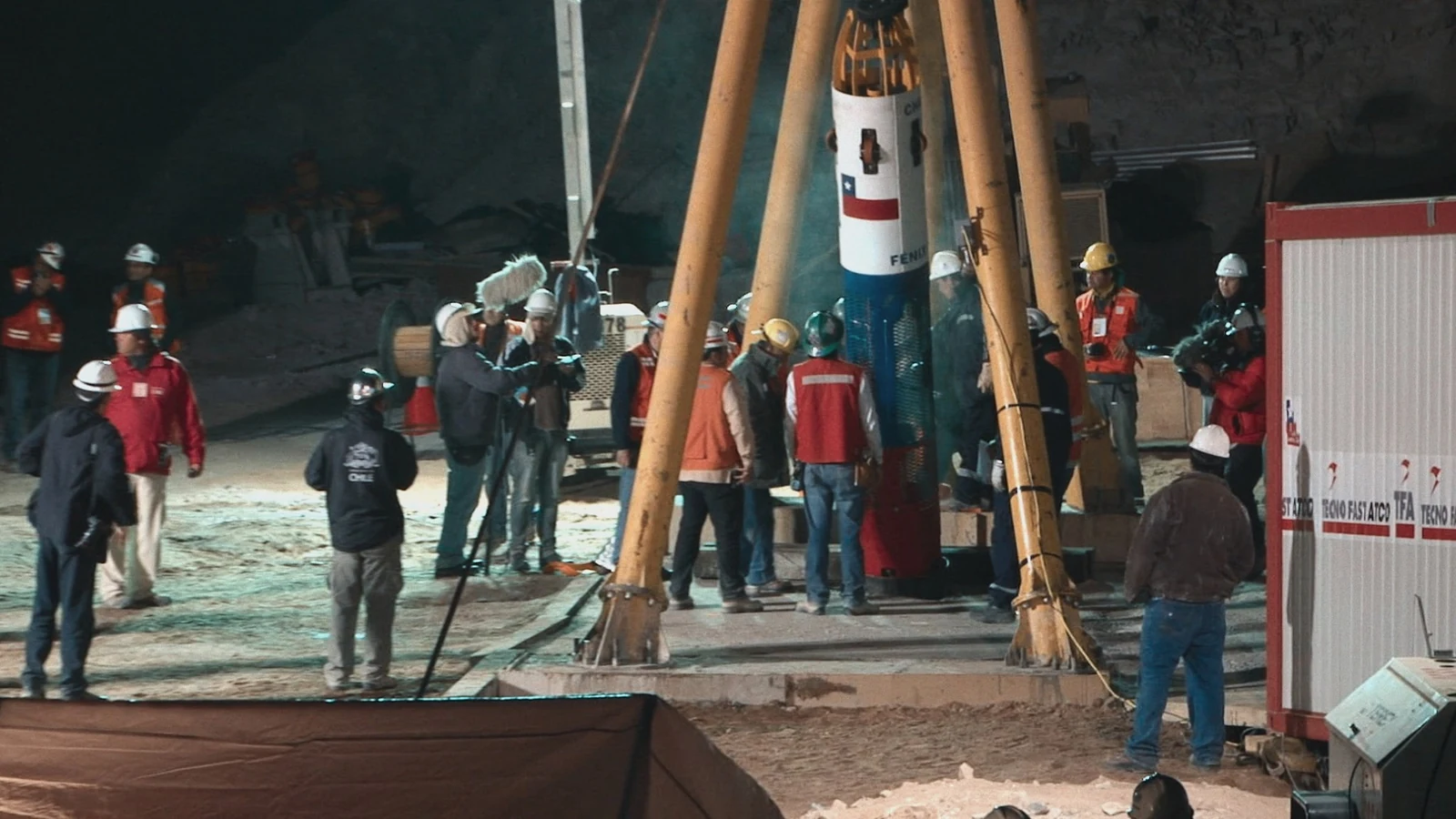
The collapse at the San José copper-gold mine trapped 33 miners on August 5, 2010. For 17 days, teams on the surface tried to locate them until a borehole reached the shelter and confirmed they were alive. Another 52 days of drilling, supplying and planning followed before the men were finally brought to the surface in the Fénix capsule.
National Geographic says the final rescue was watched by an estimated audience of more than one billion people. The new series is divided into three episodes — “Buried Alive”, “No Way Out” and “Rescue” — and combines the unseen material with interviews with survivors, relatives, rescuers and people who covered the operation.
“Chilean Mine Rescue: Race Against Time” is produced by Blast Films for National Geographic, directed by Chloe Campbell and James Parris, with Luke Sewell serving as series editor.
When the docuseries is available
The series premiered on National Geographic on September 25, 2026. Disney+’s official announcement lists all episodes for streaming from September 26 on Disney+ and Hulu, subject to regional availability.
What we think
For image-makers, the most revealing lesson is not the resolution or technical cleanliness of the footage but what happens when a camera is in the right place at the right time. An old mobile phone with obvious limitations becomes the most valuable visual record in an entire production.
The directors’ decision not to treat the material as a sensational discovery to be chopped into dozens of fast fragments matters just as much. Preserving duration, rhythm and original context is often what allows archive footage to function as historical testimony rather than simply dramatic content.
Frequently asked questions
What exactly is the unseen footage?
It is video filmed by the trapped miners themselves on a mobile phone inside the mine, before communication with the surface had been restored.
How much footage survives from the first 17 days?
Co-director James Parris told PetaPixel that roughly five to six minutes of material survive from that period.
Who directed “Chilean Mine Rescue: Race Against Time”?
The series was directed by Chloe Campbell and James Parris and produced by Blast Films for National Geographic.
When was the series released?
It premiered on National Geographic on September 25, 2026, with the official Disney+ and Hulu streaming release beginning September 26, depending on territory.