Summary
- A rare Leica / Hughes Leitz 17mm f/2 appeared at a Goodwill auction with a $35 opening price.
- The reported final figure reached $20,001.
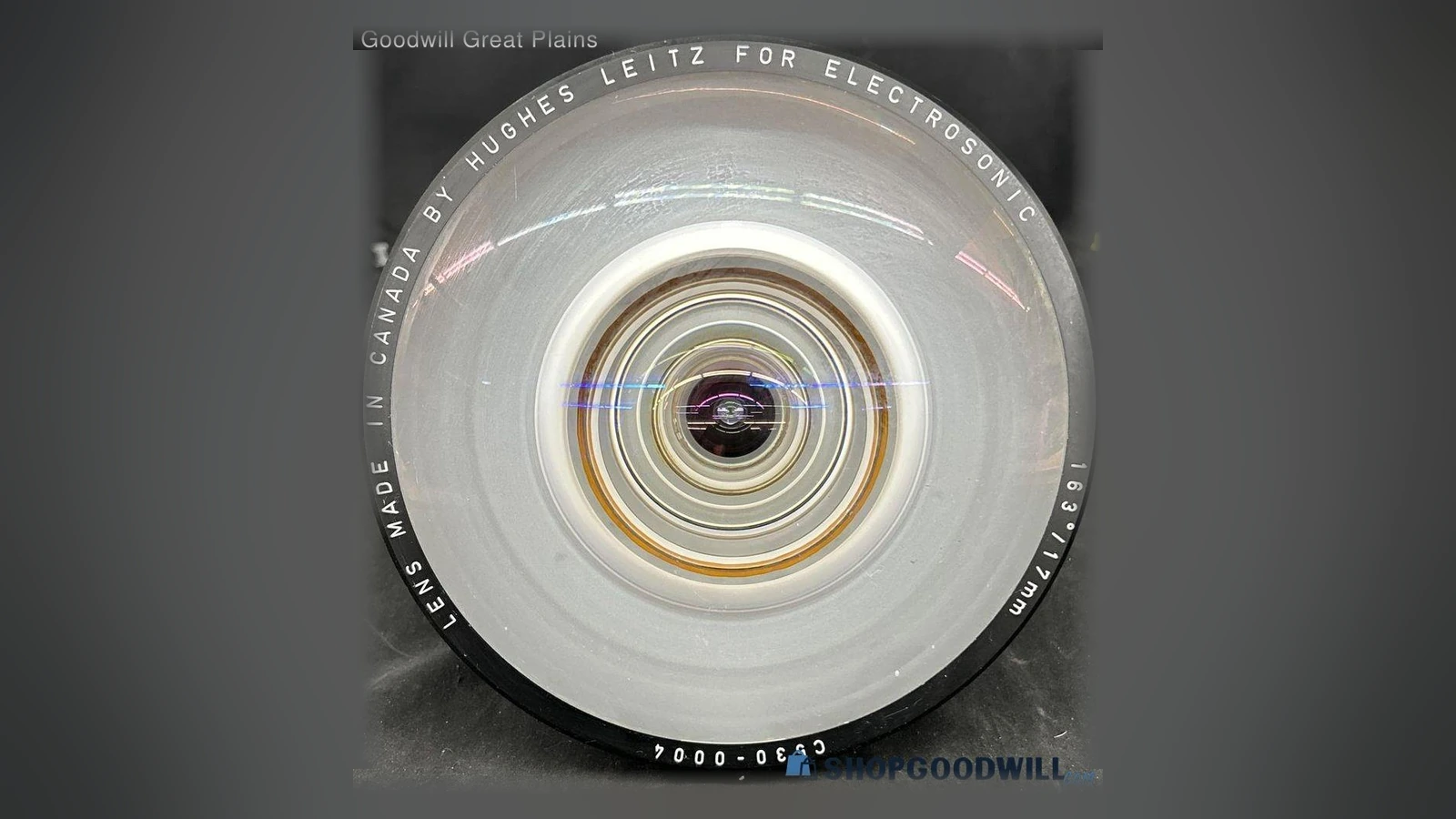
- The lens bears the C530-0004 marking, unlike the previously known C530-0007 example.
- Completion of payment has not been independently verified.
The rare Leica / Hughes Leitz 17mm f/2 prototype that turned up at a US Goodwill auction reportedly reached $20,001, despite opening at just $35.
The auction ended on October 30, 2026, with the result reported on November 1. This extraordinarily unusual lens appears to be another example of a prototype that was long believed to be unique.
From $35 to $20,001
The lens was offered by Goodwill Great Plains in Sioux Falls, South Dakota. Bidding opened at $35, but the unusual prototype attracted the attention of collectors.
On October 30, before the auction closed, the leading bid had already reached $3,008 after seven bids. The $20,001 figure was reported after the auction ended.
This is the reported final auction result; completion of payment could not be independently verified through Goodwill’s dynamic listing.
A lens that was never built for ordinary photography
The Hughes Leitz 17mm f/2 is a massive fisheye prototype made in Canada for Electrosonic, intended for specialized projection and industrial imaging applications.
Weighing nearly 12 kilograms, with a 163-degree field of view, fixed focus and no conventional aperture diaphragm, it is far removed from the photographic lenses most of us use.
The discovery of the prototype at Goodwill attracted particular interest because of a small but crucial detail: the C530-0004 marking visible on the lens.
In 2021, Leica Store Lisse presented an almost identical example marked C530-0007. It invited offers starting at €40,000, roughly $47,200 at the time. That was an asking price, not an independently confirmed completed sale price.
The two different markings strongly suggest these are not the same physical object. That makes the Goodwill example particularly useful for documenting the history of Hughes Leitz and its specialized optical systems.
What we think
If we came across this lens without knowing its history, we would be unlikely to recognize it as a relative of Leica’s photographic equipment. At nearly 12 kilograms, with such an unconventional design, it looks much more like a component from a large industrial system.
That is precisely what makes it interesting. Optical manufacturers have never worked exclusively on still cameras. Their expertise has also gone into scientific, industrial and specialized systems that most photographers never encounter.
The jump from $35 to $20,001 is striking, but collectors need to know exactly what they are buying. The condition of the optics, provenance and documentation of this particular example matter just as much as an eye-catching final bid.
There is another detail worth keeping: the different marking on the Goodwill lens gives us a concrete clue that more prototypes may have existed. For photographic equipment history, that may prove more valuable than the auction price itself.