Summary
- The 49th Leitz Photographica Auction takes place on 28 November 2026 in Wetzlar.
- The Leica BOX prototype is estimated at €400,000–500,000 and the Leica MP-105 at €300,000–400,000.
- Eight illustrated collector lots span prototypes, rare Leica M cameras and military photographic systems.
- 1. Leica BOX 18×24mm prototype — estimated €400,000–500,000
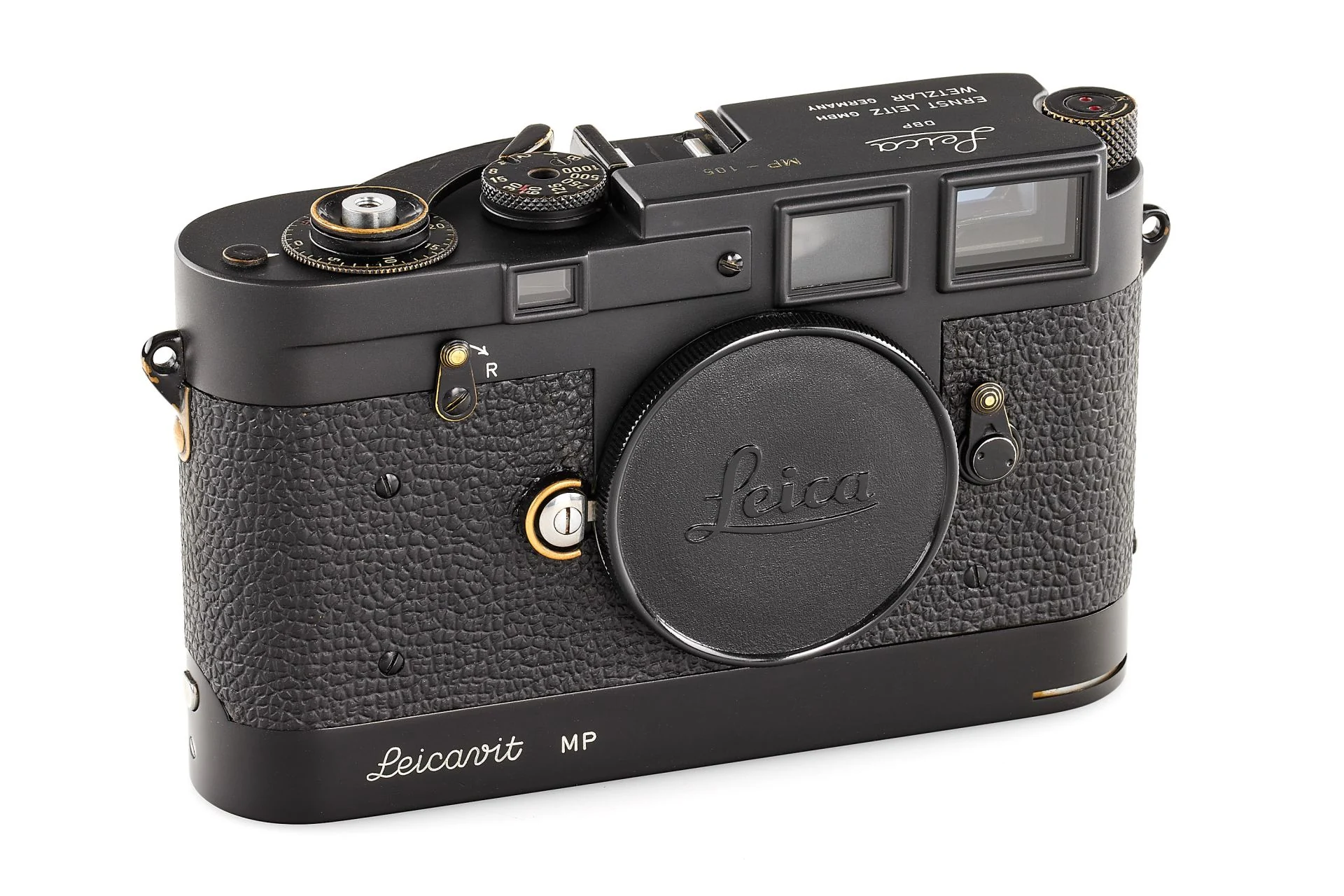
- 2. Leica MP-105 black / chrome — estimated €300,000–400,000
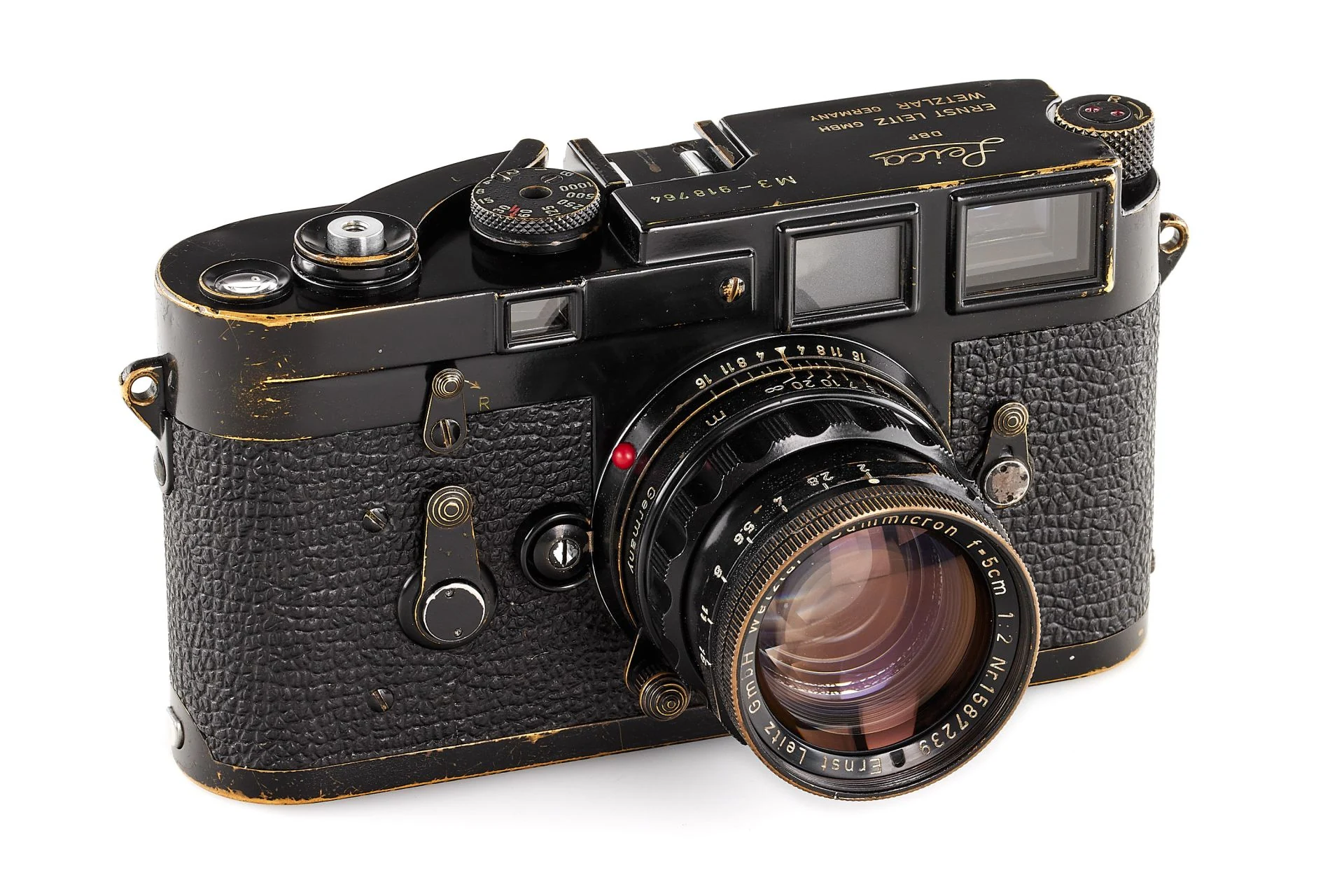
- 3. Leica M3 black paint Black Dial — estimated €150,000–180,000
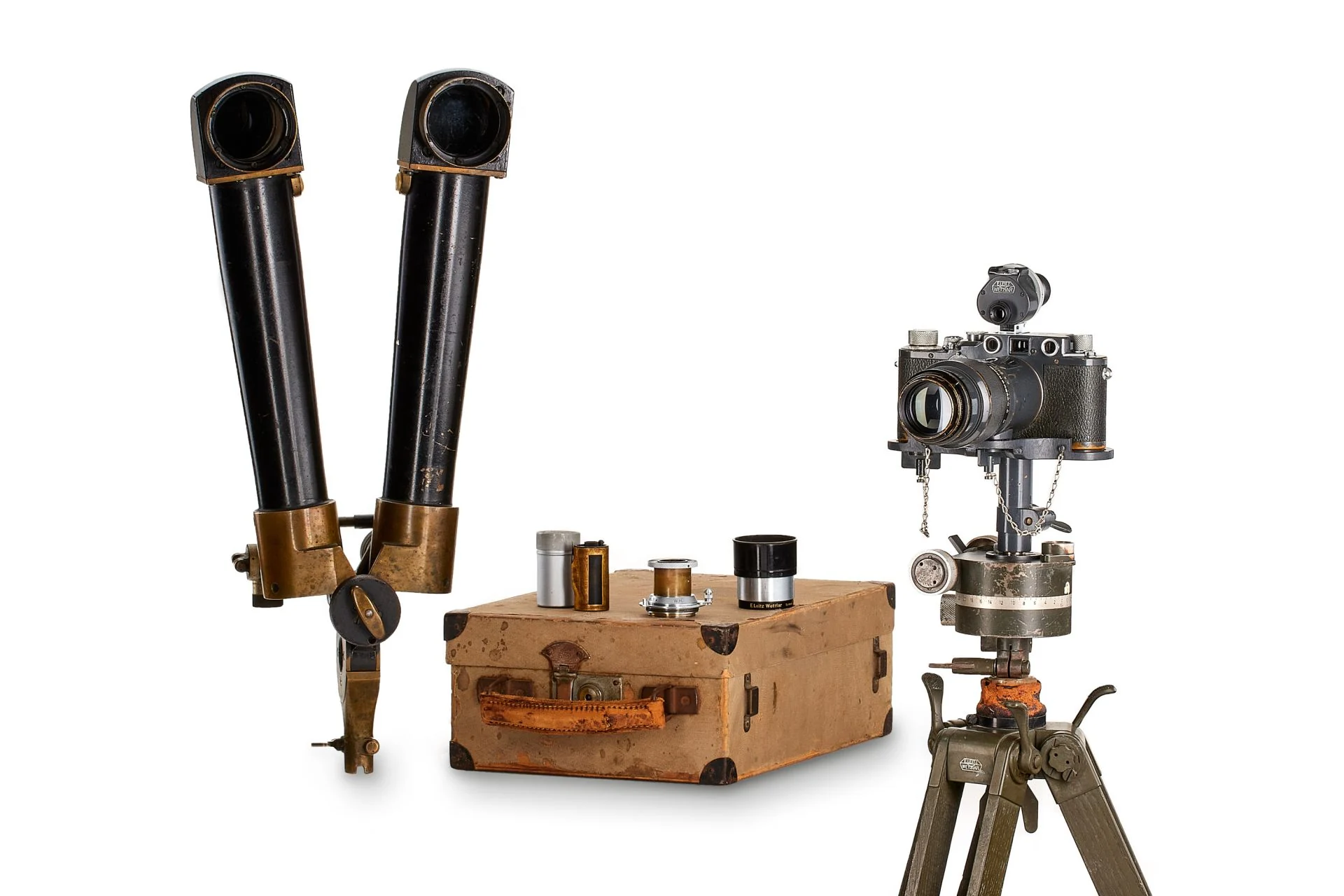
- 4. Leica W.H. Rundbildkamera E2 Outfit — estimated €140,000–160,000
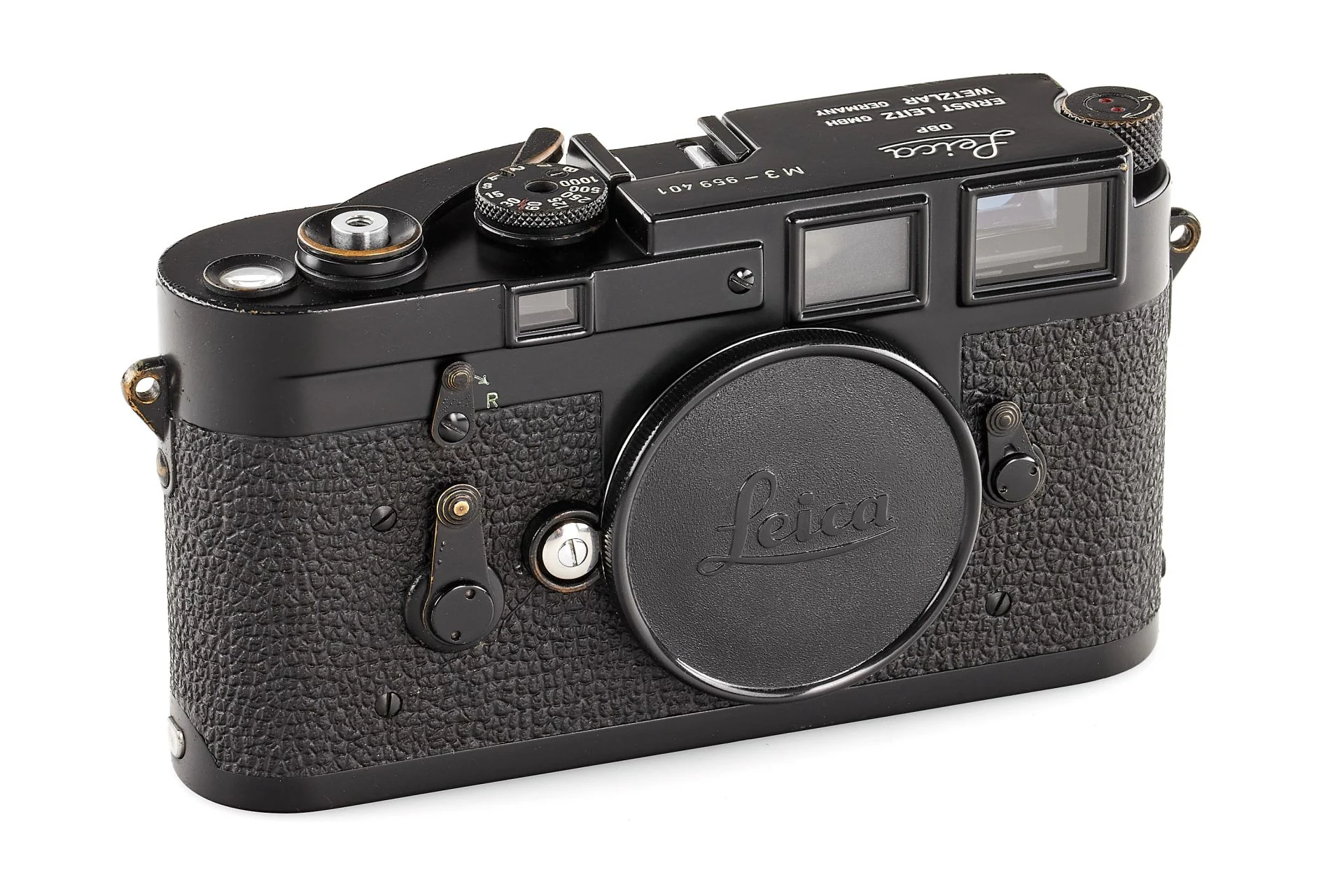
- 5. Leica M3 black paint “The First” — estimated €80,000–100,000
- 6. ELCAN Leica UW Underwater Housing — estimated €80,000–100,000
- 7. Leica M11-D “100 Years of Leica” 100/100 — estimated €60,000–80,000
- 8. Leica M3 olive “Bundeseigentum” — estimated €60,000–70,000
- Another expensive lot worth noting
- What we think
- Frequently asked questions
An experimental Leica BOX estimated at up to €500,000 leads the 49th Leitz Photographica Auction, where rare cameras, prototypes and military photographic systems will seek new collectors.
The auction takes place on 28 November 2026 at 12:00 noon local time in Wetzlar, Germany. Following the 48th Leitz Photographica Auction, which brought remarkable Leica collector pieces into the spotlight, eight lots stand out here with estimates ranging from €60,000 to €500,000.
These figures are the auction house’s estimates, not completed sale prices. Starting bids are lower, while buyers may also have to pay premiums and applicable taxes depending on the lot.
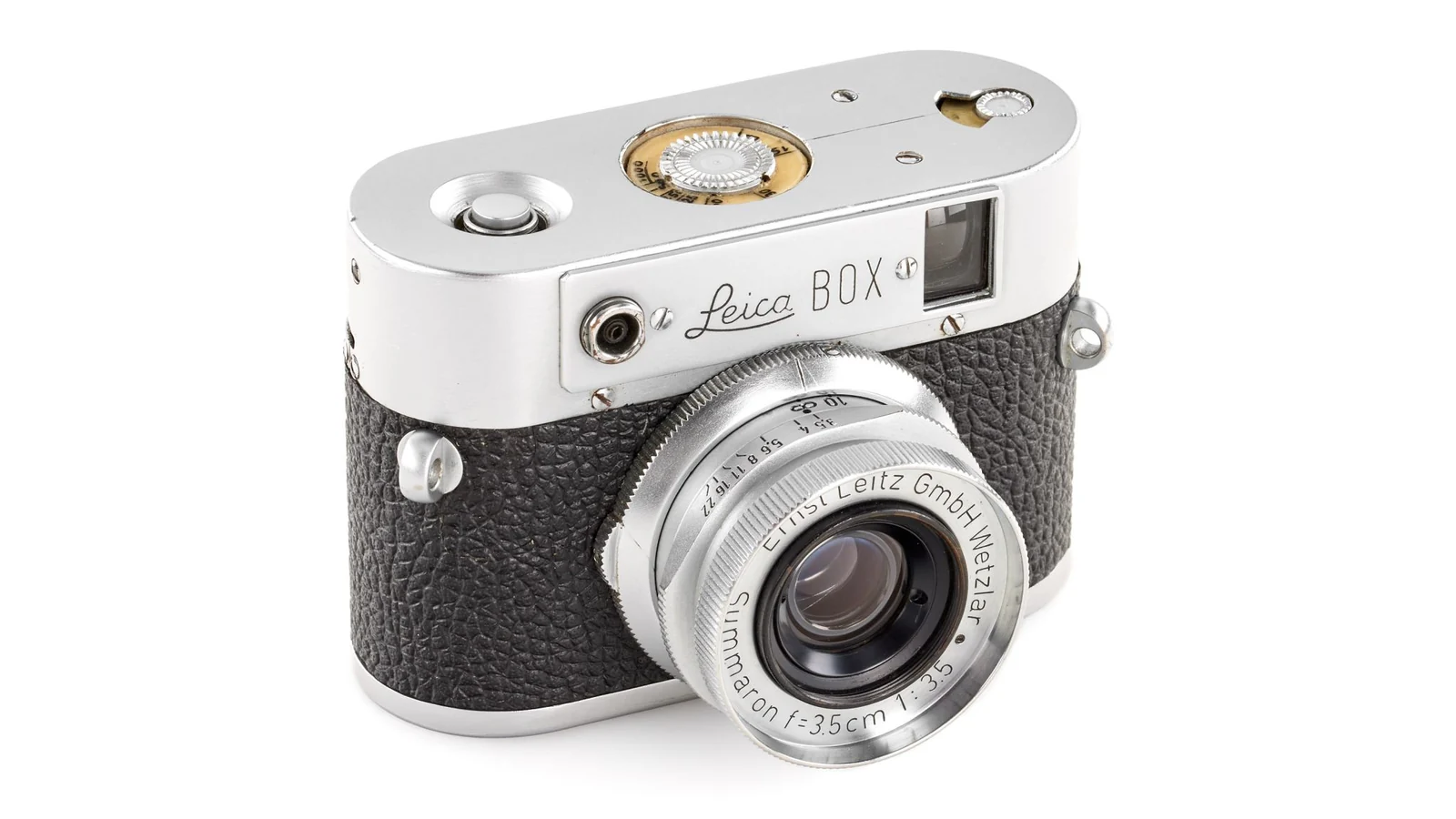
1. Leica BOX 18×24mm prototype — estimated €400,000–500,000
The star of the sale is a Leica that never entered regular production. Developed in the mid-1950s, the Leica BOX was designed as an exceptionally compact 18×24 mm half-frame camera using 35 mm film and Agfa KARAT cassettes. It measures approximately 100×64×48 mm and carries a fixed Leitz Summaron 3.5 cm lens.
Serial number 000.01 is, according to the auction house, the only fully operational Leica BOX known to exist. A second, non-working design study is held in the Leica archive. Its functioning condition, exceptional rarity and documented history help explain the €400,000–500,000 estimate.
Official lot details and starting price: more information here.
2. Leica MP-105 black / chrome — estimated €300,000–400,000
Made in 1958, the Leica MP-105 began life as a black-paint MP, one of just 141 produced in that finish. In 1975 Leica itself replaced its top plate and rear door, creating the unusual black/chrome combination while retaining the other original black-painted fittings.
Crucially, the conversion is documented by a Leica factory invoice dated 23 June 1975, for DM 103.27. A black-paint Leicavit MP is also included. Provenance is central to the appeal of cameras like this: the object is not merely rare but a specific, traceable piece of Leica history.
The market’s appetite for these cameras was apparent when a different Leica MP Black Paint, serial MP-33, sold for €600,000 at the previous auction. That was another camera, and the figure is an actual completed sale result.
Official lot details and starting price: more information here.
3. Leica M3 black paint Black Dial — estimated €150,000–180,000
This early black-paint Leica M3 from 1958, serial number 918764, is among the most coveted versions of the series. It was delivered to Brandt in Sweden on 3 June 1958, and Leica archive records include the notation “schwarz lack” alongside its number, confirming the black finish.
It comes with a black-paint Summicron 50mm f/2 with a brass mount. The visible patina is part of the camera’s history, and for collectors it can contribute to the appeal of an authentic period body when backed by proper documentation.
Official lot details and starting price: more information here.
4. Leica W.H. Rundbildkamera E2 Outfit — estimated €140,000–160,000
This is not an ordinary camera but a complex German military panoramic outfit from the Second World War. At its centre sits a grey Leica IIIcK W.H. from 1943, with special reference marks in the film gate, Elmar 5 cm and Hektor 13.5 cm lenses, a dedicated viewfinder, a wooden tripod and an observation telescope arrangement.
The “K” variant was built for cold-weather operation and used a ball-bearing shutter mechanism. According to the catalogue, only one other comparably complete outfit with its case is known. It is a historical artefact of military photographic technology, not equipment to judge against contemporary shooting needs.
Official lot details and starting price: more information here.
5. Leica M3 black paint “The First” — estimated €80,000–100,000
Serial number 959401 is the defining feature of this 1959 black-paint Leica M3. It is the first camera in the first official batch of 100 black M3 bodies (959401–959500), from a period when these variants were produced in exceptionally small numbers.
There were earlier special-order black M3 bodies, so “The First” refers specifically to the first official production batch, not the first black M3 ever made. That distinction is exactly why its serial number matters.
Official lot details and starting price: more information here.
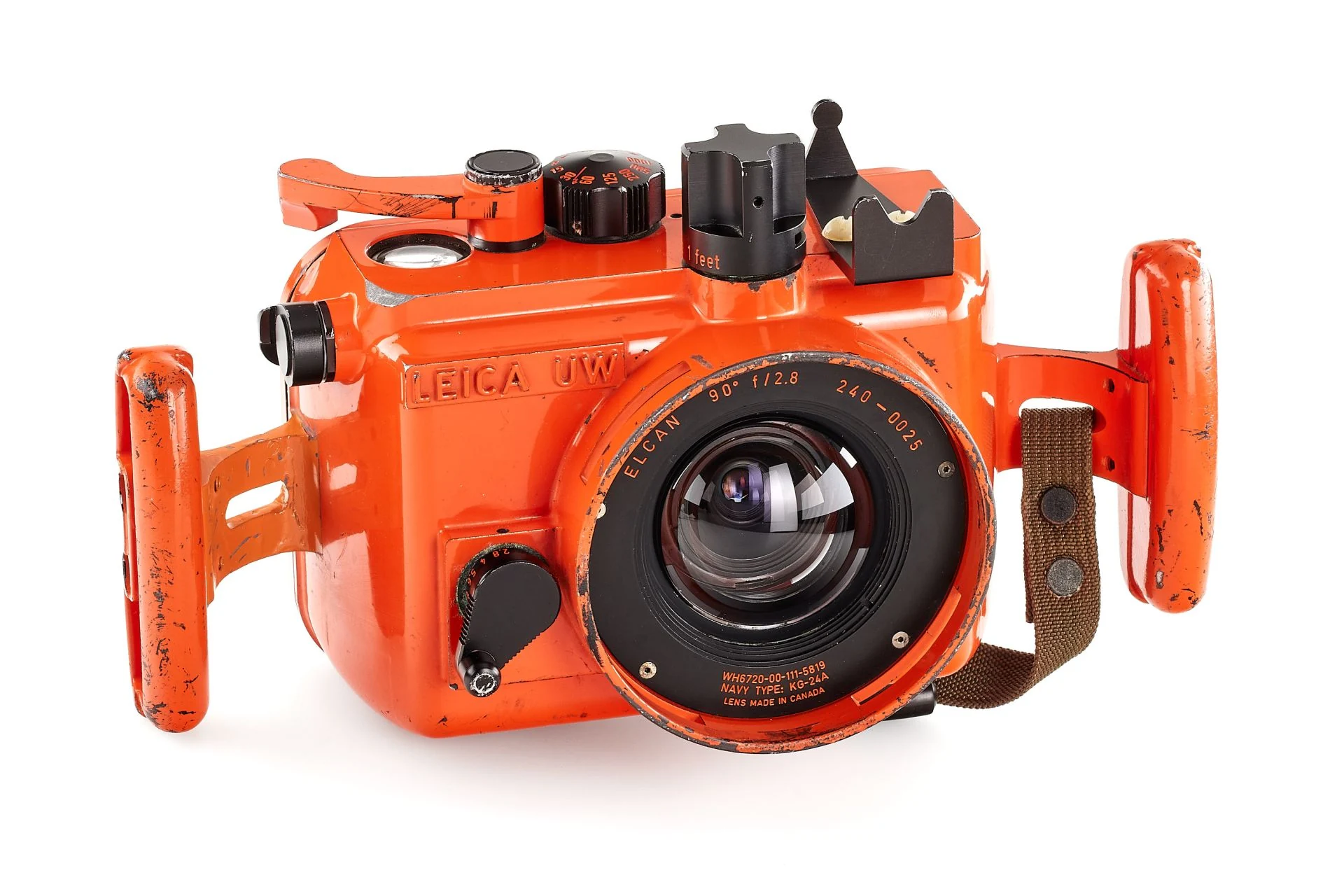
6. ELCAN Leica UW Underwater Housing — estimated €80,000–100,000
The striking orange-red ELCAN underwater system was built around 1970 by Ernst Leitz Canada for the US Army. It incorporates a permanently mounted ELCAN 90° f/2.8 wide-angle lens and houses a Leica MDa body without a serial number, intended for development and testing.
Focus, aperture and shutter speeds are all controlled from outside the housing. The auction house believes fewer than ten such housings exist worldwide, and this example comes directly from ELCAN’s development department.
Official lot details and starting price: more information here.
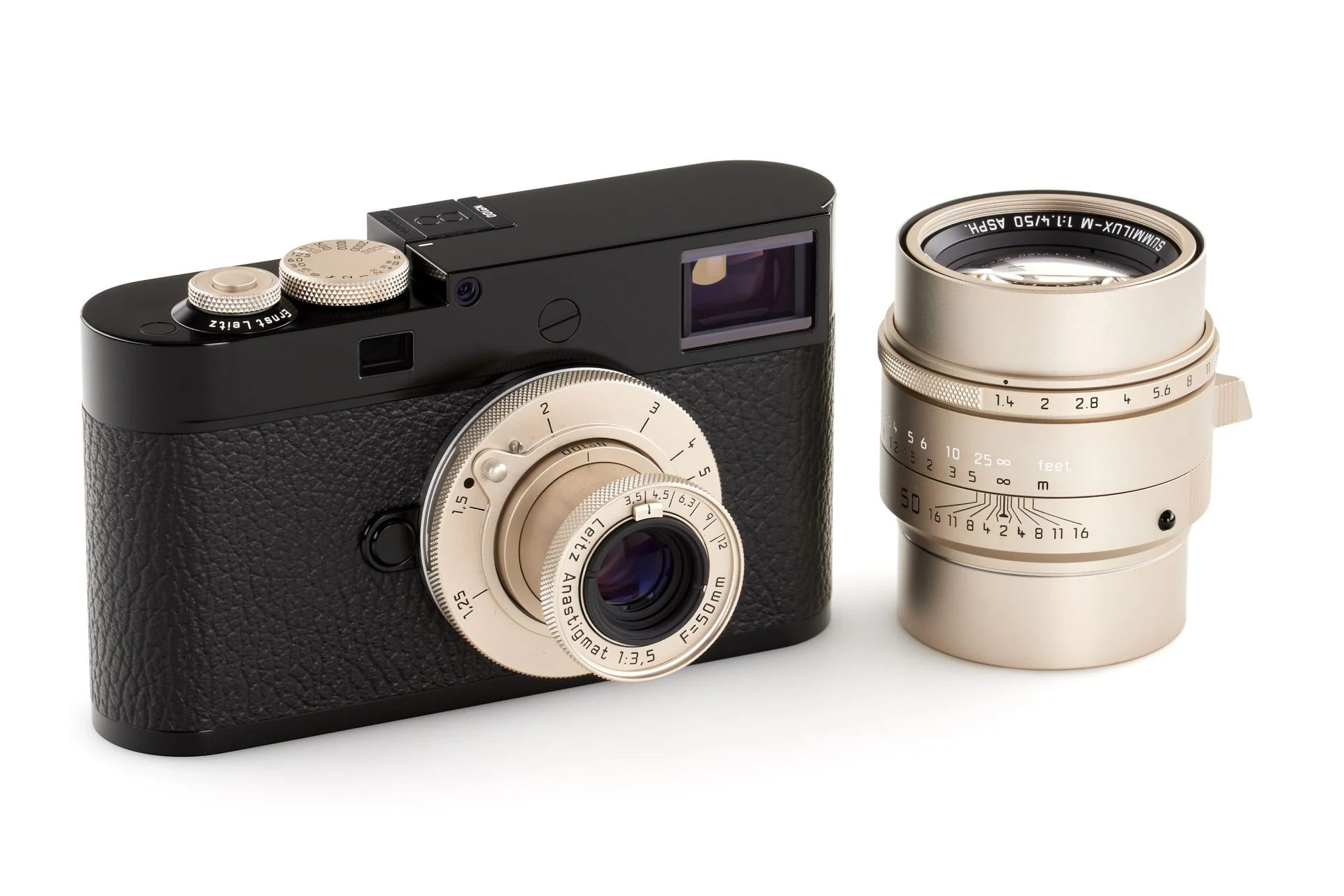
7. Leica M11-D “100 Years of Leica” 100/100 — estimated €60,000–80,000
A modern collector’s Leica appears among the historical machines. This 2025 anniversary set contains a Leica M11-D, a Leitz Anastigmat-M 50mm f/3.5 recalling the lens on the original Leica I, and a Summilux-M 50mm f/1.4 ASPH., both in a distinctive nickel-coloured finish.
Only 100 regularly numbered sets were made, and this is the final one, 100/100. It is described as unused and complete with its original presentation case and accessories. Its appeal rests largely on that place in the anniversary series rather than on the capabilities of a current digital camera.
Official lot details and starting price: more information here.
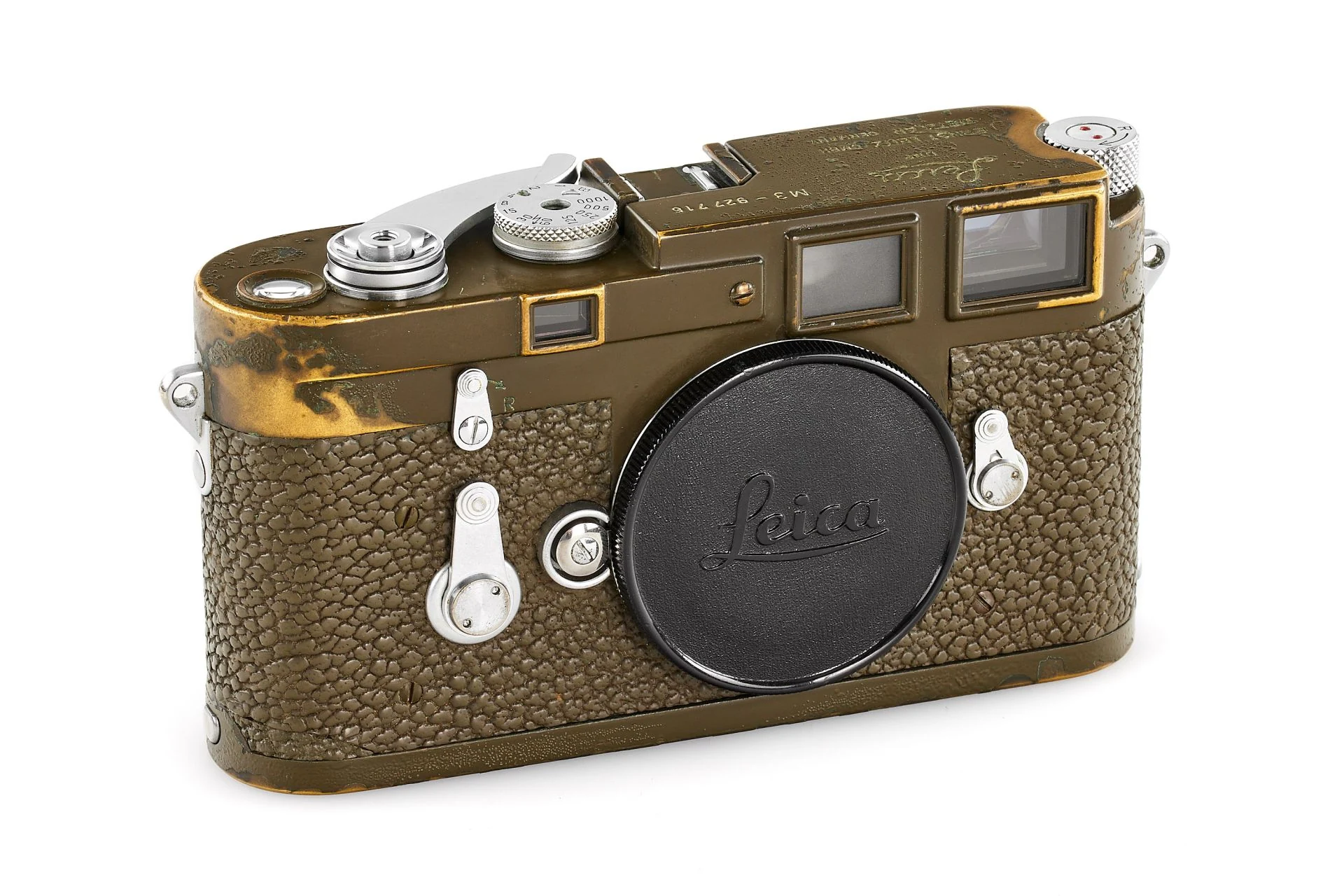
8. Leica M3 olive “Bundeseigentum” — estimated €60,000–70,000
The 1961 military Leica M3 “Bundeseigentum” stands out for its original olive-green paint, long strap lugs and single-stroke film advance. Body 927716 was delivered on 25 October 1961 and carries a federal-property engraving on its top plate.
According to the auction house, fewer than 300 M3 cameras were manufactured in this finish. Its characteristic wear and small paint bubbles are part of the original condition of this example.
Official lot details and starting price: more information here.
Another expensive lot worth noting
Another high-value entry is the Leica IIIf Black Paint Swedish Army (lot 244), estimated at €80,000–100,000. It belongs to a special batch of 100 black bodies for the Swedish Army, modified for Arctic conditions. Its official catalogue entry adds another dimension to the auction’s top end.
What we think
What makes this sale compelling is not simply that a Leica BOX prototype could reach half a million euros. It is a completely different approach to camera design: half-frame format, compact body, mechanical controls and a project that never became a production model. Photographers often look at Leica history through the familiar M-series. This small camera shows just how many other ideas its engineers explored.
Just as striking is how much the precise story of an individual body matters. The MP-105 comes with the invoice for its conversion, the M3 “The First” has the first serial number in a landmark batch, and the military Rundbildkamera has a documented and remarkably complete outfit. Those details directly shape collector value rather than merely decorating a catalogue description.
Of course these are not sensible purchases as everyday working cameras. They are objects that trace the development of photography itself, from experimental designs to highly specialised military applications. For anyone who cares about the medium, this auction offers a fascinating look at how broad the camera’s history really is.
Frequently asked questions
When and where is the auction taking place?
The 49th Leitz Photographica Auction is scheduled for 28 November 2026 at 12:00 noon local time, at Leitz-Park in Wetzlar, Germany.
Are the estimates the final prices buyers will pay?
No. Estimate ranges are predictions from the auction house. The hammer price may be higher or lower, and buyer’s premiums and applicable taxes can increase the final cost.