Summary
- “A Gorilla Story: Told by David Attenborough” won the Golden Panda at the Wildscreen Panda Awards 2026.
- “Secrets of the Bees: The Hive” received the Cinematography Award.
- “Frost Without Snow and Ice”, featuring Greek involvement, won the In-Country Panda Award.
- PTTL conducted exclusive interviews with both the film’s director and cinematographer, Asgeir Helgestad, and its producer and co-screenwriter, Angeliki Lefkaditou.
The Wildscreen Panda Awards 2026 named «A Gorilla Story: Told by David Attenborough» the year’s best wildlife documentary production, while a close-up look at the world of bees received one of the ceremony’s major craft honours.
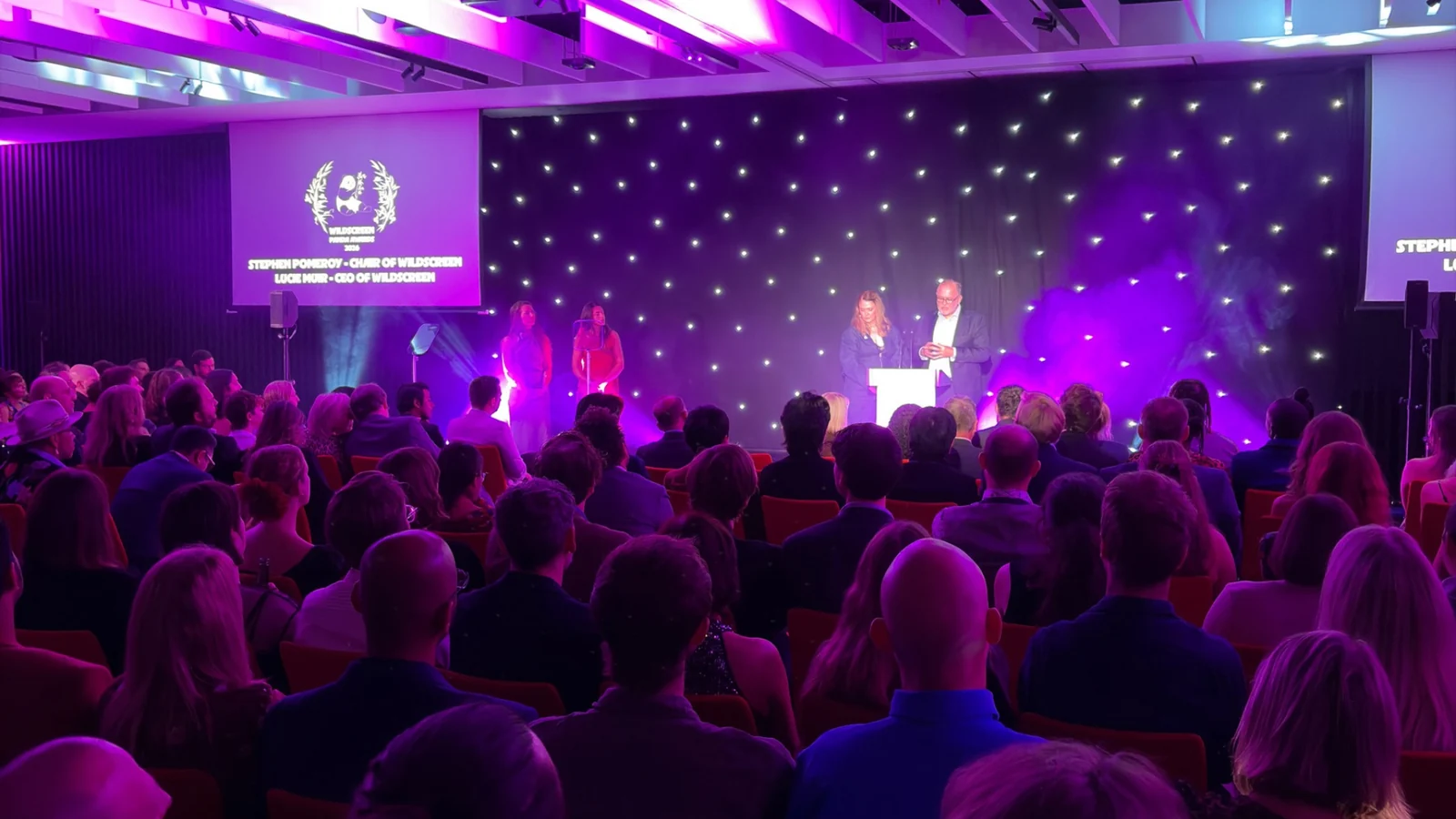
The awards were presented on 22 October in Bath, England, during the Wildscreen Festival. This year’s competition received 624 entries from 46 countries, with 70 productions making the nomination list. The event recognised winners across 18 competitive categories and three special awards.
Golden Panda for David Attenborough and «A Gorilla Story»
The jury unanimously awarded the top Golden Panda to A Gorilla Story: Told by David Attenborough, a Silverback Films production for Netflix in association with Appian Way. The documentary revisits Attenborough’s first encounter with Rwanda’s mountain gorillas and follows different generations of a gorilla family.
Attenborough, now 100, addressed the natural-history filmmaking community at the ceremony, highlighting the power of films to communicate the importance of protecting the planet. Silverback Films also produced «Ocean with David Attenborough», which brought underwater filmmaking and marine conservation into wider public discussion.
The cinematography award and the filmmakers behind the images
The Cinematography Panda Award went to National Geographic’s Secrets of the Bees: The Hive, another Silverback Films production. Cinematographers John Brown and Alastair MacEwen were recognised for filming the remarkable lives of bees.
Other craft honours included Angela Maddick for editing the opening episode of Kingdom, Tom Howe for the music of Parenthood: The Greatest Adventure, and Tom Rees for the sound of Home to Many. These are reminders that the power of wildlife storytelling relies on a full crew, not just the camera operator.
That collaborative approach also comes through in cinematographer Stuart Dunn’s account of how a wildlife documentary is made: visual consistency depends on planning, cooperation and decisions made throughout a shoot.
«Frost Without Snow and Ice» wins — with an important Greek connection
Another standout winner is Frost Without Snow and Ice, recipient of the In-Country Panda Award. Produced by Norway’s Artic Light in co-production with Lofoten Film Collective and Germany’s WDR in collaboration with ARTE, the documentary follows polar bear Frost in Svalbard as life in the Arctic becomes increasingly difficult. The film had its world premiere in Thessaloniki, Greece.
Director and cinematographer Asgeir Helgestad explained in an in-depth interview how he filmed Frost over many years, including the challenges of working in temperatures as low as -30°C and -40°C. He described keeping camera batteries warm, how shrinking ice changed where he could film, and why the animals’ welfare always came before capturing the most spectacular footage.
There is also a significant Greek contribution to the film. In a separate interview, producer and co-screenwriter Angeliki Lefkaditou discussed her creative partnership with Helgestad, turning years of footage into a cohesive story and the financial risk behind an independent documentary. Lefkaditou studied in Thessaloniki and spoke about the emotion of seeing the film’s world premiere in that city. Its Wildscreen award therefore carries particular resonance for Greek audiences.
All 18 competitive-category winners
| Category | Winning production |
|---|---|
| Behaviour | HumanLike: The Chimps of Fongoli |
| Children’s | Deadly 60 – Secretive Puma Special |
| Cinematography | Secrets of the Bees: The Hive |
| Digital-First | Nature Ain’t A Luxury |
| Editing | Kingdom: Episode 1 – Four Crowns, One Kingdom |
| Emerging Talent | I’ll Need to Leave For a Little While |
| Impact | The Bottom Line |
| In-Country Production | Frost without Snow and Ice |
| Independent Film | Captured |
| Music | Parenthood: The Greatest Adventure |
| On-Screen Talent | Tribe with Bruce Parry: Episode 1 – The Waimaha |
| Producer/Director | The Tale of Silyan |
| Production Management Team | Moon: Nature’s Secret Force – Episode 1: Dining by Moonlight |
| Scripted Narrative | Time and Water |
| Series | Human Footprint |
| Short | Chameleon Corridors |
| Sound | Home to Many |
| Sustainability | Mayan Forest in Check |
New voices, short films and special awards
The inaugural Digital-First Panda Award went to musician and zoologist Louis VI’s Nature Ain’t A Luxury, exploring who feels welcome in nature. Chameleon Corridors, directed by Jigar Ganatra with a Tanzanian team, won the short-film prize with a story set in the Eastern Arc Mountains.
Myles Storey received the Emerging Talent award for I’ll Need to Leave For a Little While, blending documentary footage and puppetry to raise awareness of a rare primate in northern Vietnam. Tamara Kotevska won the producer/director award for The Tale of Silyan.
The three special honours went to A Gorilla Story (Golden Panda), Tim Fogg (Field Craft) and Dr Keith Scholey (Lifetime Achievement). Scholey previously led the BBC Natural History Unit and co-founded Silverback Films.
The BBC won four awards and National Geographic three. Wildscreen also reported that 11 of the 18 category-winning productions were directed by people from groups that have historically been underrepresented in the sector.
What we think
It is particularly satisfying to see the cinematography of bees recognised alongside a major emotional documentary such as «A Gorilla Story». In wildlife filmmaking, a shot that appears effortless to the audience may take weeks of observation, specialist techniques and careful collaboration with scientists. The achievement is not just a beautiful image; it is giving us access to real behaviour we might otherwise never see.
We also like that these awards leave room beyond large-budget television productions. Digital-first and short-film categories make space for different formats, local crews and more personal stories. That recognition matters to filmmakers working with limited resources.
The authenticity of a wildlife image now matters as much as its technical polish. The BBC’s decision to retain less pristine but more revealing footage in «Blue Planet III» points to a lesson for anyone filming animals: viewers’ trust is built through how honestly we present what happened in front of the lens.