Summary
- Fujifilm is investing around 10 billion yen to expand magnetic tape manufacturing capacity fivefold.
- The Odawara expansion runs across fiscal 2026–2028.
- The main focus is LTO Ultrium10 and the benefits of keeping archived data offline.
- Tape can play a role in long-term preservation of large photo and film collections.
Fujifilm is investing about 10 billion yen ($63 million) to expand its data-storage magnetic tape production capacity fivefold, as the explosion of AI-generated data creates fresh demand for a decades-old storage technology.
Announced on October 29, 2026, the project will run across fiscal 2026–2028. For photographers, filmmakers and production archives, it is a reminder that RAW files, 4K and 8K footage need not only fast working storage, but dependable long-term preservation.
An investment at the Odawara plant
The funding will go to Fujifilm’s Odawara site in Kanagawa, Japan, where the company will expand manufacturing equipment and hire additional staff. Fujifilm describes it as its largest investment to date in facilities dedicated specifically to LTO tape.
The fivefold increase is not a claim that sales or production have already multiplied. It refers to planned manufacturing capacity measured by shipment capacity against fiscal 2025. The expansion will primarily support the FUJIFILM LTO Ultrium10 range.
Why magnetic tape still matters
Tape is not intended to compete with an SSD for everyday editing. Its strength is archiving very large volumes of data that do not need constant, instant access. Data are written using a dedicated tape drive, after which the cartridge can be stored offline.
This physical air gap reduces a copy’s exposure to network-borne ransomware. It does not remove the need for controlled storage conditions, media monitoring and regular recovery tests. Tape makes the most sense for large datasets that are accessed relatively infrequently.
LTO Ultrium10: up to 40TB native capacity per cartridge
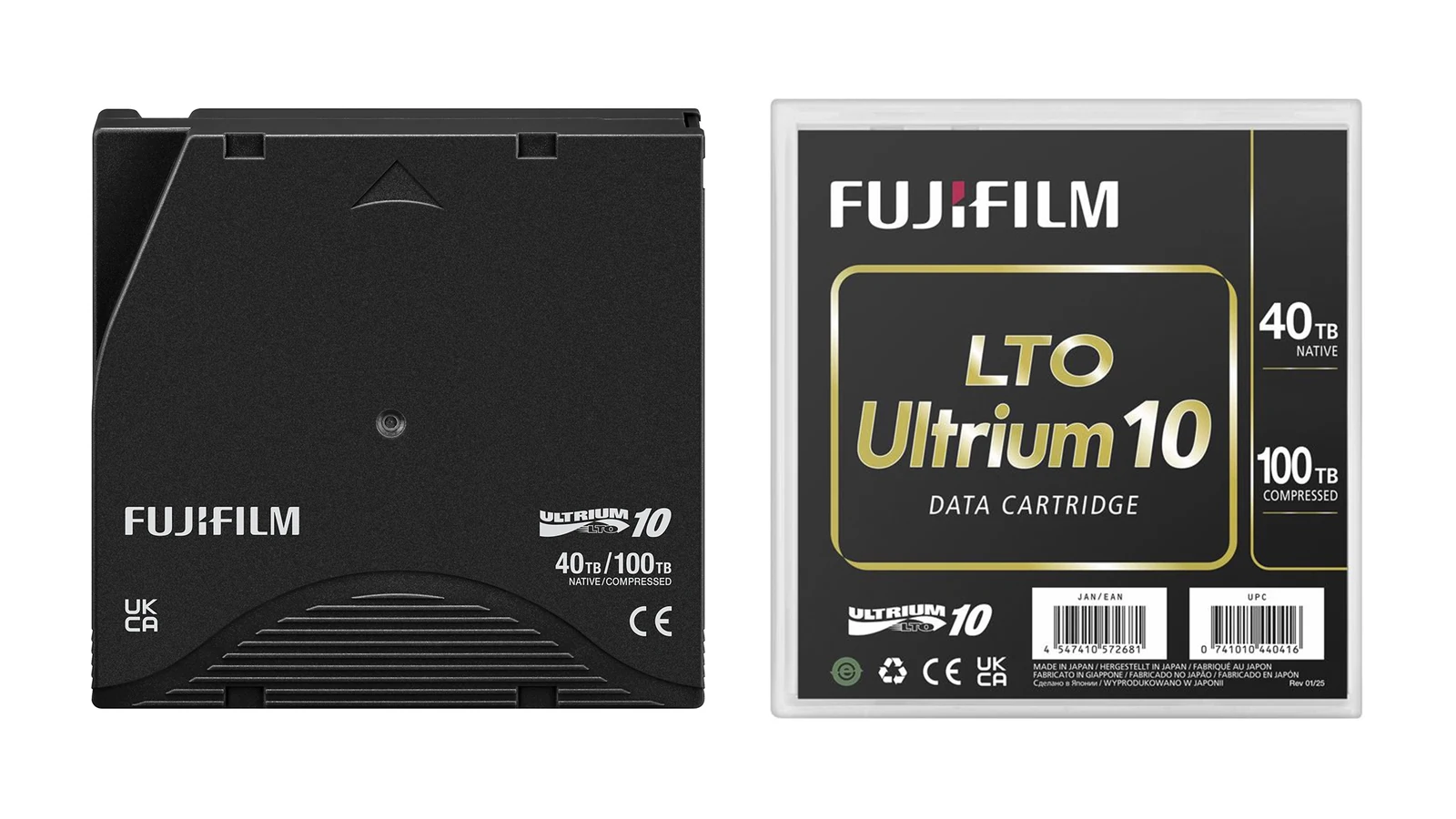
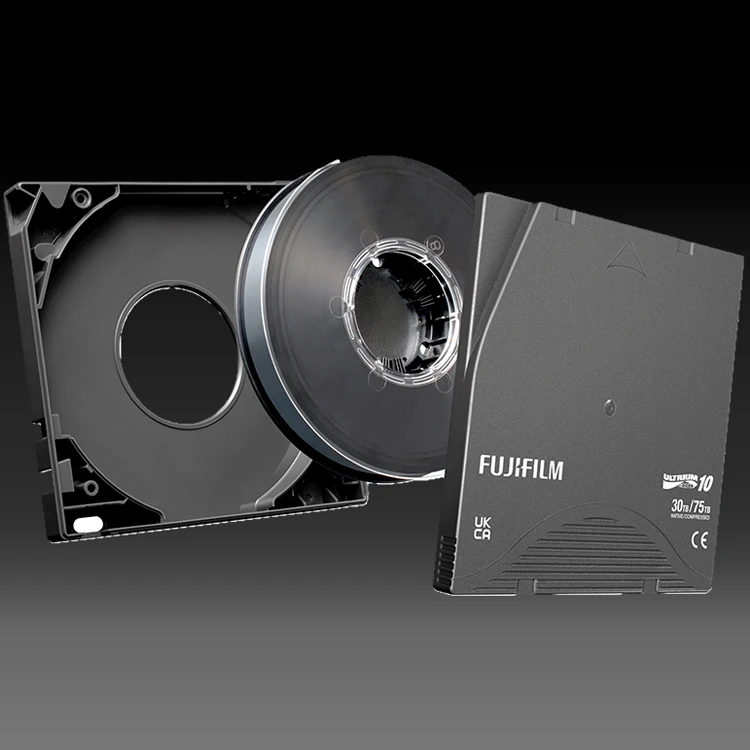
Fujifilm introduced the LTO Ultrium10 generation in 2025. Available versions include 30TB and 40TB native-capacity cartridges. The 40TB version shown in the featured image is marked as supporting up to 100TB with compression; actual gains depend on how compressible the files are. Already-compressed JPEGs or video files should not be assumed to provide that extra space.
The range uses fine hybrid magnetic particles that combine Barium Ferrite (BaFe) and Strontium Ferrite (SrFe) technologies to increase recording density. The 40TB cartridge supports native transfer rates of up to 400 MB/s with a compatible LTO-10 drive.
For official specifications of the 40TB LTO Ultrium10 version, more information here.
What this means for photographers and filmmakers
A large photography studio or documentary production can accumulate many terabytes of camera originals, project files and finished masters. In that setting, an organized LTO library can serve as a long-term archive copy alongside active working drives and regular backups.
It is not a plug-in-a-drive-and-keep-editing solution. It requires compatible hardware, software and a disciplined process for cataloguing, verification and restoration. The economics start to make sense when the size and retention period of a collection justify the upfront investment and ongoing management.
For smaller photo libraries, a practical guide to storage with disks, NAS and cloud remains a better starting point. Tape can add another layer to larger operations, rather than replacing a complete backup strategy.
What we think
It is striking to see a company many of us associate with film and cameras putting this much money into magnetic tape. Not because of nostalgia: as shoots fill drives with RAW images and large video files, keeping that material accessible for years becomes a real technical and financial decision.
For an individual photographer, buying an LTO setup is not automatically sensible. The drive, cataloguing workflow and archive maintenance cost money. For a studio holding tens or hundreds of terabytes, however, moving older projects off expensive always-online storage while retaining control over them could make a meaningful budget difference.
What matters to us is being able to reopen a project five or ten years later and find everything intact: camera originals, audio, metadata and final exports. The storage medium matters less than a tested restore process and a plan for migrating files as the technology ages.
Frequently asked questions
Can I connect an LTO cartridge directly to my computer?
No. You need a compatible tape drive plus the appropriate hardware or software to write, read and manage the archive.
Does the 100TB label mean 100TB for RAW images and video?
Not necessarily. The 40TB version’s 100TB figure is its maximum compressed capacity. Its native capacity is 40TB, and compression gains depend on the file types.