


Summary
- Worldwide digital camera shipments increased by 11.2% in 2025
- Built-in-lens cameras grew by 29.6% and continue to attract renewed interest
- The smartphone remains the most practical solution for a large part of everyday photography
- Dedicated cameras retain advantages in lenses, real optical control, ergonomics and specialized shooting
- The right purchase depends on what the user needs to do beyond what a smartphone already provides
- The market collapsed compared with 2010 — but it did not die
- What the latest 2026 figures show
- When the smartphone is already the right choice
- Where a dedicated camera remains genuinely different
- The biggest difference is control, not megapixels
- Compact, mirrorless or an older DSLR?
- The real cost is not only the camera body
- Who actually needs a camera in 2026
- What we think
- Frequently asked questions
A smartphone is now sufficient for a huge share of everyday photography, but official 2026 data and the real differences in lenses, sensors and handling show that the dedicated camera is far from having lost its purpose.
The discussion is especially relevant in 2026 because the camera market is no longer moving exclusively downward: worldwide digital camera shipments increased by 11.2% in 2025 to 9,438,876 units, while built-in-lens cameras grew by 29.6%. CIPA forecasts around 9.59 million total shipments for 2026.
That does not mean the smartphone has lost. It means something more interesting: the market appears to have separated into two different needs. For immediate everyday images, a phone is often the most practical solution; when a user wants specific lenses, genuine optical control, ergonomics, a RAW workflow or capabilities beyond computational photography, a dedicated camera still provides things that are difficult to reproduce inside the thin body of a smartphone.
The market collapsed compared with 2010 — but it did not die
To understand the current situation, it is necessary to see the scale of the change.
In 2010, CIPA recorded 121.5 million digital camera shipments in a single year, a record at the time. Around 108.6 million of those were built-in-lens cameras.
In 2025, total shipments were only 9.44 million. The difference is enormous and is largely explained by the smartphone eliminating the need for the inexpensive point-and-shoot camera that once existed in almost every household. Even so, 2025 shipments rose by 11.2%, mirrorless cameras reached 6.31 million units with 12.5% growth, and built-in-lens cameras increased by 29.6%.
PTTL recently examined the renewed recovery of the digital camera market and the return of compact cameras, showing that today’s market is dramatically smaller than it was in 2010 but has found a different audience and different reasons to exist.
What the latest 2026 figures show
CIPA’s latest available figures cover the first half of 2026. From January through June, 4,356,628 digital cameras were shipped worldwide, a total marginally higher than in the same period a year earlier.
The picture differs sharply by category. Built-in-lens cameras reached 1,225,977 units, up 16.2%, while interchangeable-lens cameras totaled 3,130,651 units, down 4.6%. Mirrorless cameras performed considerably better than DSLRs, with the latter continuing their long-term decline.
There is, however, an important footnote: CIPA itself states that an additional company was included in its Digital Camera Statistics from January 2026. Direct year-on-year comparisons are therefore affected to some degree by the change in statistical coverage and should not be interpreted as a perfectly clean measure of organic growth.
The safe conclusion is that the market is not returning to the era of 100-million-unit annual shipments, but it is not disappearing either.
When the smartphone is already the right choice
For someone mainly interested in family photographs, everyday moments, social media, quick videos and travel images without carrying additional equipment, the smartphone is often the most logical device.
It is always available, activates in seconds, automatically performs HDR and multi-frame processing, applies powerful computational photography and immediately sends the result to apps and cloud services. The best camera for a particular moment is still very often the one that is available when the moment happens.
This matters especially for someone considering a dedicated camera only because they expect every picture to become automatically better. A mirrorless camera used entirely in Auto mode with a basic kit lens and no intention of editing does not guarantee that the result will look more impressive on a phone screen than an image produced by a modern smartphone using aggressive computational processing.
A dedicated camera becomes worthwhile when the buyer wants to use the things that actually make it different.
Where a dedicated camera remains genuinely different
The most meaningful difference is not a simple megapixel figure.
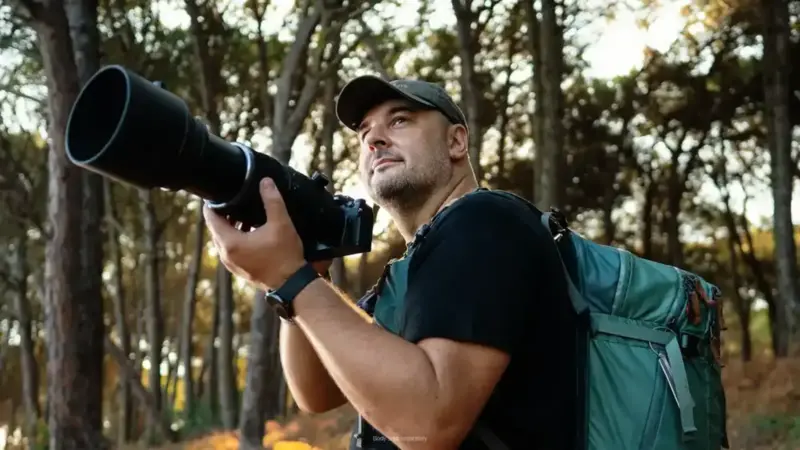
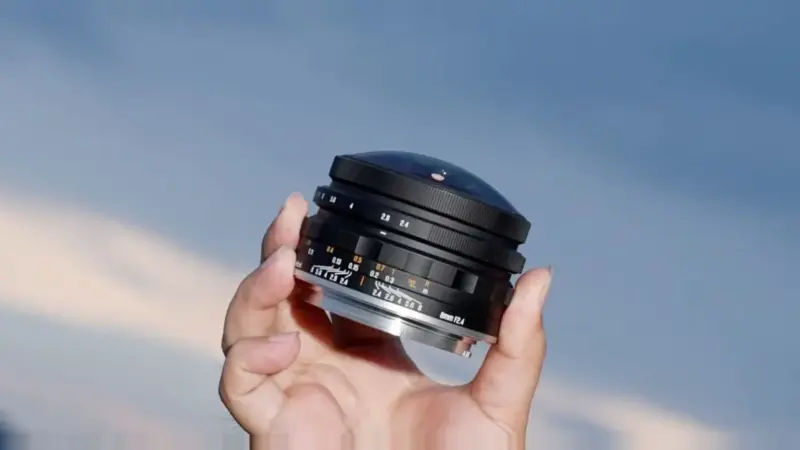
An APS-C or full-frame mirrorless camera can be paired with genuine telephoto lenses, fast primes, macro optics, ultra-wide lenses and specialized optical systems. That matters greatly for wildlife, sports, portraiture, macro, events and other applications in which focal length, aperture and the behavior of the lens are part of the creative decision.
The larger sensors used in many dedicated cameras can also provide significant advantages in challenging light, high ISO shooting and control over genuine depth of field. This does not mean every camera is better than every smartphone in every situation; it means that a complete photographic system gives the user more physical ways to shape the image before software intervenes.
PTTL has previously examined why real aperture and depth-of-field control remain important points of differentiation from smartphones. Computational bokeh can be highly effective, but it is not the same thing as the optical behavior of a real lens paired with a larger sensor.
The biggest difference is control, not megapixels
A smartphone may advertise 50, 108 or 200 megapixels while a dedicated camera offers far fewer. Comparing those numbers alone does not tell us which system is better.
The final result depends on the sensor, lens, processing, the way pixels are read or combined and, most importantly, the type of photograph being made.
With a dedicated camera, the user can choose optics, focal length and a physical aperture, work with external flash or other lighting, use RAW files and operate physical controls for shutter speed, ISO, exposure and focus without constantly depending on a touchscreen.
That does not make the dedicated camera “better” for everyone. It makes it far more suitable when the photographer wants to make more of the decisions that a smartphone would normally make automatically.
Compact, mirrorless or an older DSLR?
The answer depends more on intended use than on the age or size of the camera.
A modern compact makes sense for someone who wants a separate photographic experience, small dimensions, optical zoom or a particular visual character without carrying an interchangeable-lens system. The strong growth of fixed-lens cameras during 2025 indicates that the category has found an audience again.
An APS-C mirrorless camera is often the most balanced route for someone who wants to learn photography, change lenses and own a body capable of both still photography and video without immediately accepting the cost and weight of a full-frame system.
Full frame has genuine value when the user knows why it is needed: particular lenses, low-light requirements, shallower depth of field or a professional workflow. It is not a mandatory next step for every photographer.
Even an older DSLR can still produce excellent photographs. For someone building an entire system from scratch today, however, it is important to consider that industry development has clearly shifted toward mirrorless and that the future lens and body ecosystem is part of the purchasing decision.
The real cost is not only the camera body
The shelf price of a camera is only the beginning.
A system may eventually include a second or third lens, batteries, memory cards, a bag, filters, lighting, storage and possibly editing software. The correct question is therefore not simply “how much does the body cost?” but “how much will the system I actually need cost?”
Today’s market is also dramatically smaller than the mass consumer market of 2010. PTTL has examined in detail why modern cameras have become noticeably more expensive and how the shrinking market changed manufacturers’ strategies.
For an occasional user, buying an expensive body and lenses that will remain in a cupboard makes little sense. For someone who will use the system for years, however, the comparison is not simply with a phone but with the specific photographic capabilities the investment provides.
Who actually needs a camera in 2026
The answer becomes relatively simple once marketing is removed from the equation.
Someone who mainly wants to document daily life and share images quickly probably does not need a separate camera.
Someone who wants to learn photography in depth, use different lenses, photograph wildlife or sports, work seriously with portraits and lighting, make full use of RAW files or simply use a device designed entirely around the process of taking photographs still has very specific reasons to buy a camera.
The real question in 2026 is therefore not “camera or smartphone?” It is “what do I want to do that my smartphone does not already allow me to do?”
If there is no clear answer, a new camera is probably unnecessary. If there is one, purchasing a camera may make more sense than ever precisely because current models increasingly address specific photographic needs.
What we think
A dedicated camera is no longer necessary for taking good everyday photographs. The smartphone won that battle years ago.
That does not amount to the end of the camera. The dedicated camera has moved from being a mass-market consumer product to being a more specialized creative tool. In that role it still has clear advantages: lenses, handling, genuine optical control and the ability to build a system around specific types of photography.
The right purchase in 2026 is not the most expensive camera or the one with the highest megapixel count. It is the one that solves a real problem the phone cannot solve well enough.
Frequently asked questions
Is a dedicated camera worth it for a beginner in 2026?
Yes, if the goal is to learn photography and gain more control over lenses, exposure, focus and depth of field. If the goal is only to produce better everyday images for social media, a good smartphone may be enough.
Does someone need full frame to take better photographs?
No. APS-C and other modern camera systems can deliver excellent image quality. Full frame makes sense when a photographer needs specific advantages of the larger sensor or the associated lens system.
Is an older DSLR useless in 2026?
No. It can still produce very high-quality images. The main consideration for someone starting from zero is the future development of the system, as the industry is now focused primarily on mirrorless cameras.
Is a compact camera better than a smartphone?
Not necessarily in every situation. A good compact can, however, offer optical zoom, physical controls, a different sensor or lens and a more focused photographic experience.
When does it make more sense to stay with a smartphone?
When convenience, low weight, instant processing and sharing matter most and there is no need for specialized lenses or deeper manual control.



Comments
Ένας βασικός παράγοντας είναι σε τι οθόνη προβάλλει κανείς το υλικό του.
Αν το προβάλλει σε κινητά, δεν υπάρχει λόγος να ψάξει κανείς το κάτι παραπάνω. Άλλωστε η οθόνη του κάθε κινητού τα παρουσιάζει διαφορετικά. Αλλιώς η κουβέντα αλλάζει.
Δεν θεωρώ ότι η αγορά θα παγιωθεί στα τωρινά επίπεδα. Υπάρχει μέλλον ακόμα…