

Summary
- New Moon occurs on 11 September at 06:27 Greece time, creating the best dark window for the Milky Way
- Venus remains exceptionally bright low in the west and sets in Athens at 20:41 on 18 September
- International Observe the Moon Night takes place on 19 September, one day after first quarter
- The autumnal equinox occurs in Greece on 23 September at 03:05 EEST
- Full Moon occurs on 26 September at 19:49, about 51 minutes after moonrise in Athens
- 4–13 September: the dark Milky Way window
- 9 September: September ε-Perseids without inflated expectations
- 14–20 September: Moon, Antares and Sagittarius
- 18–22 September: Venus in western twilight
- 23 September: the equinox on the local date
- 26–27 September: full Moon, Saturn and Neptune
- A short checklist before leaving home
- What we think
- Frequently asked questions
September 2026 gives photographers in Greece a clear dark window for the Milky Way around new Moon, exceptionally bright Venus in evening twilight and a full Moon that rises close to the moment it reaches full phase.
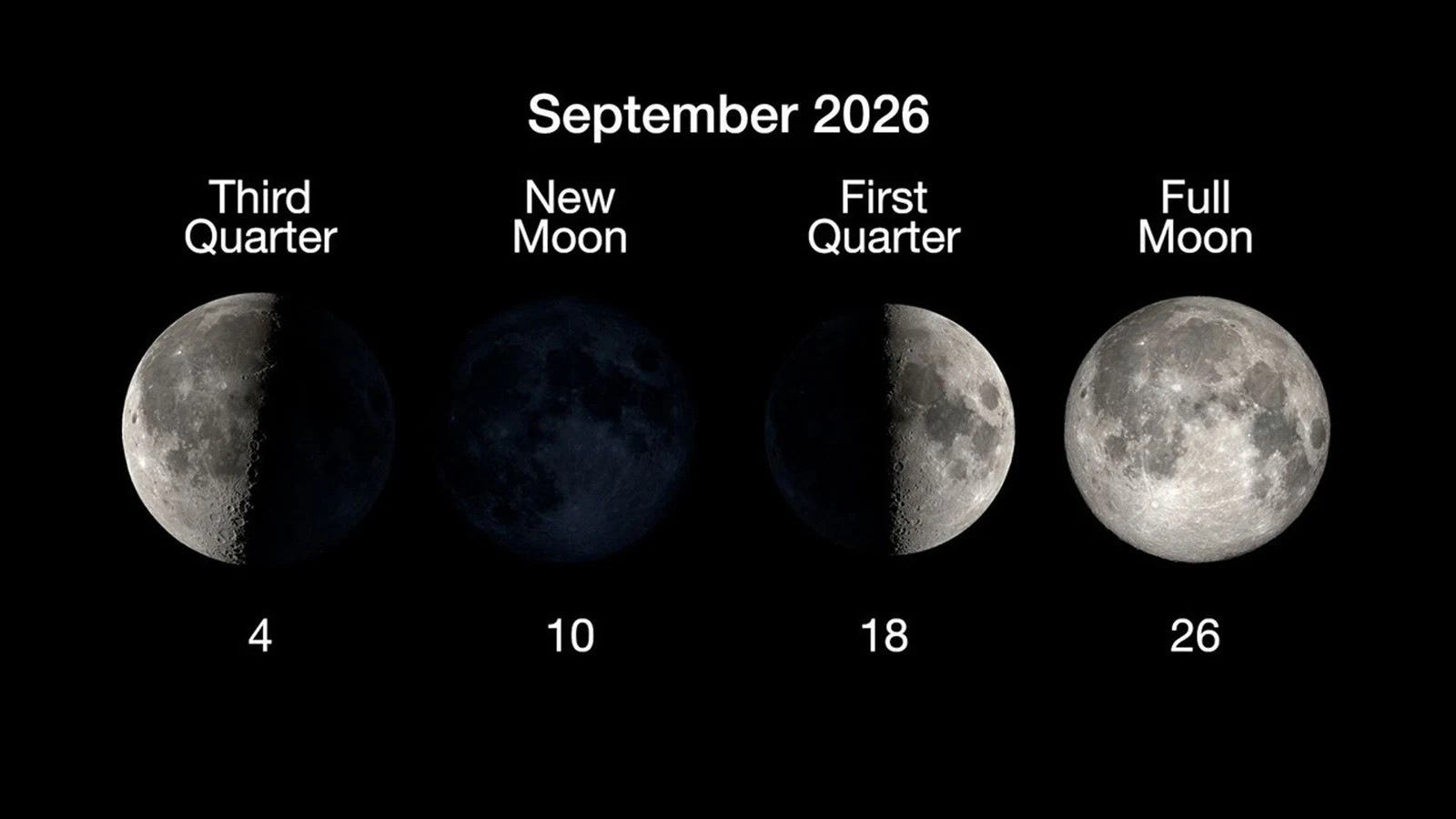
The main lunar phases for Greece are third quarter on 4 September at 10:51, new Moon on 11 September at 06:27, first quarter on 18 September at 23:43 and full Moon on 26 September at 19:49. Times are local to the Athens area, and the variation across Greece is small for photographic planning.
The month’s schedule must be read together with the local horizon. The Milky Way and Venus sit low and disappear early behind mountains or buildings, while the full Moon gives its strongest composition where an eastern horizon and a specific foreground align. Cloud, humidity and light pollution will ultimately decide each shoot.
4–13 September: the dark Milky Way window
After third quarter on 4 September, the Moon rises progressively later and the first part of the evening becomes darker. The best nights are concentrated around 8–13 September, peaking near the 11 September new Moon. The Milky Way core sits south to southwest and sinks lower as the evening progresses.
For a landscape composition, scout in daylight and make sure the southern horizon is open. A 14–24 mm lens on full frame, or its APS-C equivalent, covers the arch and foreground. Start with RAW, a wide aperture, manual focus on a bright star and an exposure short enough to avoid elongated stars; the exact limit depends on pixel pitch, focal length and output size.
For a cleaner result, prefer a sequence of short static exposures for stacking over one excessively long frame. If using a tracker, make a separate static foreground exposure and keep the sky–land boundary natural in the composite.
9 September: September ε-Perseids without inflated expectations
The September ε-Perseids reach their predicted maximum around 9 September. Their radiant becomes practically accessible from Greece after roughly 20:35, but this shower is far weaker than the August Perseids.
For a chance of recording one, use a wide composition covering a large area of sky, continuous interval shooting and enough battery for several hours. Do not point directly at the radiant because trails appear longer a little farther away. New Moon two days later helps the dark sky, not the shower’s inherently low rate.
14–20 September: Moon, Antares and Sagittarius
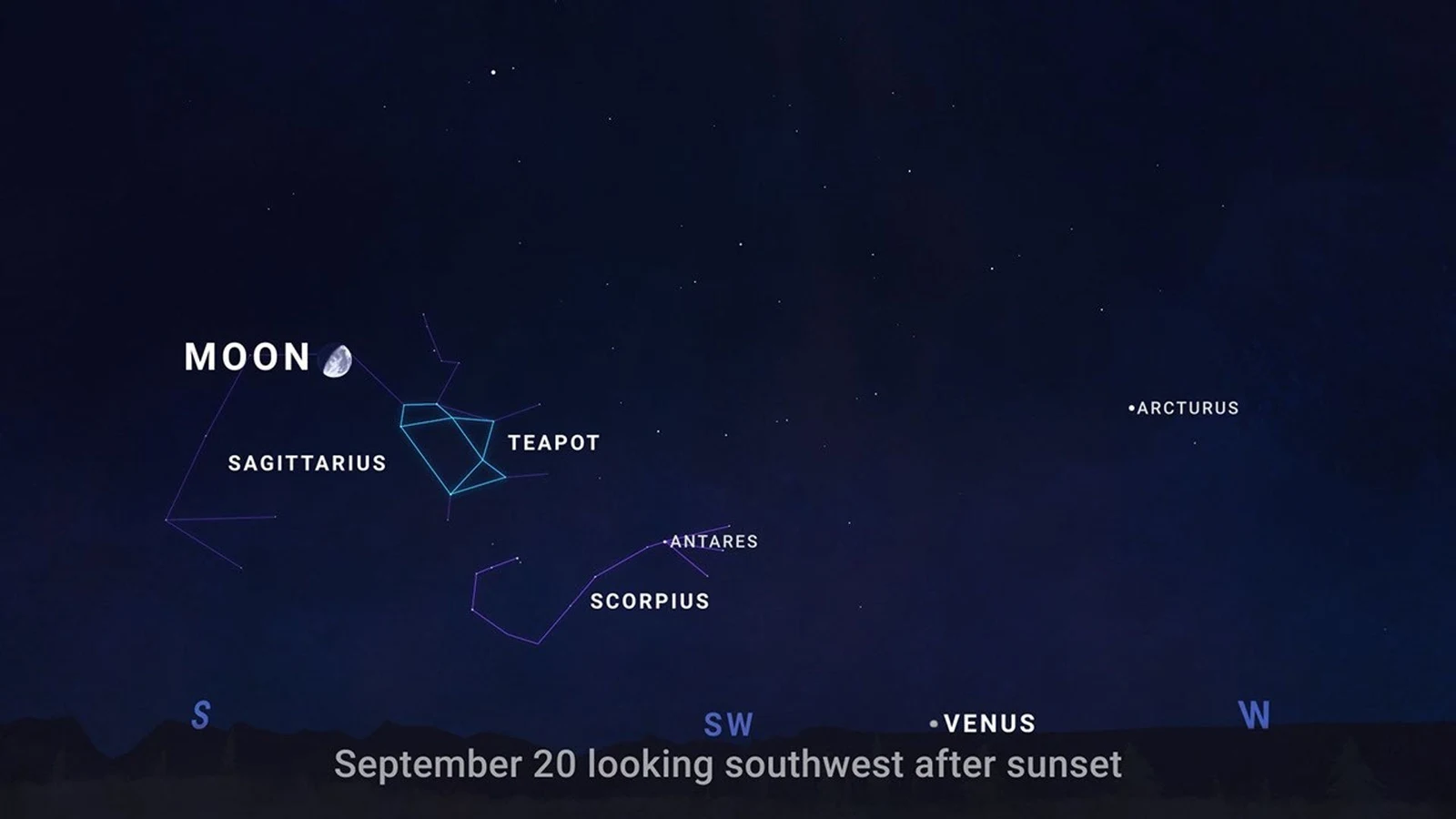
The waxing crescent Moon passes through the region of Antares, Sagittarius’s distinctive Teapot and the Milky Way centre. Each evening it moves farther east and becomes brighter, creating a different balance between terrestrial twilight, lunar crescent and star field.
These frames work better with a short telephoto or standard lens that isolates the geometry rather than with extreme magnification. Use bracketing because the bright crescent and earthshine span a wide dynamic range. International Observe the Moon Night takes place on 19 September, one day after first quarter, when shadows along the terminator reveal craters.
18–22 September: Venus in western twilight
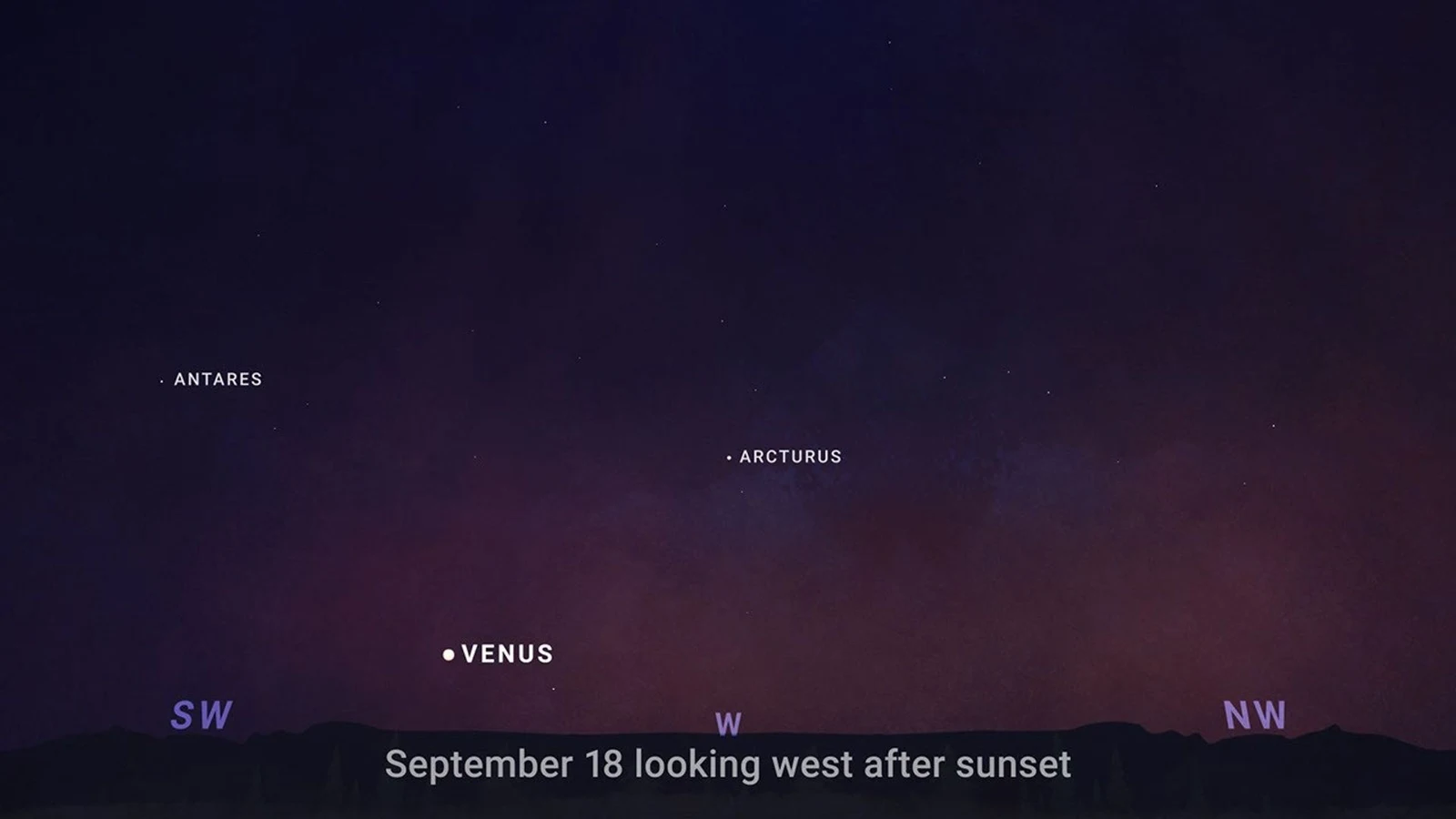
NASA highlights 18 September as an especially good evening for exceptionally bright Venus. In Athens the Sun sets at about 19:28 and Venus at 20:41, leaving roughly 73 minutes to find and photograph it low in the west. Separate astronomical ephemerides place greatest brilliance on 22 September, near magnitude −4.6.
The strongest image is not an overexposed white dot in a black sky, but the planet’s relationship with blue hour. Use a stable tripod, slight underexposure and bracketing to retain colour at the horizon. With a telephoto lens, include recognisable but safe foreground and never look towards the Sun through an optical finder before sunset.
23 September: the equinox on the local date
The autumnal equinox occurs in Greece on 23 September at 03:05 EEST. International articles listing 22 September often refer to a US time zone; on the Greek calendar the event has already moved into the following day.
The equinox does not suddenly produce equal photographic day and night at every location because atmospheric refraction and the definition of sunrise and sunset shift the measurements. It is nevertheless a useful marker for mapping sunrise and sunset positions close to due east and west and planning architectural or landscape alignments.
26–27 September: full Moon, Saturn and Neptune
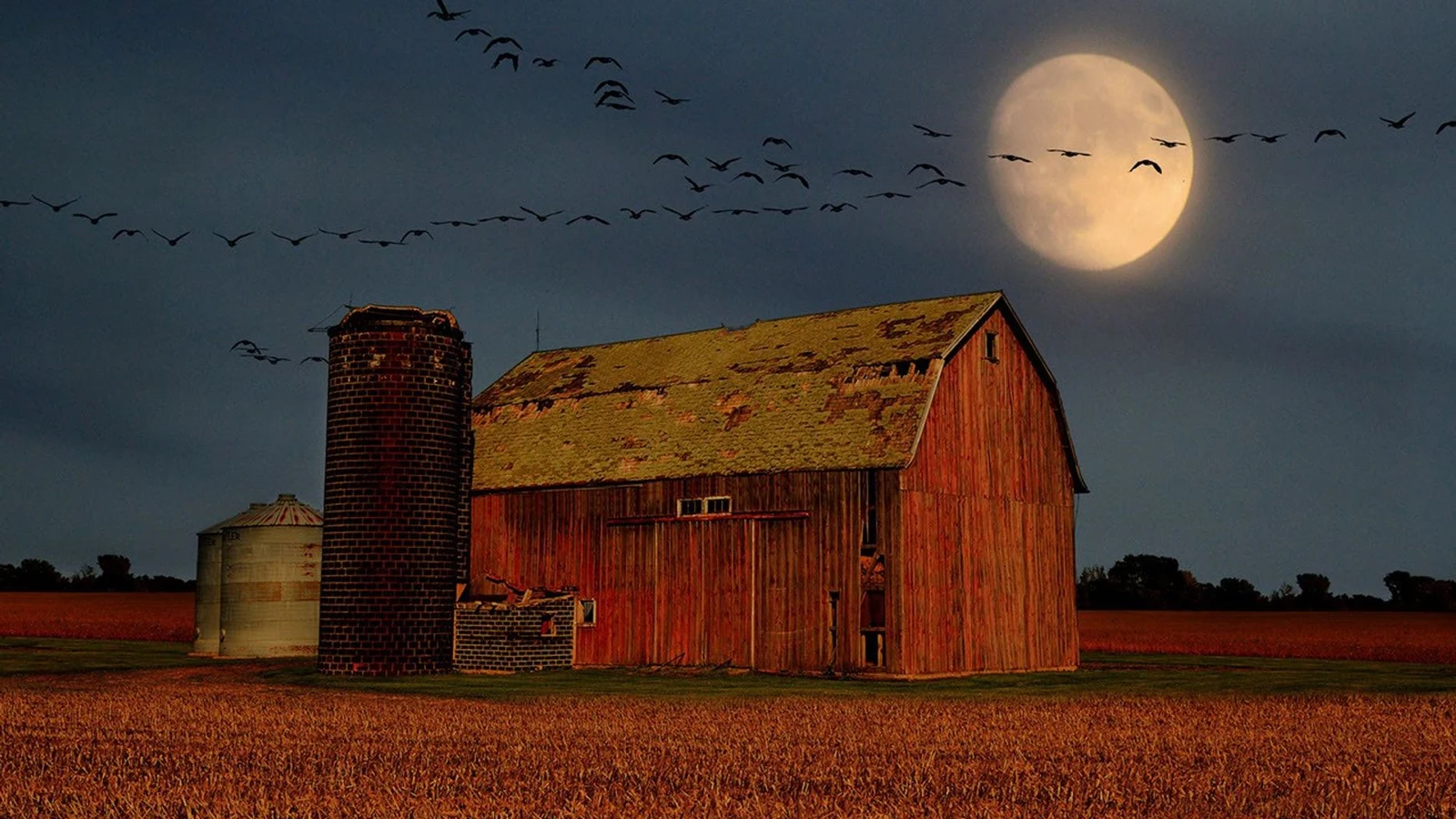
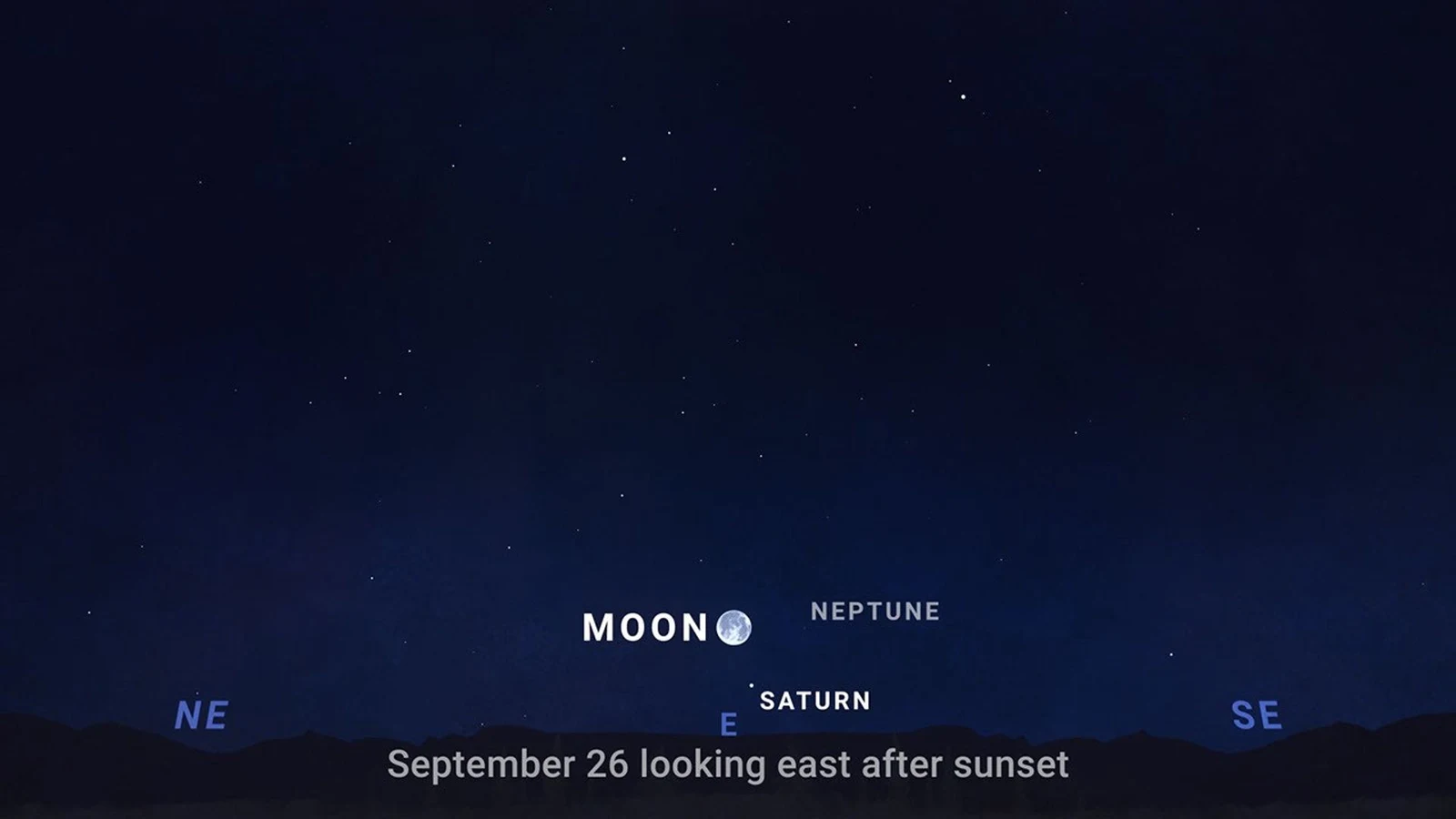
Full Moon occurs on 26 September at 19:49 Greece time. In Athens the Moon rises at about 18:58, leaving a 51-minute window before exact full phase with bright twilight near the eastern horizon. This is ideal for a planned composition with a building, mountain or human silhouette.
For a large disc relative to foreground, distance from the subject matters more than an extreme lens: move back and use 200–600 mm with a stable tripod and fast shutter. Meter for the lunar surface rather than the dark sky so that surface detail is not lost.
Saturn and Neptune lie near the bright Moon at the end of the month. Saturn records easily as a point and appears in closer visual proximity on 27 September. Neptune is around magnitude 8 and requires binoculars or a telescope; the full Moon makes detection even harder, and it should not be expected as an obvious planet in a wide photograph.
A short checklist before leaving home
Check cloud at multiple altitudes, humidity, wind and transparency—not only the chance of rain. Clean the front element and carry a dew cloth, charged batteries, a headlamp with red light and an offline return map. At a remote site, tell someone where you are going.
Set up before darkness, disable long-exposure noise reduction when continuous interval shooting is required, and make dark frames at the end if you intend to stack. For the Moon and twilight planets, keep ISO lower and bracket. For the Milky Way, prefer several clean RAW frames and honest processing over one excessively bright exposure.
What we think
September has no single spectacular event, but offers something more useful: a sequence of photographically different opportunities within one month. The strongest result will come from accurate scouting and local timing, not the most expensive camera. New Moon needs a dark southern horizon, Venus a clear western one, and full Moon precise alignment with foreground.
Frequently asked questions
What is the best night for the Milky Way?
The nights of 8–13 September are the darkest, with new Moon on 11 September at 06:27.
When is Venus best photographed?
NASA highlights 18 September. In Athens it sets at 20:41, about 73 minutes after sunset.
When is the full Moon?
On 26 September at 19:49 Greece time. In Athens it rises at about 18:58.
When is the autumnal equinox in Greece?
On 23 September 2026 at 03:05 EEST.
Will Neptune be visible beside the Moon?
Not to the unaided eye. At roughly magnitude 8 it requires optical aid, and the full Moon makes observation harder.