


Summary
- Seestar S50 Pro began European shipments from a German warehouse on 1 September 2026
- The official launch price is €899 instead of €999 through 15 September at 09:00 CEST
- The main camera uses an 8.3 MP sensor behind a 50 mm f/5.2, 260 mm optical system
- A second 8.3 MP camera with a 35 mm-equivalent view covers Milky Way, time-lapse, star trails and wide panoramas
- Features include FITS, live stacking, DSO mosaics up to 8K, Equatorial Mode, 128 GB and up to nine hours of operation
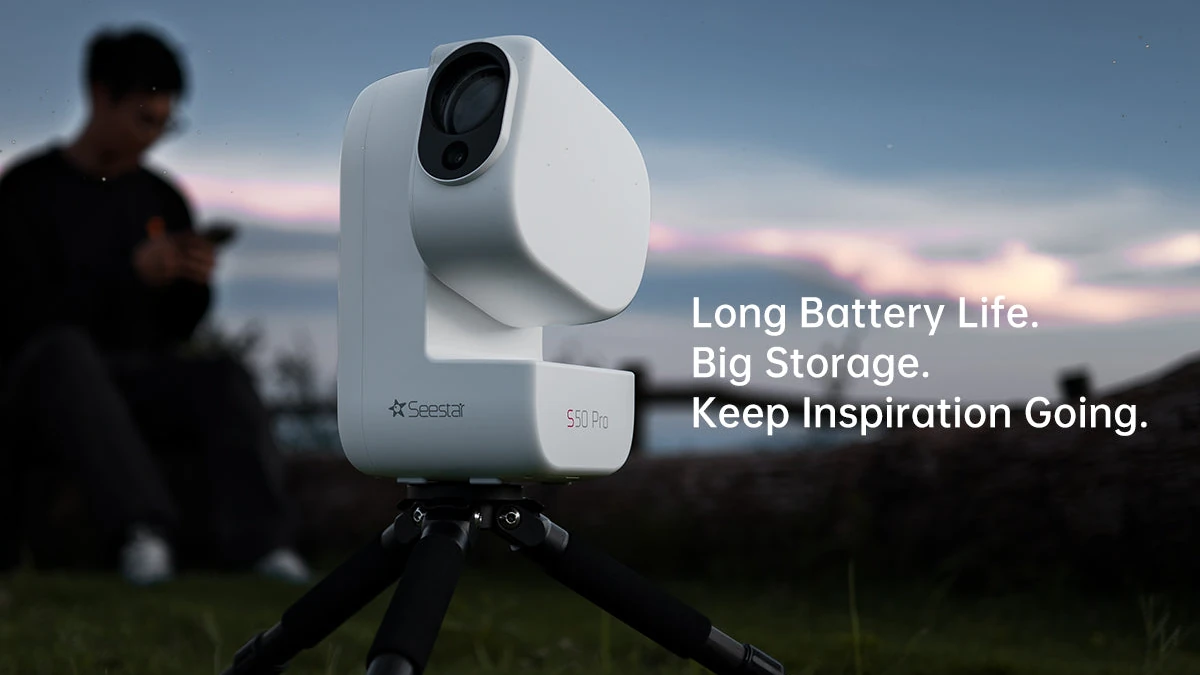
Seestar S50 Pro has begun shipping in Europe at an official launch price of €899, combining a 50 mm deep-sky telescope with a second ultrawide camera for Milky Way images, time-lapse and star trails.
European shipments began on 1 September 2026 from a German warehouse, with VAT included in the displayed price and no customs procedure within the EU. The €899 offer, reduced from a regular €999, ends on 15 September at 09:00 CEST according to the official store.
The biggest distinction from a simple automated telescope is its dual photographic design. The main unit tracks and stacks exposures of nebulae, galaxies, the Sun, Moon and planets, while the wide camera handles large areas of sky, creating a compact integrated system for different kinds of astrophotography.
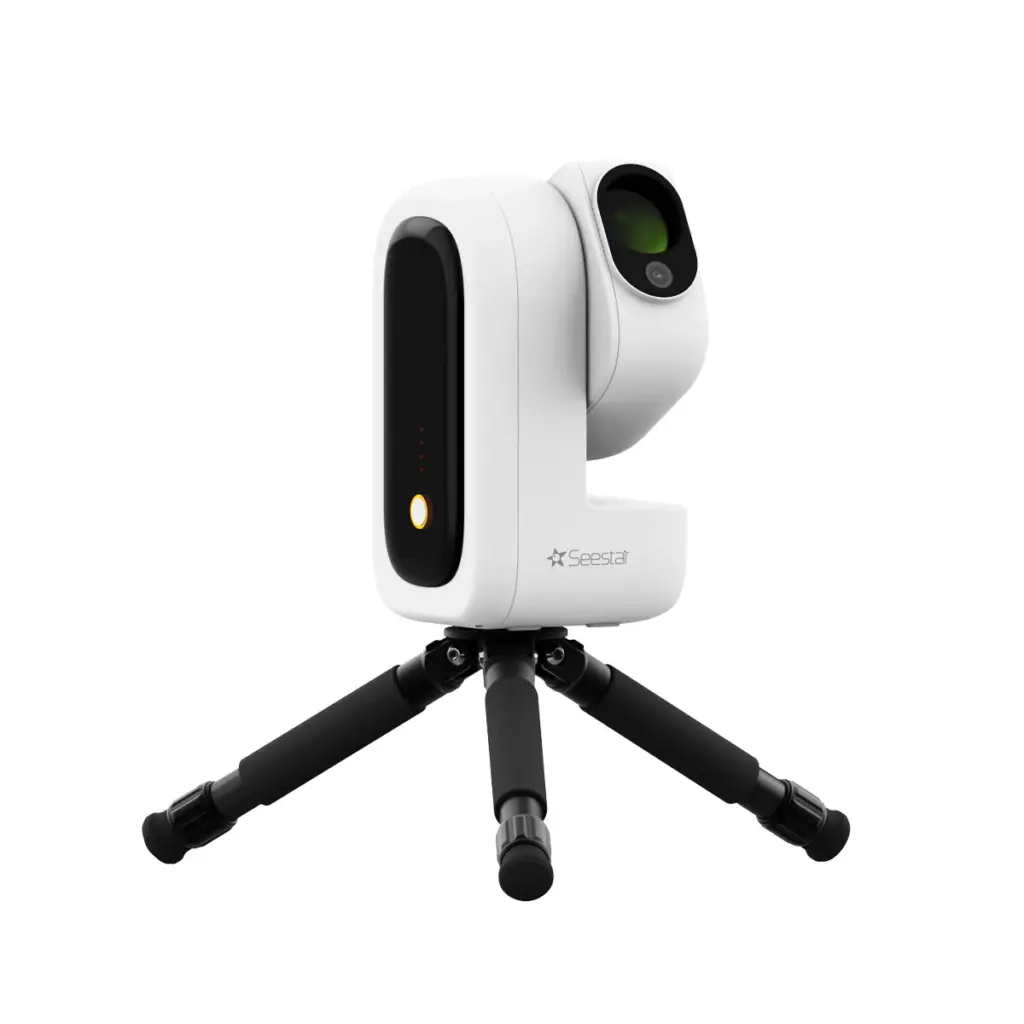
The main deep-sky camera
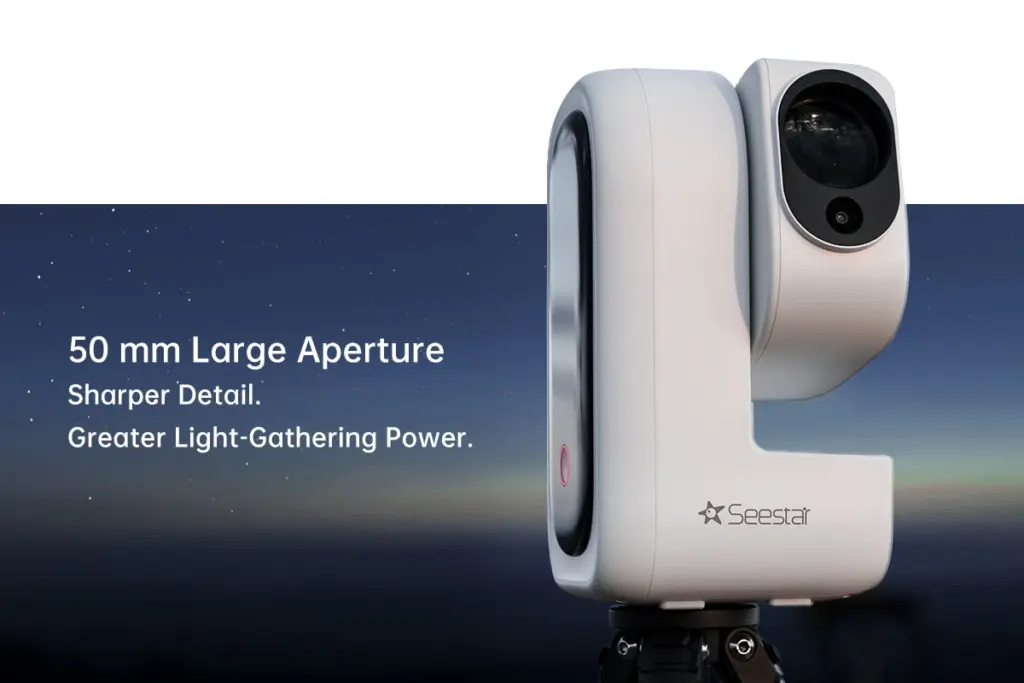
The optical system uses a four-element apochromatic design with ED glass, a 50 mm aperture, 260 mm focal length and f/5.2 ratio. Its official equivalent focal length is stated as 880 mm, with a 2.8-degree portrait field of view.
Behind it sits a 1/1.2-type 8.3 MP OmniVision OS08B10 sensor with 2.9 μm pixels and 2160×3840 output. The relatively large pixels and fast-for-50 mm optics are designed to collect faint signal through many short exposures and live stacking.
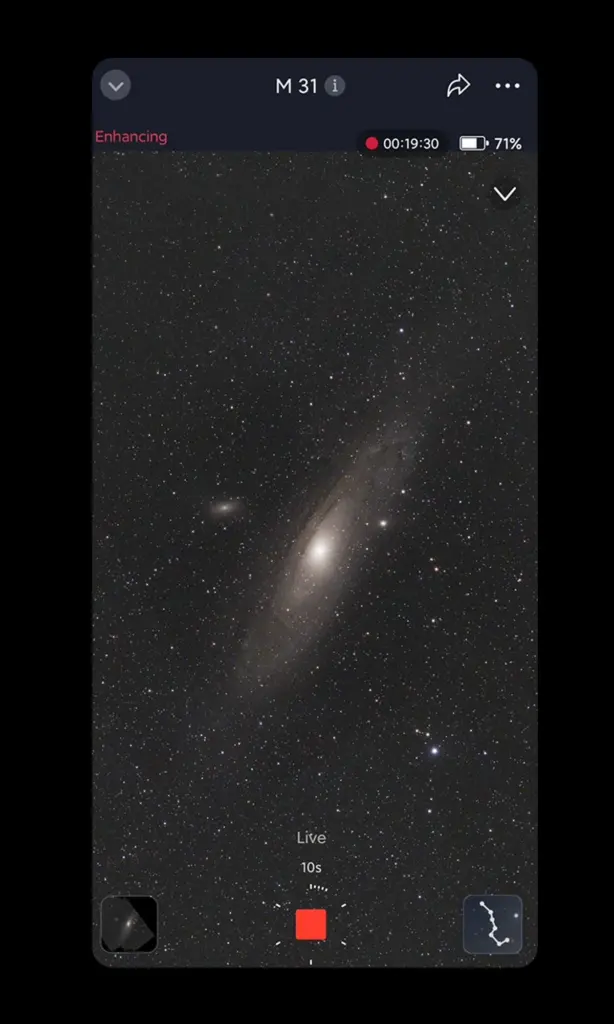
S50 Pro stores JPEG and FITS, allowing users either to accept the automatic result or take the astronomical data into independent calibration, stacking and processing. DSO mosaic extends the narrow field and can produce a composition up to 8K.
The second camera for Milky Way and landscape
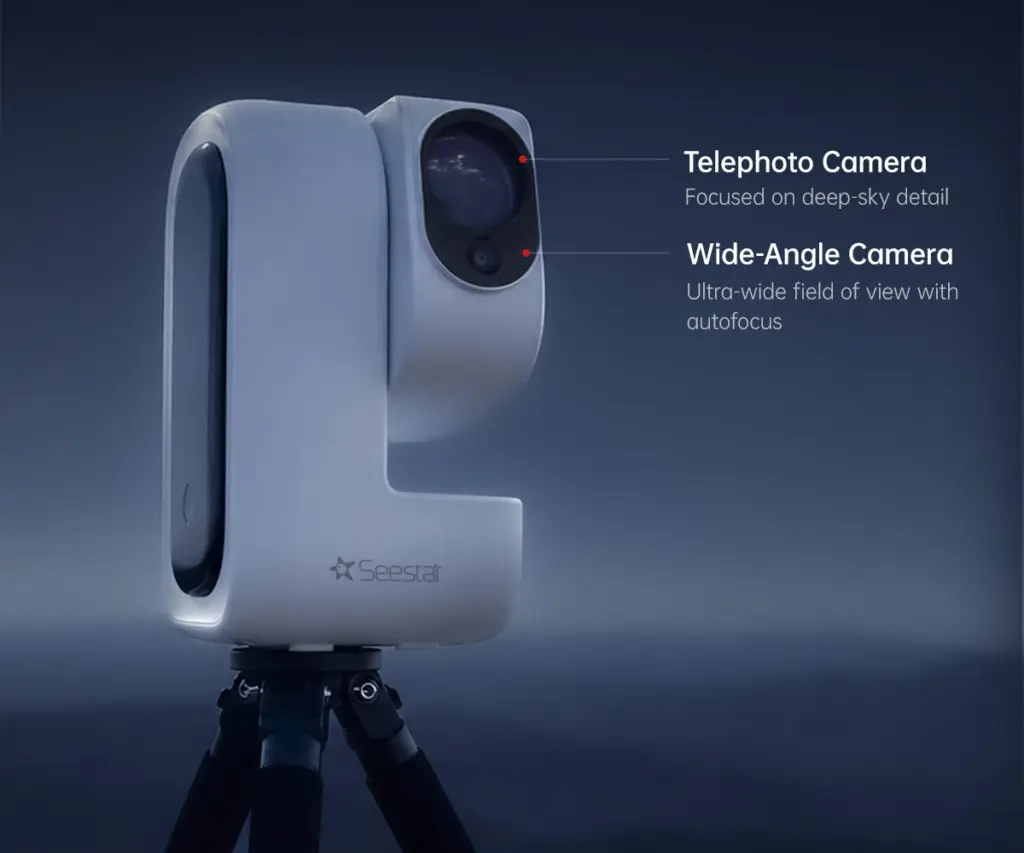
The wide unit uses a 1/2-type Sony IMX586 sensor, also delivering 8.3 MP, with 1.6 μm pixels. Its lens has a real 6 mm focal length, roughly 35 mm equivalent, an f/1.75 aperture and a 63-degree field.
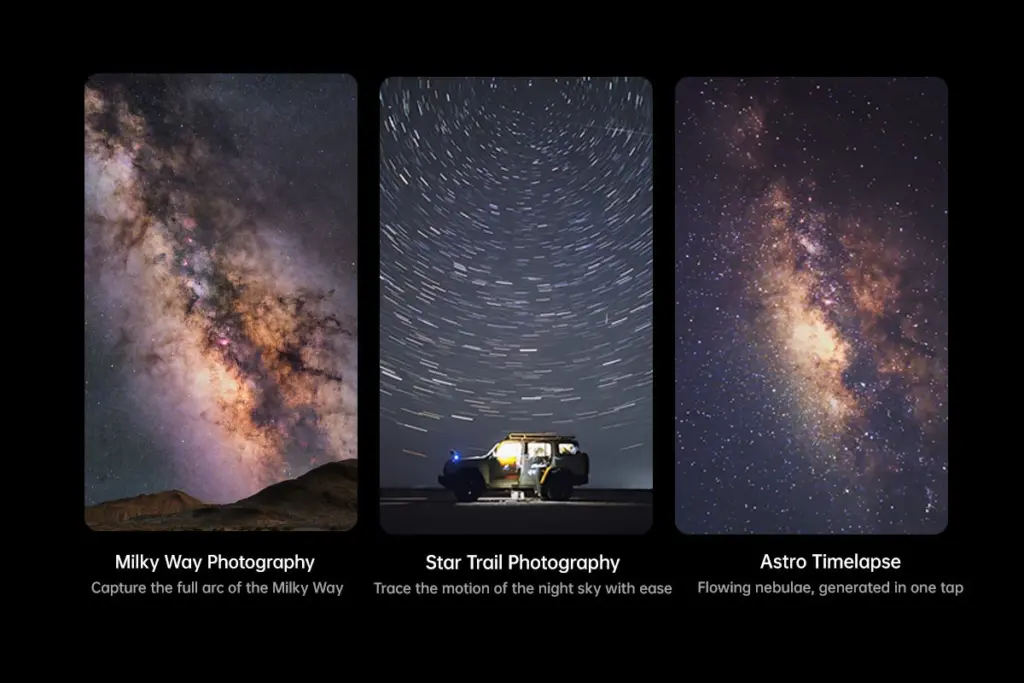
That field covers Milky Way arches, constellations, star trails, time-lapse and wide panoramas. Combining wide and telescopic framing on one mount reduces the need for a separate camera, lens and intervalometer, although it does not replace the flexibility of a larger photographic system.
Official features include automatic star reduction or removal, noise reduction, cropping, enhancement and one-tap post-processing. Those tools accelerate sharing, while FITS keeps the option of more controlled processing open.
Filters, tracking and Equatorial Mode
The integrated filter wheel contains UV/IR cut, a dual-band filter with 30 nm OIII and 20 nm Hα windows, plus a dark-frame position. The dual-band filter is useful for emission nebulae and light pollution but is not a universal answer for galaxies or reflection nebulae. A magnetic solar filter is included for observing the Sun with the intended safety system.
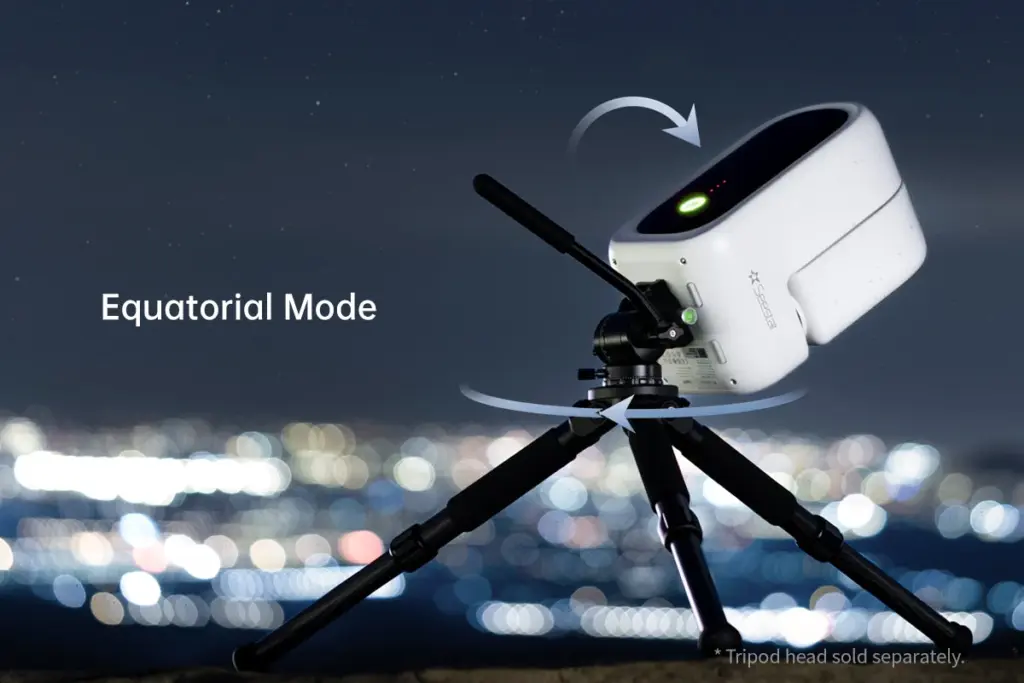
GOTO, automatic object location, tracking and capture are controlled through the app. Equatorial Mode can reduce the field rotation seen in longer alt-az sessions, provided polar alignment and mounting are stable.
For a beginner, the advantage is that object finding and stacking happen in one flow. For an experienced user, the substance lies in FITS, mosaics and the ability to control orientation and session length.
Storage, battery and portability
Internal storage is 128 GB, with roughly 100 GB available to the user. The 10,000 mAh battery is rated for up to nine hours according to Seestar, with real endurance depending on temperature, wireless use, slewing and capture type.
The body weighs 2.8 kg and measures 140×149×268 mm. The package includes a case, tripod, solar filter, USB-C cable and guides, so the basic system travels as one kit. Portability remains a major advantage for reaching dark skies away from a city.
European availability and price
Seestar S50 Pro is available from the official Seestar EU store at a €899 launch price, reduced from the regular €999. The offer ends on 15 September 2026 at 09:00 CEST, and shipments have begun from a German warehouse.
The listed European price includes VAT, and the company says no customs charge applies to delivery within the European Union. This is an official euro price, so no currency conversion is required.
What we think
S50 Pro makes sense not because it replaces a modular astrophotography rig, but because it sharply reduces the barriers between an idea and a capture. Its second camera and FITS support make it more flexible than a closed gadget, while €899 remains a significant investment. Its value will be determined by tracking quality, the real noise pattern and software reliability during long sessions.
Frequently asked questions
How much does Seestar S50 Pro cost in Europe?
The official launch price is €899 through 15 September 2026 at 09:00 CEST, reduced from the regular €999.
What does the second camera capture?
It covers a 63-degree, roughly 35 mm-equivalent field for the Milky Way, constellations, time-lapse, star trails and panoramas.
Does it save FITS files?
Yes. The main camera supports FITS for independent calibration, stacking and processing, alongside JPEG for finished results.
Is a solar filter included?
Yes, a magnetic solar filter designed for the system is included. Solar observation must only be performed with the filter installed correctly.
How long does the battery last?
Seestar rates the integrated 10,000 mAh battery for up to nine hours.