

Summary
- Chris Niccolls and his team visited Fujifilm’s design studio and factory in Japan.
- The designers explained the decisions behind the compact GFX100RF body.
- Production combines skilled manual assembly with automated precision.
- Fujifilm provided access and accommodations for the reporting trip.
How does a 102-megapixel camera go from the first sketches to a photographer’s hands? A rare visit to Japan by Chris Niccolls and his team reveals the work behind the Fujifilm GFX100RF.
In the feature published on October 16, 2026, Niccolls visited Fujifilm’s CLAY design center and X-Factory production line. Fujifilm provided access and accommodations for the reporting trip, an important disclosure when interpreting the behind-the-scenes coverage.
From early prototypes to the final camera body
Product strategy leader Masazumi Imai and lead designer Takeo Hyodo explained that their principal aim was to accommodate the large 102MP sensor in the smallest practical body. They also wanted precisely finished metal parts and tactile controls that make the camera satisfying to handle.
At CLAY, the team showed concepts with wider and taller body proportions. The final, taller shape also recalls Fujifilm’s GA645 film medium-format camera. Its form therefore reflects component dimensions, handling considerations and the company’s design heritage rather than nostalgia alone.
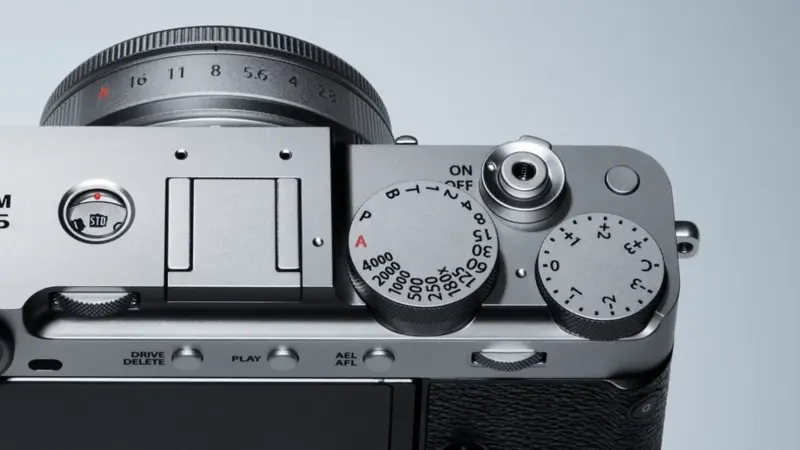
A telling example is the dedicated aspect-ratio dial. Hyodo wanted a physical control that evoked classic camera design, while changing the frame ratio has a clear photographic purpose when composing with the same high-resolution sensor. That matters especially on a fixed-lens camera.
Inside X-Factory: skilled hands and automated precision
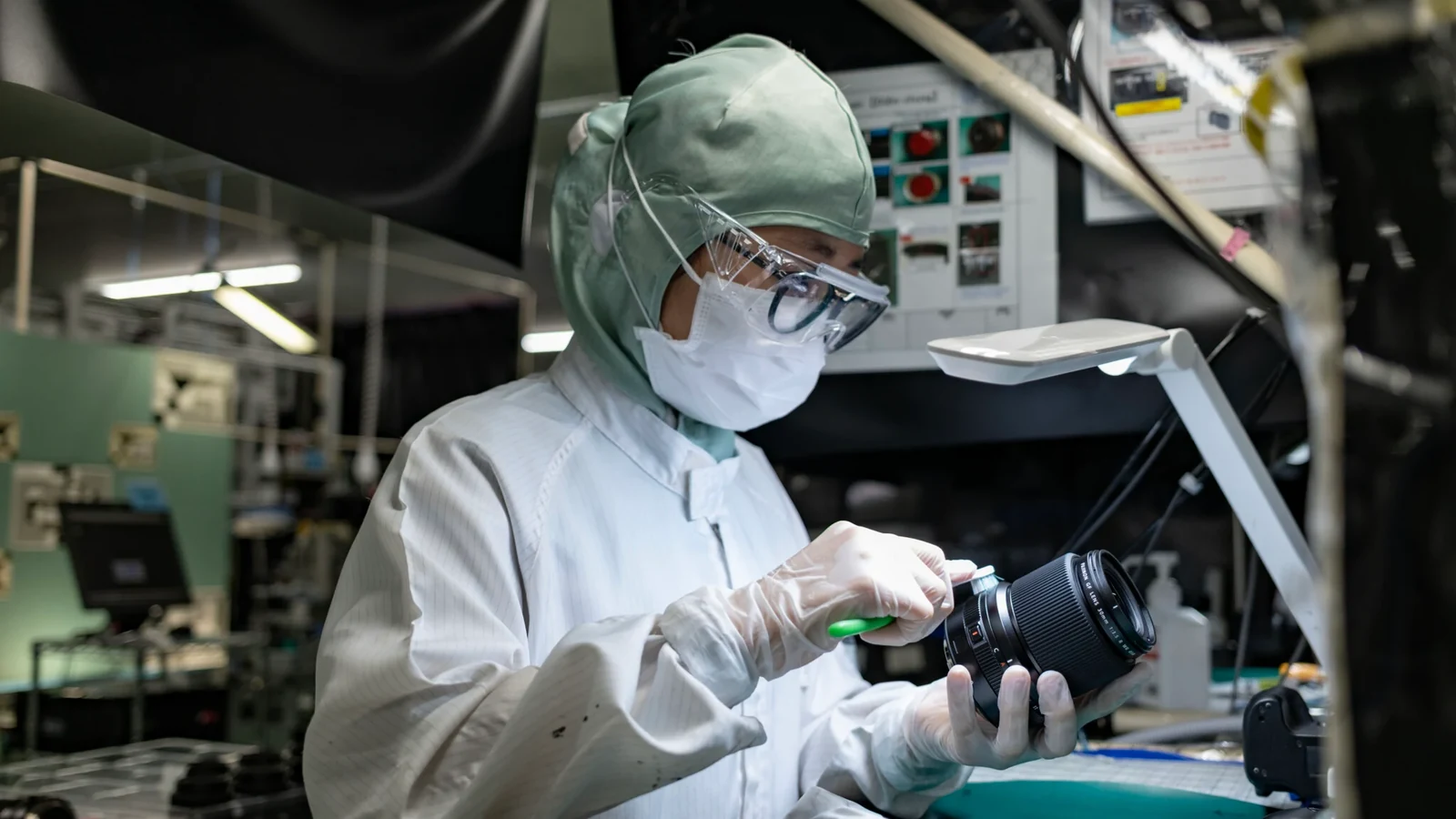
At the factory near Sendai, the visitors put on protective cleanroom clothing and followed GFX100RF production through to packaging. The process combines delicate hand assembly, soldering and precisely tightened screws with automated measurement systems. This is not a camera built entirely by robots at the push of a button.
The visiting team even tried fitting the leatherette exterior panels onto a camera body. Aligning the adhesive pieces accurately calls for patience and dexterity. It is a small but revealing example of the human work behind a finish that buyers may otherwise take for granted.
The GFX100RF is more than a digital camera body. Its integrated Fujinon 35mm f/4 lens, giving roughly a 28mm full-frame equivalent angle of view, is part of the same design challenge: optics, sensor and housing must work together.
What this visit tells photographers
Following the factory tour, Niccolls photographed in Sendai, Matsushima and other parts of Japan. His use of panoramic aspect ratios and flexible RAW files connects decisions made at the design desk to the resulting photographs. These are his observations from the trip, rather than controlled comparisons against competing cameras.
For a closer look at image quality and practical handling beyond manufacturing, there is also a hands-on Fujifilm GFX100RF video review covering the camera in use.
What we think
What makes this visit interesting is not simply seeing a spotless factory floor. It allows us to connect physical decisions we experience every day — body proportions, dial placement and surface finishing — with the people who evaluated and refined them.
Photographers spend a great deal of time debating resolution, dynamic range and sharpness. Yet a camera that is used for hours also needs to fit naturally in the hands, encourage fast decisions and hold up to repeated use. This visit demonstrates why those qualities do not automatically follow from sophisticated electronics.
The limits of the access are also worth keeping in mind: Fujifilm facilitated the trip. This is a valuable and specific look at its processes, not an independent audit of every production stage. Recognizing that distinction makes the reporting more useful, not less.