

Summary
- NASA published a photograph of a glowing rocket “jellyfish” on October 14, 2026, following the October 13 Falcon 9 launch.
- Sunlight illuminated the rocket exhaust before dawn, producing the extraordinary shape.
- The CRS-35 mission carried research and supplies to the International Space Station.
- Photographs by John Kraus and Bill White reveal two different views of the phenomenon.
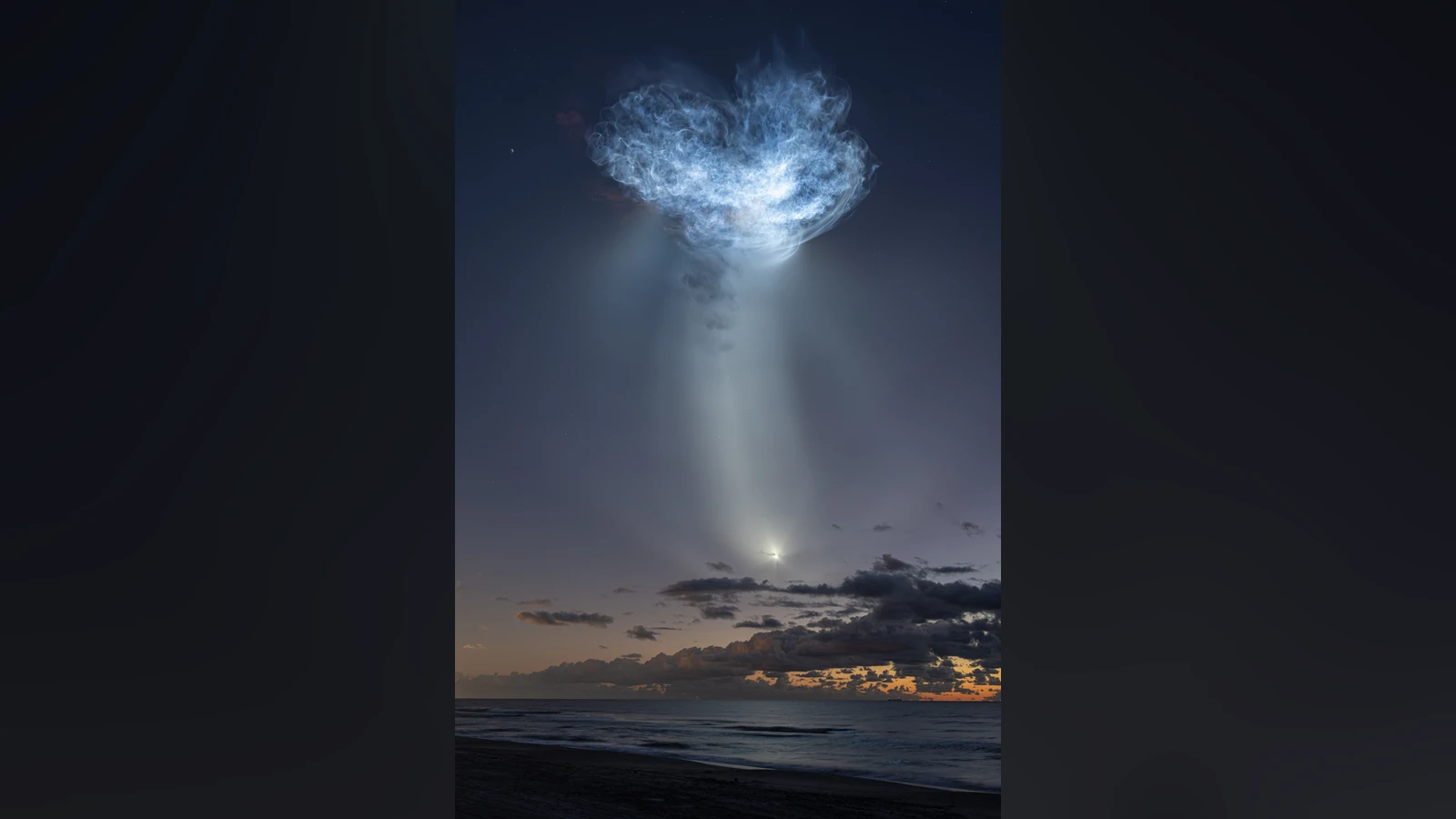
It looks like an enormous luminous jellyfish suspended above Earth. In reality, the extraordinary shape is the aftermath of a rocket launch: exhaust from SpaceX’s Falcon 9 expanded high in the atmosphere and caught sunlight shortly before sunrise. NASA’s photographs reveal the effect in remarkable detail.
NASA published the featured image on October 14, 2026. It shows the CRS-35 launch on October 13 at 6:33 a.m. EDT, from Space Launch Complex 40 at Cape Canaveral Space Force Station, Florida. The Falcon 9 carried an uncrewed Dragon spacecraft loaded with research, equipment and supplies for the International Space Station.
NASA also provided official launch coverage on NASA+. For photographers, though, the most compelling part of the story is what happened to the exhaust after the rocket climbed into the sky.
How a rocket creates a glowing jellyfish
As a rocket rises, its exhaust expands into thinner air, forming broad, diffuse plumes. Near sunrise or sunset, a striking contrast can develop: observers on the ground are still in darkness or twilight, while the higher-altitude exhaust is already illuminated by direct sunlight. Against the darker sky, those clouds seem to glow.
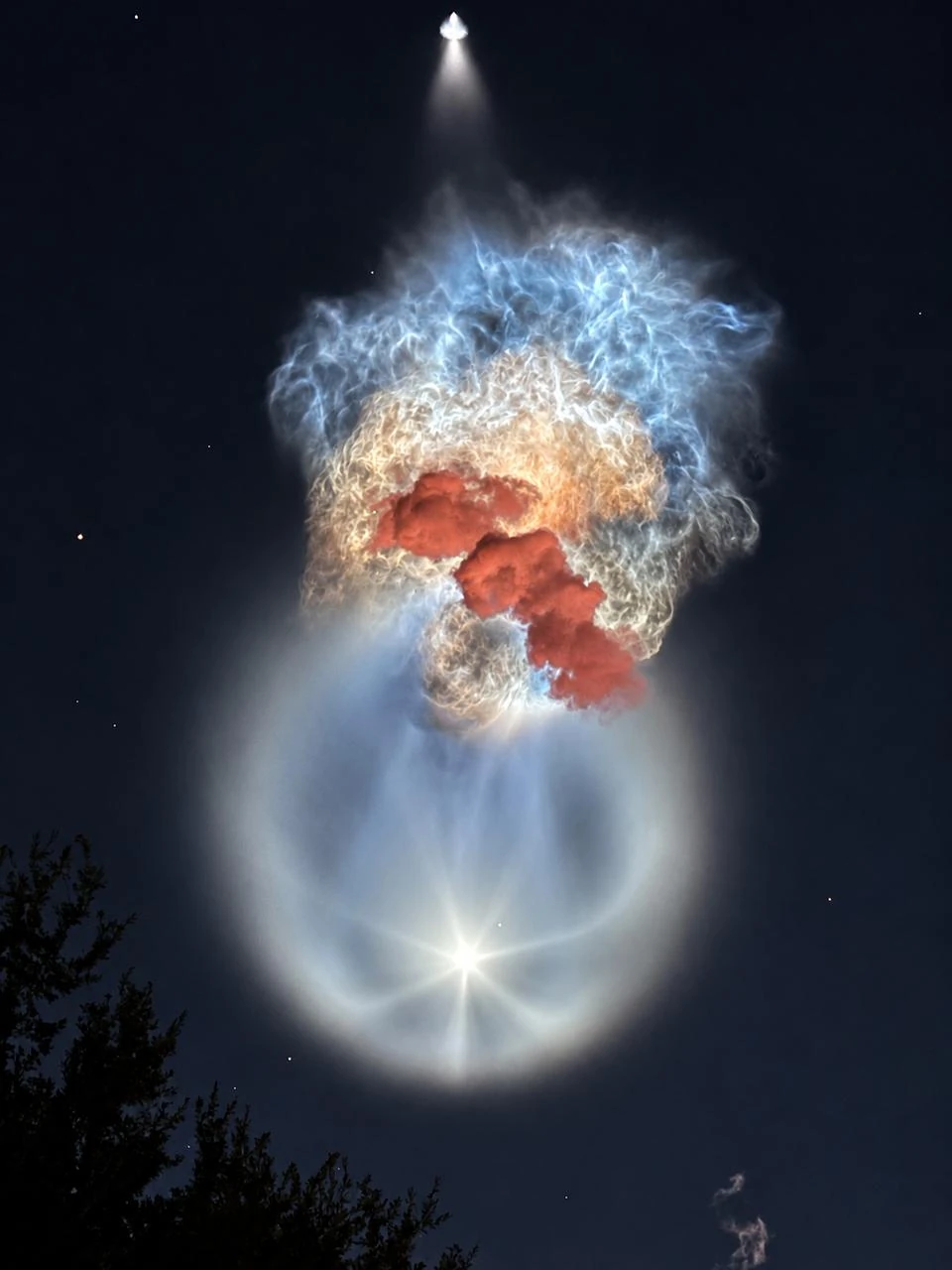
The intricate curls and filaments are not an unidentified object. They are patterns in the expanding exhaust, changing shape as the plume spreads and interacts with the atmosphere. NASA says the illuminated plumes from this launch were visible across the eastern United States.
Two photographers, two very different views
In John Kraus’s photograph, the luminous structure towers above the coastline, with dawn clouds providing scale and context. Rather than isolating a peculiar shape, the composition places the launch within a recognisable landscape.
Bill White’s photograph takes us much closer visually to the plume. Blue-white strands, warm red areas and delicate luminous textures show how differently the same launch can register depending on viewpoint and framing.
Timing and illumination matter as much as the rocket itself. In photographs of the Artemis II launch, the light from liftoff was central to the spectacle. Here it is sunlight reaching the plume while the ground remains dark that makes the image. That distinction changes the photographic challenge entirely.
What we think
Understanding the physics does not make these images any less extraordinary; it makes them more rewarding. The “jellyfish” is not an unexplained visitor but the result of a remarkable alignment of rocket exhaust, altitude, atmospheric conditions and sunlight, recorded from the right place at the right moment.
What stands out most is how differently the two photographers have told the same story. One photograph anchors the light in a landscape; the other immerses us in its extraordinary texture. For photographers working with the night sky or fleeting natural light, it is a useful reminder that context and composition can transform a single event into two distinct visual narratives.
It also underlines why an appealing resemblance is not an explanation. The earlier case of a jellyfish-like anomaly in a Curiosity image showed how easily visual patterns can invite misleading interpretations. With CRS-35, the photographs and the physical explanation reinforce each other.