

Summary
- Israeli settlers beat 64-year-old photojournalist Heidi Levine and stole her equipment.
- Witnesses reported Israeli military inaction in the West Bank.
- The case follows systemic failures of accountability documented by the ICJ and CPJ.
- The deaths of Shireen Abu Akleh and Mariam Abu Dagga expose the grave consequences for the press.
- A journalist documenting settler violence becomes its victim
- Military tolerance, allegations of complicity and the occupying authorities’ responsibility
- The International Court of Justice documented a systemic failure
- AFP photographer beaten only ten days earlier
- Shireen Abu Akleh: A U.S. citizen killed by Israeli fire, still without justice
- Mariam Abu Dagga: The photojournalist killed at Gaza’s Nasser Hospital
- More than 200 media workers killed in Gaza — the deadliest war for journalists on record
- Impunity and cover-up: Twenty journalists killed, no criminal accountability
- International condemnation without consequences
- What we think
Masked Israeli settlers beat 64-year-old Washington Post photojournalist Heidi Levine for approximately ten minutes as she documented attacks on Palestinian olive farmers in the occupied West Bank on October 16, 2026.
They knocked her to the ground, repeatedly kicked her and stole her cameras, phone and personal belongings, including her wallet and passport. Wearing PRESS identification and protective equipment did not prevent her from being seriously injured and hospitalized.
The assault occurred under Israeli military occupation. Witnesses reported soldiers nearby who failed to protect the victims. The military conduct and state responsibility must be examined within a documented history of failures to prevent settler attacks and to hold perpetrators accountable.
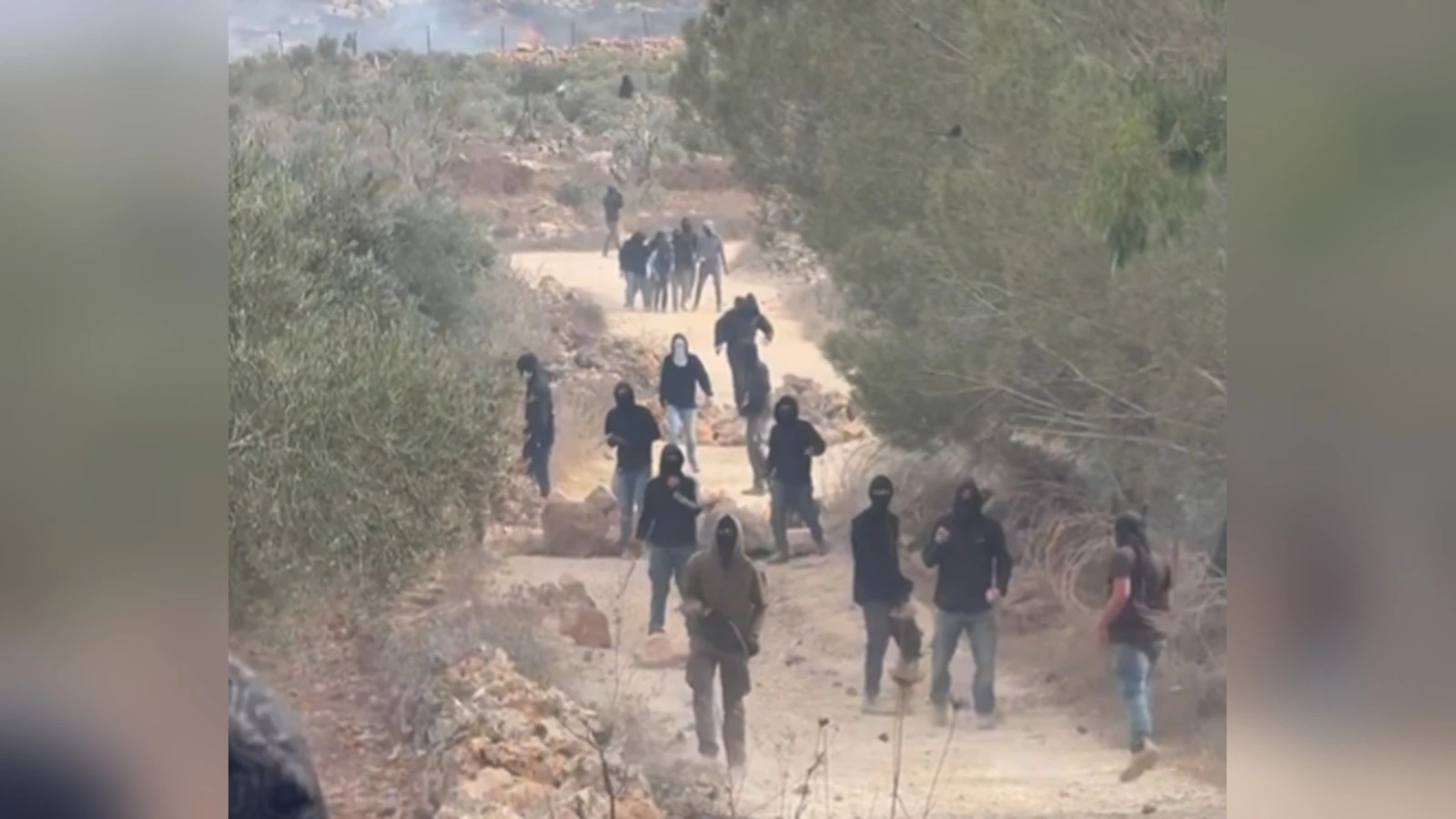
Video shared on X in connection with the attack:
A journalist documenting settler violence becomes its victim
Around 80 settlers, many masked and dressed in black, attacked Palestinians harvesting olives near Abu Falah east of Ramallah. They threw stones, assaulted farmers and burned olive trees. The attacks threaten Palestinian families’ livelihoods and access to agricultural land.
Levine described a beating lasting approximately ten minutes. She was kicked repeatedly on the ground and said her helmet and protective vest may have saved her life. Her injuries included fractured vertebrae, a broken rib and a serious hand injury requiring surgery.
The theft of cameras and a telephone is more than a loss of property: it can deprive a photojournalist and the public of evidence of what took place. It has not been established which recordings were eventually recovered.
Military tolerance, allegations of complicity and the occupying authorities’ responsibility
Levine was beaten in territory under Israeli military control. Witnesses described Israeli soldiers near the attackers who did not protect the photojournalist. Their presence as masked settlers assaulted civilians and a visibly identified member of the press is central to the story, not a footnote.
Tolerance of settler violence has consequences: attackers can act in circumstances where the presence of armed state forces does not mean their victims will be protected. The Israeli military is responsible for its own acts and omissions. Reports of soldiers assisting or cooperating with settlers must be investigated as allegations of complicity, alongside the responsibility of commanders.
Violence spread to at least eight Palestinian villages that day. The scale of the attacks and accounts of military inaction show why pursuing only the men who kicked Levine would be inadequate. The state and military authorities must also answer for the protection they failed to provide.
The International Court of Justice documented a systemic failure
In its advisory opinion of July 19, 2024, the International Court of Justice found that Israel had systematically failed to prevent or punish settler attacks on the lives or bodily integrity of Palestinians, contrary to its international obligations.
The material reviewed by the Court included reports of Israeli security forces failing to intervene and, in some incidents, supporting settlers. The Court connected settler violence, insufficient punishment and excessive force against Palestinians with a coercive environment. This is a judicial finding about systemic state responsibility, not an individual criminal conviction concerning Levine’s attackers.
The Court also concluded that Israel’s continued presence in the occupied Palestinian territory was unlawful. Violence by settlers must therefore be examined within the framework of settlement policy, military control and systematic impunity.
AFP photographer beaten only ten days earlier
On October 6, 2026, armed settlers beat AFP photojournalist Jaafar Ashtiyeh near Aqraba during the olive harvest. They struck him with rifle butts and took his equipment; colleague John Wessels was threatened at gunpoint. Journalists also reported soldiers close to that attack.
Across ten days, the pattern recurred: visible PRESS identification, settlers assaulting photographers, stolen equipment and authorities failing to provide effective protection.
Shireen Abu Akleh: A U.S. citizen killed by Israeli fire, still without justice
On May 11, 2022, Shireen Abu Akleh, a Palestinian-American journalist and U.S. citizen, was fatally shot while covering an Israeli military operation in Jenin. She wore a vest clearly marked PRESS. Independent investigations traced the fatal shot to an Israeli military position, and the Israeli military acknowledged a high probability that one of its soldiers had fired it.
Four years later, nobody had been held criminally accountable. Her American citizenship makes the investigative failure even more disturbing. The FBI opened an investigation in 2022, yet in May 2026 the Committee to Protect Journalists reported no demonstrable progress and said willing eyewitnesses had not been formally interviewed.
The failure of U.S. authorities to advance the investigation adds a second level of institutional failure. Abu Akleh’s family continues to demand justice. Her case demonstrates that international media affiliation, U.S. citizenship and visible PRESS markings have not secured protection or accountability for journalists in the occupied West Bank.
Mariam Abu Dagga: The photojournalist killed at Gaza’s Nasser Hospital
On August 25, 2025, Mariam Abu Dagga, a photojournalist contributing to the Associated Press, was killed in Israeli strikes on Nasser Hospital in Khan Younis. A mother documenting the war in Gaza, she died alongside four other journalists: Reuters contractor Hussam al-Masri, Mohammed Salama, Ahmed Abu Aziz and Moaz Abu Taha.
The first strike killed al-Masri. Subsequent strikes hit the site when journalists and rescue workers had gathered. The sequence was captured on video. Abu Dagga did not die in some abstract “dangerous environment”: she was killed by Israeli strikes on a hospital where members of the press were working.
Cameras documented the aftermath, but visual evidence has not produced effective accountability. The orders, targeting process and military authorities’ knowledge of the presence of journalists and rescuers all require scrutiny. Abu Dagga’s death deprived Gaza of another photojournalist documenting the fate of civilians.
More than 200 media workers killed in Gaza — the deadliest war for journalists on record
Gaza has become the deadliest war for journalists documented by the Committee to Protect Journalists since 1992. By the time Nasser Hospital was struck in August 2025, the Palestinian Journalists Syndicate reported more than 240 journalists and media workers killed in Gaza since October 2023. This is a Gaza-specific figure, not a regional death toll.
CPJ had documented more than 200 Palestinian journalist and media-worker deaths before revising its database. On September 24, 2026, after reviewing 229 cases, the newly verified count reported was 191 Palestinian journalists and media workers killed by Israeli forces. The two organizations use different verification criteria; this is not a change in the geographic focus or a reason to minimize the scale of loss.
Independent foreign journalists remain barred by Israel from entering Gaza freely. Palestinian photographers, camera operators and reporters have carried the burden of documenting bombings, deaths and displaced families while facing the same dangers. Every journalist killed is a human loss and a loss of independent visual documentation.
Impunity and cover-up: Twenty journalists killed, no criminal accountability
CPJ’s 2023 “Deadly Pattern” investigation examined 20 journalists killed by Israeli military fire over 22 years. None of these cases had resulted in criminal accountability.
CPJ documented opaque internal military processes, delays, failures to properly address evidence and public statements appearing to exonerate soldiers before investigations were complete. These are documented mechanisms through which accountability is evaded and which fuel allegations of cover-up.
Abu Akleh’s case and the stalled American investigation demonstrate how deep that impunity runs. Levine’s case requires scrutiny of the settlers who attacked her, the soldiers nearby and the authorities empowered and obligated to protect her.
International condemnation without consequences
Governments, international organizations and journalism associations are aware of the attacks. Condemnations followed Levine’s beating, but earlier appeals did not prevent the attack on Ashtiyeh or the violence at Abu Falah. International responses must be judged by tangible protection and meaningful accountability.
What we think
Heidi Levine’s beating cannot be separated from the system of occupation and settlement. The International Court of Justice has already found Israel’s systemic failure to prevent or punish settler violence. When a 64-year-old photojournalist marked PRESS is beaten and robbed under military control, responsibility does not end with the men seen striking her.
Allegations of military tolerance, assistance to settlers and complicity demand investigations reaching the commanding structures of the occupying authorities. Failed protection and systematic impunity have real consequences: they permit further violence and leave civilians and journalists exposed.
Shireen Abu Akleh, a U.S. citizen, was killed in Jenin, and four years later the FBI investigation remained effectively stalled. Mariam Abu Dagga was killed by Israeli strikes on Nasser Hospital together with four other journalists. These cases demonstrate the human cost to those documenting Gaza and the West Bank, while effective accountability remains absent in crucial cases.
The international community also bears responsibility for its response. Condemnations are insufficient while journalists continue to be beaten and killed. Independent investigations, effective protection and real consequences for perpetrators, commanders and state officials whose responsibility is established are essential. Without them, each new photograph may become the last record created by another member of the press.