

Summary
- AFP photographer Jaafar Ashtiyeh was beaten by armed Israeli settlers while covering events in the West Bank.
- He was hospitalized and the attackers took his camera equipment.
- The attack comes amid unprecedented violence against the press, with more than 200 Palestinian journalists and media workers killed according to CPJ.
- AFP and the Foreign Press Association are calling for a full investigation.
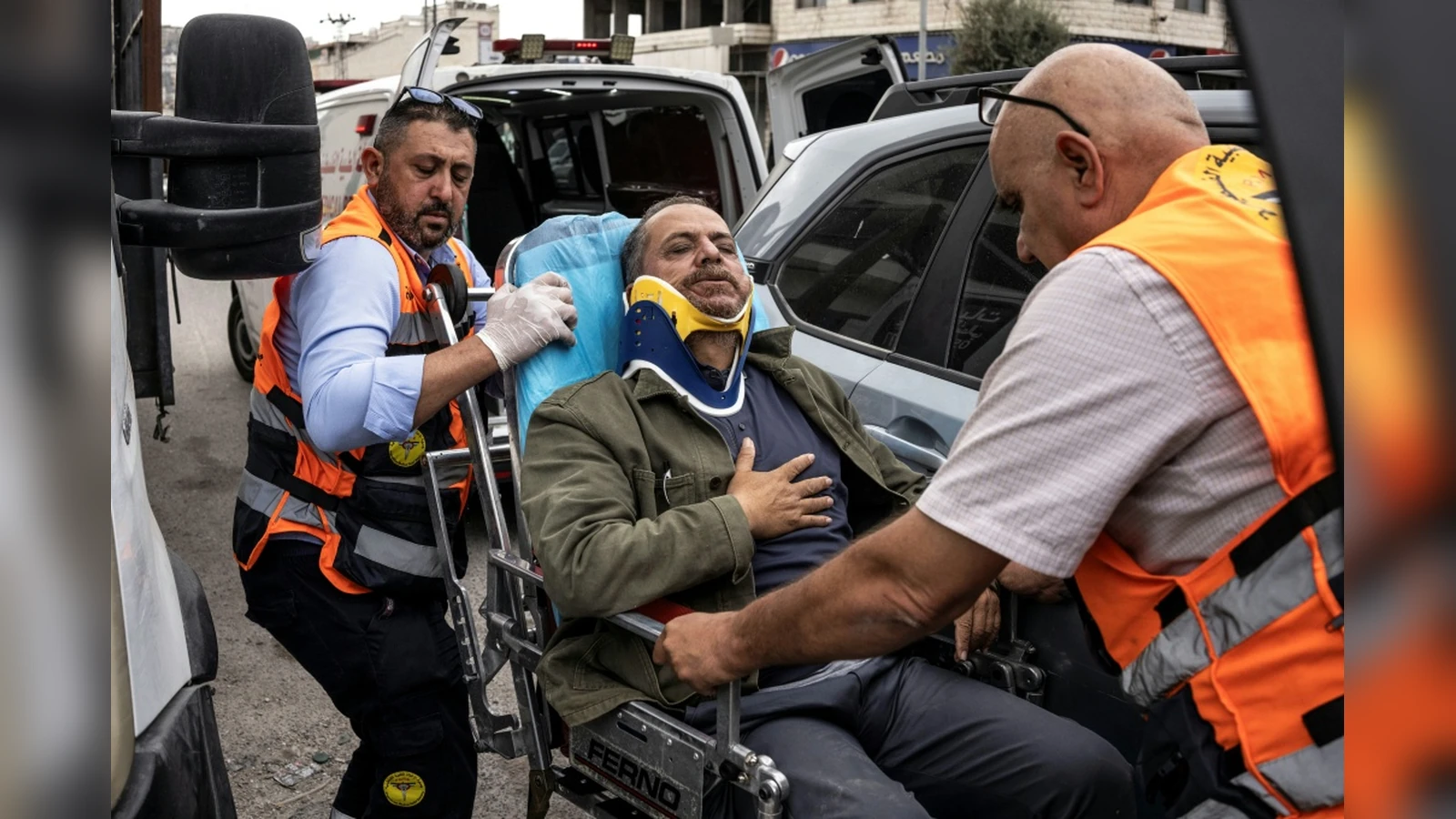
AFP Palestinian photographer Jaafar Ashtiyeh, 58, was taken to hospital after being attacked by armed Israeli settlers while covering violence against Palestinian olive farmers in the occupied West Bank.
The attack took place on October 6, 2026 near the village of Aqraba, south of Nablus. Ashtiyeh, a veteran photographer for the international news agency, suffered bruising to his head and torso and was taken by ambulance to a hospital in Nablus. X-rays found no broken bones, but he remained under round-the-clock observation.
Beaten with rifle butts
Ashtiyeh and fellow AFP photographer John Wessels were near Aqraba as Palestinians harvested olives. The photographers saw an Israeli soldier detaining a man when a quad bike raced toward them and a man opened live fire. A Palestinian was shot in the foot and was also taken to hospital.
At least six more people then rushed toward the journalists while firing guns. As Ashtiyeh tried to enter a vehicle clearly marked “Press”, two men tackled him and repeatedly struck him with the butts of their rifles. Wessels was also threatened at gunpoint, while the attackers took Ashtiyeh’s camera equipment.
Soldiers were about 500 metres away
Wessels said at least a dozen fully equipped Israeli soldiers were around 500 metres from the scene. AFP contacted the Israeli military for comment.
AFP Global News Director Phil Chetwynd condemned the attack and called for a full investigation, saying it was unacceptable for journalists to be beaten and robbed by armed settlers without intervention from Israeli security forces in the area.
The Foreign Press Association said it was “deeply alarmed” and called on Israeli authorities to investigate why soldiers in the area did not intervene in an attack on journalists who were clearly identifiable as press.
Attacks on journalists in the West Bank
The incident is not isolated. Only weeks earlier, masked Israeli settlers attacked a three-person NBC News crew in Jalud in the West Bank, injuring crew members while they were recording an interview. Violence in the West Bank has also affected people connected to its cinematic documentation: in 2025, Odeh Hathalin, an adviser on the Oscar-winning “No Other Land”, was killed by an Israeli settler in Umm al-Khair. During the first eight months of 2026, at least 16 incidents were documented in which Israeli settlers assaulted, threatened or obstructed journalists in the Palestinian territory, affecting at least 35 Palestinian, Israeli and international journalists. In at least five cases, journalists said Israeli soldiers or police officers were present or nearby but did not intervene.
Ashtiyeh himself was also injured in October 2025 while covering a settler attack on farmers during the olive harvest in the Nablus area.
Violence against those documenting events is part of a much broader and extremely grave picture for the press in the Palestinian territories. In Gaza, photojournalist Mariam Abu Dagga was killed in August 2025 alongside four other journalists at Nasser Hospital. A later detailed investigation into the Nasser Hospital attack reconstructed the two waves of strikes and the circumstances in which the five journalists were killed.
More than 200 press workers killed — an unprecedented toll
The attack on Ashtiyeh in the West Bank comes during an unprecedented period for journalism in the Palestinian territories. The Committee to Protect Journalists has documented more than 200 Palestinian journalists and media workers killed by Israeli forces in Gaza and Israeli detention centres since October 2023. CPJ describes the Israel-Gaza war as the deadliest conflict for journalists it has ever recorded.
The scale of the loss is even more significant because Israel continues to bar international journalists from independently entering Gaza. On-the-ground documentation therefore depends heavily on Palestinian photojournalists, camera operators and reporters already inside the Strip, working while they and their families are themselves at direct risk.
PTTL has repeatedly covered this reality. Photojournalist Mariam Abu Dagga was killed alongside four other journalists at Nasser Hospital, while a later detailed investigation reconstructed the two waves of strikes at the hospital and the circumstances in which the five journalists died. Visual documentation from Gaza has also become central to international photography, with an image by Palestinian photographer Ali Jadallah winning the top prize at the Siena International Photo Awards 2024.
What we think
The attack on Jaafar Ashtiyeh cannot be treated as just another isolated act of violence against a photojournalist. In the West Bank, Israeli settlements — considered illegal under international law — repeated settler violence and serious allegations of impunity create an environment in which Palestinian civilians and journalists remain exposed. Only weeks before the attack on Ashtiyeh, masked settlers attacked an NBC News crew in Jalud, while in 2025 Odeh Hathalin, an adviser on the Oscar-winning “No Other Land”, was killed by an Israeli settler in Umm al-Khair.
The picture in Gaza is even graver: more than 200 Palestinian press workers have been killed according to CPJ’s documentation, in what the organisation describes as the deadliest conflict for journalists it has ever recorded, while international journalists still lack independent access to the Strip. That restriction is not a technical detail. It limits independent on-the-ground verification and places an enormous burden on Palestinian journalists who are themselves living through the war.
The UN Independent International Commission of Inquiry has concluded that Israel has committed and continues to commit genocide against Palestinians in Gaza. Israel categorically rejects that finding. In this context, protecting the people documenting events with cameras and microphones is a critical issue of public scrutiny and accountability.
When more than 200 press workers have lost their lives, foreign journalists cannot independently enter Gaza, and photojournalists in the West Bank are attacked while doing their jobs, the issue goes far beyond the safety of one profession. It concerns whether independent images and testimony from the ground will continue to exist. A full investigation into the attack on Ashtiyeh and accountability for attacks on journalists are therefore essential to preserving the ability to document what is happening.
Frequently asked questions
Who is Jaafar Ashtiyeh?
He is a 58-year-old veteran Palestinian photographer for AFP in the Palestinian territories.
Where did the attack happen?
The attack took place near Aqraba in the occupied West Bank on October 6, 2026.
What injuries did he suffer?
He suffered bruising to his head and torso. X-rays found no broken bones, but he remained in hospital for observation.
What happened to his camera equipment?
John Wessels said the attackers took Ashtiyeh’s camera equipment.