

Summary
- The Independent reconstructs the August 25, 2025 attack on Nasser Hospital
- Four tank shells hit the hospital in two waves
- A total of 22 people were killed, including five journalists
- The camera the IDF described as a threat has been confirmed as belonging to Reuters
- The second wave came seven to eight minutes later, after journalists and rescuers had arrived
- Technical analysis points to Israeli 120mm tank ammunition
- The IDF says its review remains ongoing and has not published complete findings
- Reuters and AP are still demanding a full explanation and accountability one year later
- From 9:30am to 10:17am: Mariam’s final moments
- The Reuters camera that was treated as a military threat
- What the Israeli military officially said
- 10:09am: two projectiles hit the hospital
- The staircase fills with journalists and rescuers
- 10:17am: the two projectiles behind the biggest question
- Why it is described as a “double tap”
- Witness accounts of drones above the scene
- “They could see the target”: what Israeli whistleblowers allege
- From a precision weapon to four tank shells
- Technical analysis: 120mm shells, audio and satellite imagery
- The allegation of “retrospective incrimination”
- Problems with the list of six alleged militants
- The unusual training for foreign medics and what is actually known
- What international humanitarian law says
- Why an international-law expert says possible war crimes should be investigated
- A newer Israeli allegation about the use of Nasser Hospital
- One year later, Reuters and AP are still demanding answers
- The wider picture for journalists in Gaza
- What we think
- Frequently asked questions
A major investigation by The Independent reconstructs minute by minute the Israeli strike on Nasser Hospital that killed Mariam Abu Dagga and four other journalists, presenting new evidence about a Reuters camera, four tank shells and the crucial second wave of fire.
On August 25, 2025, Israeli forces struck Nasser Hospital in Khan Younis, killing a total of 22 Palestinians. Five journalists, medical personnel and rescue workers were among the dead. On August 23, 2026, The Independent published a detailed reconstruction of the attack based on dozens of witness accounts, video, visual and acoustic analysis, satellite imagery and testimony from Israeli military whistleblowers.
The investigation is particularly important because it looks not only at why a camera that the Israeli military had described as a threat was targeted, but above all at why a second wave of fire followed seven to eight minutes later, after journalists and rescuers had visibly gathered at the scene. One year later, the Associated Press reports that no one has been held accountable and the Israeli military has provided no timetable for completing its investigation.
From 9:30am to 10:17am: Mariam’s final moments
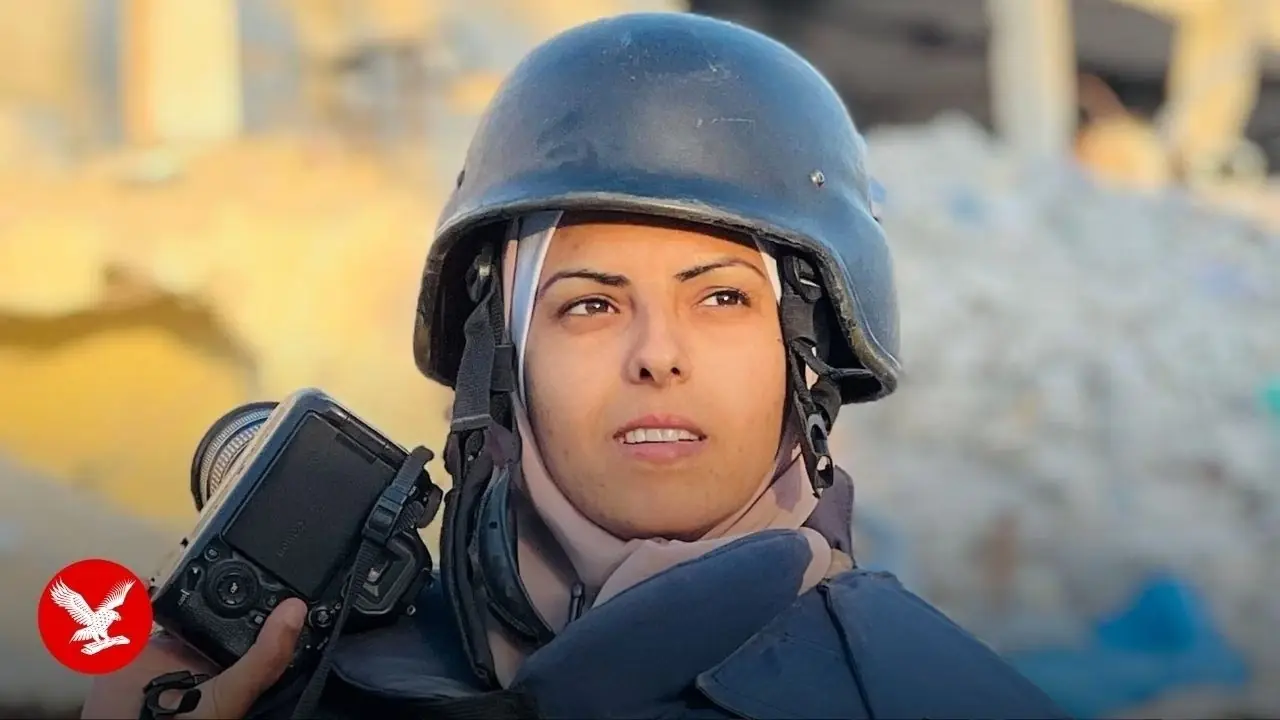
The Independent’s reconstruction begins at 9:30 in the morning. Thirty-three-year-old Mariam Abu Dagga is in a partially destroyed building opposite Nasser Hospital with her close friend and flatmate, journalist Baraa Lafi. The two women are discussing a report about overcrowding at the hospital. Mariam works for Independent Arabia and also contributes to the Associated Press.
The personal story recorded by the investigation also illustrates the conditions under which she was working. Her 14-year-old son, Ghaith, had been moved to the United Arab Emirates. Her mother had died from cancer in 2024, her father had health problems and the family had lost its home and been repeatedly displaced. Three days before her death, she had sent a message to her editor at Independent Arabia expressing fear that she would be forced to move again without knowing where she could go.
PTTL had previously covered Mariam Abu Dagga’s story and her work as a visual journalist in Gaza, as well as its initial report on the five journalists killed at Nasser Hospital.
The Reuters camera that was treated as a military threat
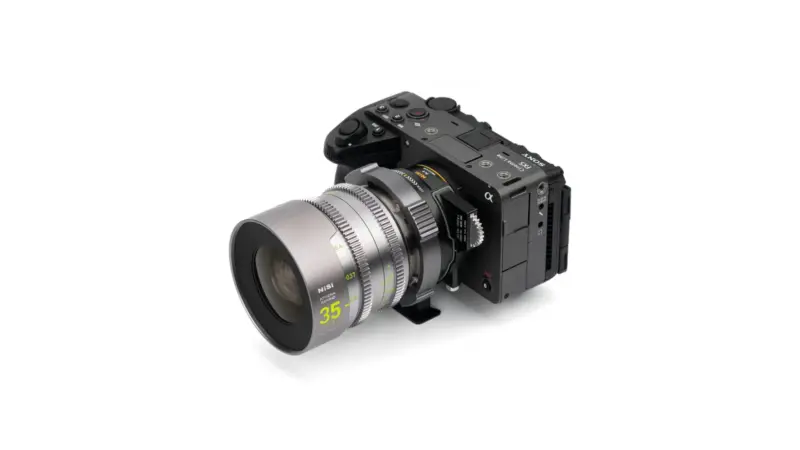
At the centre of the case is a camera positioned on the external staircase of the hospital’s fourth floor. The location was well known to journalists: it was used for live broadcasts, mobile reception and filming Khan Younis.
Reuters cameraman Hussam al-Masri, 49, operated the agency’s live camera there. The Independent reports that around a week and a half before the attack, Mariam had photographed him beside the equipment, which was covered with fabric to protect it from the heat. Screenshots of Israeli surveillance footage obtained by the newspaper also appear to show Mariam beside the same camera four days before the strike.
Reuters confirmed to The Independent that the camera belonged to the agency and was providing a live feed from Khan Younis. It also said the Israeli military knew Reuters had teams at Nasser Hospital. AP separately confirms that it had repeatedly informed the military that its journalists were stationed there.
What the Israeli military officially said
In its preliminary investigation published on August 26, 2025, the IDF said Golani Brigade troops had identified a camera at Nasser Hospital that they believed had been installed by Hamas and could be used to monitor Israeli troops and direct attacks. The military said the forces acted to remove that threat.
The same statement said six of those killed were militants, with the IDF alleging that one had participated in the October 7, 2023 attack. At the same time, Israel’s military chief expressed regret for civilian casualties and ordered a full investigation.
However, AP reported on the anniversary of the attack that an Israeli soldier familiar with internal discussions said the military was unable to find evidence linking the Reuters camera to Hamas. The same source said none of the six people later publicly linked to Hamas had been the intended target of the strike.
10:09am: two projectiles hit the hospital
At 10:09am, Hussam al-Masri is standing beside the camera while speaking to his wife by phone. The call is abruptly cut off by an explosion. According to The Independent’s reconstruction, two projectiles hit different areas of the compound almost simultaneously. One strikes the hospital’s northern side, near an area used by medical workers and surgical facilities. The second hits the fourth-floor external staircase at the camera position, killing al-Masri.
AP reports that two people were killed in the first wave. Journalists, rescuers and civil defence personnel then began moving toward the damaged staircase to assist and document what had happened.
The staircase fills with journalists and rescuers
Among those who rushed to the scene were Mariam Abu Dagga, Moaz Abu Taha, Ahmed Abu Aziz, Mohamed Salama and Reuters contributor Hatem Omar, together with members of the Palestinian Civil Defence.
Within less than five minutes, according to The Independent, more than 20 people were positioned on different levels of the staircase. Rescuers in bright orange vests were recovering victims while journalists recorded the operation with cameras and phones. The scene was being filmed from multiple angles and broadcast live.
This is one of the most important elements of the reconstruction: before the second wave, the activity at the scene was not concealed. A large and visible rescue and news-gathering operation was under way on the hospital’s external staircase.
10:17am: the two projectiles behind the biggest question
At 10:17am, seven to eight minutes after the first wave, two more explosions occur in extremely rapid succession. The second wave strikes people who had gathered to respond to the consequences of the first attack.
Mariam Abu Dagga is killed. Journalists Mohamed Salama, Ahmed Abu Aziz and Moaz Abu Taha also die. Together with Hussam al-Masri, who had been killed in the first attack, the number of journalists killed reaches five. The overall death toll eventually rises to 22. The World Health Organization recorded five journalists among the dead, as well as a doctor, health workers and a Palestinian Civil Defence member.
AP says the second strike caused most of the fatalities and that, based on footage and eyewitness accounts, none of the people at the scene appeared to be armed. In total, the news agency reports, Israel struck the hospital four times with high-explosive tank shells.
Why it is described as a “double tap”
The term “double tap” is used for a subsequent strike on the same location after enough time has passed for rescuers or others to arrive. At Nasser, the critical interval was approximately seven to eight minutes.
That fact alone does not prove intent. But it shifts the focus of the investigation toward what those who authorized and carried out the second wave knew: whether they had a view of the site, whether they recognized that a rescue operation had begun and what military objective remained after the camera had been destroyed during the first strike.
Witness accounts of drones above the scene
The Independent reports witness accounts of Israeli drones and quadcopters above the hospital following the first attack. One person on the staircase described how the presence of a quadcopter prompted warnings for people to move away because another strike was feared.
The presence of drones matters because it raises the question of whether the situation could have been monitored between the two waves. It does not by itself establish that operators or commanders saw and identified journalists and rescuers before the second strike. The Independent, however, combines those accounts with testimony from military whistleblowers about how tanks acquire their targets.
“They could see the target”: what Israeli whistleblowers allege
Two Israeli reservists who had served in southern Gaza spoke anonymously to The Independent. One, who had experience in a tank unit, said repeatedly striking a hospital would have required authorization at battalion level or above.
The same source said a tank crew views its target through the gunner’s sight when firing and expressed the belief that the operators would have been able to see the crowd before the second wave. This is serious testimony, but it is not footage from the tank’s sight or an official record of the chain of command.
The Independent says it put those findings to the Israeli military. The IDF did not respond point by point, saying only that the incident remained under review by the General Staff Fact-Finding and Assessment Mechanism.
From a precision weapon to four tank shells
Another significant element appears in both The Independent’s reporting and AP’s newer investigation.
A military source and a former Israeli official with knowledge of the case told AP that a senior officer had initially approved use of a precision weapon to destroy the camera. An attempt involving a drone reportedly failed for unknown reasons, after which an alternative method was approved. It remains unclear who ultimately decided to use tank rounds.
The Independent reports through its own military source that authorization for the operation against the camera had been granted approximately four days earlier and that a precision drone weapon was initially envisaged. Four tank projectiles were ultimately fired in two waves.
The distinction is not minor. A precision strike on a specific object and the use of multiple high-explosive tank rounds inside a functioning hospital compound create very different risks for civilians.
Technical analysis: 120mm shells, audio and satellite imagery
Earshot analysed audio from at least five different cameras recording the second wave. According to founder Lawrence Abu Hamdan, the data likely points to an Israeli 120mm M329 tank projectile. Earshot also assessed that one of the rounds had been configured in an anti-personnel mode.
Using the interval between firing and impact, trajectory and acoustic signature, analysts estimated that the tank was approximately 2.5 kilometres from the hospital to the north or northeast. Planet Labs satellite imagery from August 25 showed a position containing multiple tanks in the corresponding area. The satellite image does not establish which tank fired, but provides a geographical indication consistent with the acoustic analysis.
Weapons experts Chris Cobb-Smith and N.R. Jenzen-Jones also examined photographs of fragments recovered at the scene and identified them as parts of an Israeli 120mm tank projectile. Jenzen-Jones said the available footage was consistent with high-explosive or multipurpose ammunition.
The allegation of “retrospective incrimination”
One of the investigation’s most serious, but also more difficult to independently verify, sections concerns what allegedly happened inside the Israeli military after the strike.
A whistleblower who spoke through the Israeli group Breaking the Silence alleged that incidents involving high civilian casualties can trigger a process described as “retrospective incrimination”, in which possible links between those killed and militant organizations are sought after an attack. The Independent says the IDF did not specifically respond to the allegation.
AP separately interviewed the same military source and says it independently confirmed some details of the account. Breaking the Silence also said it had corroborated the testimony with its own sources. This adds journalistic weight to the allegation without establishing it as a proven official Israeli military policy.
Problems with the list of six alleged militants
The Independent also examined the six names released by the IDF following the attack. One of them, Omar Abu Teim, was not killed in the Nasser Hospital strike, according to a representative of the Hamas-run government media office who spoke to Reuters.
A second, Imad al-Shaer, was identified by Civil Defence personnel as a member of the rescue team. The Independent said it visually identified him in multiple videos assisting the emergency response before he was killed in the second strike. Nasser Hospital identified another of the six as a hospital employee.
AP notes that it had already found in 2025 that one of the six names was absent from the hospital’s casualty list and that two others were medical or emergency personnel. The IDF had not publicly released evidence supporting the alleged Hamas links of the six.
The unusual training for foreign medics and what is actually known
The Independent also records an episode that raised suspicions among some international medical workers. On the morning of the attack, foreign doctors and volunteers at Nasser had been required to leave the hospital for training on gender-based violence around 20 minutes away. Some described the timing as unusual given that the hospital was severely overcrowded.
Canadian-Palestinian nurse Amanda Nasser later expressed the belief that the removal of international workers had not been coincidental, noting that their movements were subject to coordination procedures. However, the investigation presents no evidence demonstrating that the training was arranged to move foreigners away before the attack. That connection remains a witness’s personal suspicion and should not be treated as an established fact.
What international humanitarian law says
Journalists are considered civilians under international humanitarian law and are protected from direct attack provided they do not directly participate in hostilities. The International Committee of the Red Cross explicitly notes that ordinary journalistic activities, including photographing, filming and reporting on military operations, do not by themselves constitute direct participation in hostilities.
Civilian hospitals enjoy additional protection. Under Article 19 of the Fourth Geneva Convention, that protection can cease only when a hospital is used, outside its humanitarian function, to commit acts harmful to the enemy, and only after the required warning and, where appropriate, a reasonable time limit have gone unheeded. Even the loss of special protection does not automatically make every attack on a hospital lawful.
Why an international-law expert says possible war crimes should be investigated
The Independent presented its findings to Kevin Jon Heller, professor of international law at the University of Copenhagen’s Centre for Military Studies.
After examining the material, Heller said a prosecutor could reasonably consider a possible intentional attack against civilians and a possible disproportionate attack, particularly in relation to the second wave. He also focused on the absence of a warning to the hospital and the relationship between the limited military advantage of destroying a camera and the foreseeable harm caused by multiple tank rounds.
This is not a judicial ruling and does not prove that a war crime was committed. Establishing criminal responsibility would require, among other things, evidence about the chain of command, the information available to decision-makers at the relevant time, the intended military objective and the precautions that were taken.
A newer Israeli allegation about the use of Nasser Hospital
On August 20, 2026, several days before The Independent published its investigation, the IDF and Shin Bet said they had intelligence indicating that Hamas security bodies were using areas of Nasser Hospital for interrogations and torture. The Israeli statement specifically referred to the second floor of the complex’s outpatient clinics.
That allegation represents Israel’s latest official position regarding possible Hamas use of parts of Nasser Hospital. It does not, however, answer the specific questions surrounding the August 25, 2025 attack: whether the Reuters camera constituted a lawful military target, why four tank rounds were used and what Israeli forces knew before the second wave.
One year later, Reuters and AP are still demanding answers
On August 25, 2026, exactly one year after the attack, Reuters Editor-in-Chief Alessandra Galloni and AP Executive Editor Julie Pace issued a joint statement again calling on the Israeli government to provide a full explanation. They stressed that the journalists were at Nasser in their professional capacity and said the information received so far had failed to provide the clear answers and accountability required by an incident of such gravity.
AP says the IDF has stated that the findings of its review will be transferred to the Military Advocate General’s Corps, which will decide whether a criminal investigation should be opened. No timetable has been provided.
The wider picture for journalists in Gaza
The Nasser Hospital case cannot be separated from the unprecedented press fatalities during the war. On June 25, 2026, the Committee to Protect Journalists said it had documented 209 Palestinian journalists and media workers killed by Israeli forces in Gaza and Israeli detention facilities since October 7, 2023. CPJ has removed cases from its records when later evidence showed participation in combat or failure to meet its journalistic criteria.
The lack of independent access to Gaza for foreign journalists has made the work of Palestinian photojournalists, camera operators and correspondents even more important. When the people producing primary visual evidence from a war are killed, the issue affects not only press safety but also the international public’s ability to know what is happening on the ground.
What we think
The Independent’s investigation does not close the case; instead, it demonstrates how many crucial points remain without an official, independently verifiable answer.
The strongest part of the investigation is not the anonymous allegations, however serious they may be. It is the convergence of evidence that can, to varying degrees, be checked: confirmation that the camera belonged to Reuters, the known presence of journalists at Nasser, videos of the rescue operation, the timing of the two waves, analysis of the ammunition and the fact that one year later a complete public explanation has still not been provided.
The hardest question remains remarkably simple: what changed during the seven to eight minutes between the two waves, and what did those who decided to fire again know? Until the chain of command and the available visual and operational material are transparently investigated, that question will remain at the centre of the case.
Frequently asked questions
How many people were killed in the Nasser Hospital attack?
The final death toll was 22. Five journalists were among those killed, along with medical workers and rescuers.
Who were the five journalists?
They were Mariam Abu Dagga, Hussam al-Masri, Mohamed Salama, Ahmed Abu Aziz and Moaz Abu Taha.
Was the targeted camera a Hamas camera?
The IDF initially said it believed the camera had been positioned by Hamas. Reuters confirmed that the camera belonged to the news agency, while an Israeli soldier told AP that the military investigation found no evidence linking the camera to Hamas.
Why is the second strike so important?
Because it occurred approximately seven to eight minutes after the first, after journalists and rescuers had already gathered on the external staircase. Whether Israeli forces knew who was there is a central question in the investigation.
Has it been proven that a war crime was committed?
No. An international-law expert who reviewed the evidence for The Independent believes there are grounds to investigate possible war crimes, but establishing criminal responsibility requires a competent and independent investigation.