

Summary
- The Deauville Sport Images Festival removed a photograph of a football match in Gaza
- Jehad Alshrafi took the image for the Associated Press
- Organisers cited outside requests and a desire to avoid offence
- A French court found the removal unnecessary and disproportionate
- The town was ordered to restore the photograph
A French court has ordered the Deauville Sport Images Festival to restore Jehad Alshrafi’s photograph of a football match in Gaza after it was removed halfway through the exhibition and replaced with an image of cyclists.
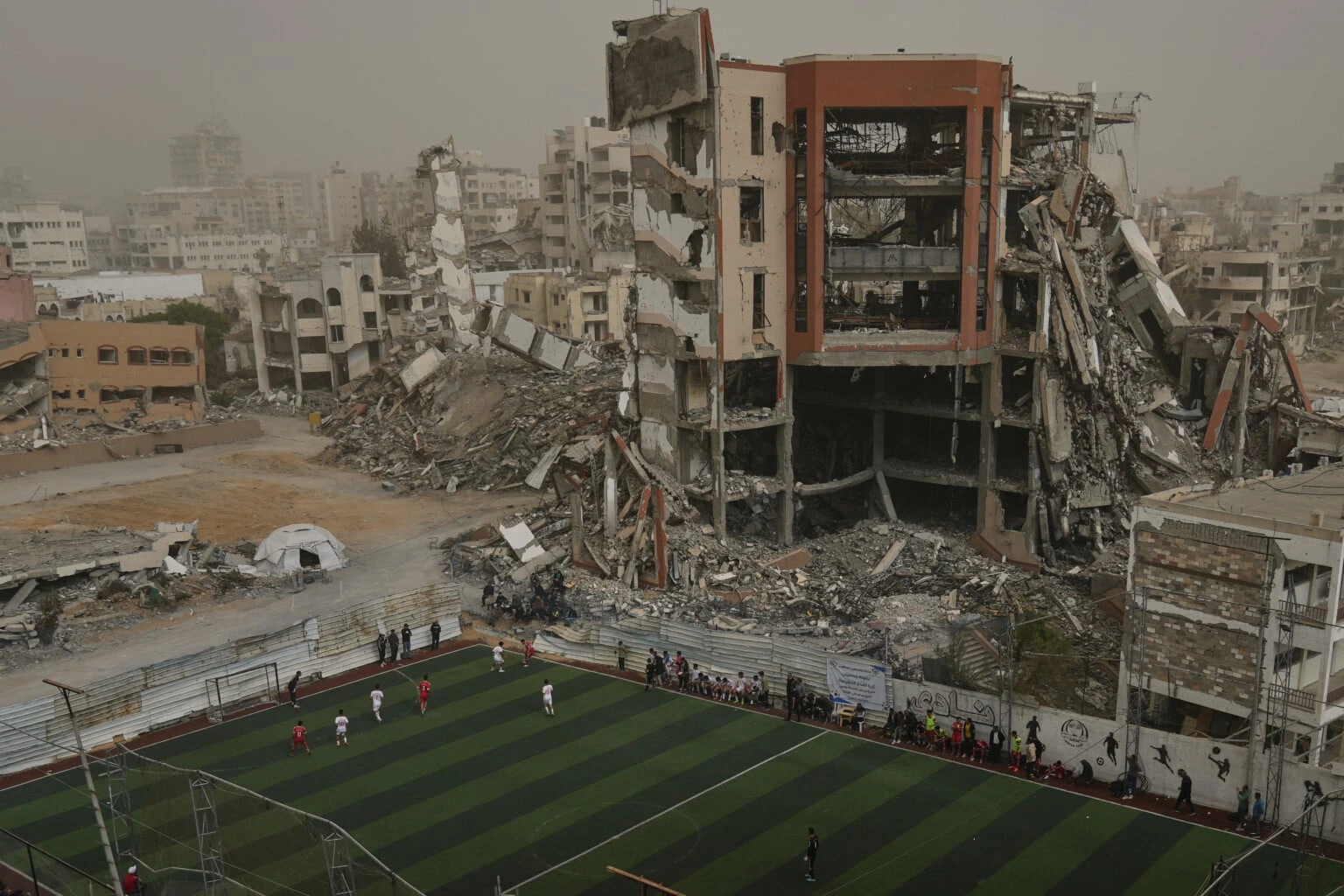
The Associated Press photograph shows Gaza Sports Club and Al-Ahly Club players competing on February 14, 2026 on a small new field, with destroyed buildings dominating the background. Organisers confirmed to a French local outlet that they replaced it after requests from unnamed outside sources, saying they did not want to “enter into controversy or offend anyone.”
The case changed again on August 31 when a court suspended the Deauville mayor’s removal order, finding that the measure was neither “necessary” nor “proportionate.” The decision does not identify who made the initial requests, but moves the discussion from assumed motives to the documented proportionality of an administrative intervention in a journalistic photograph.
What happened at the festival
The Deauville Sport Images Festival is holding its second edition from June 6 to September 6, 2026. Alshrafi’s image was one of roughly 300 photographs in the exhibition before it was quietly taken down in mid-August and replaced with a cycling photograph.
PetaPixel reports that organisers told Le Pays d’Auge they had received requests from external sources, without naming them. The public explanation was limited to avoiding controversy and offence. No specific claim was published that the image was manipulated, inaccurate or in breach of a photographic rule of the event.
The August 31 court ruling
The latest development came from a French court after a petition by the OLC rights group. The court suspended the mayor’s August 20 decision and held that removing the image was not necessary or proportionate.
Town hall lawyer Marie-Thérèse Sur-Le Liboux argued that there was a risk of public disorder and that authorities had observed a “torrent of hatred” on social media, but gave no examples in the AFP account. That is the justification recorded in court; no different motive has been publicly established and none should be asserted as fact.
Deauville representatives said it would take six days to reprint and reinstall the photograph. Because the exhibition closes on September 6, that timetable would return it only at the end of the festival. OLC head Agnès Tricoire said it would be “scandalous” if the original print had been destroyed and promised further action.

What the photograph shows
The frame does not depict a military operation, weapons or a demonstration. It records a football match on a field built inside a destroyed urban landscape. The small scale of the pitch at the bottom of the image and the ruins behind it create its central visual tension.
The Associated Press says Gaza’s main football stadium was levelled during the Israel-Hamas war and is being used as a tent camp for displaced families. In Jabalia camp, the Palestinian Football Federation cleared rubble, installed worn artificial turf and erected a fence beside the remains of destroyed buildings.

Jehad Alshrafi’s broader photo report
The removed photograph belongs to a wider AP photo essay rather than standing alone. Alshrafi documented team warm-ups, match action, spectators and amputee footballers training on the same ground.
AP reports that amputee players trained every Wednesday and Saturday, while Gaza Sports Club and Al-Ahly Club played on February 14. The series presents football’s return as a fragment of everyday life amid extensive destruction and a fragile ceasefire.


Why the case concerns image ethics
A sports photography festival does not show only technically striking moments. It decides how sport connects with social conditions, identity and public memory. Removing a photograph without a clear public explanation changes that curatorial narrative, especially after the image had already been officially included.
Neutral reporting requires separating confirmed facts from interpretation: the image was removed; organisers cited external requests and a desire to avoid offence; the town cited public-order risk; and the court found the measure unnecessary and disproportionate. The identities and motives of those who applied the initial pressure remain unknown.
What we think
The court ruling restores an important boundary: concern about possible controversy is not by itself enough to remove a journalistic image when the measure is neither necessary nor proportionate. Alshrafi’s photograph has a clear caption, a named author and a full AP photo essay documenting its context. The more responsible curatorial approach would have been to present that context rather than replace the picture without a public explanation.
Frequently asked questions
Who took the photograph?
Palestinian photojournalist Jehad Alshrafi took it for the Associated Press on February 14, 2026.
Why was it removed?
Organisers cited requests from unnamed outside sources and said they wished to avoid controversy or offending anyone. In court, the town cited a risk of public disorder.
What did the court decide?
It suspended the mayor’s removal order as unnecessary and disproportionate and ordered the photograph restored.
Has the image already returned?
Deauville officials told the court that reprinting and reinstalling it would take six days. The exhibition ends on September 6.
What does the complete AP photo essay show?
It documents the Gaza Sports Club–Al-Ahly Club match, warm-ups, spectators and amputee football training on the new Gaza field.