

Summary
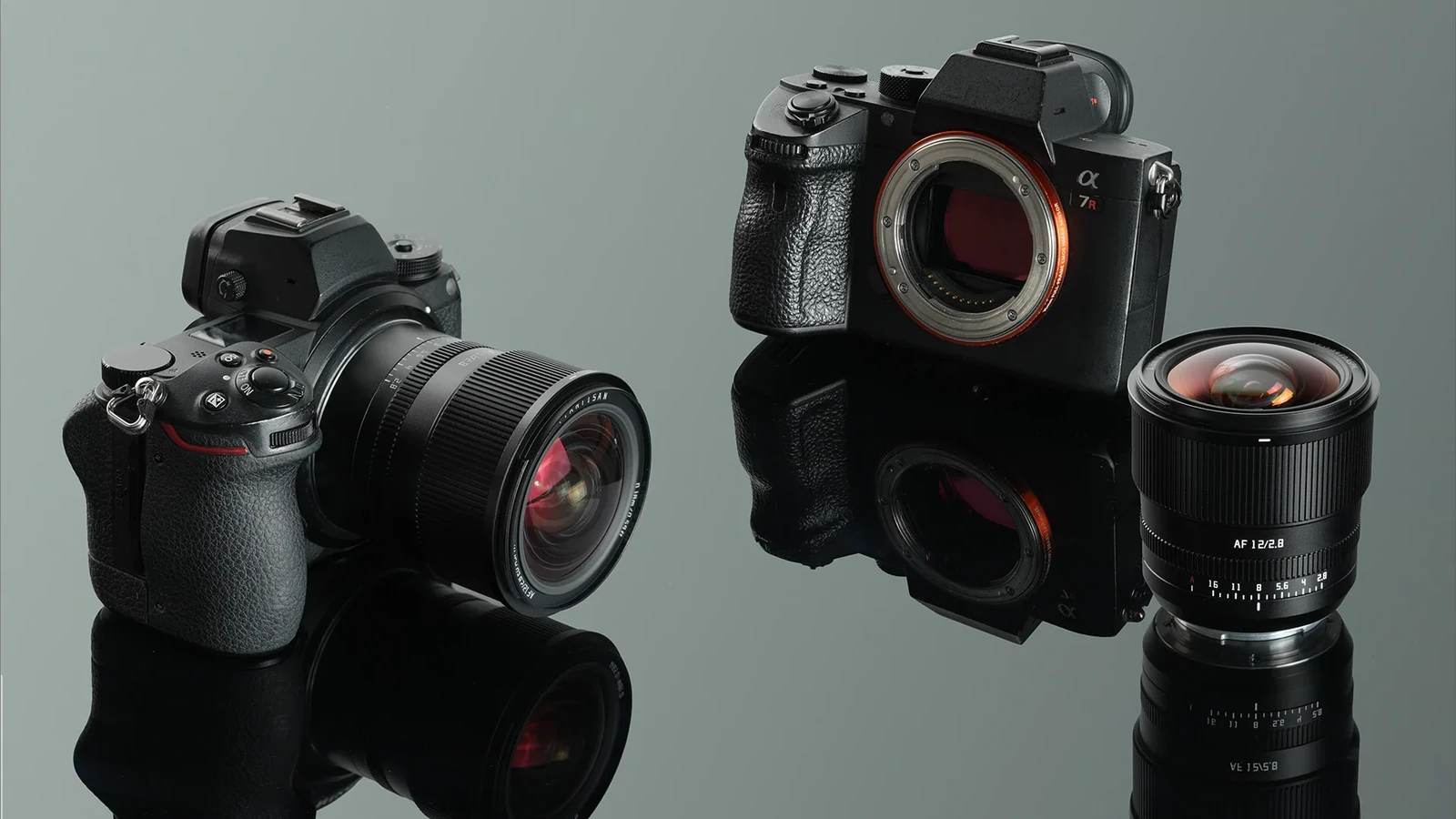
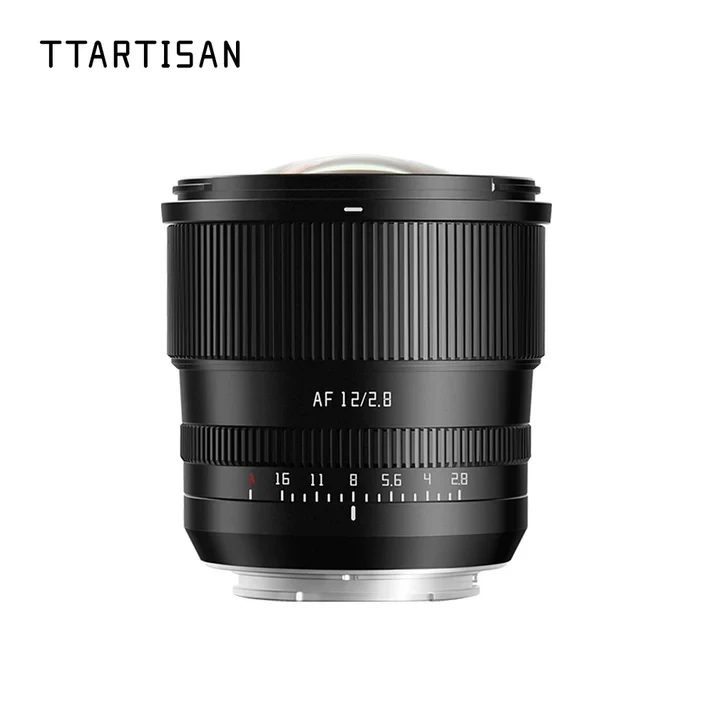
On November 24, 2026, TTArtisan announced the AF 12mm f/2.8 ASPH., an ultra-wide prime for Sony E and Nikon Z full-frame mirrorless cameras.
With a 122° field of view, an f/2.8 maximum aperture and a starting weight of 336 grams, the lens is aimed primarily at landscape, architecture and night-sky photographers.
What 12mm changes
The short focal length lets us include a large part of the surroundings even when there is no room to step back. In landscapes, moving close to a foreground object can create a much stronger sense of depth. In architecture, careful camera alignment helps limit converging verticals.
The minimum focusing distance is 18 centimetres from the sensor plane, allowing compositions with a prominent foreground while retaining the surroundings.
Two photographs in the supplied material show how a nearby tree or ice beside a waterfall can anchor a composition.


Optical design and astrophotography
The optical design comprises 16 elements in 10 groups, including two aspherical elements, three low-dispersion ED elements and five high-refractive-index HR elements.
TTArtisan claims that the design limits distortion and maintains sharpness towards the edges. The six-blade diaphragm stops down to f/16.
For night-sky photography, f/2.8 allows shorter exposures than f/4 at the same ISO. Corner performance is especially important, however: coma can distort star shapes, while vignetting affects peripheral brightness. Promotional samples are no substitute for a controlled RAW test.



Autofocus, controls and filters
Focusing is driven by an STM stepping motor, with face and eye detection on compatible cameras. The lens has a clicked aperture ring.
Compatibility deserves attention on older Sony bodies: according to the information reported by PetaPixel, the a7 III has full stills compatibility but limited video compatibility, with limitations also affecting the a7 and a7 II.
Weight ranges from approximately 336 to 349 grams, while dimensions are 72 × 72mm for Sony E and 72 × 74mm for Nikon Z (diameter × length).
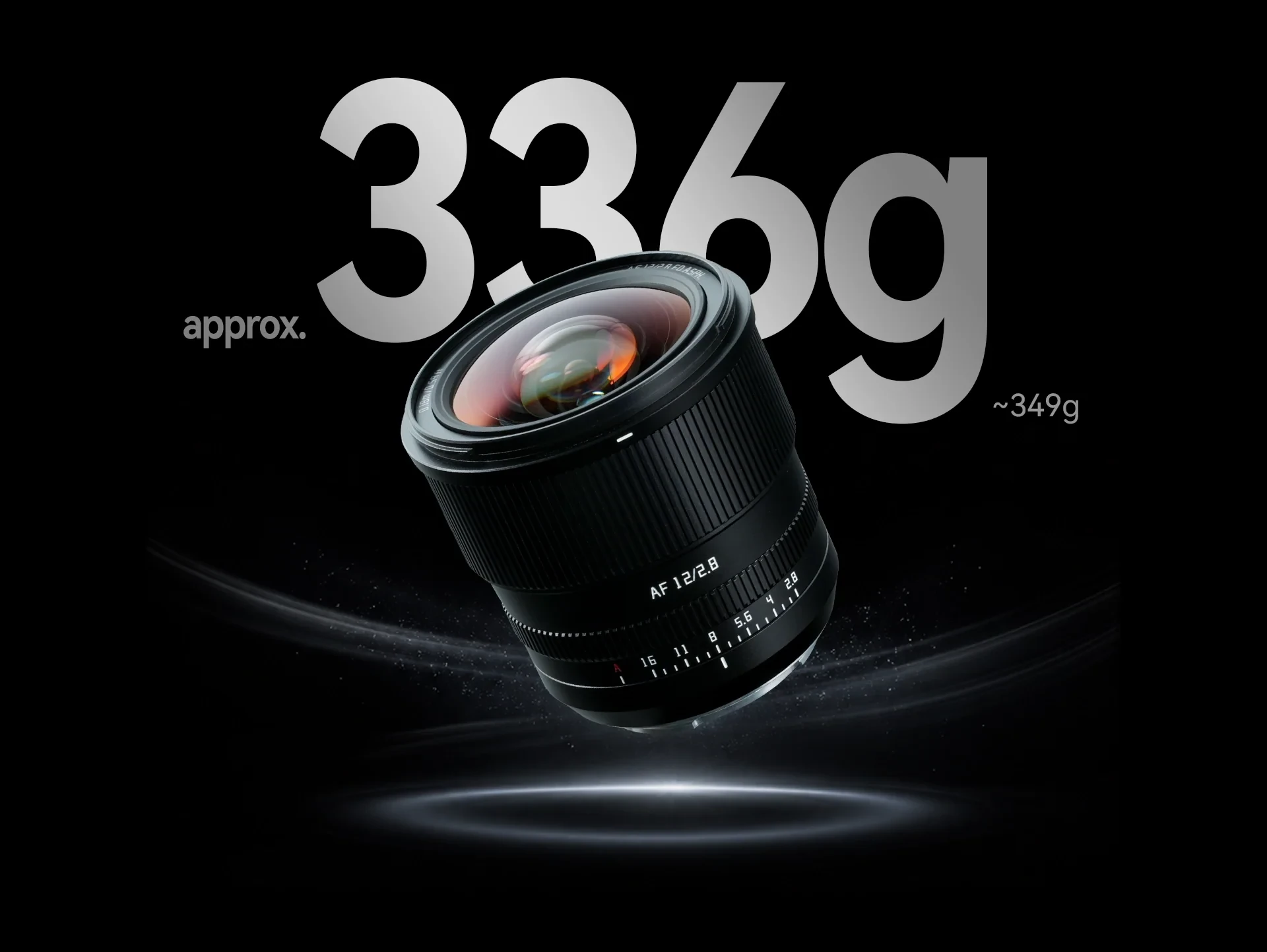
Despite its protruding front element, the lens accepts 82mm screw-in filters via the supplied adapter. A metal hood and lens caps are also included.
This makes neutral-density filters easier to use for long exposures or video shutter-speed control. A polariser requires care, as the sky can appear unevenly darkened across such a wide frame.
Price and availability
The official page lists a price of $489 for the Sony E and Nikon Z versions. PetaPixel reports preorders, but the official store shows a sold-out label, so immediate availability is not confirmed.
The manufacturer also references L-Mount in its product material, but it is not listed as a purchase option at launch. No official euro price for Greece was found.
More information here.
What we think
A 12mm prime makes sense when we genuinely need such a wide field of view. Compared with a zoom such as the Tamron 12-20mm f/2.8, the TTArtisan sacrifices focal-length flexibility but offers lower weight and the option of using conventional front filters.
For a photographer hiking with gear or regularly working at night, that combination is particularly useful. At $489, we would prioritise testing corner sharpness, coma at f/2.8 and actual distortion before buying. For video, we would additionally check continuous autofocus reliability on the intended camera body and focus breathing.