Summary
- Whalefall opened in theaters on October 16, 2026.
- The crew built four versions of the whale’s stomach.
- Cinematographer Aaron Morton used lighting inspired by bioluminescence.
- Practical sets, motion rigs and visual effects created the film’s claustrophobic world.
How do you shoot an actor trapped inside a whale’s stomach? For Whalefall, the filmmakers built a physical, moving environment around the performer and used visual effects to complete the illusion.
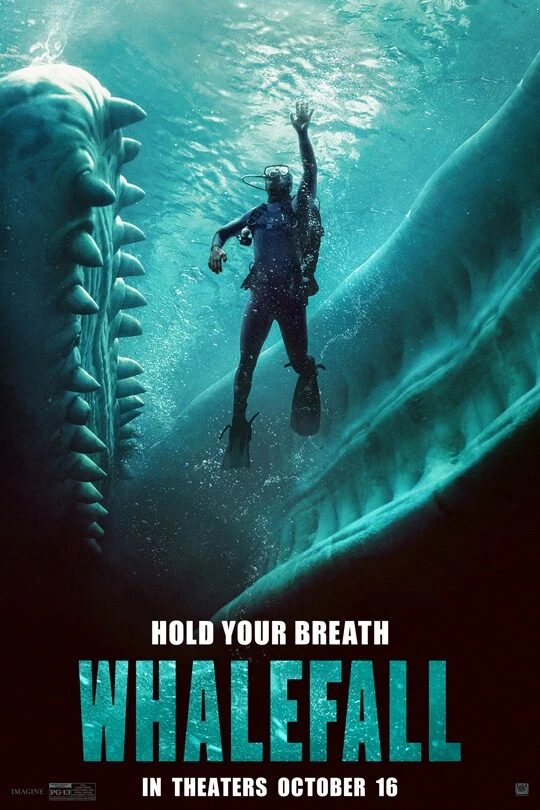
Released theatrically on October 16, 2026, the 20th Century Studios film follows Jay Gardiner (Austin Abrams), who dives in search of his late father Mitt’s (Josh Brolin) remains and ends up swallowed by a sperm whale. With roughly an hour of oxygen remaining, every movement matters. Brian Duffield directed and co-wrote the screenplay with Daniel Kraus, whose novel inspired the film.
Watch the official trailer:
Four practical sets for a moving stomach
Production designer Ramsey Avery began with cetacean anatomy and real measurements, translating that research into digital models, foam prototypes and eventually full-scale constructions. Wētā Workshop helped develop the organic surfaces. Dense upholstery foam covered in layers of tinted silicone created translucent, wet-looking tissue, complete with wounds and squid sucker marks.
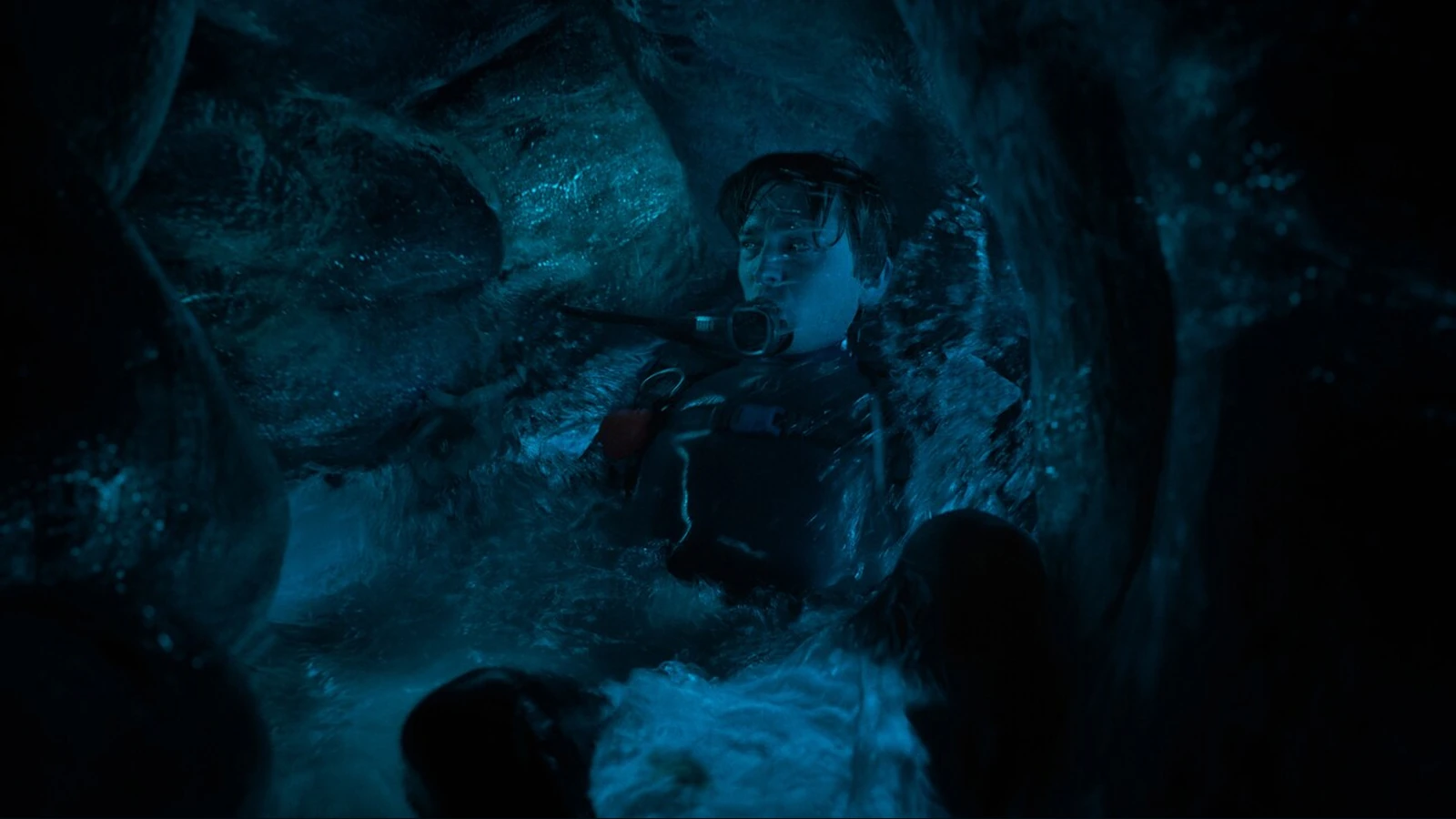
One set could not perform every action. The production built four versions of the forestomach: one for controlled motion, another for steep dives, a spinning rig that could tumble the actor, and a floor-level version for close-ups. Motion bases let the interiors rock, tilt and rotate around Abrams.
The physical work also relied on crew members manipulating the flexible walls with padded tools. Water, confined access and constantly moving surfaces complicated everything from camera positions to communication with the actor.
Lighting a space that should be dark
Cinematographer Aaron Morton faced a basic challenge: the interior of a whale does not come with a usable lighting setup. The film built its visual language around imagined bioluminescence. Programmable LED sources created blue-green illumination across the surfaces, while visual effects extended the glow or removed visible lighting elements. The actor’s face, diving equipment and moving walls had to remain legible without losing the cramped atmosphere.
Production VFX supervisor Guillaume Rocheron worked closely with the camera and design teams. An infrared camera positioned near the main camera helped track the deformation of the flexible environment, providing information for digital work on a surface that was never perfectly static. VFX extended the organic tissue, translucency and underwater surroundings. Industrial Light & Magic also officially lists its work on the film.
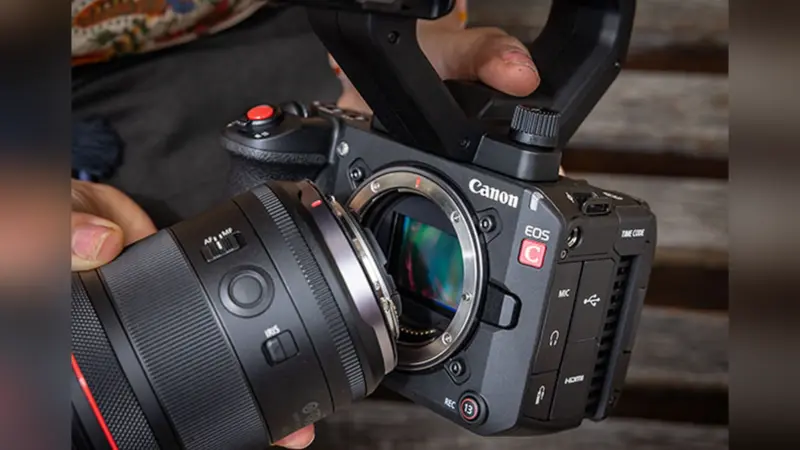
The camera had to share the same cramped environment
Duffield’s crew did not simply put Abrams in front of green screen and build an entire whale digitally. The actor performed inside structures that physically restricted his movement, while the camera crew worked through limited openings and carefully chosen sightlines. Moving walls, water and rig-driven motion provided tangible stimuli; post-production could build on what had already been photographed.
The approach underlines why it is worth studying how practical shooting and digital effects are coordinated in a production: decisions about what exists in front of the lens affect every downstream stage.
The official teaser and Disney UK trailer show more of the interior:
What we think
For filmmakers, the most compelling part of Whalefall is that the impossible location started as a physical set. Asking a performer to imagine being compressed by a wall is not the same as giving them a surface that actually moves and pushes back. That interaction changes body language and gives the camera real reactions to capture.
The lighting deserves just as much attention. Flooding the space with generic blue light would have made every detail visible, but flattened the sense of place. Here, the illumination is motivated by the fictional biology of the environment, and the moving surfaces continually alter how it falls across the frame.
The decision to build different rigs for different shots is another useful lesson. Anyone who has squeezed a camera, lights and performer into a small set knows how quickly a brilliant design can become unshootable. On Whalefall, production design and cinematography had to evolve together during testing, rather than finishing a set first and only then asking where the lens could go.