Summary
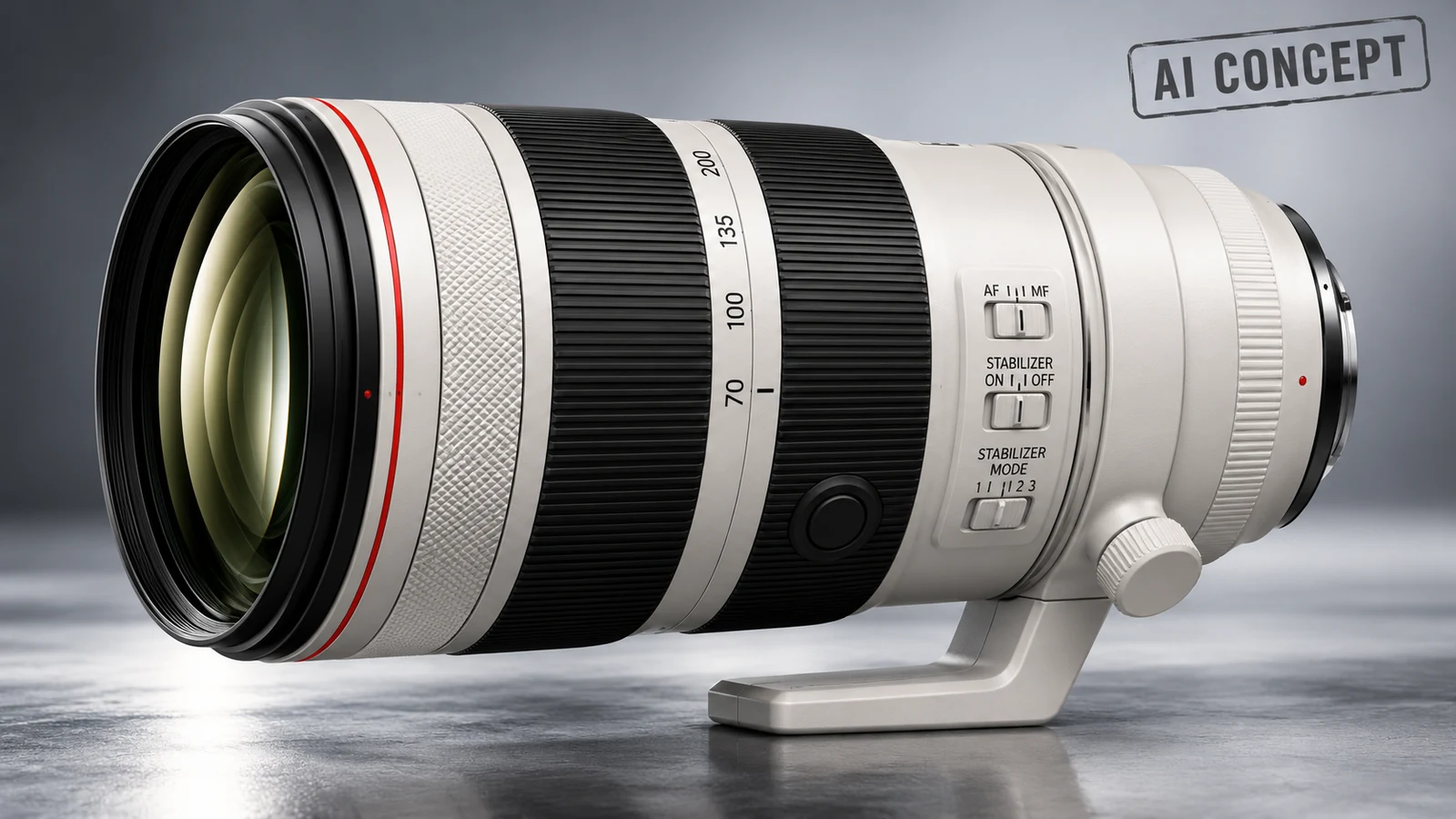
- Canon has filed a patent describing a roughly 70-200mm zoom with an aperture near f/2.
- The design uses 23 elements in eight groups.
- An unofficial estimate suggests a potential $6,000–$8,000 price.
- Canon has announced neither a product nor a price.
A constant-aperture 70-200mm f/2 would be a dream lens for many sports and event photographers; a newly published Canon patent shows one way to design it, but does not confirm that such a product is coming.
Japanese patent publication JP 2026-168807 appeared on October 16, 2026, after an April 4, 2025 filing. Among its 11 optical examples is a full-frame telephoto zoom around 70-200mm with an aperture close to f/2. Canon has not announced a corresponding product.
What the patent reveals about a 70-200mm f/2
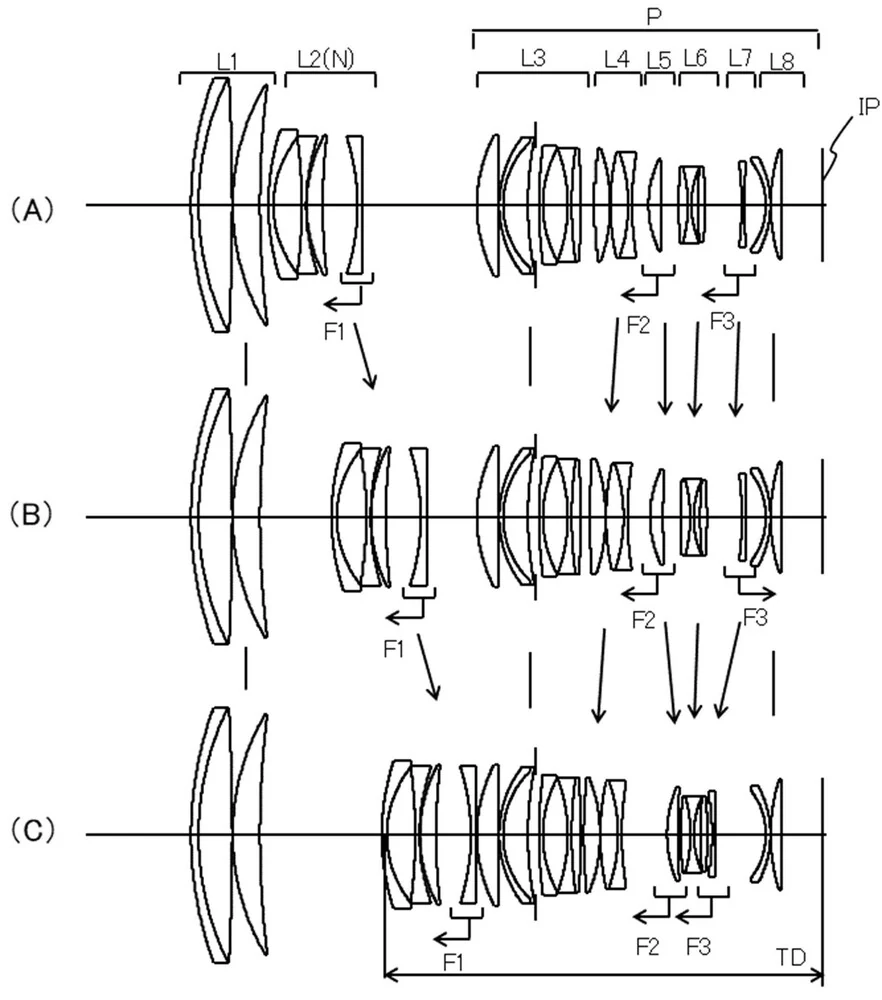
Example 9 covers 71.65–194mm at a constant f/2.06. It uses 23 optical elements arranged in eight groups and six aspherical surfaces. That is an ambitious optical formula for a telephoto zoom designed to maintain such a large aperture throughout its range.
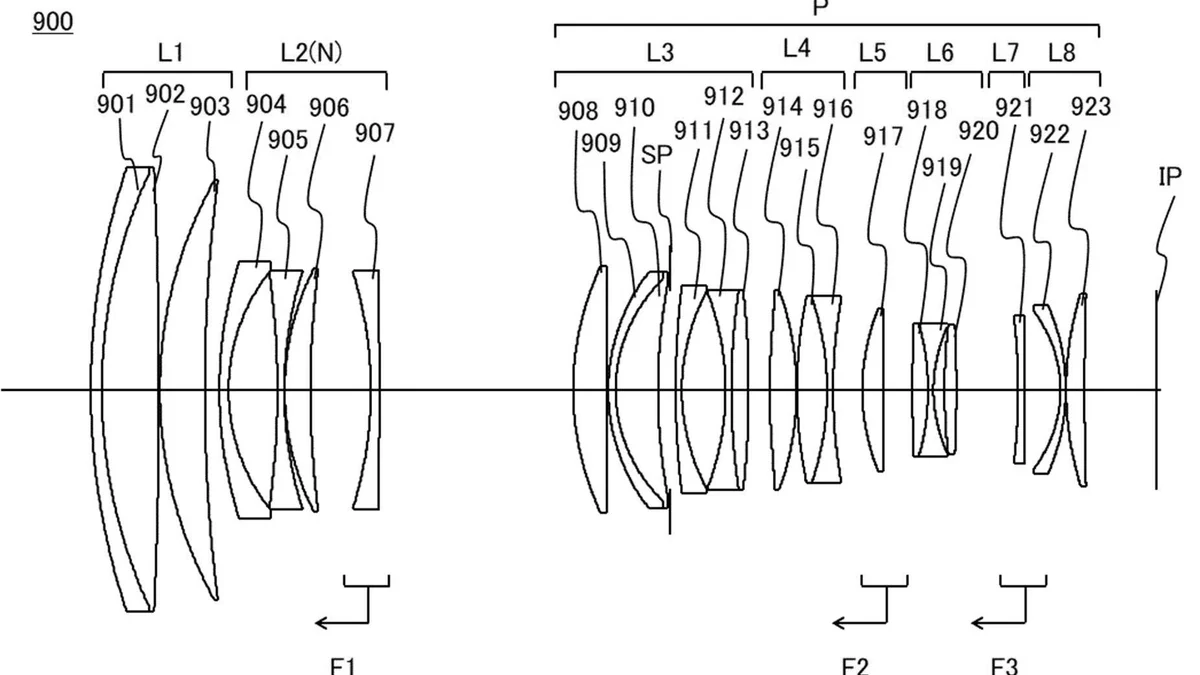
The optical length is listed as 240.16mm from the front surface to the image plane and remains constant as focal length changes. This points to an internal zoom mechanism with groups moving inside the barrel. That figure is not the published exterior length of a finished lens.
Three separate moving elements or focus groups handle focusing. The application discusses limiting changes in aberrations at close distances while keeping the optical system from becoming excessively large.
A broader family of exceptionally fast zoom designs
The application goes beyond the f/2 telephoto. Three examples cover the 70-200mm class at approximately f/2.06, f/2.5, and f/2.3. The latter two explore different trade-offs between speed, overall optical length, and focusing architecture.
The other eight examples cover f/1.46 zooms spanning various portions of roughly 36–83mm. These are alternative optical concepts, not a product roadmap promising 11 new lenses.
What it could mean for working photographers
Moving from f/2.8 to f/2 provides approximately one additional stop of light. In an indoor sports venue, that could mean shooting at 1/1000 rather than 1/500 second at the same ISO under the same lighting. Wedding, concert, and portrait photographers could also gain more headroom in low light and stronger subject separation.
The familiar 70-200mm f/2.8 remains a key professional tool, as discussed in this guide to essential lenses for creators. Extra speed would probably involve compromises in bulk and handling. With no prototype or final specifications, there is no basis for claiming a particular weight, stabilisation system, or autofocus performance.
Could the price reach $6,000–$8,000?
A telephoto zoom this fast could come with a steep price tag. One unofficial estimate puts a hypothetical RF 70-200mm f/2 at $6,000–$8,000. This is neither a Canon figure nor a leaked price list: it is speculation reflecting the complexity of building such a lens. If a product ultimately reached that price range, it would mainly appeal to professionals with particular requirements and budgets that justify such an investment.
The engineering and weight challenge
Maintaining an f/2 aperture across the zoom range calls for large optical elements and complicated moving groups. Those demands affect physical dimensions, camera balance, focusing speed and manufacturing expense. The patent gives no finished-product weight or external dimensions.
What we think
For photographers shooting indoor sport, stage performances and concerts, reaching 200mm at f/2 rather than f/2.8 would be genuinely useful. That additional light can help preserve a fast shutter speed without raising ISO further. Greater control over shallow depth of field would also be welcome for portraits and isolated subjects.
Our biggest concern would be handling. A 70-200mm needs to work over long assignments, with fast autofocus and manageable balance. A lens that routinely demands a monopod would surrender some of the flexibility that makes this zoom range so popular.
Then there is cost. The unofficial $6,000–$8,000 estimate would put it beyond many working photographers even if its optical performance proved excellent. For a photography business, the extra stop would need to result in more paid assignments or images that would otherwise be difficult to capture.
Frequently asked questions
Has Canon announced an RF 70-200mm f/2?
No. This is a published patent application containing optical designs, not a product announcement.
Is there an estimated price?
An unofficial estimate suggests $6,000–$8,000 if the lens ever enters production. Canon has confirmed neither a product nor a price.
How much faster would it be than a 70-200mm f/2.8?
An f/2 aperture gathers roughly one stop more light than f/2.8. The patent example is actually f/2.06, so its advantage is slightly below a full stop.