Summary
- The vivo X Fold6 has been on sale in Europe since October 1, 2026.
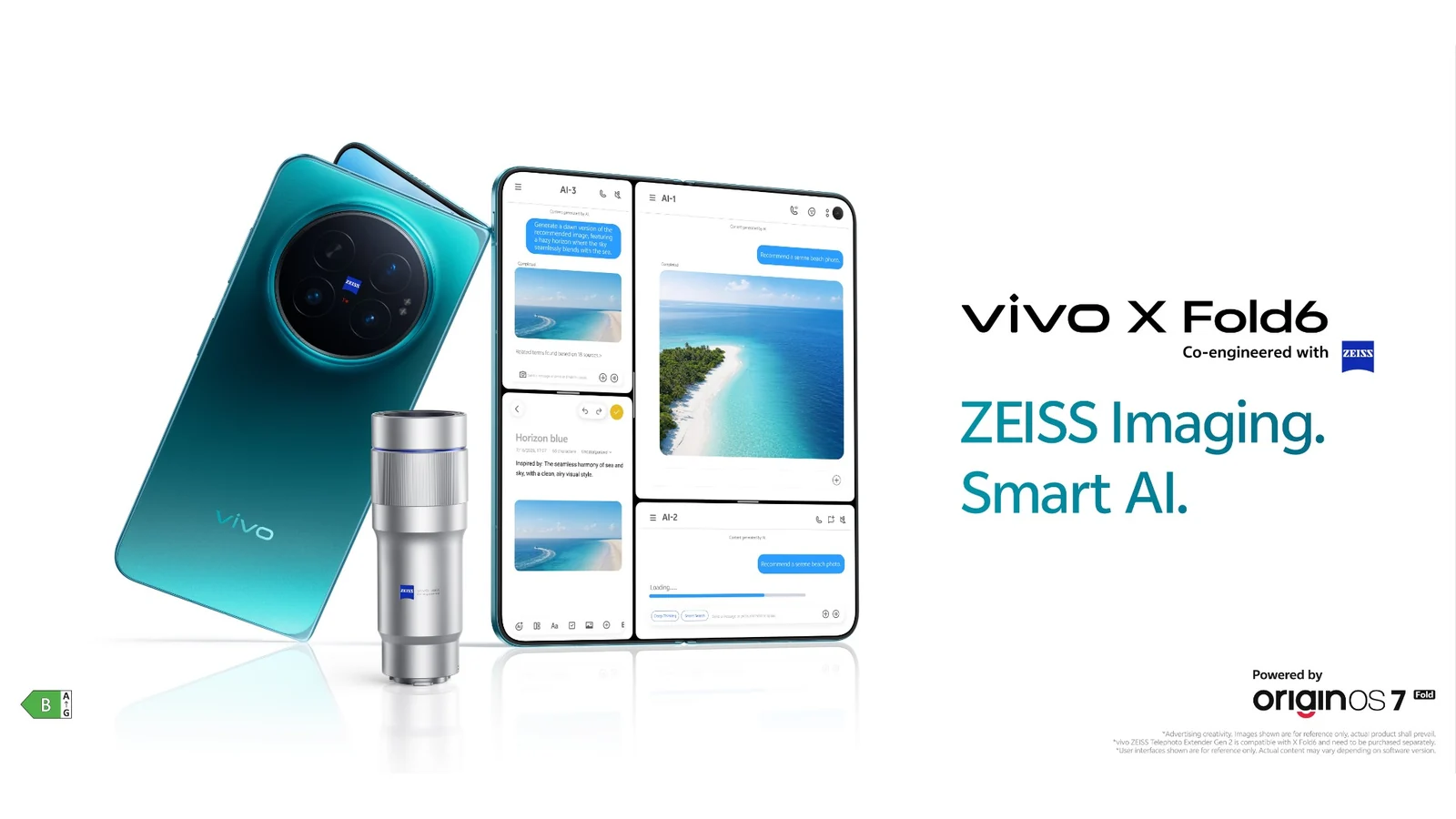
- It has a 200MP ZEISS main camera, a 50MP periscope telephoto and a 50MP ultrawide.
- An optional external ZEISS extender delivers a 200mm-equivalent frame through optical magnification and digital cropping.
- The phone has an 8.02-inch folding display and a €2,199 recommended price in selected European markets.
- Three rear cameras, three different jobs
- The external telephoto extender is the bigger story
- What the official sample photographs can—and cannot—show
- 4K video and a dedicated stage mode
- An eight-inch screen for framing and reviewing images
- Performance, durability and European availability
- What we think
- Frequently asked questions
The vivo X Fold6 is more than another foldable phone with a large display. A 200-megapixel main camera, a ZEISS periscope telephoto and support for an external telephoto extender make it an attempt to bring more serious long-range shooting options to a device that unfolds into a small tablet. It was first unveiled in China in June; European sales began on October 1, 2026. This is therefore an international rollout, not a brand-new unveiling.
For photographers, the useful question is not simply how many megapixels the camera offers. It is how its three fields of view, stabilization, optional external lens and large display fit into a practical shooting workflow—and where the compromises remain.
Three rear cameras, three different jobs
The main camera uses a 200MP Samsung HPB 1/1.4-type sensor, an f/1.68 lens and optical image stabilization. With a roughly 23mm-equivalent field of view, it is the everyday camera for streets, landscapes and general photography. Its very high pixel count may leave extra cropping latitude in good conditions, but resolution alone does not guarantee superior photographs in difficult light.
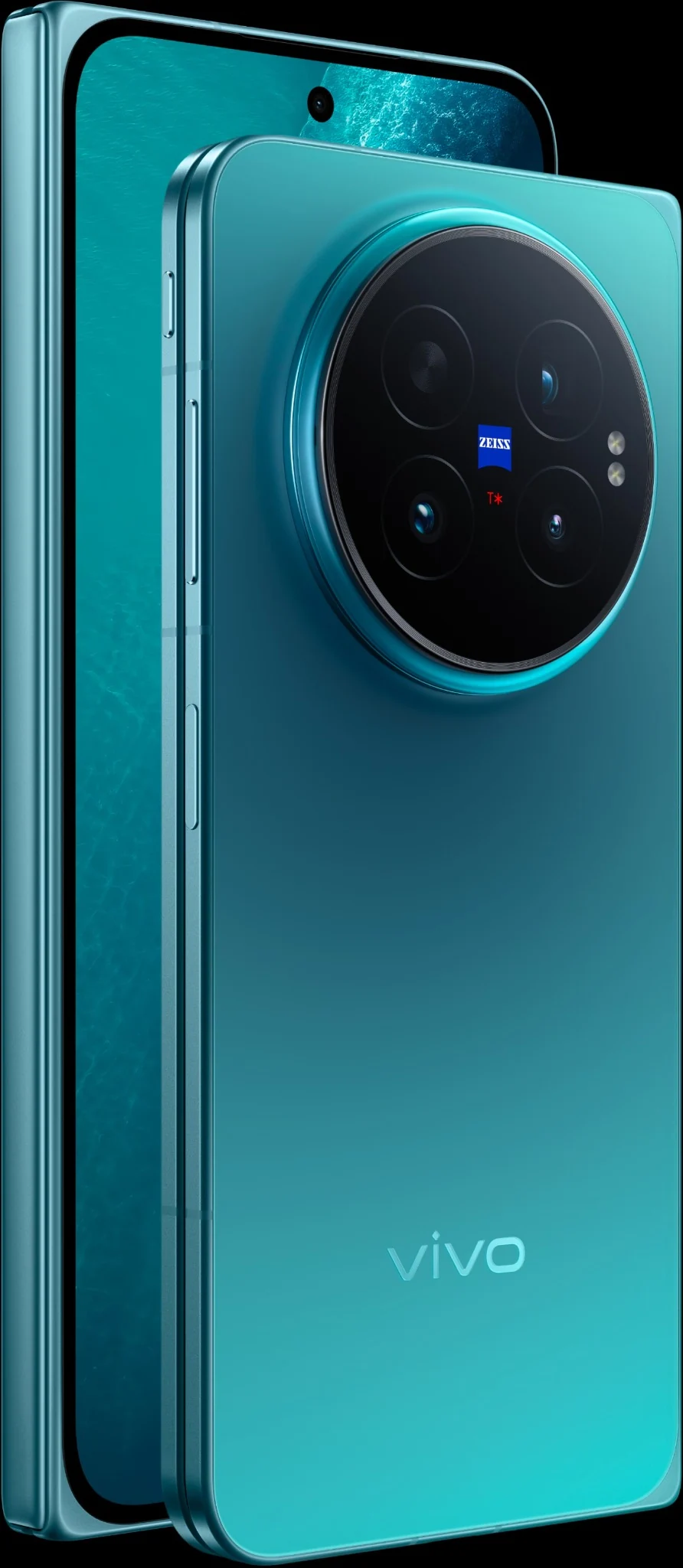
The periscope telephoto is based on a 50MP Sony LYT-602 1/1.95-type sensor, with an f/2.57 aperture and a 70mm-equivalent, roughly 3× field of view. It has optical stabilization and ZEISS APO optical design to control chromatic aberrations. This is the module most relevant to portraits at a distance, architectural details, performances and sports.
The third rear module is a 50MP 15mm-equivalent ultrawide, using a 1/2.76-type sensor, an f/2.05 aperture and autofocus. Its wider framing suits interiors, architecture and expansive landscapes. According to vivo, all three rear lenses feature ZEISS T* coatings.
The external telephoto extender is the bigger story
The X Fold6 supports the separately sold vivo ZEISS Telephoto Extender Gen 2. Its 15 glass elements are arranged in two groups and provide 2.35× optical magnification over the phone’s telephoto lens. Vivo advertises a 200mm-equivalent field of view, but explicitly states that the final number also uses digital cropping. That distinction matters: the phone does not contain an independent native 200mm lens.
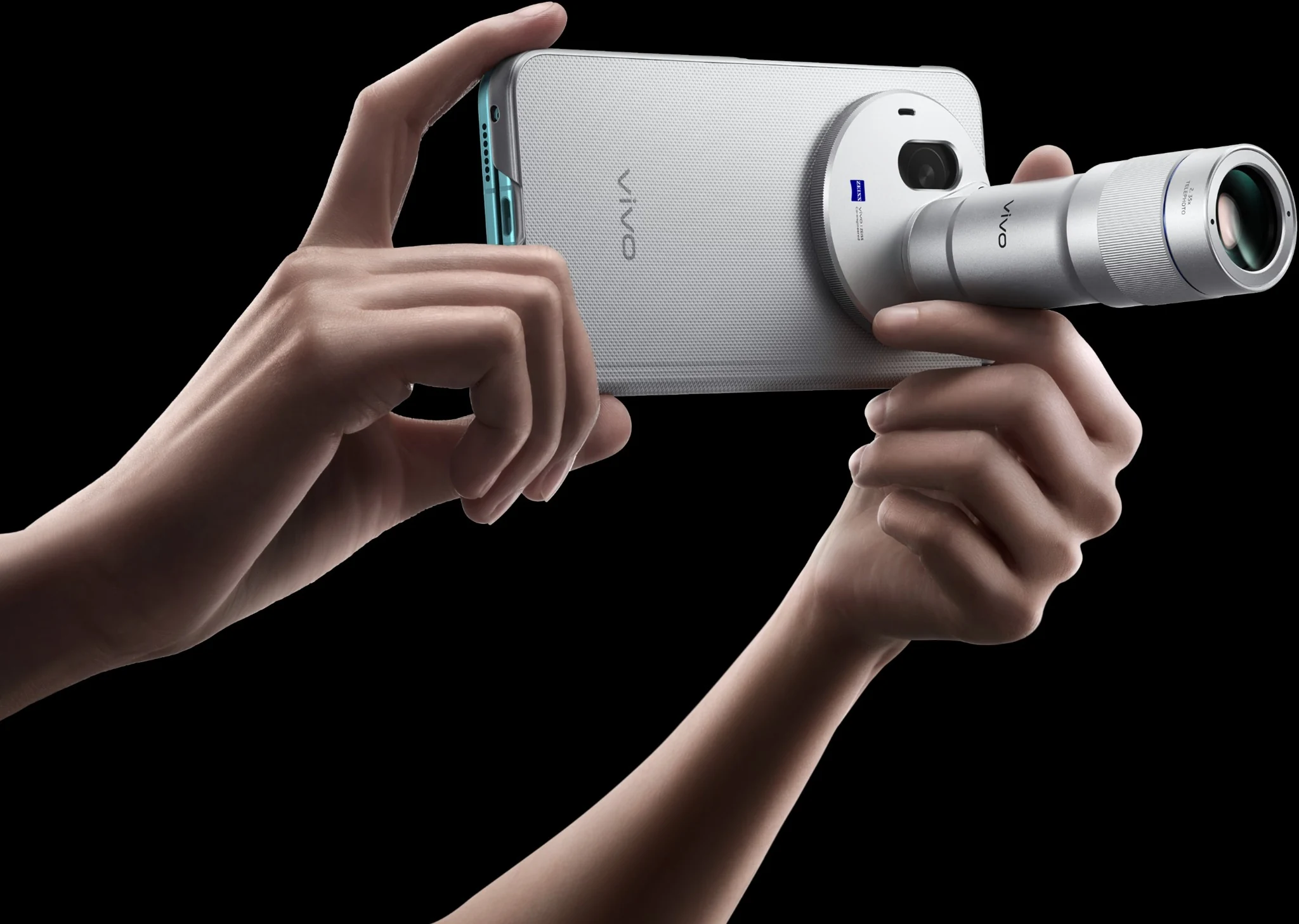
For concerts, sports or relatively distant wildlife, the accessory offers framing options beyond those of a conventional foldable. Yet it should not be confused with a dedicated camera telephoto: final image quality depends on optics, cropping, light, camera shake and computational processing. Promotional settings labelled 400mm, 800mm or 100× do not signify purely optical magnification at those figures.
Vivo has been developing a broader imaging accessory ecosystem. Its X300 Ultra with a 400mm ZEISS extender and camera cage took a more specialized approach, while the X500 Pro Max with a 200MP ZEISS telephoto and 400mm teleconverter follows a different telephoto strategy. What is new here is bringing this approach to a foldable body.
What the official sample photographs can—and cannot—show
Vivo’s sample imagery includes stage portraits and an athlete in action: subjects that demand reach, accurate focusing and sufficiently fast shutter speeds. These samples illustrate intended use, not the results of independent testing. Without untouched original files, EXIF information and controlled comparisons, they cannot establish real-world noise or fine-detail performance.



4K video and a dedicated stage mode
A Stage Mode supports 4K video at 60 frames per second with Dolby Vision. Vivo also cites its V3+ imaging chip for noise reduction and computational processing. This sounds useful for distant stage performances, though stabilization, difficult lighting and recorded audio need independent testing.
An important restriction is that dual-camera recording is unavailable while the external extender is attached. Vivo also cautions users not to point the camera directly into powerful concert lasers, which can damage an image sensor.
An eight-inch screen for framing and reviewing images
The internal AMOLED measures 8.02 inches at 2504 × 2312 pixels and refreshes at up to 120Hz. The outer AMOLED measures 6.51 inches at 2528 × 1120 pixels, also with refresh rates up to 120Hz. Vivo quotes up to 5,000 nits of local peak brightness, which should not be mistaken for sustained brightness across the entire panel.

For a photographer, the advantage is a much larger surface for checking composition, selecting frames or using editing tools without immediately moving to a tablet. Origin Workbench can show one primary and up to four supporting tasks. How well individual editing apps use the unusual screen ratio will depend on their own interfaces.
Performance, durability and European availability
The European specification lists the Dimensity 9500 Super Edition, 12GB of RAM and 512GB of storage. The BlueVolt battery is rated at a typical 6,900mAh, with wired charging up to 80W and wireless charging up to 40W. Depending on color, the handset weighs 228g or 235g. The black model measures 9.4mm folded and 4.4mm unfolded, before accounting for the prominent camera bump.

Vivo lists IP58/IP59 protection and water resistance under specified laboratory conditions, not unlimited protection against dust or water damage. The European device ships with OriginOS 7 Fold based on Android 17.
European availability was confirmed for October 1, 2026. In markets including Austria, the 12GB/512GB model carries a recommended price of €2,199. This does not establish official availability or pricing in Greece, and the optional telephoto extender costs extra.
What we think
The X Fold6 matters less because of its headline 200MP figure than because it challenges an old assumption: that a folding design necessarily demands major camera compromises. A 70mm periscope, optional optical extender and large preview screen make an interesting combination for photography on the move. The unfolded screen could genuinely improve the experience of examining and choosing frames after capture.
There are equally real trade-offs. The extender adds bulk, cost and something else to carry. The advertised 200mm equivalent involves digital cropping in addition to optical magnification, rather than a native dedicated 200mm lens. Anyone regularly photographing wildlife or fast sports will want full-resolution files and trustworthy autofocus tests before replacing dedicated gear.
For a travelling creator or someone who frequently shoots events and wants to review, edit and share work from one device, the concept is attractive. At €2,199 before accessories, though, impressive specifications are not enough. The X Fold6 is a compelling sign of where foldable imaging could go, not proof that a phone now replaces a serious camera system.
Frequently asked questions
Is the ZEISS extender included in the price?
No. The vivo ZEISS Telephoto Extender Gen 2 is sold separately and adds to the overall cost.
Is the advertised 200mm reach purely optical?
Not entirely. The accessory delivers 2.35× optical magnification, while achieving the final 200mm-equivalent field of view also involves digital cropping, according to vivo.
Is it officially on sale in Greece?
European sales began on October 1, 2026, but the verified information here does not independently establish an official Greek launch or Greek price.